
Smartwatch vs Fitness Tracker for Home Workouts: Which Device Actually Matches Your Routine?
Choosing between a smartwatch and a fitness tracker depends on your primary workout type. This guide breaks down the three device categories, matches them to specific home fitness routines, and compares subscription costs so you can pick the right wearable for your goals.
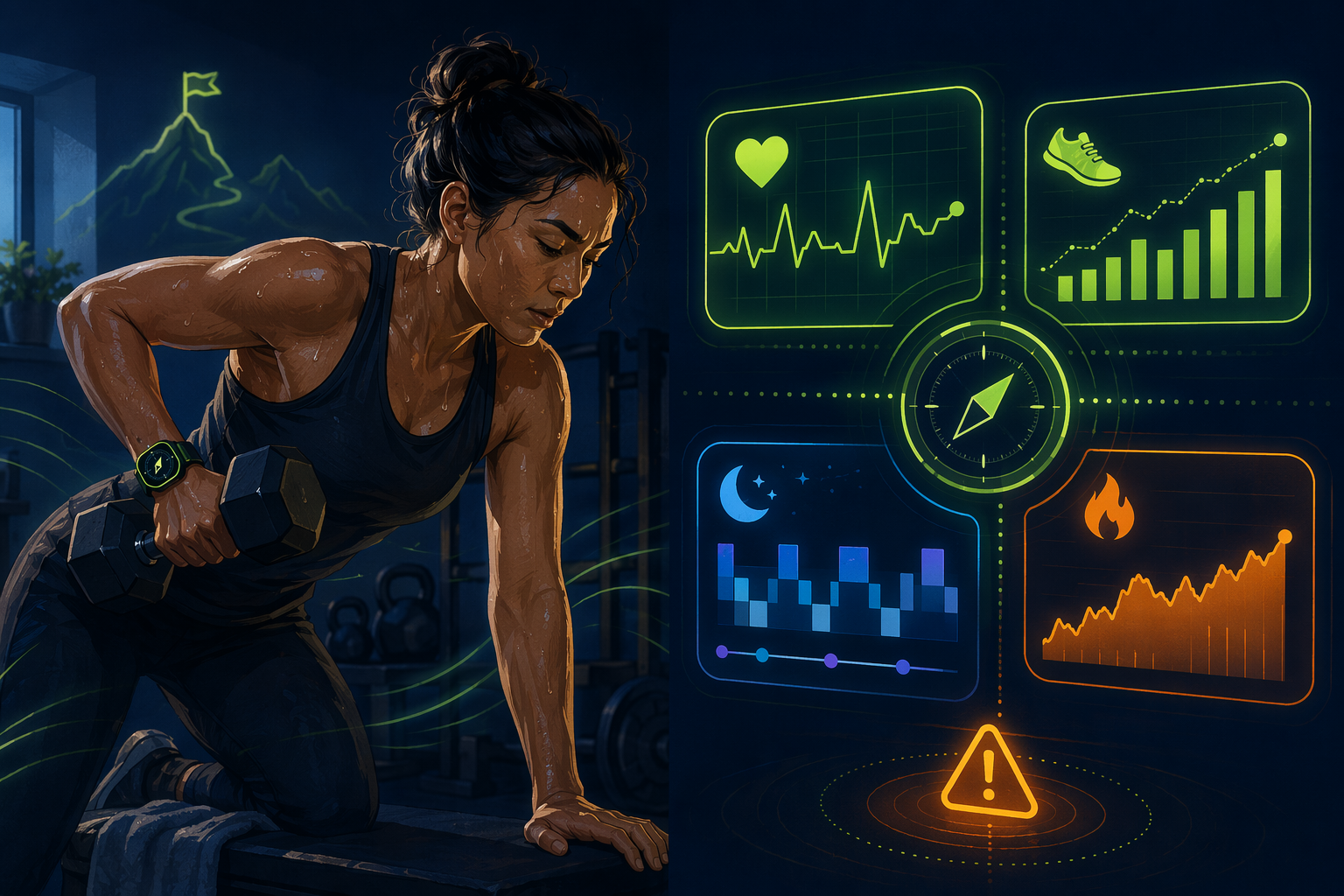
The Convergence and Divergence of Smartwatches and Fitness Trackers
Walk into any electronics store and the wall of wearables looks like a spectrum, not a set of neat categories. On one end sits the Apple Watch Ultra 3 with its cellular antenna, satellite SOS, and full app store. On the other sits the Whoop 5.0 — a screenless band that tracks strain and sleep but can't tell you the time. In between, devices like the Fitbit Charge 6 and Garmin Venu X1 blur the lines further.
This convergence is real, but it masks a divergence that matters more to home fitness practitioners than any spec sheet suggests. The right device for a runner who logs 30 miles a week on trails is not the same as the right device for someone doing bodyweight circuits in a 10x10 living room. A one-size-fits-all recommendation — "buy the best smartwatch" — fails both users because it ignores the primary variable: your workout type.
To make this decision clearer, we need to stop thinking in two buckets (smartwatch vs. tracker) and start thinking in three: smartwatches, GPS training watches, and screenless recovery trackers. Each category makes different trade-offs in battery life, activity-specific metrics, and subscription cost. Matching those trade-offs to your actual routine is the difference between a device you wear every day and one that ends up in a drawer.
The Three Device Categories: What Each Actually Does
Before comparing pros and cons, it helps to define the three categories clearly. The table below summarizes the key specs and trade-offs for each group, based on data from GearJunkie's 2026 testing and CNET's 2026 lab evaluations.
| Category | Examples | Battery Life | Key Strengths | Key Limitations |
|---|---|---|---|---|
| Smartwatches | Apple Watch Series 11, Samsung Galaxy Watch 8, Google Pixel Watch 3 | 18–42 hours (Apple Watch Ultra 3: 36–42 hrs) | Full app ecosystem, ECG/health alerts, phone replacement, seamless iOS/Android integration | Daily charging required, weaker sport-specific metrics, higher price point |
| GPS Training Watches | Garmin fenix 8, COROS Pace 4, Garmin Enduro 3, Garmin Forerunner 970 | 6–15 days (Enduro 3: 320 hrs GPS with solar) | Multi-day battery, 112+ activity profiles, offline maps, robust GPS tracking | Bulkier design, steeper learning curve, fewer smart features |
| Screenless Recovery Trackers | Whoop 5.0, Oura Ring 4, Fitbit Charge 6 (hybrid) | 5–16 days (Whoop 5.0: 14–16 days tested) | Deep sleep/strain analytics, no screen distraction, long battery, lower upfront cost | No app store, limited or no standalone GPS, ongoing subscription costs |
Verify further before you buy:
Price or spec changed since we checked? Report it below.
Comments
Join the discussion with an anonymous comment.