
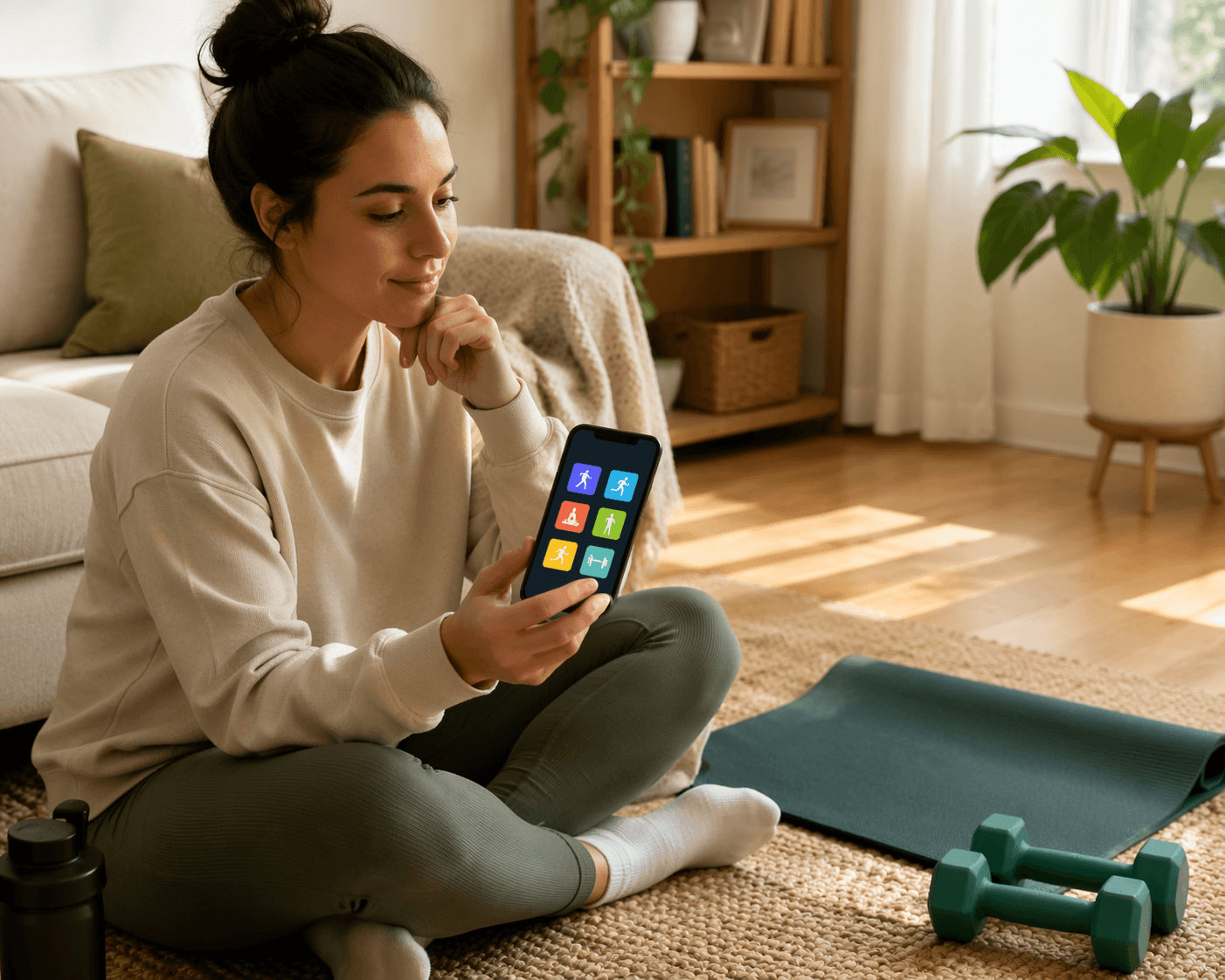
The frustrating part of looking for free workout apps is not the shortage of options. It is opening three of them, tapping around for a minute, and realizing the first useful workout is sitting behind a paywall. If you are starting from scratch, the first decision is simpler than most lists make it sound: for home bodyweight workouts, start with Nike Training Club or FitOn; if you want structured strength training from day one, look at Caliber. Nearly 1 in 5 smartphone users have downloaded a fitness app, but many people still abandon them when the free tier is too limited to be useful [1].
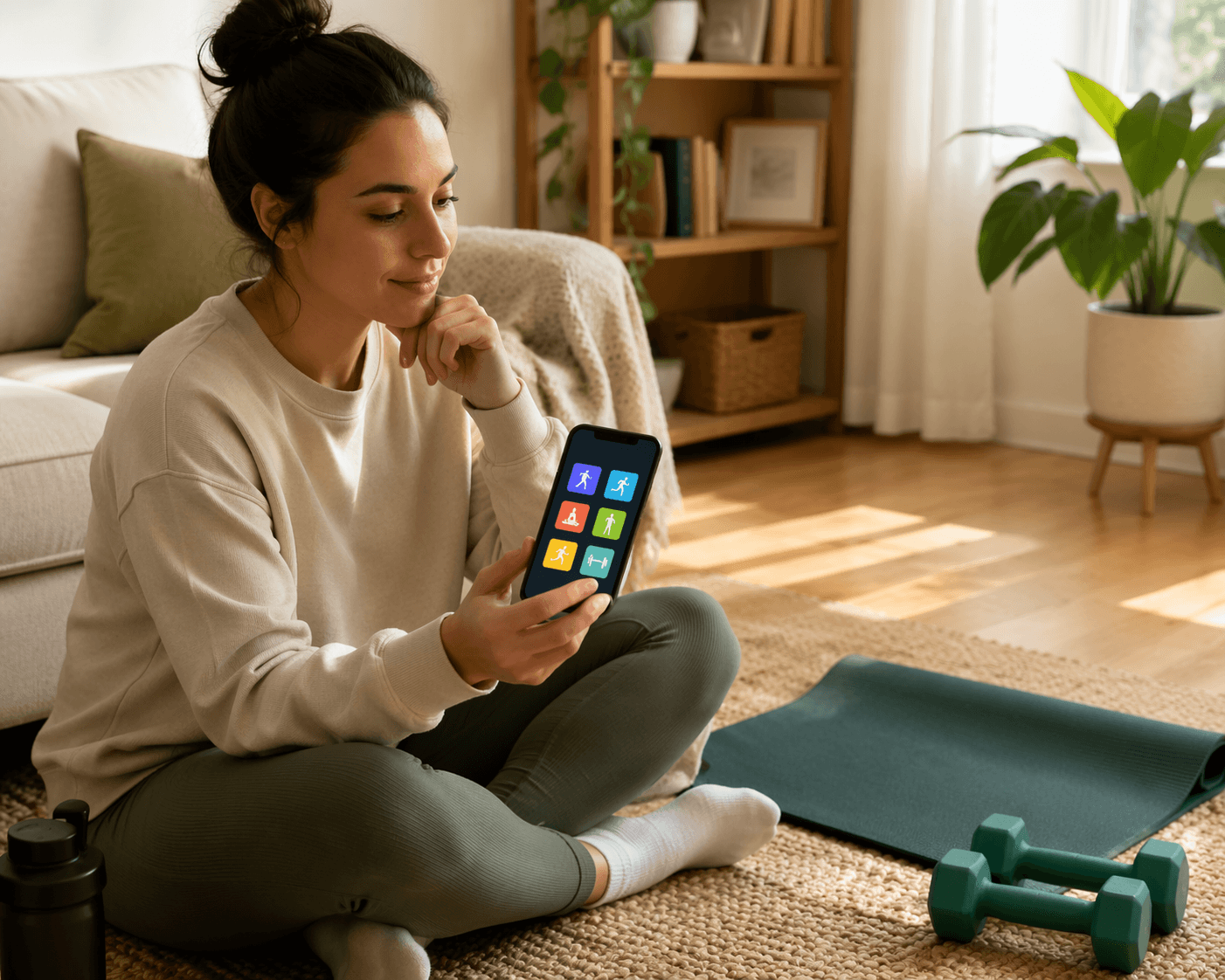
The fastest way to narrow it down
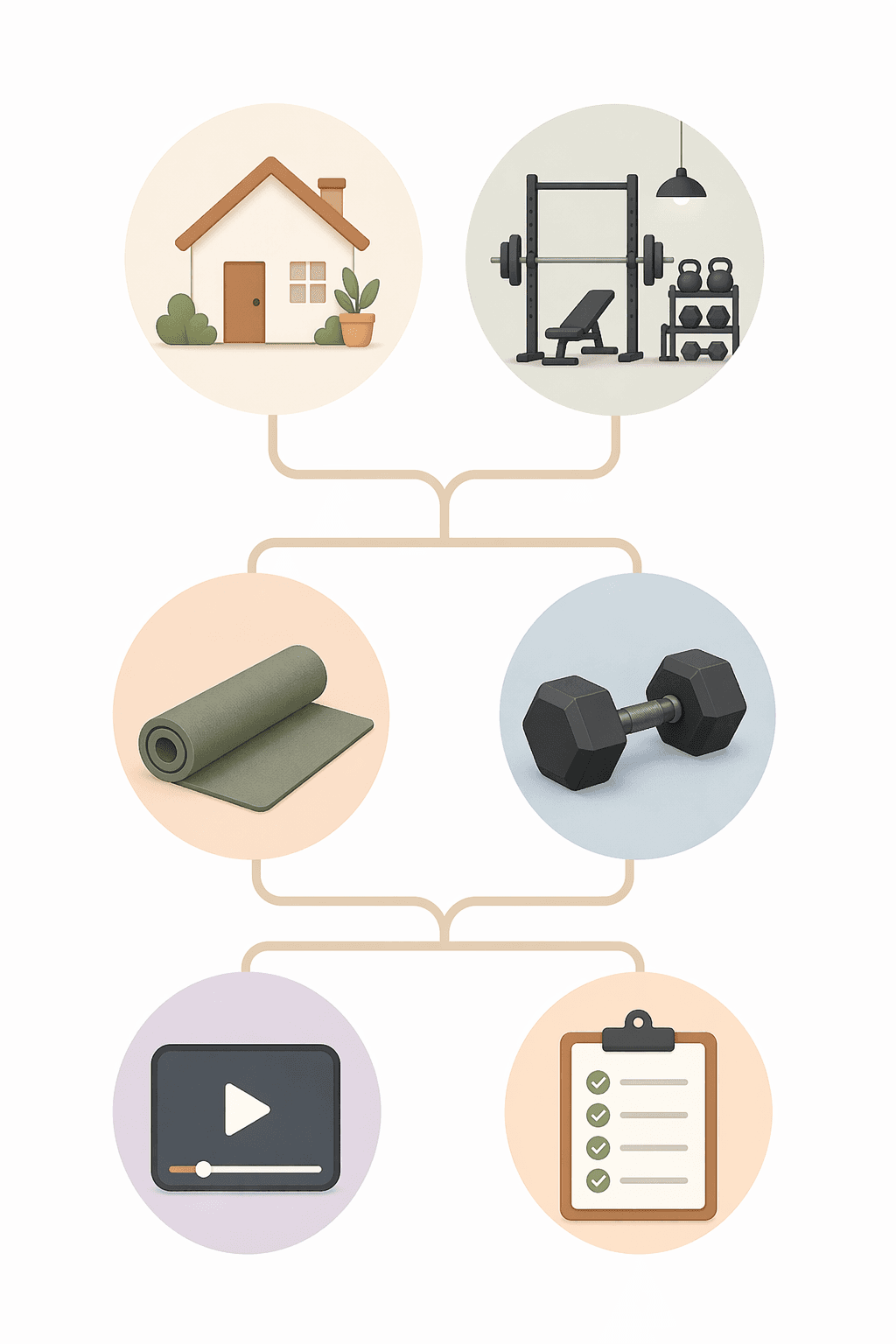
Before comparing features, answer three questions: where you train, what equipment you have, and how much guidance you want. That is usually enough to separate the apps that help a beginner start from the apps that only look good in a download store.
| Where you train | What you have | What you want | Best first download |
|---|---|---|---|
| At home | No equipment or just a mat | Guided workouts you can follow immediately | Nike Training Club or FitOn |
| At home or in a gym | A few dumbbells or a willingness to buy some | A structured strength plan | Caliber |
| Mostly in a gym | You already know the exercises you plan to do | Logging and tracking | A tracker-first app, later |
Nike Training Club is the cleanest starting point for home workouts
Nike Training Club is the easiest recommendation to make when someone wants to work out at home and does not want to think too hard about setup. It has been completely free since 2020, with no premium tier, subscription, or ads, and it offers 300+ guided video workouts [2]. That combination solves the trust problem that sinks a lot of free workout apps: the app is not just free to browse, it is free to use.
NTC works best for the beginner who wants a clear workout, a trainer on screen, and very little friction between deciding to exercise and actually starting. It is not trying to be a full training dashboard. That is a strength early on, because a beginner usually needs fewer choices, not more.
Do not pick NTC if your main goal is a custom strength plan with exercise logging and progressive overload. In that case, the app is generous, but it is not the most direct fit.
FitOn is the better pick if you want visible modifications
FitOn is the other strong home-first option because it does something beginners often need and rarely get: it shows trainer modifications on screen. The free version gives access to all guided workout videos, while the paid Pro tier mainly adds meal plans and offline downloads [2].
That matters because a beginner does not always need the hardest version of a move. They need permission to take the easier version without feeling like they are doing it wrong. FitOn is useful for that exact moment, especially if the reader wants something closer to a class experience than a training log.
Do not choose FitOn if you already know you want a structured lifting program or a serious set of workout records. The app is built to guide movement well, not to replace a strength-training plan.
Caliber is the better first app when the goal is strength training
Caliber belongs in a different lane. Its free-forever tier includes a 500+ exercise library with video demos and form cues, plus algorithm-built custom programs [2]. Paid coaching is optional, with group coaching at $19 per month and 1:1 coaching at $200 per month [2].
For a beginner who is ready to strength train from day one, that is the most useful kind of free app: it gives structure before the habit exists. You are not just watching workouts; you are following a plan. That makes Caliber the stronger choice for someone who knows they want progressive strength work rather than general movement.
Do not start here if your real goal is a quick, no-equipment living-room routine. Caliber is better when you want a program to follow, not when you want the least possible setup.
Tracker-first apps are usually a second step
Apps like Hevy, Strong, and similar logging tools can be excellent once you already know your exercises and want to record sets, reps, and progress. For a true beginner, they often ask for too much decision-making too early. They assume you have a routine before you have one.
That is why generic "best free workout apps" rankings can be misleading. A tracker can be a good app and still be the wrong first app. If you do not yet know whether you want bodyweight workouts, dumbbells, or a strength split, a logging app may feel more confusing than helpful.
The simplest choice is usually the right one: no equipment and home workouts point to Nike Training Club or FitOn; structured strength training points to Caliber. Once you know what kind of training you are trying to sustain, the app decision becomes much easier.
References
- Fitness App Revenue and Usage Statistics (2026) — Business of Apps
- The 12 Best Free Workout Apps Tested by Experts (2026) — Garage Gym Reviews
Comments
Join the discussion with an anonymous comment.