
7 Costly Mistakes When Buying Affordable Home Gym Equipment (And How to Avoid Them)
First-time home gym buyers on a budget often waste money on equipment that breaks, doesn't fit their space, or goes unused. This guide covers the seven most common purchasing mistakes and provides a simple audit framework to help you buy smart the first time.
Why 'Affordable' Doesn't Mean 'Cheap'
When you're building a home gym on a tight budget, the natural instinct is to find the lowest price on everything. But the biggest financial risk for first-time buyers isn't spending too little — it's spending on the wrong things. A $200 multi-gym that collects dust in the corner is a far worse investment than a $400 power rack you use three times a week for the next five years.
This guide is built around seven specific equipment purchasing mistakes that cost budget buyers real money. Each mistake has a distinct angle — construction quality thresholds, space mismatches, single-use gadget traps, and the progressive build strategy — that the typical budget roundup or general beginner article doesn't address. If you're price-sensitive and worried about wasting money, these are the pitfalls to watch for before you click "add to cart."
Mistake 1: Buying Equipment That Doesn't Match Your Training Goal
The most common mistake in the sub-$500 zone is buying gear without a clear training objective. A cheap multi-gym with a 150-lb weight stack might seem like a bargain, but if your goal is building serious leg strength, you'll outgrow it in weeks. Conversely, a set of heavy kettlebells is a poor choice if your primary aim is low-impact cardio for joint health.
Before you spend a dollar, define your primary goal. Here's how the most common objectives map to budget-friendly equipment choices:
- Strength training: A power rack (or squat stand), barbell, and weight plates. This is the most scalable path — you can start with a bare setup and add weight over years.
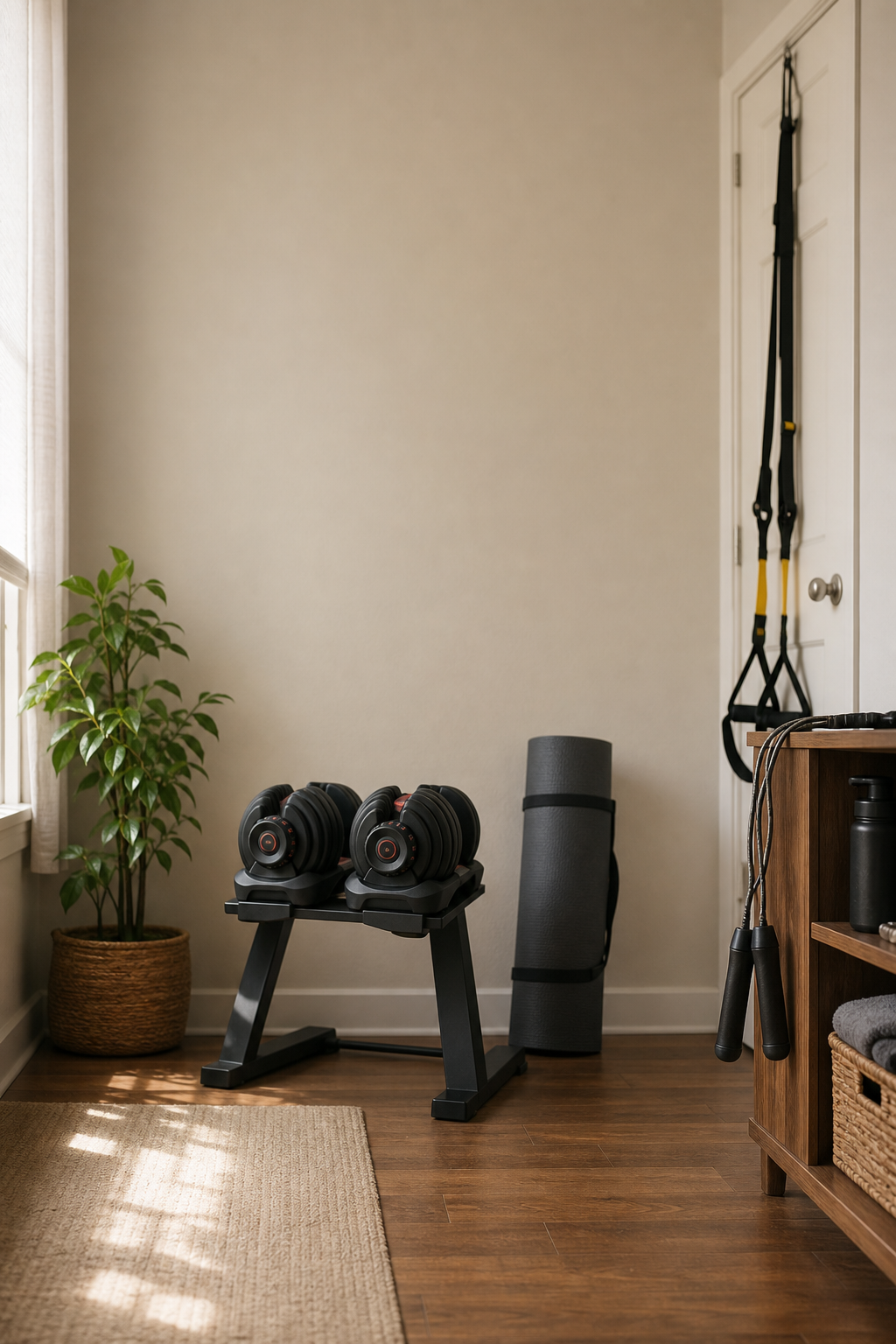
- General fitness / weight loss: Adjustable dumbbells, a jump rope, and a suspension trainer. These cover full-body conditioning, HIIT, and bodyweight work in a small footprint.
- Mobility and recovery: A yoga mat, foam roller, and resistance bands. Low cost, low space, and directly aligned with the goal.
- Cardio endurance: A jump rope ($10–$20) or a budget exercise bike. Avoid cheap treadmills under $500 — they typically have weak motors and short warranties.
Mistake 2: Prioritizing Price Over Construction Quality
The cheapest option on the market is rarely the best value. Understanding a few basic construction metrics can save you from buying equipment that bends, breaks, or becomes unsafe under load.
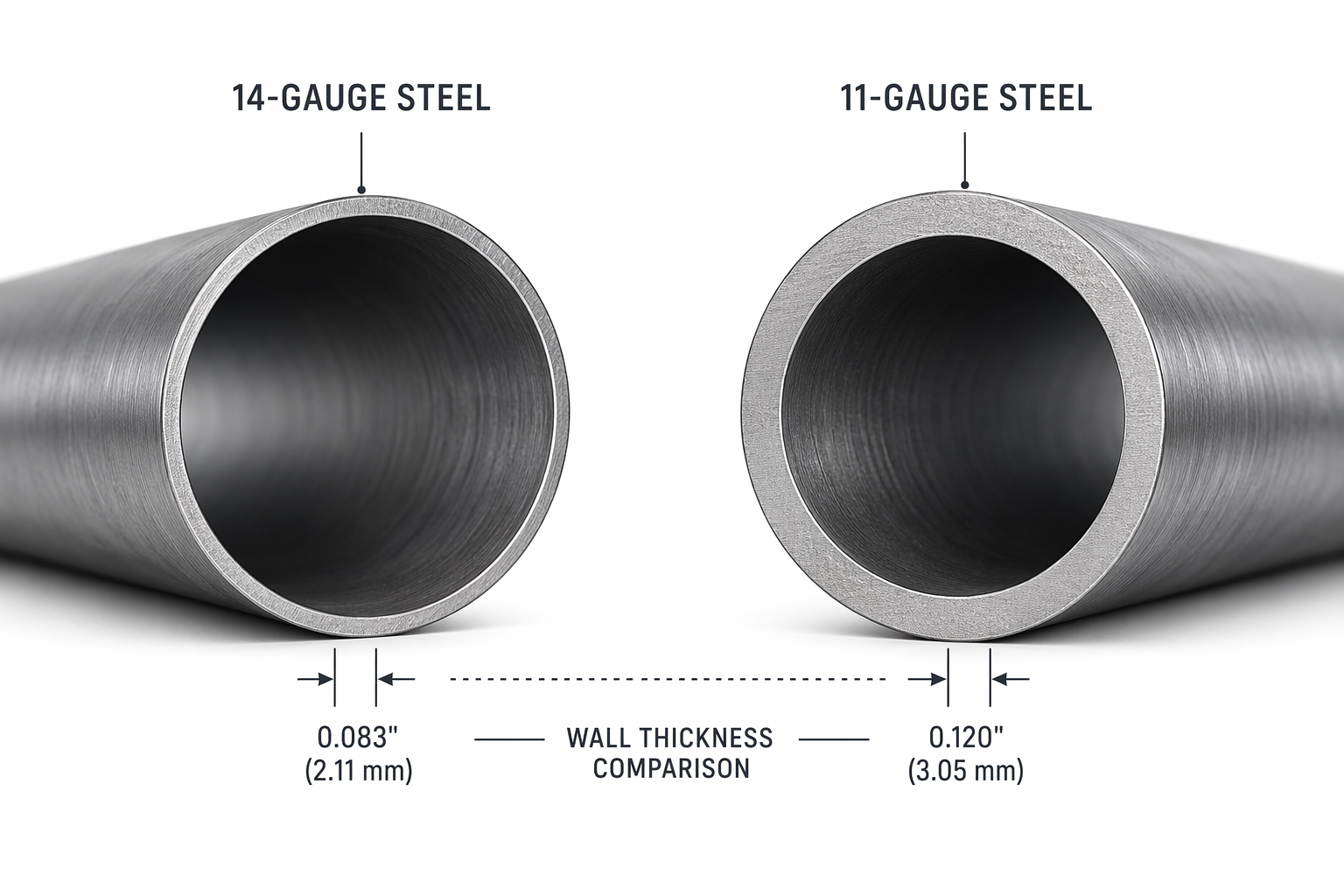
Take power racks as an example. The REP PR-1100 costs $380 and is made from 14-gauge steel with a 700-lb weight capacity. Garage Gym Reviews founder Cooper Mitchell notes that the PR-1100 "is not the same level of quality or durability as the brand's higher-end racks, but it's much cheaper and is a tremendous starter rack." The trade-off is real: 14-gauge steel "won't survive muscle-ups or dynamic movements," and the rack cannot be bolted to the floor. For a beginner doing basic squats and bench press, it's fine. For someone planning to do kipping pull-ups or drop heavy weights from overhead, it's a safety risk.
This result comes from one real apartment under the stated conditions — it is a strong signal, not a guarantee your space will measure identically.
Builds this evidence supports
Cable Machine Alternatives That Save Space and Money
Compare the best cable machine alternatives for home gyms – from resistance bands and pulley systems to suspension trainers and compact digital units – and find the right option for your space and budget.
How to Choose a Compact Home Gym That Works for Your Space, Budget, and Noise Tolerance
This article provides a structured decision framework for apartment dwellers and small-space residents to match their specific floor footprint, noise sensitivity, and budget to the most suitable compact home gym strategy — whether that's an all-in-one machine, modular build, smart digital system, or band/bodyweight setup.
The Garage Gym Reality Check: What Equipment Actually Fits in a Single-Car Garage
Most garage gym guides assume a two-car space. This article uses real dimensions, real equipment footprints, and three layout templates to show what fits—and what doesn't—in a single-car garage (10x20 to 12x20 ft).
Spot something off?
If this result didn't match your own space, let us know — floor-damage and noise claims carry real deposit-risk consequences if we get them wrong.