
Best Space-Saving Home Gym Equipment: Compact, Foldable, and Wall-Mounted Solutions Compared
A product-level comparison of the best compact, foldable, and wall-mounted home gym equipment for apartment dwellers and small-space homeowners. Compare top options by footprint category, including smart all-in-ones, folding racks, and portable systems.
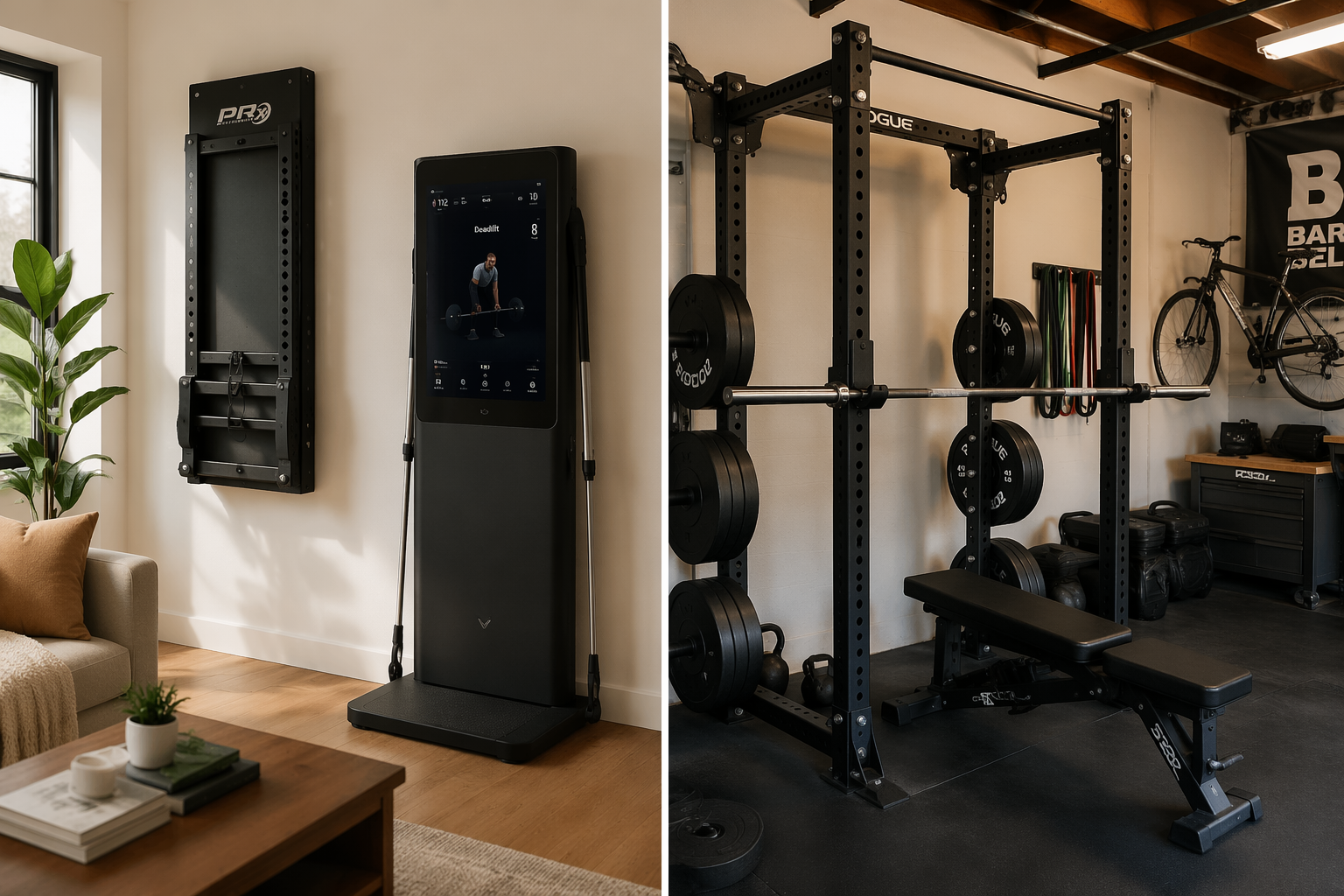
Introduction: Why Space-Saving Equipment Is the Key to a Home Gym in Any Home
The most common reason people give for not owning home fitness equipment is cost. The second most common is space. According to a 2022 Statista survey cited by PTPioneer, 20% of US exercisers who do not own fitness equipment point to a lack of space as the primary barrier. That figure has likely held steady or grown as urban living densities increase and new housing units shrink. The global home gym equipment market, estimated at $12.4 billion in 2025 by Global Market Insights, is seeing a clear trend toward foldable and modular designs specifically to address this constraint.
The good news is that the equipment engineering has caught up with the problem. A new wave of compact all-in-one machines, wall-mounted folding racks, and truly portable resistance systems means you no longer need a spare bedroom or a garage to build a functional home gym. This article compares the best space-saving options by footprint category — compact all-in-ones, foldable racks, and portable systems — so you can match a specific product to your available square footage.
Compact All-in-One Smart Gyms: Speediance Gym Monster vs. Tonal 2
For anyone who wants a complete strength training setup in the smallest possible footprint, compact all-in-one smart gyms are the most compelling category. Two products dominate this space: the Speediance Gym Monster and the Tonal 2. Both deliver full-body resistance training with guided programming, but they approach the space problem from different angles.
Speediance Gym Monster: Foldable Floor Unit
The Speediance Gym Monster is a floor-standing unit that folds when not in use. According to Garage Gym Reviews' testing, its unfolded footprint measures 49.21 inches deep by 28.34 inches wide by 72.83 inches tall. When folded, the depth drops to just 14.96 inches — roughly the depth of a standard bookshelf. This means you can push it against a wall or into a closet between sessions.
The Gym Monster uses digital resistance (electric motor with cable pulleys) and offers a wide range of exercises including chest press, rows, squats, and lat pulldowns. It requires a subscription for full access to its training library and progressive programming. It is best suited for someone who wants a guided, app-driven experience and has enough floor space to leave it unfolded during a workout.
Tonal 2: Wall-Mounted Minimalism
The Tonal 2 takes a fundamentally different approach: it mounts directly to the wall. Its footprint is 21.5 inches wide by 5.25 inches deep by 50.9 inches tall — essentially a slim vertical panel that protrudes only a few inches from the wall. No floor space is consumed during storage or use, which makes it the most space-efficient option in this comparison for anyone who can drill into studs.
Tonal 2 also uses digital resistance (electromagnetic) with a maximum of 200 lbs per arm. Its AI-powered coaching adjusts weight automatically between sets. Like the Gym Monster, it requires a subscription. The trade-off is that you need a suitable wall location with adequate clearance for the arms to extend, and you cannot take it with you if you move — a meaningful consideration for renters.
| Feature | Speediance Gym Monster | Tonal 2 |
|---|---|---|
| Form factor | Floor-standing, folds to 14.96" D | Wall-mounted, 5.25" D |
| Unfolded footprint | 49.21" D x 28.34" W x 72.83" H | 21.5" W x 5.25" D x 50.9" H |
| Resistance type | Digital (motor + cable) | Digital (electromagnetic) |
| Max resistance | 220 lbs (estimated) | 200 lbs per arm |
| Subscription required | Yes | Yes |
| Best for | Users who want a foldable floor unit and can leave it set up during workouts | Users who want zero floor footprint and can mount to wall studs |
This result comes from one real apartment under the stated conditions — it is a strong signal, not a guarantee your space will measure identically.
Builds this evidence supports
Cable Machine Alternatives That Save Space and Money
Compare the best cable machine alternatives for home gyms – from resistance bands and pulley systems to suspension trainers and compact digital units – and find the right option for your space and budget.
How to Choose a Compact Home Gym That Works for Your Space, Budget, and Noise Tolerance
This article provides a structured decision framework for apartment dwellers and small-space residents to match their specific floor footprint, noise sensitivity, and budget to the most suitable compact home gym strategy — whether that's an all-in-one machine, modular build, smart digital system, or band/bodyweight setup.
The Garage Gym Reality Check: What Equipment Actually Fits in a Single-Car Garage
Most garage gym guides assume a two-car space. This article uses real dimensions, real equipment footprints, and three layout templates to show what fits—and what doesn't—in a single-car garage (10x20 to 12x20 ft).
Spot something off?
If this result didn't match your own space, let us know — floor-damage and noise claims carry real deposit-risk consequences if we get them wrong.