
Tonal 2 Home Gym Review: Full Buyer's Guide to Specs, True Cost, and Who It's Actually For
A structured buyer's guide to the Tonal 2 smart home gym covering electromagnetic resistance specs, total cost of ownership over multiple years, AI coaching value, and four buyer profiles that should — and four that shouldn't — commit to this $4,295+ investment.
Quick Verdict and Who This Review Is For
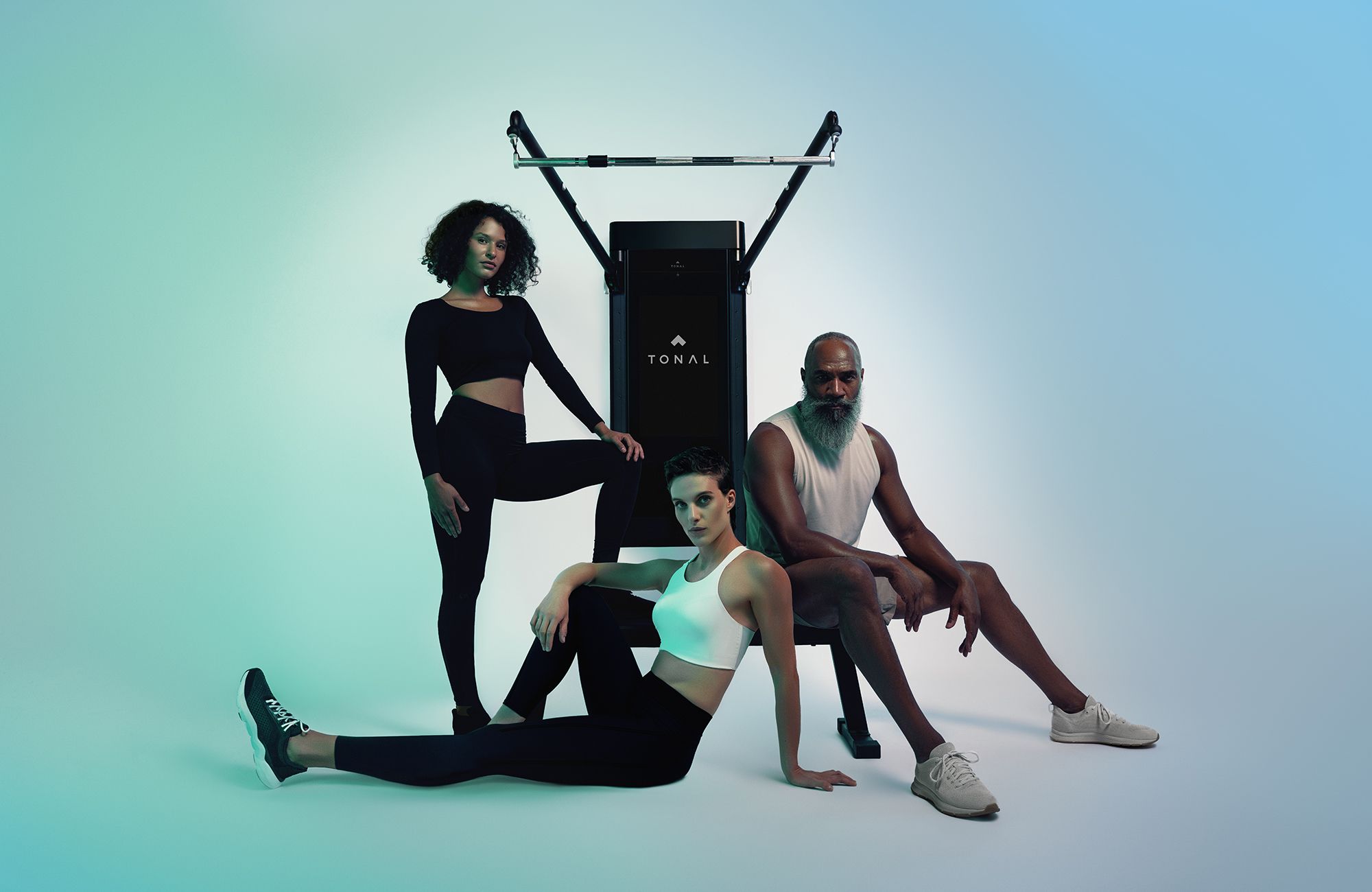
The Tonal 2 is the most capable AI-guided wall-mounted home gym you can buy in 2026. That is not a hedge — it is a specific claim about a specific category. If you want electromagnetic resistance, real-time form coaching, and a machine that fits flush against a wall in under 50 square feet, nothing else matches it on feature depth.
But the Tonal 2 is also a $5,800–$6,060 year-one commitment, not a $4,295 purchase. The mandatory 12-month subscription, professional installation, and recommended accessories push the real entry cost well above the hardware price. Over two years, you are looking at approximately $6,525. Over ten years, the number reaches $12,285 — driven almost entirely by the $59.95/month membership.
This guide is written for intermediate fitness enthusiasts — typically 30 to 50 years old — who are space-constrained and seriously evaluating Tonal as a long-term investment. It covers what generic reviews skip: a transparent total cost of ownership breakdown, an honest Tonal 1 vs. Tonal 2 upgrade delta, and a buyer-profile segmentation framework that tells you directly whether this machine fits your situation.
What Is Tonal and How Does Electromagnetic Resistance Work
Tonal replaces physical weight plates and dumbbells with digitally controlled electromagnetic resistance. Inside the machine's arms, motors generate magnetic force that resists your movement — the amount of force is set by the software and can be adjusted in real time, mid-set, without you touching anything.
The practical result is a wall-mounted unit with no stored plates, no loading, and no storage footprint beyond the machine itself. You get a full cable system — both arms move independently — in a form factor that looks closer to a large flat-screen TV mount than a cable rack.
One mechanical detail matters for setting expectations: Tonal's pulleys operate on a 1:1 resistance ratio. On a traditional cable machine with a 2:1 pulley ratio, selecting 100 lbs on the stack means you only feel 50 lbs of force at the handle. On Tonal, 100 lbs means 100 lbs of force. This makes Tonal's resistance feel comparatively heavier than an equivalent number on a standard cable stack.
Tonal 1 vs. Tonal 2: What Actually Changed
If you are deciding between the current Tonal 2 at $4,295 and the certified refurbished Tonal 1 at $2,495, the upgrade delta matters. Several widely cited reviews — including those from GarageGymReviews and BarBend — were written for the Tonal 1 and still cite the older hardware price ($3,495–$3,995) and subscription cost ($49/month). Those figures do not reflect the Tonal 2.
The confirmed Tonal 2 upgrades, based on the official product page and the CNET review of the new unit, are:
| Feature | Tonal 1 (Refurbished) | Tonal 2 |
|---|---|---|
| Hardware price | $2,495 (certified refurbished) | $4,295 |
| Subscription (monthly) | $59.95/mo (current rate) | $59.95/mo |
| Max resistance | 200 lbs | 250 lbs |
| Built-in camera | No | Yes — Smart View for form feedback |
| Aero HIIT workouts | No | Yes — includes new movement types |
| Weight feel calibration | Standard (felt heavier than selected) | True weight feel calibration |
| Motor control board | Gen 1 | Gen 2 |
| Wi-Fi | 802.11n | 802.11ac 2x2 MIMO |
| Bluetooth | 4.x | 5.1 aptX |
| Warranty | 2-year manufacturer | 2-year manufacturer |
Full Specifications
| Specification | Detail |
|---|---|
| Hardware price | $4,295 (list price as of June 2026) |
| Subscription requirement | 12-month commitment required at purchase; $59.95/month + applicable taxes |
| Installation cost | Starting at $295; varies by location (range: $295–$550) |
| Resistance range | 5–250 lbs (electromagnetic) |
| Resistance ratio | 1:1 (100 lbs selected = 100 lbs felt at handle) |
| Movements in library | 315+ |
| Workout types | 16 |
| Wall space required | 7 ft of unobstructed width |
| Floor space required | 7 × 7 ft (49 sq ft) |
| Ceiling height required | 7 ft 10 in minimum |
| Connectivity | Wi-Fi 802.11ac 2x2 MIMO / Bluetooth 5.1 aptX |
| Camera | Built-in Smart View camera for form analysis |
| Warranty | 2-year manufacturer warranty |
| Return policy | 30-day money-back guarantee (verify at tonal.com — policies may change) |
| HSA/FSA eligibility | Yes, via Truemed — average savings of ~30% for qualified buyers |
| Certified refurbished Tonal 1 | $2,495 |
Key Features Deep-Dive
Five AI Dynamic Weight Modes
Tonal's AI coaching system includes five dynamic weight modes that adjust resistance automatically based on your output. Each serves a different training purpose:
- Spotter: Reduces resistance automatically when your form or output signals fatigue — the equivalent of a training partner stepping in during your last rep. This mode is only available with an active membership.
- Burnout: Progressively reduces weight as you fatigue within a set, extending time under tension beyond what you could hold with a fixed load.
- Chains: Increases resistance as you move through the concentric phase of a lift, mimicking the effect of adding chain weight to a barbell — harder at the top, lighter at the bottom.
- Eccentric: Adds resistance specifically during the lowering phase of a movement, where muscles are strongest. This is difficult to replicate with free weights without a training partner.
- Smart Flex: Adjusts weight in real time throughout a set based on your velocity and output, keeping you in your optimal training zone.
Smart View Camera and Form Feedback
The built-in Smart View camera is a Tonal 2 exclusive — it was not available on the original Tonal. It provides real-time form analysis, flagging issues like bar path drift, asymmetrical loading, or incomplete range of motion during a set. The feedback appears on the touchscreen display during your workout.
For buyers who are training without a coach or partner, this is a meaningful addition. It does not replace an experienced human coach, but it provides a level of form accountability that no other wall-mounted home gym currently offers.
Aero HIIT and Programming Library
Tonal 2 adds Aero HIIT as a new workout category, introducing movement types not available on the original machine — including Aero Pulls, Mini Pulls, Twists, Chops, and Lunges. These expand the machine's range beyond traditional cable exercises into more dynamic, full-body conditioning work.
The full programming library includes 315+ movements across 16 workout types. The AI programming system adapts weights, volume, and progression based on your performance history — this is the core value of the coaching ecosystem and the primary reason the subscription is structured as mandatory.
True Total Cost of Ownership
The $4,295 hardware price is not your real cost. The mandatory 12-month subscription, professional installation, and recommended accessories make the year-one total meaningfully higher — and the subscription compounds every year you continue.
| Cost Component | Amount |
|---|---|
| Hardware (Tonal 2) | $4,295 |
| Accessories (recommended) | $495 |
| Installation (range) | $295–$550 |
| 12-month subscription ($59.95/mo) | $719.40 |
| Year-one total (low estimate) | ~$5,804 |
| Year-one total (high estimate) | ~$6,059 |
| Time Horizon | Tonal 2 Total Cost | Speediance Gym Monster 2 |
|---|---|---|
| Year 1 | ~$5,800–$6,060 | ~$3,689 |
| Year 2 | ~$6,525 | ~$3,689 |
| Year 5 | ~$8,685 | ~$3,689 |
| Year 10 | ~$12,285 | ~$3,689 |
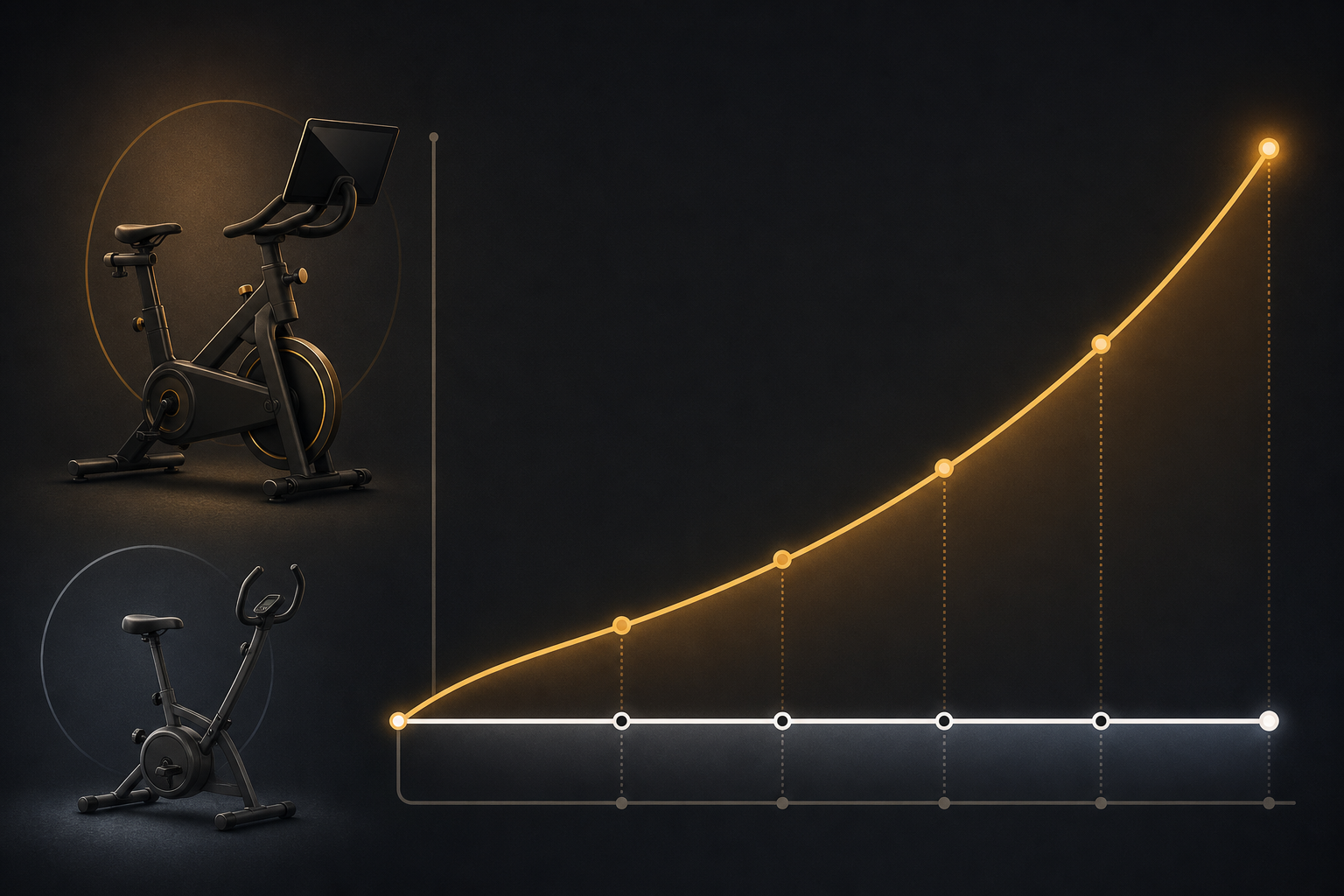
The gap between Tonal and Speediance is not a hardware quality gap — it is a subscription model gap. Over ten years, Tonal costs approximately $12,285 versus Speediance's $3,689. That $8,596 difference is almost entirely the accumulated subscription cost.
HSA/FSA Eligibility and the Refurbished Path
Qualified buyers can use HSA or FSA funds toward a Tonal purchase through Truemed, with an average savings of approximately 30%. For a buyer in a 30% effective tax bracket, this brings the hardware cost closer to $3,000 — a meaningful reduction.
The certified refurbished Tonal 1 at $2,495 is the other cost-reduction path. It carries the same subscription requirement and the same installation process, but the 200 lb resistance ceiling and absence of the Smart View camera are real trade-offs for intermediate-plus lifters. For buyers whose training stays primarily in the 50–180 lb range across upper-body and functional movements, the refurbished Tonal 1 is a legitimate option.
What It's Like to Use: Setup, Installation, and Daily Experience
Tonal uses professional white-glove installation — you do not mount this yourself. A trained installer assesses your wall, mounts the unit, and confirms it is secure before leaving. The process typically takes a few hours.
Wall compatibility is the most critical pre-purchase check. Tonal requires drywall with studs spaced 16 to 24 inches apart. Walls made of concrete, plaster, or stucco thicker than 1.25 inches are not compatible. This is not a minor footnote — at least one CNET reviewer was unable to install the Tonal 1 in her own apartment due to wall material.
For daily use, the experience is built around the touchscreen interface. You select a workout from the class library or let the AI build a session based on your history and goals. The system adjusts weight automatically as you move through sets — adding resistance when you are performing well, backing off when your output signals fatigue. The AI's 17 sensors track force, velocity, and range of motion in real time.
- Space requirements to confirm before purchase: 7 ft of unobstructed wall width, 7×7 ft floor clearance, 7 ft 10 in ceiling height minimum.
- If you move, Tonal charges a relocation fee for reinstallation at the new address.
- The 30-day money-back guarantee runs from the installation date. Verify the current return policy at tonal.com — terms have varied across sources.
- The touchscreen interface and class library are polished and regularly updated. Live classes are available alongside on-demand programming.
Who Should Buy Tonal 2: Four Buyer Profiles
- Consistent high-frequency users (4+ workouts per week). The $59.95/month subscription cost amortizes to roughly $15 per workout at four sessions per week. For households that will genuinely use the machine at that frequency, the AI-guided progressive overload and accountability structure justify the ongoing cost. Occasional users pay the same subscription for far less value.
- Buyers replacing personal training costs. If you are currently paying $60–$120 per personal training session and would switch to Tonal as your primary coaching source, the math shifts significantly in Tonal's favor. The AI coaching, form feedback via Smart View, and progressive programming replace a meaningful portion of what a trainer provides — not all of it, but enough to justify the comparison.
- Space-constrained homeowners with compatible drywall. If you have a 7×7 ft corner of a room, compatible drywall with standard stud spacing, and no plans to move in the near term, Tonal delivers a genuinely complete cable gym in a minimal footprint. No other wall-mounted system matches its feature depth at this form factor.
- Intermediate lifters training primarily in the 50–200 lb range. If your training focuses on upper-body pulling and pushing movements, functional cable work, and conditioning — and you are not primarily a heavy compound barbell lifter — Tonal's resistance range covers your needs well. The 250 lb ceiling is adequate for most intermediate-level cable and functional training.
Who Should Not Buy Tonal 2: Four Profiles to Reconsider
- Renters with concrete, plaster, or stucco walls. If your apartment or condo has walls that do not meet Tonal's stud-spacing and material requirements, installation is not possible. This is a hard stop — not a workaround situation. Confirm wall compatibility before you purchase, not after.
- Occasional or inconsistent exercisers. If you realistically work out one to two times per week, the subscription cost per session becomes difficult to justify. At two sessions per week, you are paying roughly $30 per workout for the coaching ecosystem. A less expensive alternative — including a traditional cable setup or the Speediance Gym Monster 2 with its free lifetime membership — will serve you better.
- Heavy compound lifters who need 300+ lbs for primary movements. Tonal's 250 lb ceiling is a real constraint for intermediate-to-advanced lifters whose training centers on heavy deadlifts, squats, and Romanian deadlifts. Reviewers note that these movements are less satisfying on Tonal than with free weights, and that serious compound lifters will need supplemental training outside the machine. If compound strength is your primary goal, the Vitruvian Trainer+ (440 lbs, floor platform) is a more appropriate tool — though it offers no coaching system.
- Budget buyers who can build a functional cable setup for under $2,000. A functional trainer cable machine, a set of adjustable dumbbells, and a bench can be assembled for $1,200–$1,800 with no ongoing subscription cost. If AI coaching and guided programming are not priorities for you, the $4,000+ hardware price plus mandatory subscription is not justified. The Amp wall-mount system at $1,795 including installation (with a 100 lb ceiling) is another option — viable for beginners, but limited for intermediate-plus lifters.
Competitor Context: Speediance, Vitruvian, and Amp
Three alternatives are worth naming directly. Each serves a different buyer profile, and none of them is a lesser version of Tonal — they are genuinely different tools for different needs.
| Machine | Price | Max Resistance | Subscription | Wall Mount | Best For |
|---|---|---|---|---|---|
| Tonal 2 | $4,295 + $295–$550 install | 250 lbs | $59.95/month (required) | Yes — drywall only | AI coaching depth, space efficiency, intermediate cable training |
| Speediance Gym Monster 2 | ~$3,689–$3,749 | 220–260 lbs | Free lifetime membership | No — portable, floor-based | Cost-sensitive buyers, renters, long-term value |
| Vitruvian Trainer+ | ~$3,000 | 440 lbs | Subscription included | No — flat floor platform | Advanced strength athletes needing high resistance ceiling |
| Amp | $1,795 (includes install) | 100 lbs | $23/month | Yes | Budget-conscious beginners; limited for intermediate-plus lifters |
Speediance Gym Monster 2 is the primary alternative for cost-sensitive buyers and renters. Its free lifetime membership eliminates the subscription gap entirely — the 3x long-term cost difference between Tonal and Speediance is subscription-driven, not hardware-driven. Speediance is also portable and requires no wall mount, making it usable in apartments where Tonal installation is impossible. Verify current Speediance pricing before purchasing — figures from different sources range from $3,689 to $3,749.
Vitruvian Trainer+ is the right choice for advanced strength athletes who need a resistance ceiling above 250 lbs. At 440 lbs of resistance on a flat floor platform, it handles heavy compound pulling and pressing that Tonal cannot. The trade-off is the absence of a coaching system — Vitruvian does not offer guided programming or AI weight adjustment. It is a high-resistance training tool, not a coaching platform.
Amp is the budget wall-mount option at $1,795 including installation. Its 100 lb resistance ceiling is a genuine constraint for anyone beyond the beginner level — intermediate lifters will hit the ceiling quickly on pulling and pressing movements. It is viable for beginners who want a low-cost wall-mounted cable system with light coaching features.
Frequently Asked Questions
- Can you use Tonal without a subscription? Yes, but you lose Spotter mode, AI coaching, all guided programming, and most tracking features. What remains is a functional cable machine capable of basic self-programmed exercises. The 12-month subscription commitment is required at purchase — you cannot buy the hardware without it.
- What walls are compatible with Tonal? Drywall with studs spaced 16 to 24 inches apart. Concrete, plaster, and stucco walls thicker than 1.25 inches are not compatible. Confirm your wall type before purchasing — Tonal's installation team can help assess compatibility.
- Is the certified refurbished Tonal 1 worth considering? At $2,495, it is a meaningful budget path — $1,800 less than the Tonal 2. The real trade-offs are the 200 lb resistance ceiling (vs. 250 lb) and the absence of the Smart View camera. For buyers whose training stays primarily in the 50–180 lb range and who do not need real-time form feedback, the refurbished Tonal 1 is a legitimate option.
- What is the return policy? The official Tonal product page confirms a 30-day money-back guarantee. Note that some sources cite a 90-day figure — the official page is the authoritative reference, and policies may change. Verify before purchasing.
- Can HSA or FSA funds be used? Yes. Tonal is eligible for HSA/FSA purchase through Truemed, with an average savings of approximately 30% for qualified buyers. This effectively reduces the hardware cost to around $3,000 for buyers in a 30% effective tax bracket.
- What happens if I move? Tonal charges a relocation fee for reinstallation at a new address. Wall compatibility at the new location must also be confirmed before the move. Renters who move frequently should factor this into the total cost of ownership.
This result comes from one real apartment under the stated conditions — it is a strong signal, not a guarantee your space will measure identically.
Builds this evidence supports
Cable Machine Alternatives That Save Space and Money
Compare the best cable machine alternatives for home gyms – from resistance bands and pulley systems to suspension trainers and compact digital units – and find the right option for your space and budget.
How to Choose a Compact Home Gym That Works for Your Space, Budget, and Noise Tolerance
This article provides a structured decision framework for apartment dwellers and small-space residents to match their specific floor footprint, noise sensitivity, and budget to the most suitable compact home gym strategy — whether that's an all-in-one machine, modular build, smart digital system, or band/bodyweight setup.
The Garage Gym Reality Check: What Equipment Actually Fits in a Single-Car Garage
Most garage gym guides assume a two-car space. This article uses real dimensions, real equipment footprints, and three layout templates to show what fits—and what doesn't—in a single-car garage (10x20 to 12x20 ft).
Spot something off?
If this result didn't match your own space, let us know — floor-damage and noise claims carry real deposit-risk consequences if we get them wrong.