
Best Fitness Trackers for Home Workouts: Tiered Picks and Real Subscription Costs for 2026
Most tracker roundups rank devices by GPS and outdoor accuracy — neither of which matters much if you train at home. This guide organizes 2026's best fitness trackers into three budget tiers based on what actually counts for indoor workouts: recovery and sleep tracking depth, heart rate accuracy during strength and cardio sessions, and the full subscription cost most buyers don't see until after purchase.
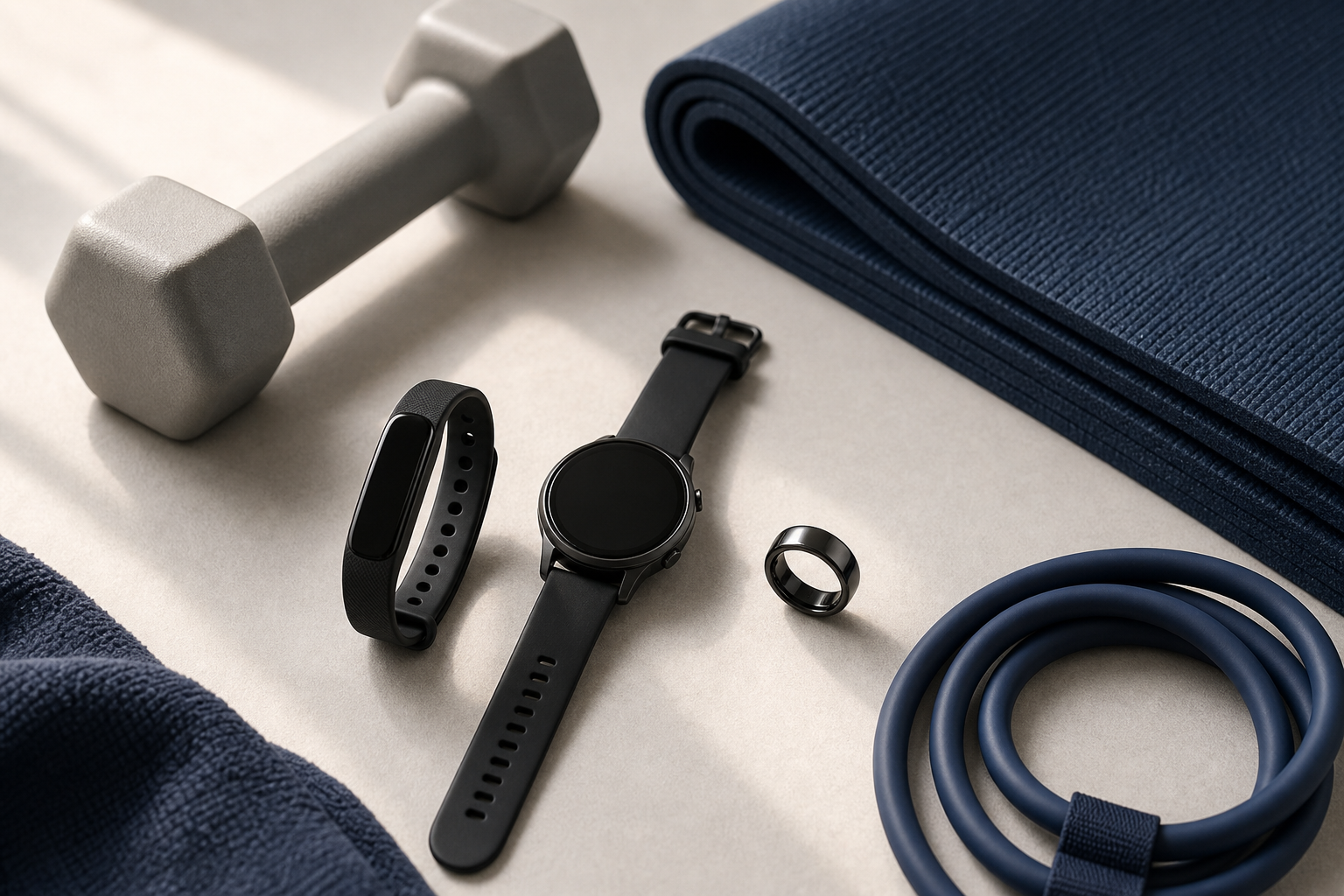
Why Standard Tracker Roundups Miss the Home Gym Buyer
Most fitness tracker reviews are built around a specific test protocol: strap on the device, go for a run, compare GPS route accuracy and heart rate against a chest strap. The top picks in those roundups are optimized for outdoor athletes — runners, cyclists, hikers — who need precise route mapping and reliable HR readings at 80%+ intensity on a flat track.
If you train at home, almost none of that applies. You're doing strength sets, HIIT circuits, yoga flows, or indoor cycling. You don't need onboard GPS. You need a device that accurately reads your heart rate during a deadlift set, tells you whether last night's sleep was genuinely restorative, and doesn't quietly add $200 a year to your total cost after you've already bought it.
That reframing changes the entire comparison. Devices that rank highly on outdoor run tests may perform poorly during weightlifting. Devices with no subscription look expensive upfront but cost far less over two years than subscription-dependent alternatives. And form factor — whether you're wearing a ring, a band, or a watch — has real consequences for sensor contact during a barbell squat.
What Actually Matters When You Train Indoors
Four criteria drive most of the value you'll get from a fitness tracker as a home gym user. GPS precision isn't one of them.
- Recovery and sleep tracking depth. For home gym users who train consistently, the most actionable daily data isn't step count — it's whether your body is ready to train hard or needs an easier day. Readiness scores, HRV trends, sleep stage breakdowns, and resting heart rate trends are the metrics that change behavior.
- Heart rate accuracy during indoor workouts. Optical wrist sensors perform reasonably well during steady-state cardio but struggle during strength training. This is a real limitation, not a minor footnote — more on this in the accuracy section below.
- Battery life relative to your charging routine. A device that needs nightly charging will miss sleep data. A device with 14+ day battery means you charge it once every two weeks and forget about it. Match battery life to how often you're willing to take the tracker off.
- Total ownership cost including subscriptions. A $99 device with a $199/year subscription costs more than a $350 ring with a $70/year subscription after two years. Most roundups bury this math. This guide surfaces it explicitly.
GPS, outdoor sport profiles, altitude tracking, and route navigation are secondary or irrelevant for most home gym users. If you occasionally run outside, connected GPS via your phone covers that need at any price tier.
Key Decisions Before You Buy: Form Factor, Platform, and Subscription Model
Before comparing specific devices, three structural decisions narrow your options significantly.
Form Factor: Band, Watch, or Ring
Slim bands (Fitbit Inspire 3, Fitbit Air, Xiaomi Smart Band 10) are lightweight, unobtrusive, and easy to sleep in. The trade-off is a smaller display or no display, and the thin band design can contribute to light leakage in the optical sensor during weightlifting.
Watch-style trackers (Garmin Vivoactive series, Apple Watch SE 3, Garmin Venu Sq 2) offer richer on-wrist displays and more workout modes but are bulkier. During barbell work, a watch face can press against equipment or shift on your wrist, affecting sensor contact.
Rings (Oura Ring 4) eliminate wrist interference entirely during lifting. The ring sits on your finger, away from the barbell, and the sensor maintains consistent skin contact. For sleep tracking specifically, many users find a ring more comfortable than any wrist device. The trade-off is no on-device display and a required subscription for full feature access.
Platform Compatibility
Most trackers work with both iOS and Android. Two important exceptions: the Apple Watch is iOS-only — it will not pair with an Android phone. The Samsung Galaxy Fit3 is primarily optimized for Android and Samsung devices. If you use an iPhone, the Samsung Galaxy Fit3 is effectively off the table. If you use an Android phone, the Apple Watch is off the table.
Subscription Model: What You're Actually Committing To
This is the decision that most buyers don't fully evaluate until after purchase. The spectrum runs from fully free (Garmin Connect, Xiaomi Mi Fitness) to optional-but-useful (Fitbit/Google Health Premium) to required-for-core-features (Oura Ring) to device-included-but-subscription-required (Whoop).
| Device | Subscription | Cost | Required for core features? |
|---|---|---|---|
| Fitbit Inspire 3 | Fitbit Premium (optional) | $10/mo or $99/yr | No |
| Fitbit Air | Google Health Premium (optional) | $10/mo or $99/yr | No |
| Xiaomi Smart Band 10 | None | $0 | N/A |
| Samsung Galaxy Fit3 | None | $0 | N/A |
| Fitbit Charge 6 | Fitbit Premium (some features) | $10/mo or $99/yr | Partial |
| Garmin Vivoactive 5/6 | Garmin Connect (free) | $0 | N/A |
| Garmin Vivosmart 5 | Garmin Connect (free) | $0 | N/A |
| Apple Watch SE 3 | None for core features | $0 | No |
| Garmin Venu Sq 2 | Garmin Connect (free) | $0 | N/A |
| Whoop 5.0 | Whoop membership (device included) | $199–$359/yr | Yes |
| Oura Ring 4 | Oura membership | $70/yr or $6/mo | Yes |
Tier 1: Best Fitness Trackers Under $100
Sub-$100 trackers cover the practical needs of most home gym users: heart rate monitoring, sleep tracking, workout detection, and a daily readiness or recovery score. The gap between these devices and $300+ options is narrower than most roundups suggest.
Fitbit Inspire 3 — Best Beginner Pick
Around $93–$99, the Inspire 3 is the most accessible entry point in the Fitbit lineup. It has a color AMOLED touchscreen, 8–10 day battery life, heart rate monitoring, SpO2, sleep tracking, stress management scoring, and connected GPS via your phone for occasional outdoor use. Fitbit Premium is optional — core tracking features work without it.
In testing by Wirecutter, the Inspire 3 showed strong step-count accuracy and real-world battery life of 8.5 days. It's lightweight at 0.32 oz, which matters for all-day and overnight wear. For someone buying their first tracker, it's a low-risk entry that integrates with the Google Health ecosystem if you later upgrade.
Fitbit Air — Best New Screenless Option
The Fitbit Air launched May 26, 2026, at $99 with no subscription required for core features. It's a screenless band — the sensor pebble detaches for charging, and a 5-minute charge delivers roughly a day of use. Full charge gives 7 days of battery life.
The Air tracks heart rate, HRV, SpO2, skin temperature, sleep stages, and training load (Cardio Load). It also includes FDA-certified background AFib detection and a Daily Readiness score. PCMag rated it 4.5 Outstanding with an Editors' Choice designation, noting highly accurate heart rate and sleep tracking and a well-organized app with Gemini-powered health coaching.
For home gym users, the Fitbit Air is particularly interesting because it brings screenless recovery-focused tracking — previously only available via Whoop at a much higher ongoing cost — to a one-time $99 purchase. Google Health Premium (optional) adds AI coaching at $10/month or $99/year, but the free tier covers the fundamentals.
Xiaomi Smart Band 10 — Best Battery Life Under $60
At around $53, the Xiaomi Smart Band 10 offers 14–21 day battery life, an AMOLED screen, and over 100 workout modes with no subscription required. For users who dislike charging routines, the battery life alone justifies the trade-offs.
The trade-offs are real: the Mi Fitness app is less polished than Fitbit or Garmin Connect, and the device lacks ECG, blood pressure, skin temperature, barometer, or HRV sensors. Heart rate and sleep tracking cover the basics but won't give you the recovery depth of higher-tier options. Wareable describes it as offering "90% of the features for 30% of the price" — accurate for basic tracking, less so for recovery-focused users.
Samsung Galaxy Fit3 — Budget Option, Android Only
The Galaxy Fit3 costs around $43 with no subscription, accurate HR tracking, and 7.5-day battery life. It's a legitimate budget option — but only if you use an Android device. iPhone users should skip it entirely. This is a hard compatibility constraint, not a minor caveat.
Tier 2: Best Fitness Trackers $100–$200
The mid-range is where the Garmin Connect advantage becomes meaningful. Garmin's platform is free and comprehensive — Body Battery scores, sleep coaching, stress tracking, and HRV data are all available without a subscription. That changes the total ownership math significantly compared to Fitbit's Premium-dependent features.
Fitbit Charge 6 — Best for Gym Equipment Integration
The Fitbit Charge 6 runs $127–$150 and adds built-in GPS, ECG, EDA (electrodermal activity for stress), and 40 exercise modes including strength training, yoga, and cycling. Its standout feature for home gym users is Bluetooth HR broadcast — it can connect to compatible workout machines (including Peloton bikes and some treadmills) and display your heart rate directly on the equipment screen.
Some features require Fitbit Premium. With the Fitbit Air now available at $99 with overlapping sleep and recovery features, the Charge 6 makes most sense for users who specifically want the gym equipment HR broadcast or the built-in GPS for occasional outdoor runs.
Garmin Vivoactive 5 / 6 — Best All-Around Mid-Range
The Garmin Vivoactive 5 is available around $200 with an AMOLED display, up to 11-day battery life, accurate heart rate, in-depth sleep and stress coaching with nap detection, and onboard music storage. Garmin Connect is free and covers all of these features without a subscription — a significant advantage over Fitbit's tiered model.
The Vivoactive 6 appears in some 2026 roundups as Garmin's updated version. Verify current specs and pricing directly on Garmin's product page before purchasing — the Vivoactive 5 is the more thoroughly reviewed option at time of writing.
Garmin Vivosmart 5 — Best No-Subscription Band
At around $150, the Garmin Vivosmart 5 is a slim band with a narrow monochrome OLED display, connected GPS via phone, Body Battery score, HRV tracking, and full Garmin Connect access at no additional cost. Engadget notes that the $150 upfront investment unlocks everything the device can do — no paywalled features. It syncs with both Apple Health and Google Health and works on iOS and Android.
For users who want a slim band with Garmin's data depth and no ongoing costs, the Vivosmart 5 is the most straightforward choice in this tier.
Tier 3: Best Fitness Trackers $200 and Up
Premium trackers offer more advanced recovery metrics, deeper sleep analysis, and in some cases subscription-based coaching platforms. The honest framing: for most home gym users at beginner to intermediate level, the practical difference between a $150 Garmin and a $349 Oura Ring is narrower than the price suggests. These devices make the most sense for users who will actively engage with the data every day.
Apple Watch SE 3 — Best for iPhone Users Who Want a Full Smartwatch
At around $239, the Apple Watch SE 3 offers an always-on display, strong workout tracking across a wide range of exercise types, and no subscription required for core health and fitness features. It uses the same processor as the Series 11. The tested battery life is approximately 46 hours — which means daily or near-daily charging. If you want to track sleep, you'll need to build a charging window into your routine.
The iOS-only limitation is absolute. If you use Android, this device is not an option regardless of its other qualities.
Garmin Venu Sq 2 — Best GPS Watch with Free Platform
The Garmin Venu Sq 2 runs around $249 with an AMOLED display, 8–9 day battery life, integrated GPS, and the full Garmin Connect platform at no cost. For users who want a capable GPS watch with strong sleep and recovery data and no subscription, it's the cleanest option in this price range.
Whoop 5.0 — Best Recovery Data, Highest Ongoing Cost
Whoop 5.0 is device-free but requires a membership: $199/year (One), $239/year (Peak), or $359/year (Life). The device has no screen — all data is viewed through the Whoop app. Battery life is 14–16 days in testing.
Whoop's recovery and sleep data is genuinely best-in-class for users who engage with it seriously. It tracks strain, recovery, sleep debt, HRV, and recommended bedtimes. For strength training specifically, Whoop supports logging individual exercises including back squat and bench press. Wearing the sensor on the bicep rather than the wrist improves HR accuracy during lifts — a meaningful option for home gym users.
Oura Ring 4 — Best for Sleep Tracking and Lifting Comfort
The Oura Ring 4 starts at $349 for the device plus a $69.99/year or $5.99–$6/month subscription. Battery life is approximately 7 days in testing. The ring tracks heart rate, HRV, SpO2, skin temperature, sleep stages, stress, and activity, presenting all of it through a Readiness Score and detailed overnight sleep breakdown.
For home gym users specifically, the ring form factor has a practical advantage: it doesn't interfere with barbell grips, pull-up bars, or dumbbell handles the way a wrist tracker can. CNET notes that ceramic Oura Ring models are scratch-resistant, which matters for weightlifting. Sleep tracking is the Ring's strongest suit — the granular overnight data (sleep efficiency, latency, restfulness, HRV, breathing regularity, resting HR, SpO2) is more accessible in the Oura app than in Whoop's.
An Oura Ring 5 is available at $399 with the same subscription model, but detailed spec comparisons between Ring 4 and Ring 5 were limited at time of writing. If you're considering the Ring 5, verify the spec differences directly on Oura's website before paying the premium.
Total Ownership Cost: What You'll Actually Pay Over Two Years
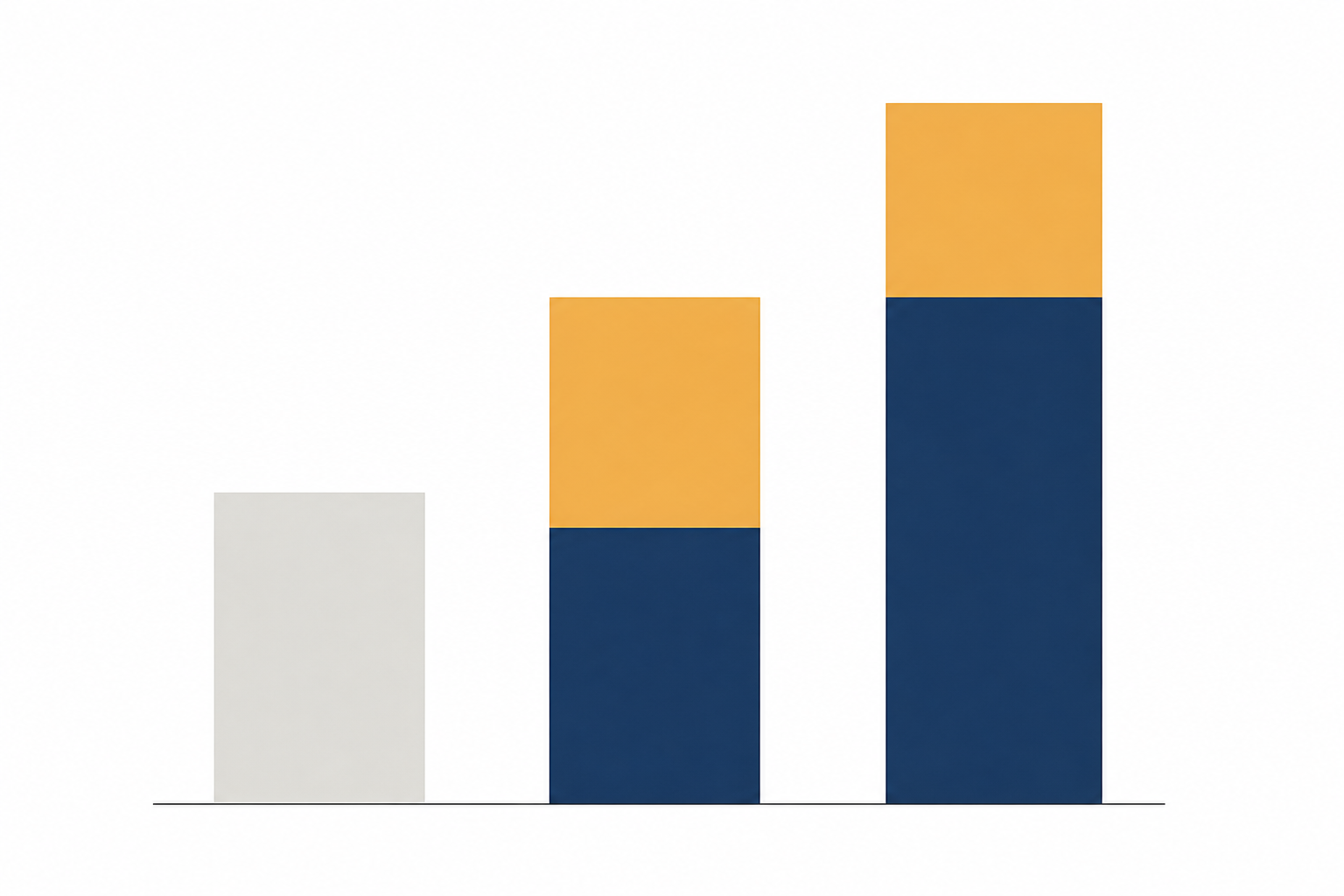
The subscription cost math is the most important comparison most roundups skip. Here's what each recommended device actually costs over one and two years, using the free tier where available and the standard subscription where required.
| Device | Device Cost | Subscription (annual) | 1-Year Total | 2-Year Total |
|---|---|---|---|---|
| Fitbit Air (free tier) | $99 | $0 | $99 | $99 |
| Fitbit Air (with Premium) | $99 | $99 | $198 | $297 |
| Xiaomi Smart Band 10 | $53 | $0 | $53 | $53 |
| Samsung Galaxy Fit3 | $43 | $0 | $43 | $43 |
| Fitbit Inspire 3 (free tier) | $99 | $0 | $99 | $99 |
| Garmin Vivosmart 5 | $150 | $0 | $150 | $150 |
| Garmin Vivoactive 5 | $200 | $0 | $200 | $200 |
| Garmin Venu Sq 2 | $249 | $0 | $249 | $249 |
| Apple Watch SE 3 | $239 | $0 | $239 | $239 |
| Oura Ring 4 | $349 | $70 | $419 | $489 |
| Whoop 5.0 (One tier) | $0 | $199 | $199 | $398 |
| Whoop 5.0 (Peak tier) | $0 | $239 | $239 | $478 |
| Whoop 5.0 (Life tier) | $0 | $359 | $359 | $718 |
The pattern is clear: devices without subscriptions (Garmin lineup, Xiaomi, Samsung Galaxy Fit3, Fitbit Air on the free tier) cost exactly what you pay at purchase. Subscription-dependent devices compound over time. A PCMag comparison of Oura Ring 4 and Whoop 5.0 found that costs are roughly equivalent after two years, but the Oura advantage grows the longer you own it — after three years, Oura at the Ring 4 price point costs less than Whoop at any tier.
Heart Rate Accuracy During Strength Training: What the Data Shows
Optical wrist sensors work by shining light into your skin and measuring blood flow changes. During steady-state cardio — running at a consistent pace, cycling at a steady effort — this method is reasonably reliable. During strength training, it becomes significantly less so.
Three factors cause the degradation during lifting: arm movement artifacts from gripping and moving weights, light leakage between the sensor and skin when the band shifts position, and cadence lock (where the sensor mistakenly reads movement cadence as heart rate). The result is readings that can overshoot or undershoot actual heart rate by meaningful margins.
DC Rainmaker's review of the Fitbit Air directly observed that at lower intensities during strength sessions, heart rate readings were "a bit more variable" — with occasional overshooting that distorted Cardio Load calculations. This isn't unique to the Fitbit Air; it's a known limitation of wrist-based optical sensors across the category.
For home gym users who need precise heart rate data during strength sessions — for example, to accurately calculate training zones or monitor cardiovascular response during high-rep work — a chest strap HR monitor (such as the Polar H10, which is used as the accuracy control in most serious tracker reviews) or a bicep-worn tracker provides meaningfully better accuracy than any wrist-based optical sensor.
For users who primarily want recovery scores, sleep data, and general activity tracking — and who treat strength training HR as directional rather than precise — wrist-based sensors are adequate. The limitation matters most if you're using HR data to make specific training decisions during a lift.
Frequently Asked Questions
Fitbit vs. Garmin for home gym use — which is better?
It depends on what you value. Fitbit's strength is its app experience and AI coaching — the Google Health integration and Gemini coaching in Fitbit Premium are consistently rated as more accessible and motivating than most alternatives. Garmin's strength is its free platform: Garmin Connect provides Body Battery scores, HRV tracking, sleep coaching, and stress data without any subscription. If you want to avoid ongoing costs entirely, Garmin wins on total ownership math. If you want the best app experience and don't mind optional Premium costs, Fitbit is competitive.
What's the best tracker for sleep and recovery?
For users who want maximum sleep and recovery data depth and are willing to pay ongoing subscription costs: the Oura Ring 4 and Whoop 5.0 are the two best options. The Oura Ring 4 presents granular overnight sleep data more accessibly; Whoop is more prescriptive about training recommendations. Both require subscriptions. For users who want strong recovery data without a subscription, the Fitbit Air (free tier) and Garmin Vivosmart 5 cover the fundamentals well.
What's the best tracker specifically for strength training?
No wrist-based optical tracker delivers precise HR data during heavy lifting — acknowledge that limitation upfront. For strength-focused home gym users, the most useful tracker features are recovery scores (to know when to push vs. recover), sleep tracking, and HRV trends. The Oura Ring 4 has a practical advantage here: the ring form factor doesn't interfere with barbell grips or pull-up bars. Whoop 5.0 worn on the bicep also improves HR accuracy during lifts. For users who want a screen and workout logging, the Garmin Vivoactive 5 or Venu Sq 2 track strength training sessions and provide recovery data without a subscription.
Subscription vs. no subscription — is it worth paying ongoing?
For most home gym users at beginner to intermediate level: no. The Garmin lineup and Fitbit Air on the free tier cover recovery scores, sleep tracking, HRV, and workout detection without any ongoing cost. Subscriptions make sense if you actively use coaching features daily, want the deepest possible sleep analysis, or are training at a level where marginal recovery data changes your decisions. If you're unsure whether you'll engage with that depth of data, start with a no-subscription device and upgrade later.
Is a smart ring worth it for home gym users?
The Oura Ring 4 makes a reasonable case for home gym users specifically. The ring form factor eliminates wrist interference during lifting, the sleep tracking is among the best available, and the Readiness Score is genuinely useful for training decisions. The required subscription ($70/year) is lower than Whoop's. The trade-off is no on-device display and a $349+ upfront cost. If sleep and recovery data is your primary use case and you're willing to check your phone for workout metrics, the Ring 4 is a strong option. If you want on-wrist workout data or a display, a watch or band makes more practical sense.
This result comes from one real apartment under the stated conditions — it is a strong signal, not a guarantee your space will measure identically.
Builds this evidence supports
No build currently links to this specific test. Browse all builds with a matching tag.
Spot something off?
If this result didn't match your own space, let us know — floor-damage and noise claims carry real deposit-risk consequences if we get them wrong.