
How one runner trained for Badwater 135 at age 60
Rick Yelverton finished the 135-mile Badwater ultramarathon at age 60. This article shares his actual training protocols—daily heat sessions, pacing discipline, fueling strategies, and recovery techniques—showing that age is not the barrier many assume it is.
- Citation source
- iRunFar
- Evidence level
- restrained inference
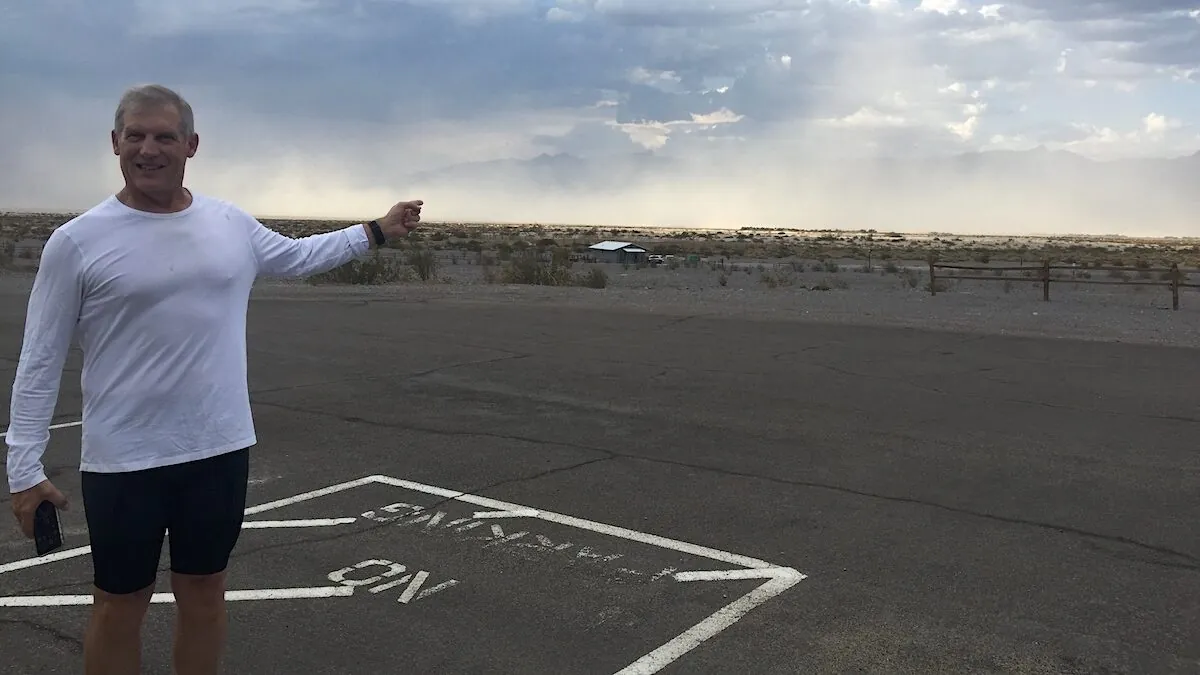
Badwater 135 began for Rick Yelverton in the kind of weather that makes normal race language feel too tidy: a sandstorm at 117°F, then 135 miles across a course built to punish heat management as much as leg strength. He was 60 years old, entering Badwater for the first time, and he finished in 40 hours 15 minutes, 44th out of 68 finishers.[1]
That result is easy to flatten into an age story. It is more useful as a training story. The question is not whether a 60-year-old can be tough. Plenty are. The question is what kind of preparation made it plausible for one specific runner to keep moving when the race stopped rewarding enthusiasm and started rewarding systems.
The load-bearing part of the training was heat
Yelverton’s most striking preparation was not a mileage number. It was the daily heat exposure. During the final month before Badwater, he spent 90 minutes a day in a sauna heated to 170°F, after building up to that duration gradually.[1]
That detail matters because Badwater does not merely ask whether a runner can cover 135 miles. It asks whether the runner can make decisions, digest calories, manage effort, and stay functional while heat keeps adding cost to every mistake. In that setting, heat acclimation is not decoration around the training plan. For Yelverton, it was central work.
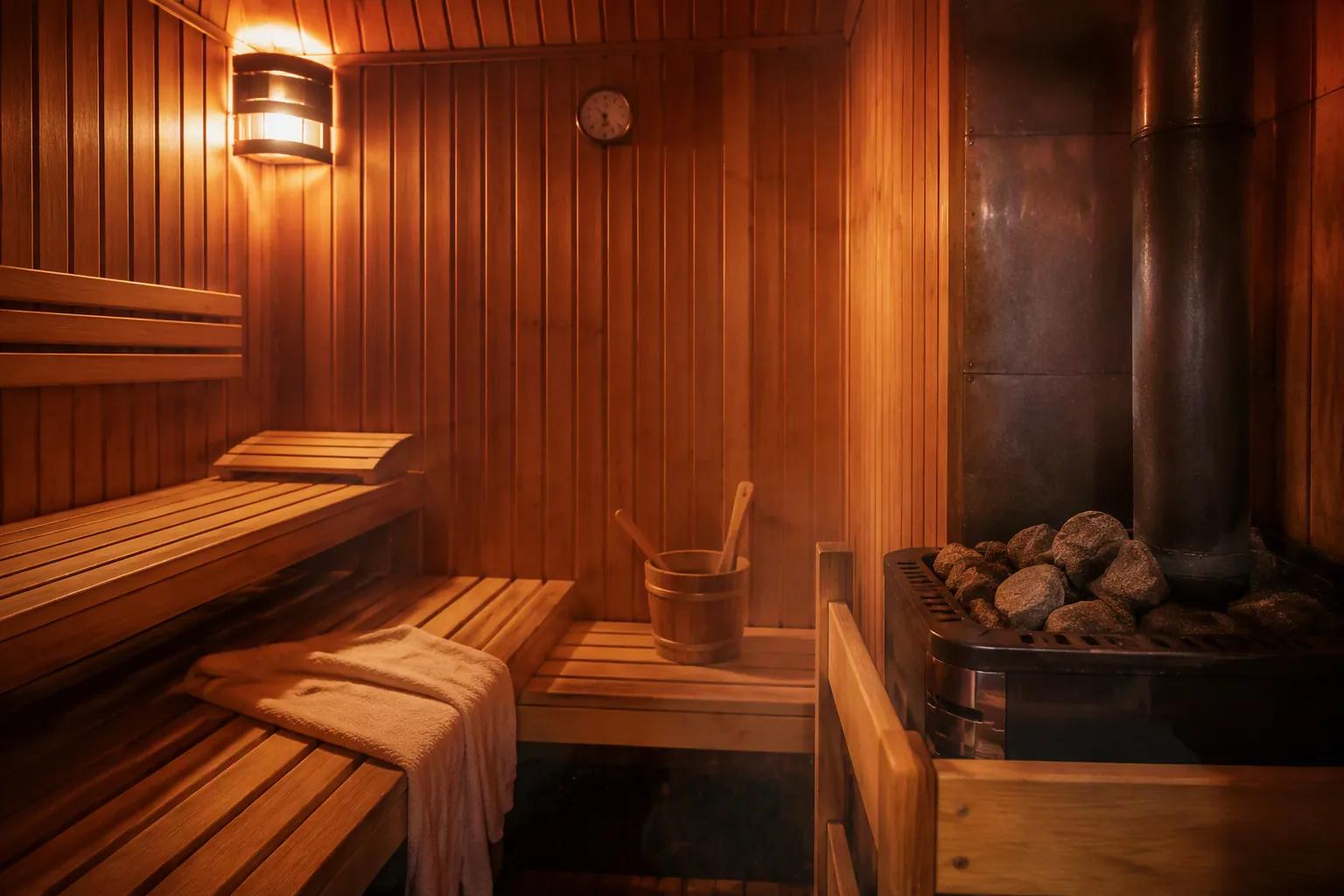
It is also the part most worth slowing down over. A 170°F sauna for 90 minutes is an unusually aggressive individual protocol, not a general prescription. The evidence here supports what Yelverton did, not what every runner should do. Sauna tolerance varies, medical risk varies, and the 170°F, 90-minute routine goes beyond the 15-to-45-minute, lower-temperature range often seen in common heat-acclimation guidance.[1]
The useful lesson is narrower and stronger: his heat work was specific, repeated, and built gradually. It addressed the main environmental problem of the race rather than relying on hope that general fitness would transfer. That distinction matters for older runners especially, because “be careful in the heat” is too vague to train from, while “practice controlled heat exposure progressively” is at least a real problem-solving approach.
He trained for the course he did not have
Yelverton lived in Mississippi, which meant he did not have Badwater’s climbs sitting outside his door. His workaround was blunt: he hiked on a treadmill set at a 15% grade because Mississippi had no hills to match the race demands.[1]
There is no romance in that image, which is probably why it is so useful. A treadmill at 15% grade does not make a desert mountain, and it does not make Death Valley. But it does force the athlete to practice the mechanical reality of climbing: slower cadence, longer time under tension, different muscular fatigue, and the humility of hiking when hiking is the correct tool.
This is where the training starts to look less like a fantasy about overcoming limits and more like an inventory of constraints. No local hills? Manufacture grade. Racing in extreme heat? Practice heat exposure. Entering a long event where running every step would be foolish? Train the walking that will keep the finish alive.
After mile 42, the race became a pacing problem
The most disciplined number from Yelverton’s race may be 18 minutes. After mile 42, he averaged 18-minute miles.[1] That is not the kind of pace people put on posters, but at Badwater it can be the difference between managed suffering and a long unraveling.
Holding back that early can feel wrong to runners who measure fitness by what they can do while fresh. But mile 42 of a 135-mile race is not late. It is the point where impatience still has plenty of time to collect interest. Yelverton’s conservative movement protected the finish by reducing the number of problems he had to solve at once.
| Race demand | Yelverton’s response |
|---|---|
| Extreme starting heat | Final-month daily sauna exposure, built gradually |
| Long climbs without local terrain | Treadmill hiking at 15% grade |
| Late-race breakdown risk | 18-minute-mile average after mile 42 |
| Sleep pressure | Five-minute power naps every few hours |
| Foot damage over 135 miles | Sock changes every 20-25 miles with foot powder |
This is the part of a Badwater 135 runner interview that deserves more attention than the heroic adjectives. Pacing discipline is not merely going slow. It is choosing a pace that leaves enough room for heat, digestion, foot care, sleep debt, crew stops, and the simple fact that the body will not negotiate honestly after a full day on the road.
Fueling was simple because the job was simple
Yelverton used mini cans of Coke, each 90 calories, along with potato chips. Earlier in the race, he also used Ensure and Skratch.[1] None of that sounds like a laboratory-perfect nutrition strategy, and it should not be treated as one. It sounds like a runner matching calories, salt, fluid, and tolerance to a race where eating can become a negotiation.
The point is not that Coke and chips are universally ideal. The point is that his fueling had to keep him moving. In an event this long, a food choice that works reliably can be more valuable than a more impressive plan that fails when heat, fatigue, or nausea arrive.
The naps were short enough to serve the race
Yelverton took five-minute power naps every few hours. In the interview, the pattern was described almost comically: he could fall asleep instantly, then spring up when touched.[1] That kind of sleep behavior is not a lifestyle hack; inside a 40-hour race, it is maintenance.
The restraint matters. Long stops can cool ambition into stiffness. No stops can turn fatigue into bad decisions. Five minutes gave him a small reset without letting the race drift away from him.
Foot care stayed ordinary, which is why it mattered
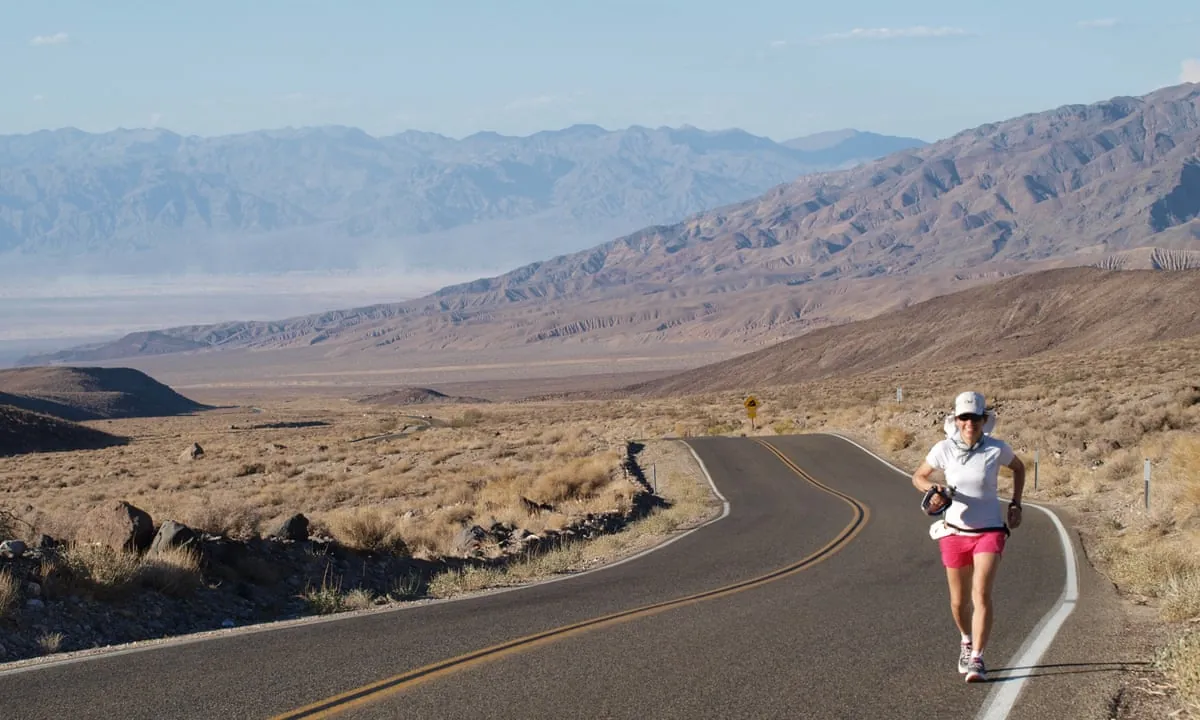
Every 20 to 25 miles, Yelverton changed socks and used foot powder to prevent blisters.[1] It is the kind of detail that can look minor beside sauna numbers and desert heat, but feet are often where a confident ultra plan becomes a slow argument with reality.
There is no need to turn this into complicated blister science. The action was concrete: reduce moisture, refresh the interface between foot and shoe, inspect problems before they became race-ending problems, and repeat often enough that the maintenance happened before crisis.
What older runners should take from this
Yelverton’s finish does not prove that 60 is the new 30, and it does not make Badwater sensible for anyone with enough grit and vacation time. It proves something narrower: in this one case, age alone did not prevent a first-time 60-year-old entrant from finishing Badwater 135. The finish depended on unusually consistent heat acclimation, conservative pacing, and unglamorous maintenance habits that kept small failures from stacking into a terminal one.
That is a better lesson than inspiration. The sauna protocol should be studied carefully, not copied casually. The food choices should be tested, not borrowed on faith. The 18-minute miles after mile 42 should be understood as discipline, not surrender. The sock changes should be treated as part of the race plan, not housekeeping.
References
- Rick Yelverton 2021 Badwater 135, iRunFar, https://www.irunfar.com/rick-yelverton-2021-badwater-135
This is general fitness education, not medical advice. For diagnosis or treatment of pain or injury, consult a qualified clinician.
Pick your next session
Browse all routines to find an appropriately-spaced next session.
Spot something off?
This content sits adjacent to health guidance — tell us if a citation or figure needs a correction.