
How to Recover from Bobsled Concussion at Home
A graded, evidence-based home exercise progression for bobsled athletes recovering from concussion or 'sled head,' adapted from the Amsterdam 2022 consensus and ACSM guidelines, with bobsled-specific neck-strengthening isometrics. It helps athletes safely return to activity between medical appointments.
- Citation source
- ACSM, Amsterdam 2022 consensus
- Evidence level
- Formal position stand and general guideline
- Recommended frequency
- 24–48 hours relative rest
After a suspected bobsled concussion or a rough stretch of “sled head,” the useful question is usually smaller than return-to-sport: what can you safely do at home today without making the fogginess, headache, or disequilibrium worse? That is the right question. A home plan is not a diagnosis, not emergency care, and not a substitute for medical clearance. If symptoms are severe, worsening, unusual for you, or you have been told to stop activity by a clinician, the exercise plan waits.
The urgency around bobsled brain injury is no longer just a locker-room conversation. In March 2026, the Los Angeles Times reported on lawsuits against USA Bobsled/Skeleton alleging brain injuries and CTE connected to the sport and to “sled head” symptoms. [1] Lawsuits do not write a rehab protocol. They do, however, make it harder to keep treating headache after sliding as something an athlete should simply tough out.
For bobsled injury recovery exercises at home, the starting point should be the current sport-concussion approach: 24–48 hours of relative rest, then controlled activity below the level that meaningfully aggravates symptoms. The Amsterdam 2022 concussion consensus and ACSM guidance both moved away from the old “dark room until everything disappears” model and toward early, symptom-limited aerobic activity such as walking or stationary cycling. [2][3]
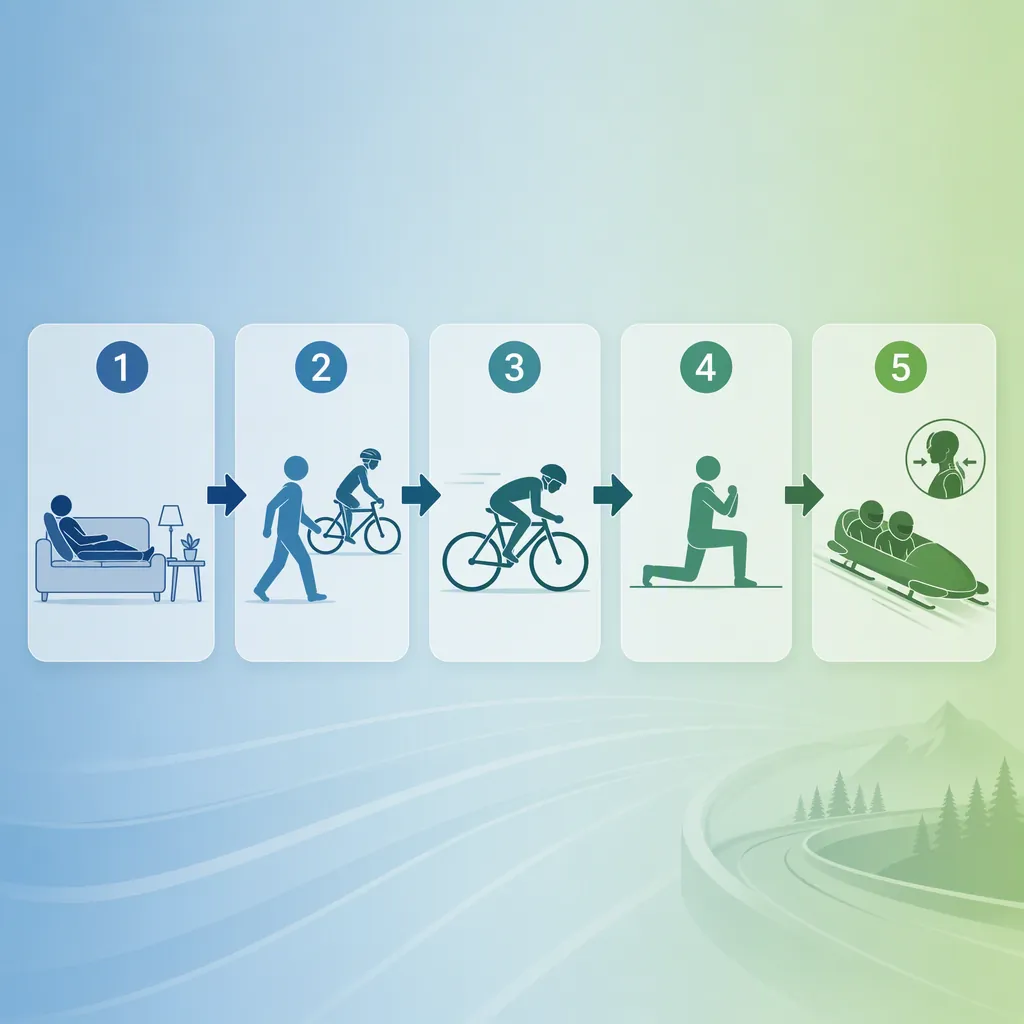
The home progression starts with aerobic control, not toughness
The cleanest way to use this at home is to treat recovery as a gated progression. You do not earn the next stage by wanting it badly. You earn it by tolerating the current stage without a meaningful symptom flare during activity or later the same day.
| Stage | What to do at home | What “too much” feels like | When to hold or step back |
|---|---|---|---|
| Relative rest | For the first 24–48 hours, keep daily life quiet: basic self-care, light movement around the apartment, limited cognitive and screen load. | Headache, pressure, fogginess, nausea, dizziness, visual strain, or unusual fatigue rising as you move through normal tasks. | If ordinary activity keeps escalating symptoms, do not add exercise yet; contact your clinician if symptoms are worsening. |
| Light aerobic | Walk indoors or outside on easy terrain, or use a stationary bike at a comfortable pace. Keep it boring on purpose. | Symptoms that climb during the session, disequilibrium that changes your gait, or a headache that follows you afterward. | Shorten the session, reduce intensity, or return to relative rest for the day. |
| Symptom-limited increases | Gradually extend the same low-risk aerobic work before making it harder. Change one variable at a time. | Feeling fine at the start but foggy, irritable, headachy, or off-balance later in the day. | Go back to the last version you tolerated. Do not stack duration, intensity, and heat or stress on the same day. |
| Light strength | Add simple bodyweight or light resistance work only after aerobic activity is tolerated: controlled squats, hip hinges, rows, carries, and trunk work. | Head pressure with bracing, dizziness when changing position, symptoms after straining, or neck pain that starts driving the session. | Remove heavy loading, breath-holding, fast transitions, and any movement that provokes head or neck symptoms. |
| Sport preparation | Add bobsled-relevant but non-sliding work: start-position shapes, low-force push mechanics, trunk stiffness drills, and later-stage neck work. | Symptoms triggered by acceleration, bracing, rapid head movement, or visual motion. | Stop sport-specific drills until reviewed. Home work does not clear you for ice, driving, or racing. |
Relative rest: quiet, not immobilized
Relative rest means reducing the things that spike symptoms while keeping enough normal rhythm that your day does not collapse into bedrest. Shower. Eat. Move around the apartment. Step outside if light and balance allow. Skip training, alcohol, hard conditioning, and “testing yourself” with chores that turn into workouts.
This stage is also when you start writing things down. Not a dramatic journal. Just the basics: sleep, headache, fogginess, dizziness, neck pain, screen tolerance, and what happened after you walked around. If you already track recovery with a wearable, keep it in its lane. Sleep and resting trends can help you notice load, but they do not clear a concussion. For broader recovery monitoring, a guide like the Whoop recovery score guide can be useful background, as long as concussion symptoms remain the decision-maker.
Light aerobic work: walking and stationary cycling
When symptoms are stable enough for activity, begin with the least heroic options: an easy walk or a stationary bike. No intervals. No hill repeats. No “I used to do this as a warmup” logic. The point is to raise circulation and reintroduce exertion while staying below the symptom line.
A good first aerobic session should feel almost too easy while you are doing it. The mistake is judging only the workout. With concussion and sled-head symptoms, the bill can arrive later: a heavier head in the afternoon, worse screen tolerance, a nap that feels less like recovery and more like shutdown, or balance that becomes sloppy when you stand up. That delayed response counts.
If walking outside adds too many variables—traffic, cold air, bright light, uneven sidewalks—use a hallway, treadmill, or stationary bike. If cycling makes your neck brace or your vision swim, walk instead. The exercise is not sacred; the response is.
Symptom-limited increases: change one thing at a time
Once easy aerobic work is tolerated, increase carefully. Add a little more time before adding intensity. Add a slightly brisker pace before adding complex movement. Do not increase duration, pace, heat exposure, errands, and screen load on the same day, then wonder which piece caused the setback.
This is the lonely middle part of recovery: you may look normal, you may be bored, and you may still be one bad decision away from losing two days. Hold the line here. Sub-symptom-threshold work is active recovery; it is not a loophole for conditioning.
Light strength: remove strain before you add load
Light strength belongs after basic aerobic work is behaving. Start with movements that do not require heavy bracing or fast head position changes: sit-to-stand squats, slow hip hinges, easy rows, wall push-ups, unloaded split-stance work, dead bugs, side planks from the knees, and farmer carries with light household loads.
Avoid the movements that turn recovery into a pressure test: heavy squats, Olympic lifting, hard sled pushes, max-effort jumps, breath-holding, rapid burpees, and anything that makes head pressure or dizziness appear. If you feel symptoms when you brace, the answer is not to brace harder. It is to reduce the demand and get reviewed if that pattern persists.
Why “sled head” changes the way you read symptoms
Bobsled recovery cannot be treated as a generic concussion handout with a sled drawn in the corner. In a 2024 study of 12 Team USA bobsled athletes, researchers recorded 1,900 head acceleration events across 101 days of a World Cup tour. Athletes averaged about 11 head acceleration events per run, with peak linear acceleration around 12g. [4] That does not prove every run causes brain injury. It does explain why a sliding athlete may feel wrong without remembering one clean, dramatic hit.
The small sample matters. Twelve elite athletes are not every driver, brakeman, development athlete, or Masters competitor. Still, the data give a shape to what many athletes describe: repeated head acceleration rather than a single obvious collision. If your symptoms show up after a series of runs, that pattern deserves the same caution you would give a classic concussion mechanism.
A systematic review by McCradden and Cusimano identified “sled head” as a repetitive subconcussive phenomenon discussed in sliding sports and separated it from the simpler story of one hit, one concussion. [5] The hard part is that the literature has not pinned down exactly what every sled-head episode is. It may involve concussion, subconcussive exposure, cervical strain, vestibular irritation, or overlapping mechanisms. At home, you do not need to solve that debate before acting cautiously.
- If headache, fogginess, disequilibrium, or visual strain appears after repeated runs, treat it as meaningful even if there was no crash.
- If neck pain and head symptoms travel together, track both. A sore neck does not rule out concussion, and concussion does not rule out a cervical component.
- If symptoms worsen with motion, vibration, bracing, or visual flow, do not jump straight to sport-prep drills because your resting symptoms are quiet.
- If you need medication, caffeine, or adrenaline to feel normal enough to train, you are not getting clean information from your symptoms.
Neck work comes later, and it has a specific job
Neck strengthening is useful in bobsled recovery planning, but not because it “treats” a concussion. That overstates the evidence. Neck work belongs later, after you can tolerate light aerobic activity and basic strength without symptom flare, as a readiness and risk-modification component for a sport where head and neck control matter.
The sliding-sport argument is reasonable but still limited. The 2024 bobsled head-acceleration study included neck strength measures in a small Team USA sample, and a 2025 clinical commentary in the International Journal of Sports Physical Therapy recommends neck stability programming for sliding athletes while discussing neck strength as a modifiable concussion-risk factor. [4][6] That supports adding neck work to later-stage preparation. It does not validate neck isometrics as a stand-alone post-concussion treatment.
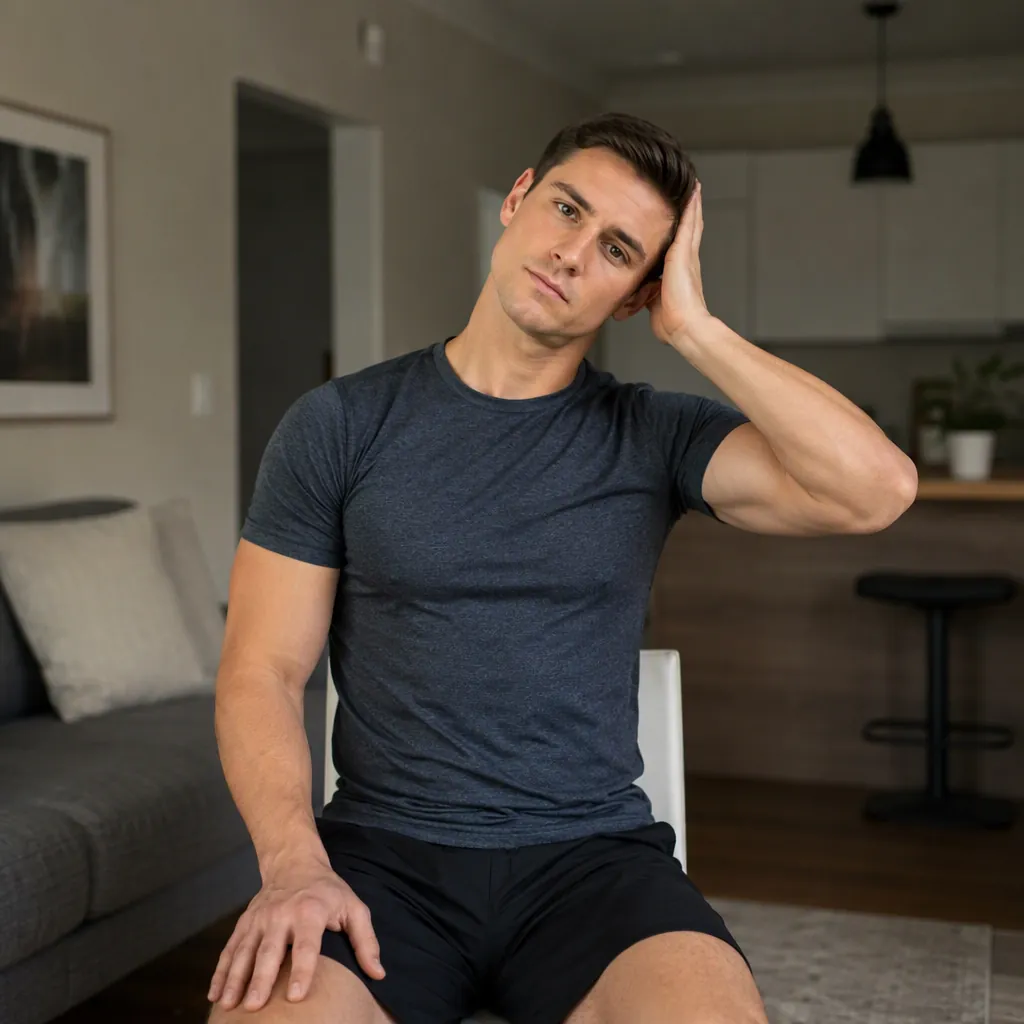
Once you are tolerating light cardio and general strength, start with quiet neck control before adding resistance. The first goal is not to make your neck burn. It is to keep your head steady without provoking headache, dizziness, pressure, or nerve-like symptoms.
- Chin tucks: Sit or stand tall, gently draw the head straight back as if making a double chin, then relax. Keep the jaw soft and the eyes level.
- Flexion isometric: Place a palm on the forehead and press the head lightly into the hand without letting the head move.
- Extension isometric: Place the hands behind the head and press backward gently, keeping the neck long instead of tipping the chin up.
- Side-bend isometric: Press the side of the head into the palm while keeping the nose pointed forward. Repeat on both sides.
- Band-assisted neck control: Only after isometrics are symptom-free, use very light band tension and small, controlled ranges. If the band makes you brace or grimace, it is too much.
FitToPlay’s bobsleigh program includes prevention-oriented exercises such as neck isometrics, back extensions, and Nordic hamstring work. [7] Those exercises can inform later-stage home preparation, but the label matters: prevention programming is not the same as a validated post-concussion rehab protocol. After a concussion or sled-head episode, borrow the movements only when your symptom response and medical guidance allow it.
How to decide whether today’s exercise was the right amount
The most useful home rule is not “no symptoms ever.” Many athletes have some baseline symptoms early on. The more useful rule is whether activity causes a clear, lasting worsening. A walk that produces a small, brief awareness of symptoms and then settles may be acceptable under your clinician’s plan. A walk that turns into hours of fogginess, disequilibrium, or head pressure was too much.
Judge the session in three places: during exercise, after you stop, and later that day. Bobsled athletes are often good at getting through a session and bad at respecting the delayed cost. That delayed cost is still data.
- Green light: symptoms stay stable, movement feels coordinated, and the rest of the day does not deteriorate.
- Yellow light: symptoms rise but settle quickly, or you feel slightly off later. Repeat the same stage next time instead of progressing.
- Red light: symptoms clearly worsen, balance changes, head pressure builds, fogginess lingers, or neck symptoms become dominant. Stop and step back; seek medical review if this pattern continues.
A home progression should make your week less mysterious. It will not make it perfectly linear. Sleep, travel, stress, menstrual cycle, illness, school or work load, and emotional strain can all change symptom tolerance. If your plan only works on an ideal day, it is not your real plan yet.
What home recovery does not clear
A well-run home plan can help you bridge the gap between appointments. It can tell you whether walking is tolerated, whether stationary cycling is safer than outdoor routes, whether light strength creates head pressure, and whether neck isometrics belong in the current week or a later one. It cannot clear you for ice.
Push starts, loading, driving, repeated runs, vibration, high-speed visual flow, and crash risk change the problem. Those require sport-qualified medical clearance and a staged return-to-sport process. The home work prepares the conversation; it does not replace it.
Use the general concussion consensus protocol. Adapt it for the way bobsled actually exposes the head and neck. Add neck strengthening later as a modifiable sliding-sport factor, not as a cure. And when “sled head” does not fit neatly into one diagnosis, do not fill the evidence gap with bravado.
References
- Lawsuits against USA Bobsled/Skeleton allege brain injuries, CTE, Los Angeles Times, March 23, 2026
- Consensus statement on concussion in sport: the 6th International Conference on Concussion in Sport–Amsterdam, October 2022, British Journal of Sports Medicine, 2023
- Exercise, Rest and Concussion Recovery, American College of Sports Medicine
- McPherson et al. 2024 bobsled head acceleration events study, PubMed Central, 2024
- McCradden and Cusimano 2018 systematic review on “sled head” in sliding sports, PubMed Central, 2018
- Clinical commentary on sliding athletes and neck stability programming, International Journal of Sports Physical Therapy, 2025
- Bobsleigh, FitToPlay
This is general fitness education, not medical advice. For diagnosis or treatment of pain or injury, consult a qualified clinician.
Pick your next session
Browse all routines to find an appropriately-spaced next session.
Spot something off?
This content sits adjacent to health guidance — tell us if a citation or figure needs a correction.