
How to Exercise Safely at Home When the Heat Index Hits 115°F
When the outdoor heat index hits 115°F, outdoor exercise is dangerous, but indoor home workouts can be done safely with the right modifications. This article provides a practical, evidence-based framework for choosing low-intensity exercises, cooling strategies, hydration rules, and recognizing stop signals to prevent heat illness.
- Citation source
- CDC
- Evidence level
- general guideline
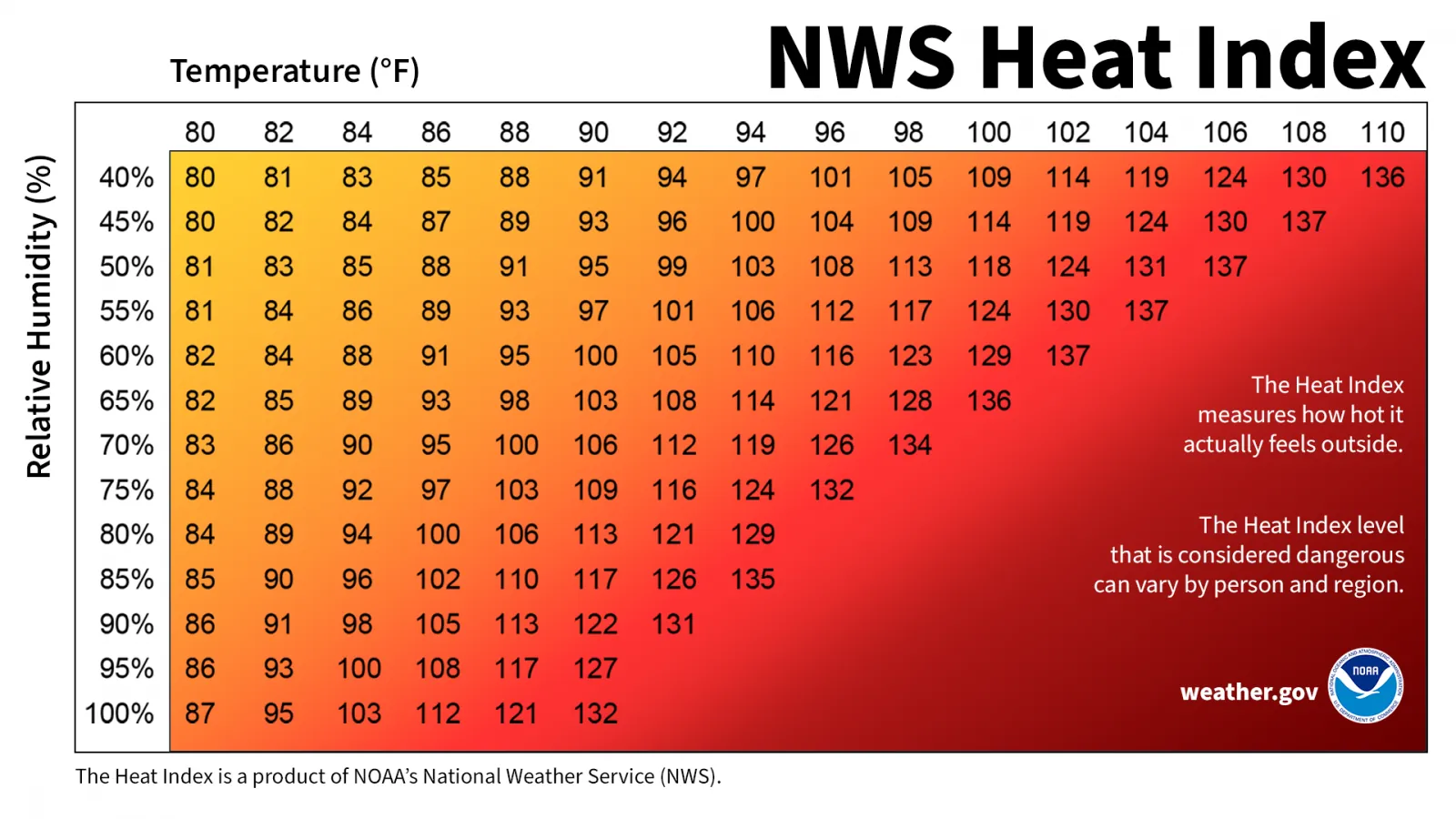
Your phone says the heat index is 115°F. That is not a “push through it” day. On the National Weather Service Amarillo heat index chart, 115°F sits inside the Danger zone, which runs from 103°F to 124°F; the same chart warns that direct sun can add up to 15°F to the listed heat index effect.[1] Outdoor exercise is off the table.
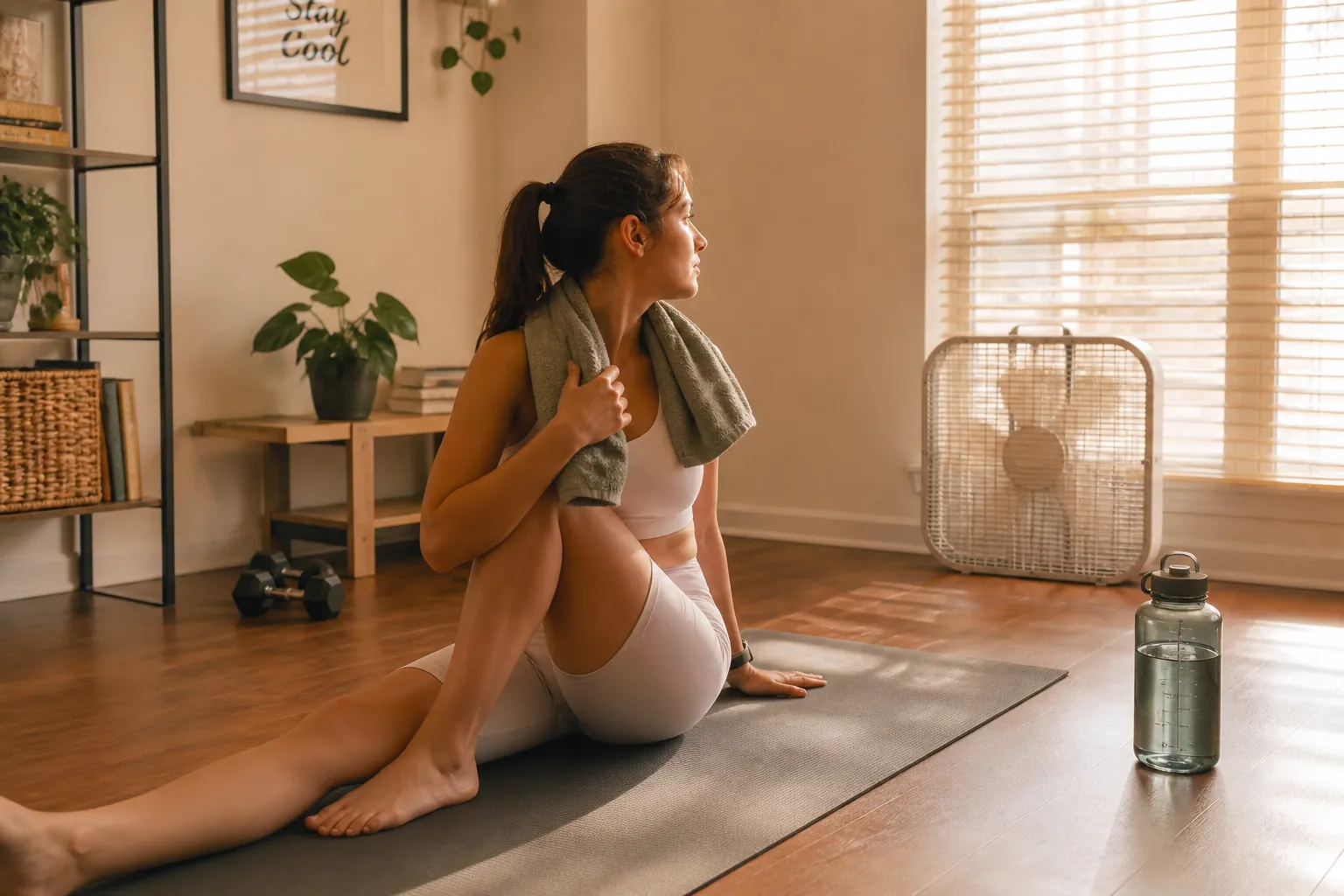
The harder call is the home workout. “Indoors” can mean a cooled bedroom, but it can also mean a garage, a rental with weak airflow, a second-floor room that baked all afternoon, or a box fan moving hot air around. At a 115°F outdoor heat index, a safe home session has to become shorter, easier, actively cooled, and easier to abandon. If the room is too hot, cooling is unavailable, or warning symptoms appear, the workout ends.
First, Decide Whether Today Is a Workout Day or a Maintenance Day
The useful question is not whether you are disciplined. It is whether your setup lets you move without adding dangerous heat stress. A maintenance day still counts. Ten to twenty minutes of mobility, light band work, or easy bodyweight movement can keep the habit alive without pretending the weather is normal.
| Condition | Decision |
|---|---|
| Outdoor workout, patio workout, driveway workout, or garage session exposed to direct sun | Stop. Do not train outside at a 115°F heat index. |
| Indoor room is air conditioned or clearly cool, with water and cooling supplies ready | Modify. Keep it short, low intensity, and actively cooled. |
| Indoor room is hot, humid, or poorly ventilated, and the only plan is a fan | Treat it as unsafe until the room is cooled or the workout is moved. |
| You feel ill, overheated, unusually fatigued, dizzy, confused, or stopped sweating | Stop. Cooling and recovery come before exercise. |
| You take medication that can affect heat tolerance or have a higher-risk health condition | Use extra caution and consider skipping or asking a clinician about safe limits. |
Fans deserve a plain warning here. The CDC says fans may not prevent heat-related illness when indoor temperatures are in the high 90s, and it specifically notes that fan use can become ineffective above 90°F.[2] A fan can help sweat evaporate in some conditions, but it is not an air conditioner, and it is not a rescue plan for a room that is already hotter than your body can manage.
What Counts as a Safer Home Workout at 115°F
The safer version is deliberately unimpressive: low intensity, no racing the clock, no personal records, no “just one more round.” If that feels disappointing, good. It means you are taking the conditions seriously instead of turning a summer weather alert into a character test.
Choose movements that let you breathe normally and stop cleanly. Mobility work, gentle yoga, easy core work, light resistance bands, slow bodyweight squats, wall push-ups, dead bugs, bird dogs, glute bridges, and controlled step-backs all fit better than HIIT, heavy lifting, jump circuits, sprint intervals, burpees, or max-effort kettlebell work.
- Use a talk-test pace: you should be able to speak in full sentences.
- Cut the session length before you start, not after you are already overheated.
- Add longer rests than usual, even for movements that normally feel easy.
- Avoid loaded sets that require bracing hard or holding your breath.
- Skip finishers, challenges, AMRAPs, and anything designed to make you chase fatigue.
A reasonable heat-modified session might be one round of joint circles, easy hip mobility, a few sets of band rows, glute bridges, wall push-ups, and gentle stretching. That may not scratch the same itch as heavy squats or intervals. It also leaves you able to train later in the week instead of spending the evening nauseated, chilled, or watching someone else decide whether your dizziness is getting worse.
Cool Before You Need Cooling
Cooling should begin before the first rep. Once you are already overheated, every decision gets worse: you bargain with yourself, shorten rests, misread dizziness as effort, and tell yourself the room will feel better once you “get moving.” It usually does not.
Pre-cooling can be simple. Take a cool shower. Use a cold wet towel around the neck. Keep another towel ready for the armpits or groin if you start feeling too hot. If you tolerate it, an ice slurry or very cold drink before training can help lower the starting heat load. These are not luxury-athlete tricks; they are practical ways to make a modest session less risky.
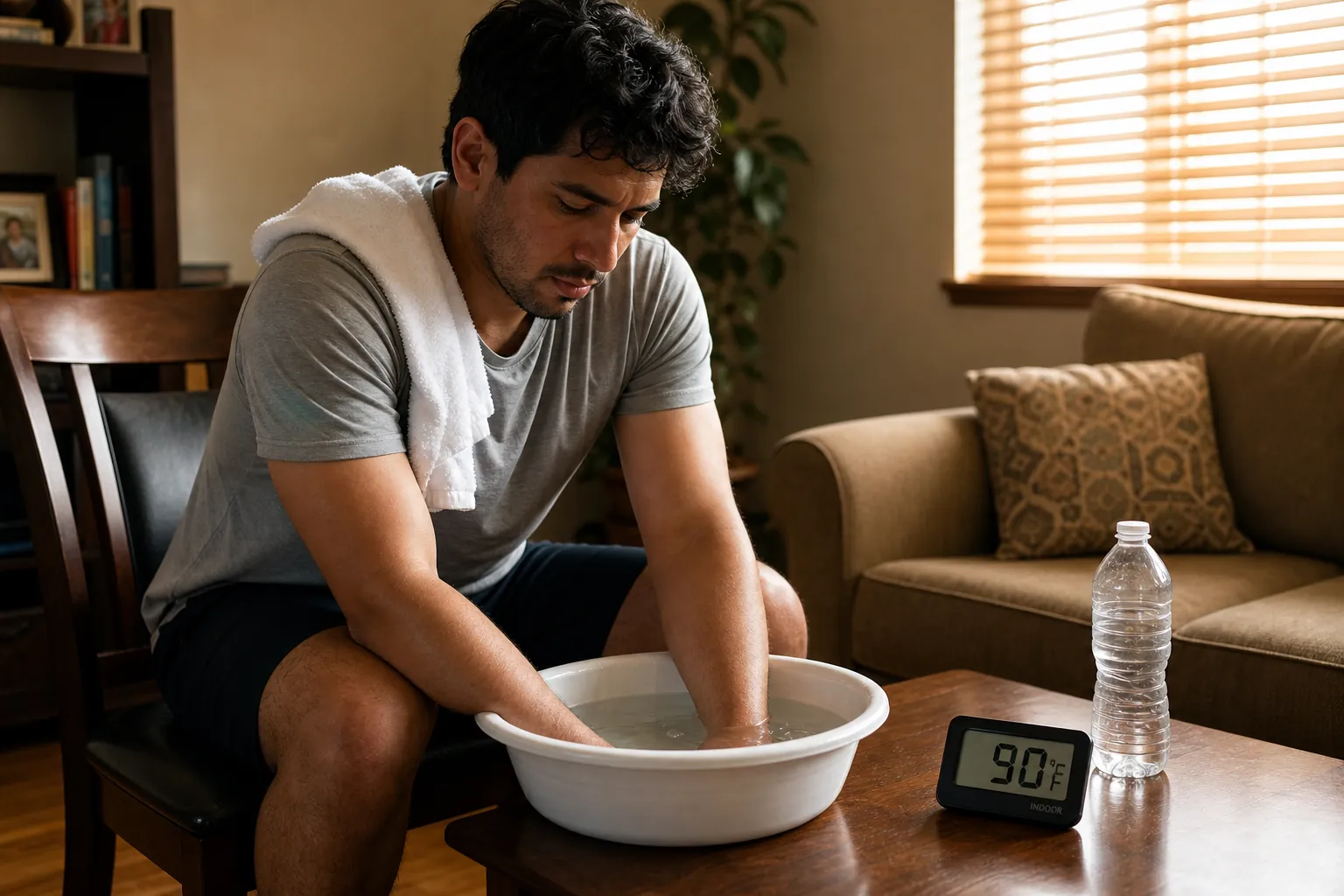
Hand or forearm immersion is especially useful at home because it does not require special gear. The CDC includes forearm immersion in cold water among cooling approaches for athletes in heat.[3] A mixing bowl, shallow bin, or clean sink can do the job during rest breaks. If you are using bands or bodyweight movements, there is no good reason to rush past a cooling break.
A Practical Cooling Setup
- Cool the room first if you can; do not rely on exercise to “adjust” you to a hot room.
- Set a cold towel, water bottle, and forearm-immersion bowl within reach before starting.
- Use the fan only as support for an already safer room, not as the main safety measure.
- Take cooling breaks on a timer, not only when you feel desperate for one.
- Move the session to the coolest room available, even if that room is awkward or small.
Hydration Needs a Number, Not a Vibe
“Drink some water” is too loose for a day like this. A better home rule is measured and boring: drink about 16 ounces of fluid 1 to 2 hours before training, then sip about 5 ounces every 10 to 15 minutes during the session. If the session lasts longer than 60 minutes, include electrolyte replacement rather than plain water alone.[3]
That does not mean a 60-minute workout is a good idea at a 115°F heat index. It means that if heat, sweating, duration, or repeated sessions make fluid losses more significant, electrolytes matter. For most people training at home in these conditions, the cleaner decision is to shorten the workout enough that hydration supports the session instead of becoming a rescue attempt.
Do not start if you are already behind: headache, dark urine, a dry mouth, or feeling unusually wiped out before the warm-up are reasons to delay and cool down. They are not proof of heat illness by themselves, but they are poor starting conditions for a hot-room workout.
Being “Used to Heat” Is Not a Free Pass
People in Texas, Arizona, Florida, Georgia, Louisiana, and the rest of the hot-weather map often do have better habits than visitors. They check the hour, know which room turns into an oven, and understand that a garage can feel different at 6 a.m. than at 5 p.m. That experience helps. It is not the same as being heat-proof.
Heat acclimatization takes time. The Korey Stringer Institute describes heat acclimatization as a gradual process and notes that most adaptations occur over 7 to 14 days of repeated heat exposure.[4] One hot week does not make a hard workout safe, especially if you spent most of that week indoors, sleeping poorly, dehydrated, sick, or moving between air conditioning and brief outdoor exposure.
A previous heat-exhaustion episode also matters. KSI notes that after heat exhaustion, susceptibility can be increased the next day.[5] That should change the decision. If yesterday’s session ended with nausea, chills, weakness, heavy dizziness, or needing help to cool down, today is not the day to test whether you are fine.
Medications and Higher-Risk Situations Change the Threshold
Some people need a lower cutoff than the average fitness article admits. The CDC lists several groups at increased risk from heat, and its heat guidance for athletes notes that medications and medical conditions can affect heat tolerance.[3][6] The concern is not willpower. It is whether your body can dump heat fast enough while exercising.
Be especially cautious if you take beta blockers, diuretics, or ACE inhibitors, because these medication classes can affect heat tolerance. This article is evidence-based reference content, not medical advice; if medication, heart disease, kidney disease, pregnancy, recent illness, or a history of heat illness applies to you, a conservative skip or a clinician’s guidance is the safer call.
The Stop Signals Are Not Negotiable
This is the part to decide before you start, because overheated people are not great judges of how overheated they are. Write the stop rules in your head, or say them out loud if someone else is nearby: confusion, dizziness that does not resolve with rest, or cessation of sweating means the workout is over. The CDC’s heat-illness guidance treats symptoms such as confusion and dizziness as warning signs that require immediate attention, and heat stroke is a medical emergency.[2]
Dizziness deserves special respect. A little lightheadedness when you stand up too fast is one thing; dizziness that continues after you sit, cool, and drink is different. Do not restart the set to “see how it goes.” Sit down, cool aggressively, and get help if symptoms persist or worsen.
Confusion can look ordinary from the inside. It may show up as trouble following the workout, unusual irritability, clumsy decisions, repeating yourself, or not making sense when someone asks a simple question. If you are exercising with a partner, do not debate this symptom. Stop the workout and begin cooling.
Cessation of sweating is also a hard stop. Sweating patterns vary, and a dry shirt alone does not diagnose anything, but if you were sweating and then stop while still hot, weak, dizzy, or mentally off, treat it as dangerous. Move to a cooler place, use cold towels or cold-water immersion methods if available, and seek emergency help when severe symptoms suggest heat stroke.
- Stop for confusion, disorientation, fainting, or behavior that seems unlike you.
- Stop for dizziness that does not clear with sitting, rest, cooling, and fluids.
- Stop for nausea, chills, weakness, or a pounding headache that builds during the session.
- Stop if sweating stops while you still feel overheated or unwell.
- Stop if the room keeps getting hotter and you cannot cool it down.
A Safer Version of Today’s Session
If the room is reasonably cool, you have water ready, cooling supplies are within reach, and no higher-risk issue is pushing you toward a skip, the workout can stay on in a smaller form. Think of it as protecting the streak, not proving fitness.
- Drink 16 ounces of fluid 1 to 2 hours before you plan to train.[3]
- Cool first with a cool shower, cold towel, cold drink, or a few minutes of hand or forearm immersion.
- Set a timer for a short session and choose low-intensity bodyweight, mobility, or light band exercises.
- Sip about 5 ounces every 10 to 15 minutes while you move.[3]
- Rest longer than usual and use cooling breaks before symptoms force you to.
- End immediately if dizziness, confusion, stopped sweating, worsening nausea, or unusual weakness appears.
If any part of that setup fails, the safe decision changes. A 115°F heat index is already in the Danger zone outside. A hot room, no cooling plan, high-intensity programming, or a body that is already struggling can bring the same problem indoors. The disciplined move is to narrow the workout until it fits the day, or stop before the day takes the choice away from you.
References
- Heat Index, National Weather Service Amarillo
- About Heat and Your Health, Centers for Disease Control and Prevention
- Heat and Athletes, Centers for Disease Control and Prevention
- Heat Acclimatization, Korey Stringer Institute
- Heat Exhaustion, Korey Stringer Institute
- People at Increased Risk for Heat-Related Illness, Centers for Disease Control and Prevention
This is general fitness education, not medical advice. For diagnosis or treatment of pain or injury, consult a qualified clinician.
Pick your next session
Browse all routines to find an appropriately-spaced next session.
Spot something off?
This content sits adjacent to health guidance — tell us if a citation or figure needs a correction.