
When Lightning Strikes on a Hike, These Three Steps Could Save You
A structured before-during-after framework to help hikers avoid lightning strikes and respond correctly, with pre-hike planning, in-storm terrain decisions, and post-strike first aid supported by NWS and CDC data.
- Citation source
- CDC
- Evidence level
- general guideline
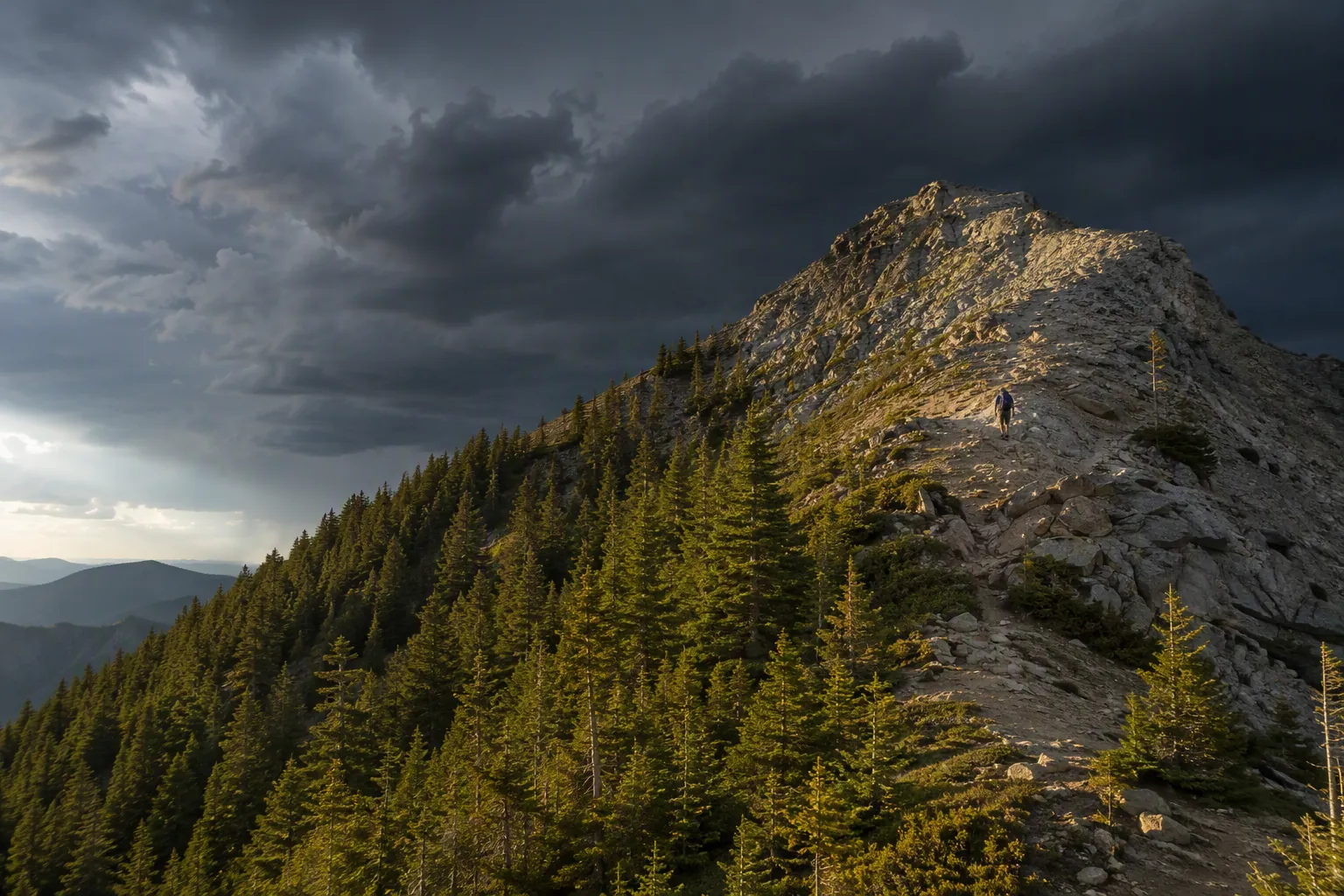
If lightning is even a realistic part of the forecast, the most useful lightning strike hiking safety tip is not what to do with your trekking poles. It is to arrange the day so you are off summits, ridges, open slopes, and other exposed terrain before the storm window gets serious. In the U.S., CDC lightning data for 2006–2025 records 517 deaths, with about two-thirds occurring between noon and 6 p.m.; July is the peak month, and about 90% of people struck by lightning survive.[1]
That survival number is worth knowing, but it is not a permission slip to negotiate with the sky. The clean decision is earlier and duller: start early, clear the high ground early, and turn around before the ridge if the day is building faster than your plan.
The Three-Part Framework
Lightning decisions get worse when they are made one dramatic second at a time. A better system is simple enough to remember without cell service:
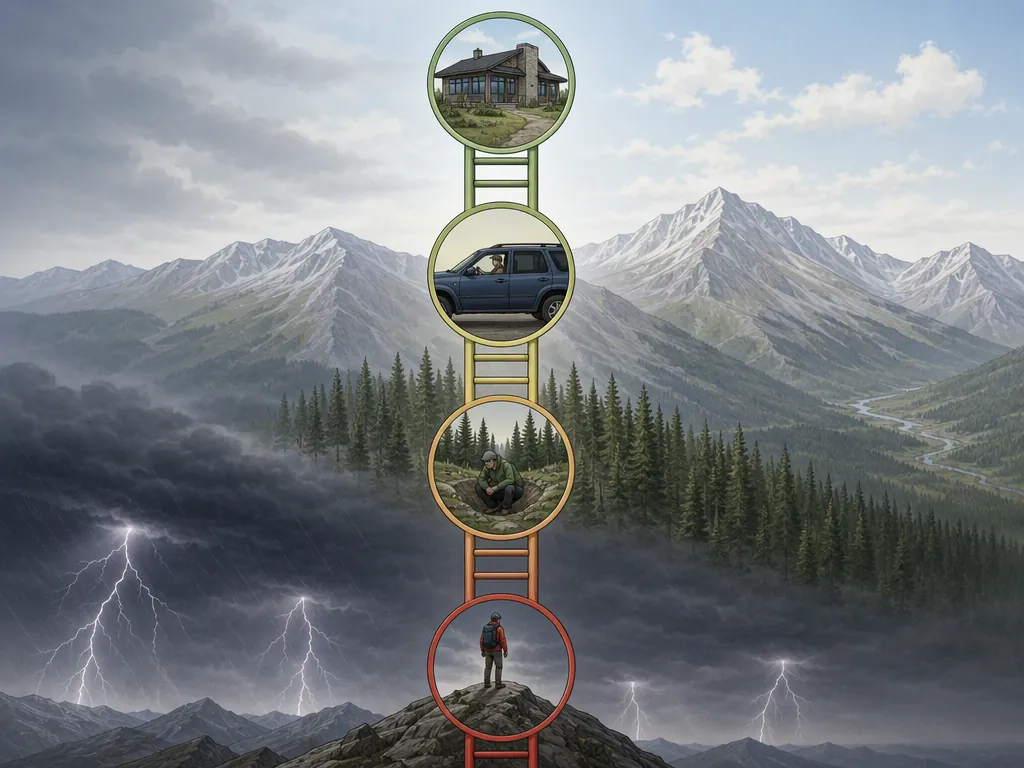
| Phase | Main decision | What success looks like |
|---|---|---|
| Before | Plan the route around the storm window, not just mileage. | Summits, passes, ridges, open bowls, and long exposed traverses are cleared before late morning when risk is forecast. |
| During | Move to lower, less exposed terrain early; do not wait for rain. | The group is below treeline, away from isolated tall objects, separated when practical, and not sheltering under rock overhangs. |
| After | Treat a strike as a rescue and first-aid problem, not an electrical hazard. | Victims are checked immediately, CPR starts if needed, and the group stays alert for additional strikes. |
The National Weather Service’s terrain safety scale makes the outdoor problem blunt. A summit above treeline is rated 0 out of 10, the highest-risk position. A ditch below treeline among uniform-height trees is rated 3 out of 10, the safest outdoor option on that scale. A substantial building or hardtop vehicle is 10 out of 10.[2]
That means “safer” outside still does not mean safe. If the plan requires you to be on a summit at 1 p.m. in July with storms in the forecast, the plan is already leaning on luck.
Before the Hike: Build the Turnaround Into the Route
A lightning plan starts the night before, then gets checked again before the trailhead. Look at the National Weather Service forecast, the hourly timing, and the Storm Prediction Center convective outlook if thunderstorms are possible. The point is not to become a meteorologist in hiking shoes; it is to know whether your high-exposure section overlaps the day’s likely storm build.
For mountain routes, the conservative version is an alpine start with the exposed part finished before late morning. The American Alpine Institute advises planning to be off summits and ridges by 11 a.m. in the Rockies when lightning is a concern.[4] That is not a universal magic hour for every range, but it is the right kind of planning: put the slow climb and the photo-worthy ridge before the typical afternoon storm window, not inside it.
- Choose the route with real descent options, not just a beautiful skyline traverse.
- Mark the last sensible turnaround point before exposed terrain.
- Know where treeline, dense forest, trail junctions, and road access sit on the map.
- Set the group rule before anyone is summit-hungry: thunder, fast vertical cloud growth, or missed timing means descent.
- Carry weather information as support, not as permission to stay exposed.
This is where hikers who train outdoors can borrow a habit from runners: let the hourly forecast decide the session, not the other way around. If the storm window is sitting over your planned ridge time, swap the objective, shorten the route, or move the effort indoors. FitAtHome’s guide to exercising safely during severe weather uses the same basic logic for outdoor workouts: weather thresholds matter more than stubbornness.
Read the Sky Before It Becomes a Siren
Forecasts age quickly in the mountains, so the sky gets a vote. Fair-weather cumulus can be ordinary. Towering cumulus with cauliflower-like tops and darkening bases is a different conversation. The National Weather Service describes the progression from cumulus to towering cumulus to cumulonimbus as a key warning sequence for outdoor sports; once clouds are visibly building upward, hikers should move toward shelter rather than keep bargaining with the next mile.[5]
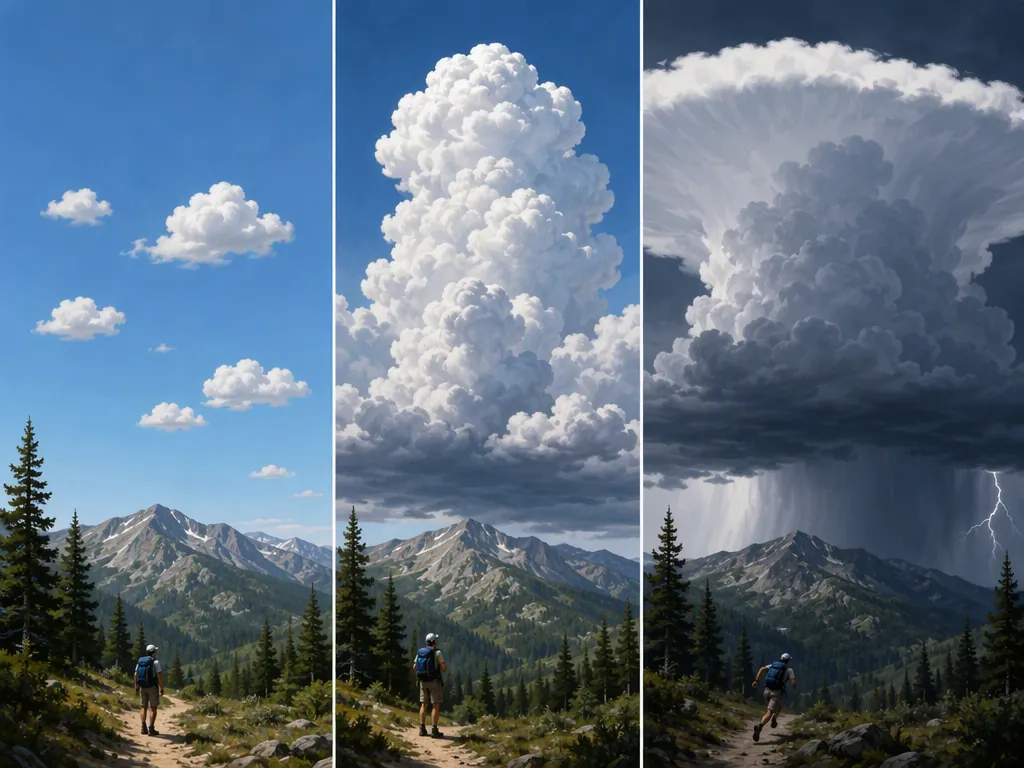
Rain is a late threshold, not an early one. Lightning can strike more than 10 miles from the rain core, which is why blue sky overhead is not a reliable safety signal when thunderstorm cells are nearby.[3][5]
During the Storm: Move First, Optimize Later
The 30-30 rule is still the cleanest field trigger: if the time between lightning flash and thunder is under 30 seconds, seek shelter immediately; after the last thunder, wait 30 minutes before resuming activity.[3] The second half is the part people cheat. Waiting five minutes because the rain eased is not the same decision.
On a hike, “seek shelter” usually does not mean you have a real shelter. Unless you are near a substantial building or hardtop vehicle, you are choosing among bad outdoor options. The job is to become less tall, less isolated, less exposed, and less likely to be part of a group casualty.
Get Off the Places Lightning Prefers
Above treeline, you and your group can become the tallest clean targets on the landscape. A summit is the obvious problem, but ridges, open saddles, high passes, exposed talus, meadows, and shorelines can create the same basic shape: people standing up in open terrain with little competing height around them.
Dropping below treeline among trees of similar height is usually better than staying on the ridge, but do not confuse that with being safe. The NWS scale’s safest outdoor example is still only 3 out of 10.[2] If you can reach a building or hardtop vehicle without crossing more exposed terrain, that is the real shelter. If not, keep descending to lower terrain and avoid being near the tallest tree, the lone boulder, the fence line, or the isolated snag.
Caves and rock overhangs deserve special suspicion because they look protective in exactly the wrong way. NPS Rocky Mountain National Park and the Alpine Institute warn that lightning current can travel through wet rock and jump across gaps to a person sheltering near the rock surface.[7][4] A shallow overhang can turn you into part of the electrical path.
Stop Lying Flat
Old advice told people to lie flat. That advice has aged badly because ground current is a major lightning injury pathway. Backpacker, citing lightning-safety experts, describes ground current as the leading injury mechanism and says it may account for up to 50% of cases; NPS guidance also emphasizes keeping the body’s contact with the ground limited.[6][7]
The practical correction is simple: do not spread your body across wet ground. If you are forced to stop in the open because movement would put you in worse terrain, keep your feet close together to reduce the voltage difference across your body, minimize contact with the ground, and get moving again as soon as there is a safer direction.
Treat the Lightning Position as a Last Resort, Not a Plan
Some outdoor medicine and backcountry curricula still teach a crouched lightning position, sometimes with feet together and a foam sleeping pad or pack underfoot. The idea is to reduce ground contact and current flow through the body. The problem is that experts disagree about how much this helps in real strikes. Backpacker reports that Dr. Ron Holle of the Lightning Safety Council has called the position “useless,” while NOAA’s Dr. Kristin Calhoun notes that it has not been scientifically validated.[6]
So use the crouch only in the narrow sense it deserves: a fallback when you cannot reach better terrain. It is not a reason to stay on a summit, finish a ridge traverse, or shelter under an overhang. A foam pad may offer marginal insulation, but terrain choice and timing are doing the real work.
Do Not Waste the Storm Arguing With Your Poles
Metal gear is a distraction that hikers love because it feels actionable. Trekking poles, ice axes, tent poles, and metal-frame packs conduct electricity if lightning involves them, but they are not lightning magnets in the cartoon sense. Lightning risk is driven more by height, isolation, shape, and exposure than by whether a hiker has aluminum nearby.[6]
If you are holding poles while descending, use them if they help you move quickly and safely. If you stop, set metal objects away from your body when practical. But do not spend your best descent minutes performing gear theater while the group remains the tallest thing on a ridge.
Separate the Group When You Have to Wait
If the group is stuck outdoors during active lightning and can separate without creating new hazards, spread out. The Appalachian Mountain Club recommends spacing people about 100 feet apart to reduce the chance that one ground-current event creates multiple casualties.[8]
That does not mean scattering blindly in cliffs, whiteout, or dense blowdown. It means avoiding the common huddle: five people under one tree, all touching packs, all waiting for the same strike pathway. Keep voices or visual contact if possible, but give the ground current fewer bodies to connect.
After a Strike: Help Immediately
A lightning victim does not carry an electrical charge. You can touch them. That one sentence matters because hesitation costs time, and the next useful action is basic emergency care: check responsiveness, breathing, and pulse; call for rescue if possible; start CPR if needed; and treat burns, trauma, and hypothermia as conditions allow.[3][8]
CPR can be especially important after lightning injury. AMC notes that lightning-related cardiac arrest may respond well to immediate bystander CPR, and CDC guidance also emphasizes giving first aid promptly after calling for help.[8][3] If there are multiple victims, prioritize anyone who is not breathing or has no pulse rather than assuming the quietest person is already beyond help.
The storm may not be finished. If the scene is still exposed, rescuers have to balance first aid with their own lightning risk: stay separated when possible, move the victim only if necessary for safety, and avoid creating a second group of casualties.
What This Looks Like on a Real Hiking Day
The useful version of this system is not complicated. A forecast shows afternoon thunderstorms. The route has a summit, a ridge walk, and a forested descent. The group starts early, sets a hard turnaround before the ridge, watches the clouds instead of only the mileage, and treats thunder as a decision rather than a mood.
If the sky builds faster than expected, the summit can wait. If thunder arrives within the 30-second window, the hike pauses or descends toward the best available terrain, then waits 30 minutes after the last thunder before resuming.[3] If someone is struck, the group helps immediately because the person is not electrically dangerous to touch.[3]
For trail runners and fast hikers, the same timing logic applies to weekday training loops. If the hourly forecast makes the exposed section a bad bet, move the effort to a lower route, a treadmill, or an indoor session. FitAtHome’s hourly weather run decision guide is a useful parallel when the outing is more conditioning than expedition.
Lightning safety is not one heroic trick performed in the storm. It is arranging the day so the storm finds you lower, less exposed, farther apart, and ready to help if prevention fails.
References
- Lightning Strike Victim Data, CDC
- How Dangerous is Lightning?, National Weather Service
- Safety Guidelines: Lightning, CDC
- Lightning Hazard and Mitigation, Alpine Institute
- Lightning Safety for Outdoor Sports, National Weather Service
- Everything Hikers Know About Lightning Safety is Wrong, Backpacker
- Lightning Safety, National Park Service Rocky Mountain National Park
- How to Treat a Lightning Injury in the Backcountry, Appalachian Mountain Club
This is general fitness education, not medical advice. For diagnosis or treatment of pain or injury, consult a qualified clinician.
Pick your next session
Browse all routines to find an appropriately-spaced next session.
Spot something off?
This content sits adjacent to health guidance — tell us if a citation or figure needs a correction.