
Is an Oat Milk Latte Enough Protein After a Workout?
A standard oat milk latte delivers roughly 2–6g of protein — far short of the 20–40g post-workout target cited by major sports-medicine bodies. See the per-cup numbers, the evidence caveats, and the simplest swaps that turn an oat latte into real recovery nutrition.
- Citation source
- International Society of Sports Nutrition (ISSN)
- Evidence level
- Restrained inference
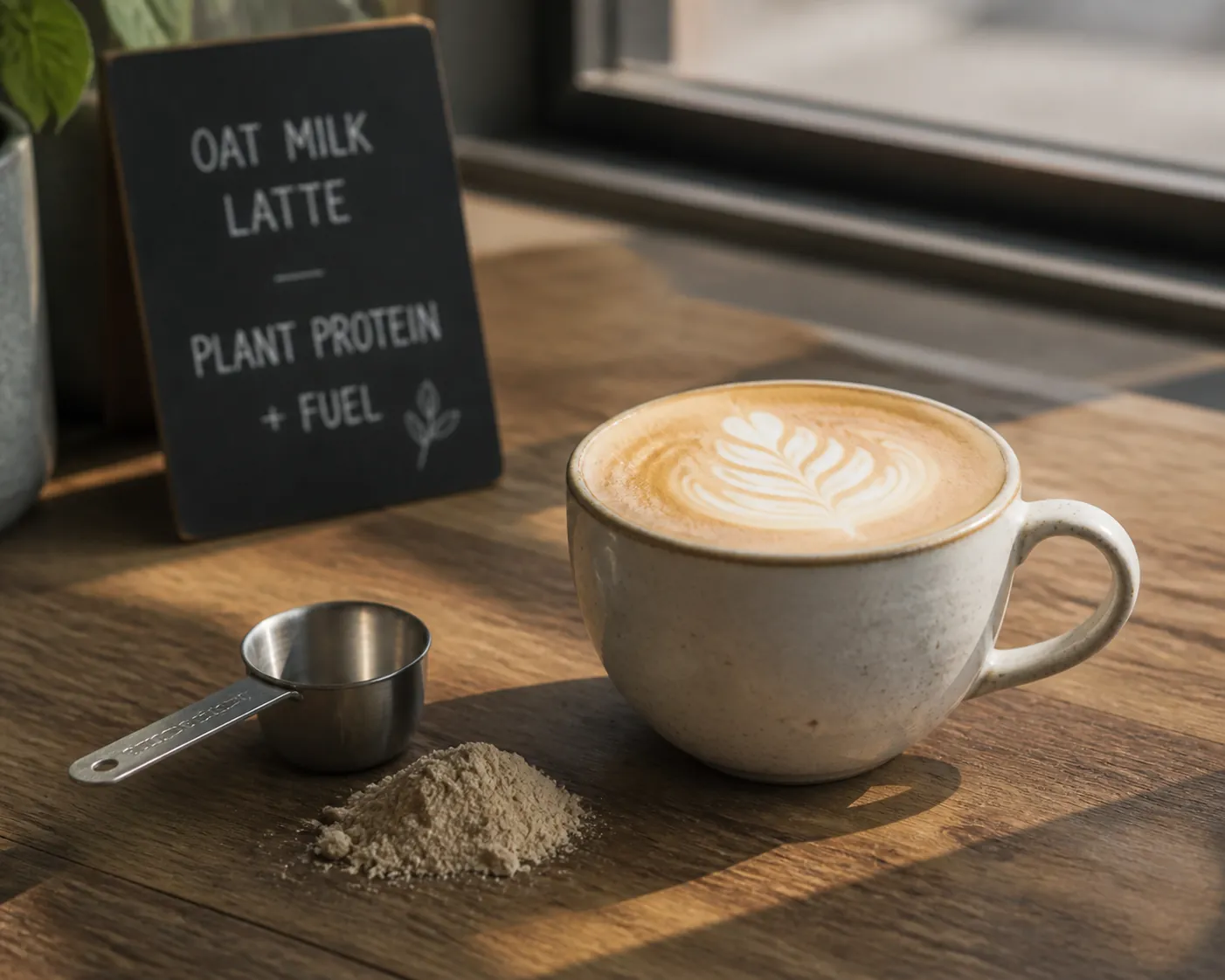
The oat milk latte after a workout feels like it should be doing more than warming your hands. It is ordered at the right time, it is plant-based, it has milk in the name, and it lands with the satisfaction of a small reward after lifting. But if you are asking whether an oat milk latte has enough protein for workout recovery, the plain answer is this: a standard oat milk latte is usually a carb-and-caffeine drink with a small amount of protein, not a complete post-workout protein dose.
Most regular oat milks sit around 2–3 grams of protein per cup. A 16-ounce latte often contains roughly one to two cups of oat milk once espresso and foam are accounted for, so the drink commonly lands around 2–6 grams of protein. Espresso is not doing meaningful protein work here. That number matters because post-workout protein guidance commonly points closer to 15–40 grams, depending on the source and the person.
The Label Math Behind the Latte
Start with the cup, not the coffee shop language. Verywell Fit’s USDA-linked nutrition profile lists plain oat milk at about 3 grams of protein, 16 grams of carbohydrate, and 120 calories per cup.[1] The University of Florida IFAS Extension comparison puts unsweetened oat milk at 2 grams of protein per cup, compared with 8 grams for cow’s milk.[2] Oatly Original, a widely used benchmark brand, lists 3 grams of protein, 16 grams of carbohydrate, 2 grams of fiber, 7 grams of sugars, and 120 calories per 1-cup serving.[3]
That is not a moral judgment on oat milk. It is just the arithmetic. If your café uses about 8 ounces of oat milk in a smaller latte, you may get roughly 2–3 grams of protein. If a larger drink uses closer to 12–16 ounces of oat milk, you may get roughly 3–6 grams. The espresso changes the caffeine, flavor, and ritual. It does not turn the drink into a protein serving.
| What you are checking | Typical protein signal | What it means after training |
|---|---|---|
| Unsweetened oat milk | About 2–3g per cup | Small protein contribution; mostly a carb-containing drink |
| Oatly Original | 3g per cup | Useful as a label example, not a full recovery dose |
| Cow’s milk in the UF/IFAS comparison | 8g per cup | Higher protein per cup than regular oat milk |
| Protein-fortified oat milk | Varies by product; check the label | Can help close the gap if the serving size is realistic |
The trap is that a latte is sold as one item, while the nutrition label is written per serving. A 16-ounce drink is not automatically two cups of oat milk. It may include espresso, foam, ice, or unused headspace depending on the café and drink style. That uncertainty is why the honest range is usually 2–6 grams rather than one fake-precise number.
Why 2–6 Grams Usually Falls Short
Post-workout protein targets are not all written the same way, and they should not be treated like a single law for every body. The International Society of Sports Nutrition position stand gives a broader daily protein range of 1.4–2.0 grams per kilogram of body weight per day for many exercising people, and describes an acute dose around 0.25 grams per kilogram or 20–40 grams of protein.[4] Mass General Brigham gives a practical post-exercise range of 15–25 grams within 2 hours after exercise.[5] Harvard Health describes about 20 grams within 45 minutes after a workout.[6]
Those sources differ in timing language and dose framing, but they overlap on the part that matters for the latte: a few grams is not close. A latte with 3 grams of protein gives about 15% of a 20-gram target. Even a generous 6-gram oat latte reaches only about 30% of 20 grams, and less if the person is aiming toward the 25–40 gram end of the range.
This is also where the evidence needs a clean boundary. There is no direct human trial showing that oat milk lattes improve workout recovery. The conclusion here is extrapolated from the protein amount in oat milk, general post-exercise protein guidance, and the fact that regular oat milk is low in protein compared with common recovery-dose ranges. That is enough to answer the practical café-counter question, but it is not the same thing as a latte-specific recovery study.
If the rest of your day already covers your protein target, the latte does not have to carry the whole recovery job. But if you are counting the latte as the thing you did for muscle repair after a lift, the numbers are thin. It may help with habit, enjoyment, fluid, carbohydrate, and caffeine. It just should not be logged as a meaningful protein serving unless the label says otherwise.
Oat Milk Is Not One Macro Category
The words “oat milk latte” hide several different products. Unsweetened oat milk, original oat milk, barista blends, sweetened versions, and protein-fortified oat milks can behave very differently on a nutrition label. For recovery, the front of the carton matters less than three lines on the back: serving size, protein grams, and added sugar.
- Unsweetened oat milk: usually the cleaner label check, but still commonly around 2–3 grams of protein per cup.
- Original or barista oat milk: often chosen for texture and steaming performance; protein may still sit around the regular oat-milk range.
- Sweetened oat milk: check the added-sugar line, because sweetness can rise without solving the protein problem.
- Protein-fortified oat milk: potentially useful, but treat the exact protein claim as a label-specific fact, not a category guarantee.
Oatly Original is a useful example because its label confirms the ordinary pattern: 3 grams of protein per cup, along with 7 grams of sugars per cup.[3] Another oat milk could be lower, higher, sweetened differently, or fortified. That is why the brand name alone is not enough information for recovery math.
How to Count Your Next Post-Workout Latte
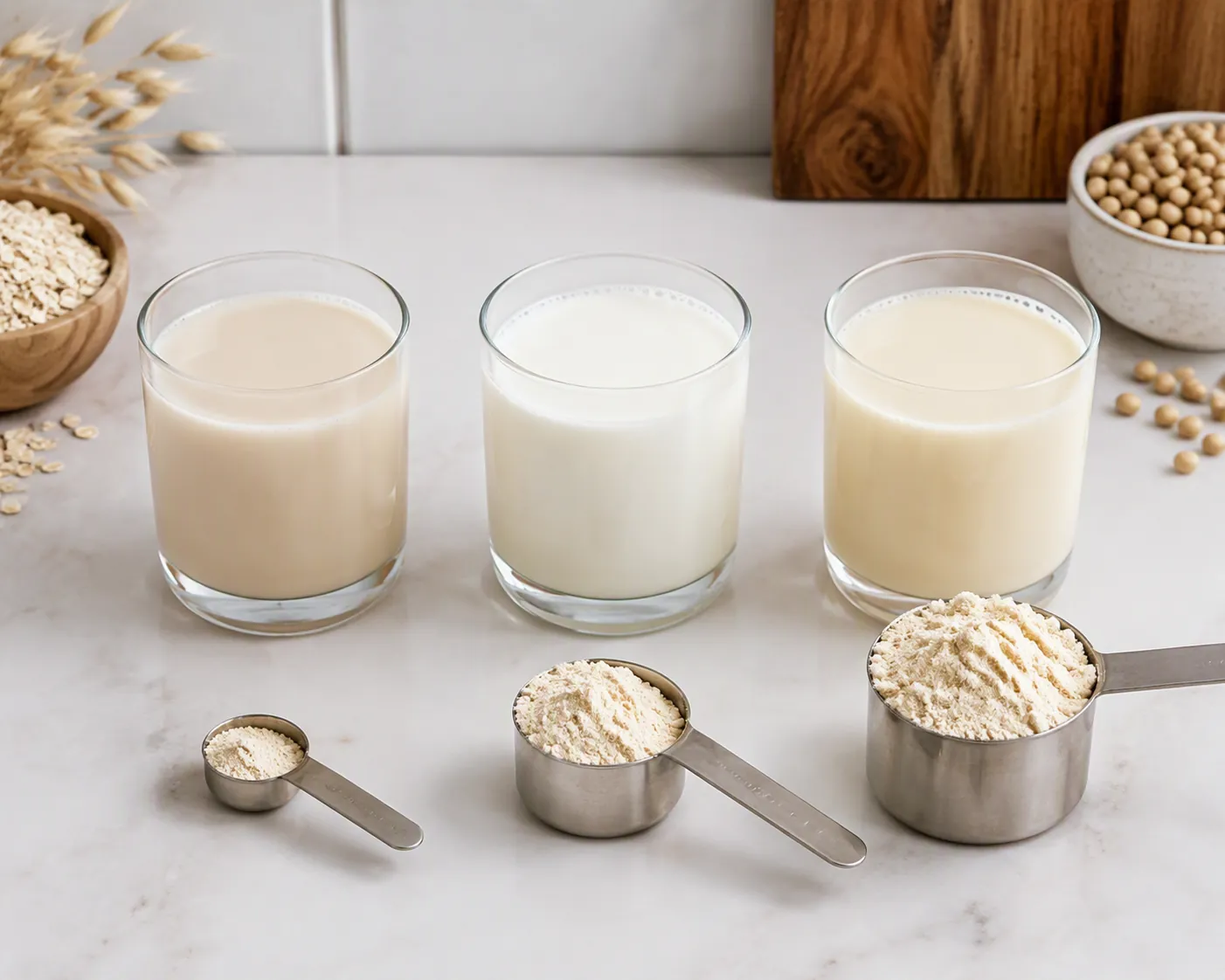
Use the carton like a calculator. Find the protein per serving, then estimate how much oat milk actually went into the drink. If the carton says 3 grams per cup and your latte contains about one cup of oat milk, you have about 3 grams of protein. If it contains closer to two cups, you have about 6 grams. Then compare that with the post-workout range you are trying to hit.
A simple home version looks like this: one shot or two of espresso, 1 cup of regular oat milk, and no added protein. That drink is pleasant, but it is still roughly a 3-gram protein drink if the oat milk label matches the common 3-gram-per-cup pattern. To get near 20 grams, something else has to enter the day’s recovery plan.
That “something else” does not have to be complicated. If you like the latte ritual, keep it and add a measured protein source beside it. If you want the drink itself to do more, use a protein-fortified oat milk and verify the serving size. If your priority is protein per cup rather than oat flavor, a higher-protein soy or pea option may make the math easier.
For broader timing, hydration, and food planning around training, a fuller post-workout recovery routine at home can help place the latte in context. If you like seeing food choices broken down by macros instead of vibes, this macro math on a food choice follows the same habit: count what is actually there.
The Practical Verdict
An oat milk latte can absolutely stay in the post-workout routine if it helps you cool down, rehydrate, get some carbohydrate, or simply enjoy training enough to come back tomorrow. Just count a standard one as carbs and caffeine with a small protein bonus.
For recovery protein, let the label decide. Regular oat milk at 2–3 grams per cup will not carry you to a 15–40 gram post-exercise protein range by itself. A fortified oat milk, a measured scoop or side of protein, or a higher-protein soy or pea swap can close the gap without giving up the ritual.
References
- Oat Milk Nutrition Facts — Verywell Fit
- Plant-Based Milk Alternatives — UF/IFAS Extension
- Oatmilk 32 oz — Oatly
- International Society of Sports Nutrition Position Stand: protein and exercise — PubMed, 2017
- How much protein do you need when working out? — Mass General Brigham
- Feeding your fitness — Harvard Health
This is general fitness education, not medical advice. For diagnosis or treatment of pain or injury, consult a qualified clinician.
Pick your next session
Browse all routines to find an appropriately-spaced next session.
Spot something off?
This content sits adjacent to health guidance — tell us if a citation or figure needs a correction.