
Is Orgain Protein Powder Safe After the Heavy Metals Lawsuit?
The 2026 class-action lawsuit alleges Orgain protein powder contains lead, cadmium, and arsenic. This article breaks down the numbers, explains the real risk for home-workout users, and offers practical guidance on whether to switch or continue with informed limits.
- Citation source
- Consumer Reports
- Evidence level
- general guideline
- Recommended frequency
- 4.75 servings per week
Start with the tub on the counter: is there a recall?
If you are trying to decide whether the heavy-metals lawsuit makes Orgain protein powder unsafe for home workouts, the first useful fact is not the biggest percentage in the headline. It is the current product status: the lawsuit is active, but Orgain protein powder has not been recalled.
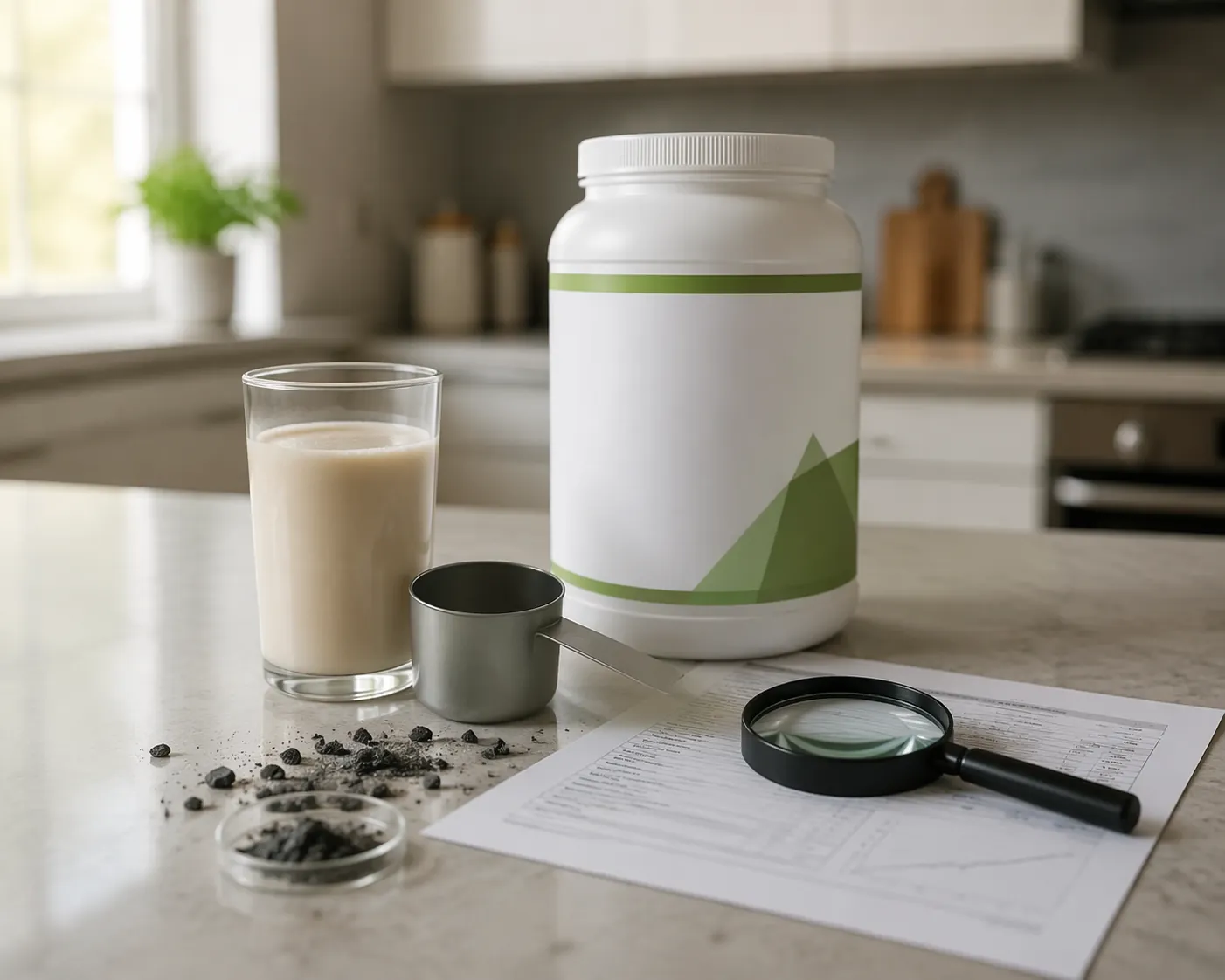
The class-action lawsuit was filed on July 7, 2026, under case number 2:26-cv-02364. It targets Costco’s sale of Orgain Organic Protein Powder in Vanilla Bean and Creamy Chocolate Fudge, and Hagens Berman says it is representing seven plaintiffs in the case. The complaint alleges the products contained undisclosed lead, cadmium, and arsenic. As of now, the case is an allegation, not a court finding, settlement, or regulatory determination. [1]
There is also no FDA recall of Orgain protein powder and no recall notice that changes what a normal buyer can do with the tub sitting in the pantry. That matters because “lawsuit filed” and “product recalled” are not the same consumer signal. A recall would usually mean a company or regulator has identified a specific removal action. This case has not reached that point. [2]
The alarming figure in the lawsuit is that one plaintiffs’ sample allegedly showed lead at about 674% above California Proposition 65’s safe-harbor level. That number deserves attention. It also needs a label attached to it: it comes from plaintiffs’ counsel, and the public materials available here do not show that the result has been independently validated in court or confirmed by a regulator. [1]
So the practical answer starts here: nothing in the current record says that one shake today is an emergency. But if Orgain is your automatic daily post-workout scoop, the serving pattern is important enough to look at more closely.
What the numbers actually measure
“Above Prop 65” sounds like a single bright line between safe and unsafe. It is not that simple. Proposition 65 safe-harbor levels are precautionary disclosure thresholds, not federal nutrition targets and not proof that a serving will cause harm. A percentage above that threshold can make a small microgram-level amount sound dramatic, especially when the baseline is intentionally conservative.
That does not make the issue fake. Lead, cadmium, and arsenic are not nutrients anyone is trying to add to a recovery shake. The question is exposure: how much per serving, how often you take it, whether you are getting similar exposure from other foods or supplements, and whether there are lower-tested alternatives that do the same job.
Consumer Reports gives a more usable reference point than the lawsuit headline because it connects its lab result to serving frequency. In its October 2025 testing, Consumer Reports found Orgain Vanilla Bean at 143% of its concern level for lead, which it defines as 0.5 micrograms per day. It rated that product “okay to eat occasionally” and translated that into about 4.75 servings per week. Consumer Reports did not test Orgain Creamy Chocolate Fudge in that set. [3]
| Question | What the available evidence says | Why it matters for a home-workout user |
|---|---|---|
| Has Orgain been recalled? | No recall has been issued, and there is no FDA recall in the current materials. [2] | A lawsuit alone does not mean the product has been removed from the market. |
| What is the lawsuit’s lead claim? | Plaintiffs allege one sample was about 674% above California Prop 65’s lead safe-harbor level. [1] | It is a serious allegation, but it is not yet an independent court or regulator finding. |
| What did independent testing find? | Consumer Reports tested Orgain Vanilla Bean at 143% of its 0.5 mcg/day lead concern level. [3] | That is less dramatic than the lawsuit percentage, but still high enough to affect serving frequency. |
| How often did Consumer Reports say to use it? | About 4.75 servings per week for Orgain Vanilla Bean. [3] | A daily scoop is 7 servings per week, which is above that occasional-use guidance. |
For someone who uses a scoop only when lunch got away from them or after a harder home session, Consumer Reports’ “occasional” guidance may be easy to stay under. For someone making a shake every morning because the dumbbells are in the bedroom and the blender is already out, 4.75 servings per week is a real limit, not a footnote.
Orgain is not the only plant protein with this problem
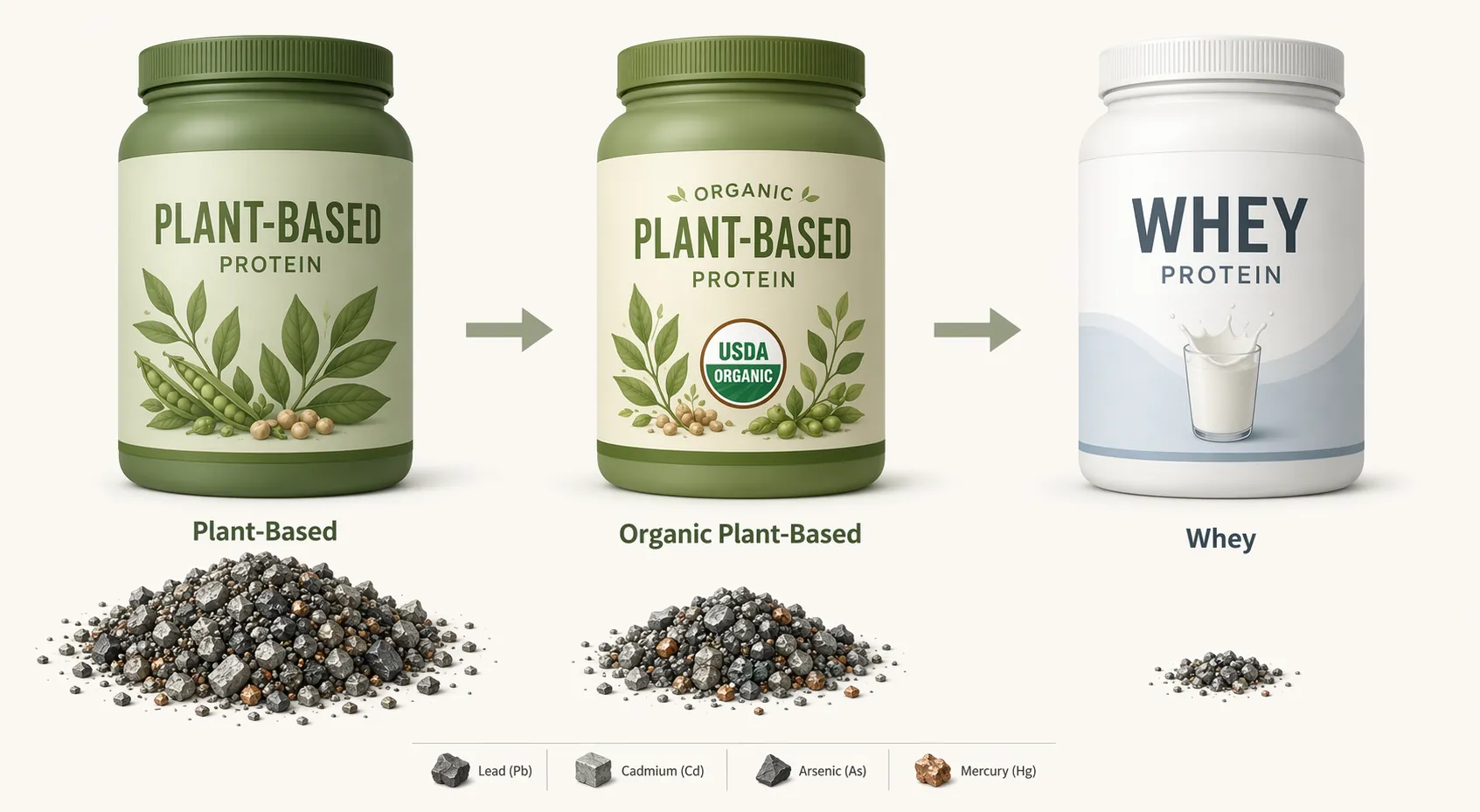
The easiest but least useful version of this story is “Orgain bad, another tub good.” The broader data does not support such a clean split. Heavy-metal contamination appears to be a category problem, especially for plant-based and organic protein powders.
In January 2025, the Clean Label Project reported testing 160 top-selling protein powders. It found that 47% exceeded safety thresholds. Organic powders had three times more lead than non-organic powders, plant-based powders had five times more cadmium than whey, and chocolate-flavored powders had 110 times more cadmium than vanilla. [4]
Consumer Reports’ October 2025 testing pointed in the same general direction: plant-based protein powders averaged nine times the lead of whey-based powders. [3]
That is why the “organic” part of Orgain Organic Protein Powder does not settle the safety question. Organic certification is not a heavy-metal shield. It can tell you something about farming standards, but it does not mean the plant ingredients grew in soil without naturally occurring or environmental contaminants. Orgain itself says its products are safe, comply with food safety standards, and that trace amounts of heavy metals occur naturally in plant ingredients. [5]
That defense is plausible as a general explanation for why plant powders test differently from whey. It still does not answer the buyer’s more specific question: how much lead, cadmium, or arsenic is in this flavor, this lot, at this serving size, compared with other options?
Daily use is where the decision changes
A home-workout routine makes repetition easy. The same mat, the same adjustable dumbbells, the same shake after training. That is convenient, but it is also why a small per-serving contaminant level matters more for a daily user than for someone who finishes a tub over several months.
If you are using Orgain Vanilla Bean once or twice a week, Consumer Reports’ guidance does not suggest panic. If you are using it every day, your routine is above the roughly 4.75 servings per week Consumer Reports attached to its Orgain Vanilla Bean result. [3]
That difference is the center of the decision. The current evidence does not say a one-serving-per-day Orgain habit is an immediate danger. It does say daily plant-protein use is the kind of pattern where lowering exposure is reasonable if you have an easy substitute.
For general recovery, protein powder is only one convenience tool. A post-workout meal, Greek yogurt, milk, tofu, eggs, beans, or a smaller shake can all fit depending on diet and schedule. If you are trying to place protein powder inside a broader recovery routine rather than treat it as the routine itself, FitAtHome’s guide to a post-workout recovery routine at home is the more useful starting point.
If you keep using the tub, use it like an occasional product
Keeping the tub is not the same as pretending the lawsuit never happened. A more practical middle ground is to stop treating it as the automatic daily protein source.
- Use Consumer Reports’ Orgain Vanilla Bean guidance as a rough ceiling: about 4.75 servings per week, not seven. [3]
- Avoid stacking several plant-based protein products in the same day if they are all serving the same convenience role. One shake, a plant-protein bar, and another fortified powder can turn “just a scoop” into a repeated exposure pattern.
- Be more cautious with chocolate plant-protein powders than vanilla when you have a choice. Clean Label Project’s 2025 testing found much higher cadmium in chocolate-flavored powders than vanilla. [4]
- Do not let “organic” or “third-party tested” do all the work. Look for published results with units, serving size, flavor, lot or batch practices, and the threshold being used.
- If the powder is for a child, pregnancy, or another situation where you want the most conservative consumer choice, switching to a lower-tested option is simpler than managing serving caps.
This is not medical advice, and it does not turn a lawsuit sample into a personal risk calculation. It is just the clearest consumer move available when the exact lot on your shelf has not been publicly tested in a way you can verify.
When switching makes more sense
Switching is not an overreaction if Orgain is part of your daily training rhythm. The strongest reason to switch is not that the lawsuit proves the tub is dangerous. It is that daily use gives you more chances to benefit from a lower-tested powder.
If dairy fits your diet, whey or milk-based options are worth considering because Consumer Reports found plant-based powders averaged much higher lead than whey-based powders. [3] That does not make every whey product perfect, and it does not help vegan users, but it is a meaningful category difference. For a food-first comparison, FitAtHome’s look at Fairlife milk for post-workout recovery may be useful.
If you want to stay plant-based, look for brands that publish clearer testing information and compare actual lead, cadmium, and arsenic results rather than slogans. Consumer Reports published a January 2026 follow-up identifying five tested protein powders with low lead, which is more actionable than shopping by “clean” language alone. [6]
The better switch is not necessarily the most expensive tub or the one with the loudest certification badge. It is the product that gives you enough protein, fits your diet, mixes well enough that you will actually use it, and provides more transparent contaminant testing than the one you are leaving.
Why disclosure is becoming the real issue
The Orgain lawsuit is partly about what consumers were not told. That is also where the supplement market has been weak for ordinary buyers. A tub can say plant-based, organic, clean, or tested, while still leaving out the numbers that would let you compare products.
Regulators and advocates have started moving in that direction. California SB 1033, introduced in February 2026, would require heavy-metal testing and public disclosure for protein products starting in 2027. The Texas attorney general also launched an industry investigation in June 2026. [7]
Those developments do not decide whether your current Orgain tub is safe. They do show why buyers should not have to reverse-engineer safety from a lawsuit, a marketing page, and a handful of independent tests. Protein powder is a routine food-like product for many people. Routine use deserves routine disclosure.
So, should you stop using Orgain for home workouts?
If you have already taken Orgain after home workouts, the available evidence does not justify panic. There is no recall, the lawsuit’s most dramatic number is still an allegation from plaintiffs’ counsel, and Consumer Reports’ independent Orgain Vanilla Bean result landed in an occasional-use zone rather than a “never use” category. [1][2][3]
If you are using it every day, switching is a reasonable choice. That is especially true if you can tolerate whey or dairy, if you can find a plant-based powder with clearer low-lead testing, if you use chocolate flavors often, or if you simply do not want your recovery routine to come with a weekly serving calculation.
A fair position is boring but useful: Orgain is not something the current evidence says to fear after one serving per day, but it may not be the best default daily powder for a home-workout user who has lower-tested options. Use the rest of the tub occasionally if that fits your risk tolerance, or switch now if you would rather remove the question from your routine.
References
- Hagens Berman case page, Hagens Berman.
- USA TODAY 7/9/26, USA TODAY, July 9, 2026.
- Consumer Reports protein powder testing, Consumer Reports, October 2025.
- Clean Label Project protein study, Clean Label Project, January 2025.
- Orgain support page, Orgain.
- Consumer Reports low-lead protein powders follow-up, Consumer Reports, January 2026.
- EWG coverage of California SB 1033 and heavy metals in protein products, EWG, 2026.
This is general fitness education, not medical advice. For diagnosis or treatment of pain or injury, consult a qualified clinician.
Pick your next session
Browse all routines to find an appropriately-spaced next session.
Spot something off?
This content sits adjacent to health guidance — tell us if a citation or figure needs a correction.