
Foods That Prevent Summer Fatigue in Home Workouts
Summer heat makes home workouts more draining by increasing sweat and carbohydrate use. This guide gives concrete before, during, and after eating targets to prevent that fatigue with regular food and water, and explains when electrolyte products are an optional convenience rather than a necessity.
- Citation source
- ACSM
- Evidence level
- General guideline
The summer home-workout crash is very specific: the session was normal, the dumbbells were not heavier, the mat routine was not heroic, and still you end up on the floor feeling hollow, headachy, or oddly flattened. In a humid apartment, that is not automatically a discipline problem. It is often the boring math of fluid, sodium, and carbohydrate catching up with you.
That is the useful way to think about foods that prevent summer fatigue around home workouts. The answer is not a ranked list of “cooling foods.” It is a timed plan: what goes in before you start, what is worth drinking or eating while you train, and what has to be replaced afterward.
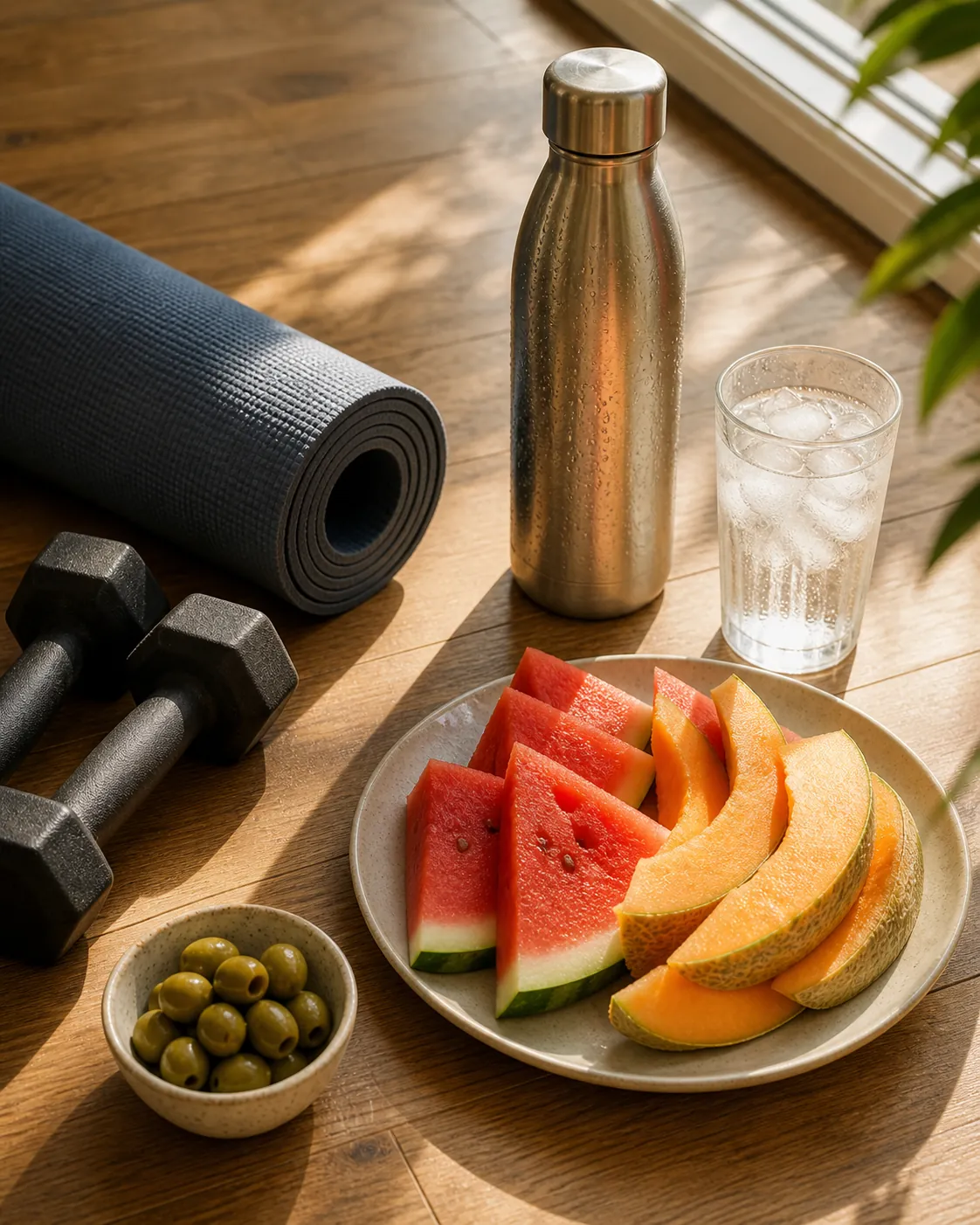
The quick fueling targets
Use this as the first pass. Then adjust for how hot the room is, how much you sweat, and whether the session is a quick strength circuit or a longer, sweaty conditioning workout.
| Timing | Target | Regular-food way to do it |
|---|---|---|
| Before a hot workout | Start hydrated; if the room is hot or you sweat heavily, include sodium. ACSM’s Nancy Clark column gives about 500 mg sodium around 90 minutes before exercise in the heat as a useful target. [1] | Water plus a salty snack: olives, pickles, crackers with cheese, jerky, broth, or another food whose label lets you land near the sodium target. Add easy carbohydrate if the last meal was light. |
| During sessions under about 60 minutes | Plain water is usually enough for typical home sessions, especially if you ate beforehand. Electrolyte products are not automatically required for normal-condition workouts under about 60–90 minutes. [1] | Keep water where you can actually reach it. If the workout is short, do not turn “more electrolytes” into the first answer before checking breakfast, lunch, and room heat. |
| During sessions over about 60 minutes | Add carbohydrate: about 30–60 g carbohydrate per hour belongs here, not in every 25-minute dumbbell session. [1] | A banana, juice diluted with water, a sports drink, dates, pretzels, or another easy carb source can work. Choose what your stomach tolerates. |
| After | Replace sweat losses with about 2–3 cups fluid per pound lost, and eat 20–30 g protein with carbohydrate for recovery. [1] | Milk with cereal, a smoothie, yogurt with fruit, eggs with toast and fruit, rice with tofu or chicken, or a sandwich plus water can all be legitimate recovery food. |
Why summer makes the same workout feel bigger
A small room can hold heat in a way that outdoor fitness advice often ignores. You may be indoors, but you are still training in heat: the fan is pushing warm air around, the window light has been baking the floor, and the room does not cool down between sets. In that setting, your body uses sweating to dump heat, and sweat carries fluid and sodium with it. Heat can also increase carbohydrate demand during exercise, which is one reason a summer session can feel disproportionately draining when lunch was too small or too far away. [1]
The dehydration number worth remembering is about 2% body-weight loss from fluid. Around that point, performance can degrade. It is not a magic cliff where everything is fine at 1.9% and ruined at 2.1%; it is a practical warning line. If a hot workout regularly leaves you foggy and wrecked, sweat loss deserves a place in the investigation. [1]
Food helps more than people give it credit for. Roughly 20% of daily fluid needs can come from food, and melons are about 90% water. That does not make watermelon a mystical recovery food; it makes it a useful, easy-to-eat source of water plus carbohydrate when the kitchen is hot and your appetite is low. [1]
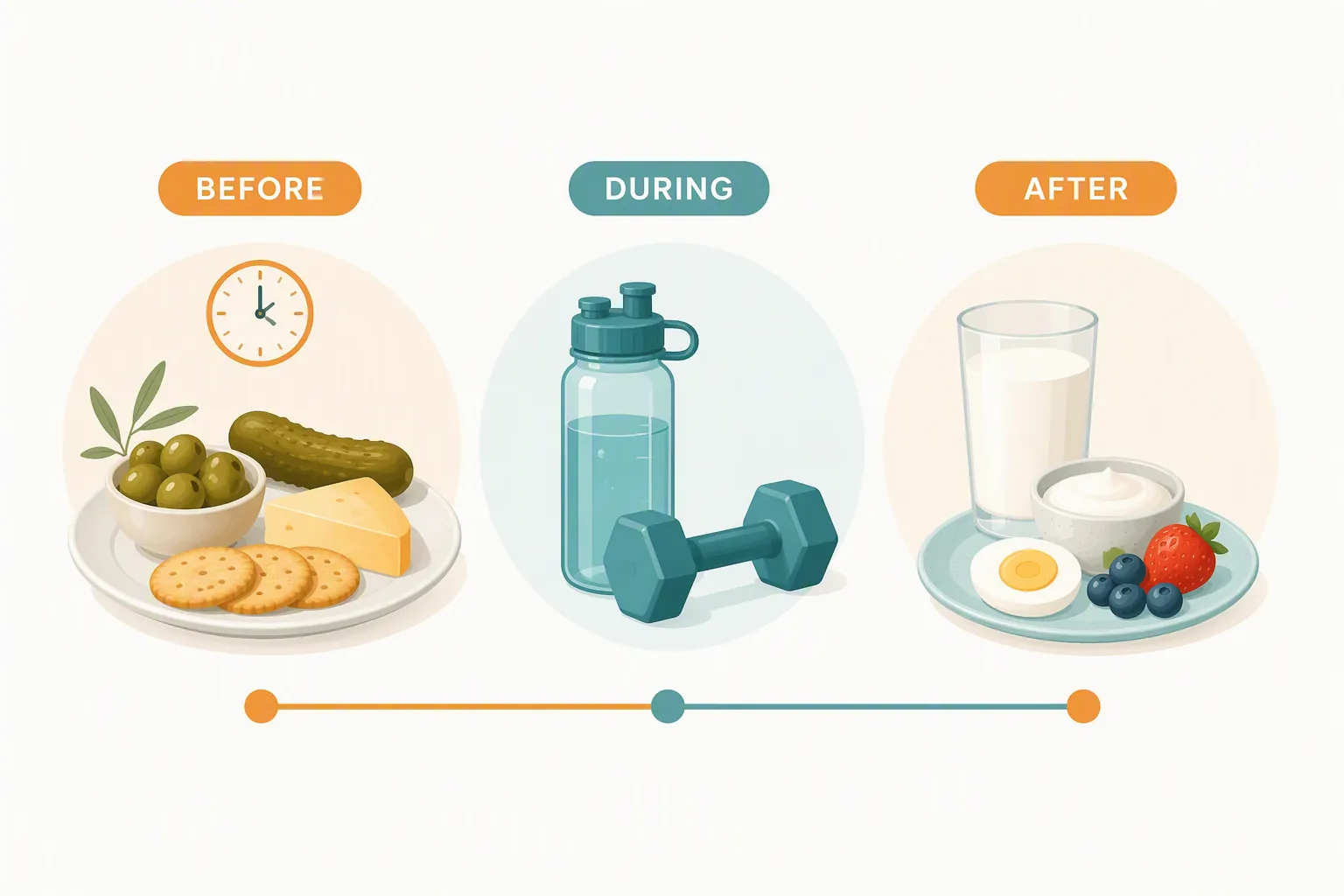
Before: do not start the workout already behind
The easiest summer mistake is waiting until the warm-up to start solving hydration. If the room is hot, the session is sweaty, or you know you lose salt heavily, give yourself a head start. A practical pre-workout target from ACSM’s hydration and electrolyte guidance is about 500 mg sodium around 90 minutes before exercise in the heat. [1]
That does not have to mean a packet. It can mean water with a salty snack, using the label instead of guessing. ACSM’s real-food sodium examples include olives, pickles, crackers with cheese, jerky, and broth. [1] The useful move is not to eat all of them; it is to stop treating commercial electrolyte products as the only way sodium can enter the room.
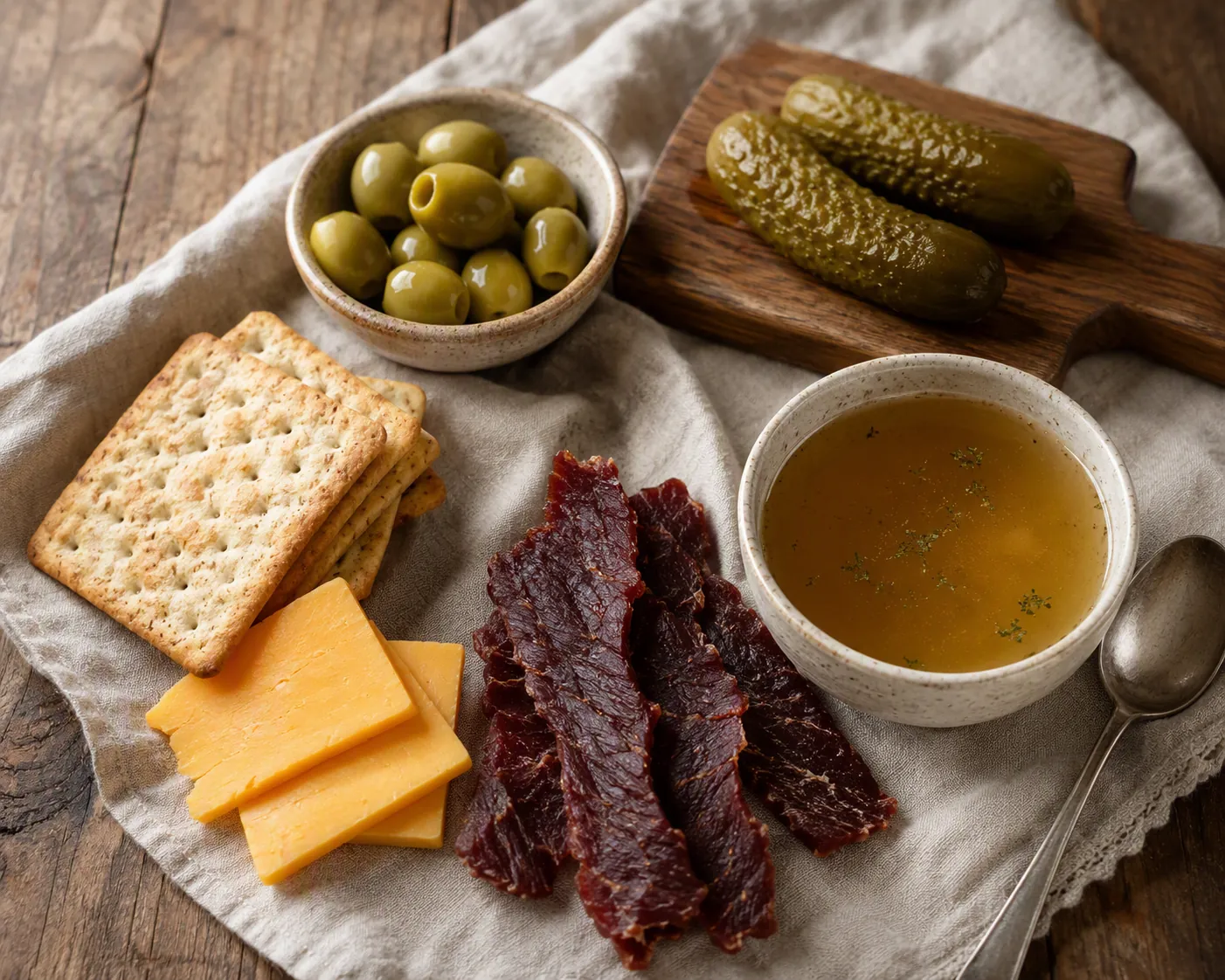
Carbohydrate matters before hot workouts too, especially if you train after a light lunch or long work stretch. If the session is within a couple of hours, choose something easy: toast, fruit, cereal, rice, potatoes, a tortilla, yogurt with fruit, or a simple sandwich. The point is not to create a perfect pre-workout meal. It is to avoid asking your body to handle heat, sweat, and an empty tank at the same time.
A workable pre-workout plate
- If you have 90 minutes: water plus a salty food that brings sodium near the heat-training target, then a familiar carbohydrate if your last meal was small.
- If you have 30–60 minutes: water plus a smaller, easy carbohydrate such as fruit, toast, cereal, or yogurt; keep fat-heavy or very large meals for another time if they sit badly.
- If you are starting after a full meal: you may only need water nearby, unless you sweat heavily or the room is unusually hot.
This is also where melons and other high-water foods can help without turning the article into a produce parade. Watermelon or cantaloupe with a salty food is more useful before a humid workout than a vague instruction to “eat hydrating foods,” because it gives you fluid, carbohydrate, and sodium in forms you can actually assemble.
During: match the drink to the session length
Most home workouts do not need to become endurance-fueling projects. If you are doing a 30- to 45-minute strength session, mobility workout, Pilates class, or moderate circuit, plain water is usually the right default, assuming you did not start underfed. For workouts under about an hour—and even many sessions up to 60–90 minutes in normal conditions—electrolyte products are generally not required. [1]
The room still matters. A 45-minute lower-body circuit in a stagnant apartment may be sweatier than the same plan in spring. So keep water close enough that drinking does not require a dramatic pause. A bottle across the room is how people accidentally do the whole session dry and then wonder why the cooldown feels like a punishment.
Carbohydrate during the workout becomes more relevant once the session goes past about 60 minutes. That is where the 30–60 g carbohydrate per hour target belongs. [1] It is useful for a long indoor bike ride, a long dance-cardio class, a stacked strength-plus-conditioning session, or any summer workout that runs long enough for energy availability to become part of the problem.
| Workout situation | During-workout choice |
|---|---|
| Under about 60 minutes, normal sweat, ate recently | Water. |
| Under about 60 minutes, very hot room or salty heavy sweat | Water; consider whether pre-workout sodium was too low before assuming you need a product during the workout. |
| Over about 60 minutes | Water plus carbohydrate, aiming roughly 30–60 g carbohydrate per hour. [1] |
| Long, very sweaty, or hard-to-repeat sessions | A sports drink or electrolyte-carb mix can be convenient if it helps you drink and fuel consistently. |
A practical during-workout carbohydrate can be ordinary food or drink: a banana, dates, applesauce pouch, juice, pretzels, or a sports drink. For some people, liquid carbohydrate is easier in the heat. For others, a few bites of food between blocks feels better. The correct option is the one you will tolerate and repeat.
After: replace sweat, then rebuild
Recovery gets messy in summer because appetite can drop at exactly the time you need fluid and food. The post-workout target is still straightforward: replace fluid, include carbohydrate, and get enough protein to support repair.
If you want the least emotional way to check sweat loss, weigh yourself before and after a representative hot workout. For each pound lost, a practical replacement target is about 2–3 cups of fluid. [1] You do not need to do this every day. Doing it once or twice can explain why a “normal” summer workout is leaving you flattened: the towel, shirt, and mat may be holding more fluid than you assumed.
Protein belongs in the recovery meal, but protein alone does not solve summer fatigue. A useful post-workout target is 20–30 g protein with carbohydrate. [1] That can be very plain food: milk and cereal, Greek yogurt with fruit, a smoothie, eggs with toast, a turkey sandwich, tofu with rice, beans with tortillas, or leftovers plus fruit.
Milk is worth keeping in the conversation because it is not just a protein food. ACSM’s hydration column notes that milk can retain fluid as well as or better than commercial electrolyte drinks. [1] That makes a glass of milk, chocolate milk, a smoothie, or cereal with milk a perfectly serious recovery option, not a childish consolation prize after a hard session.
Simple recovery pairings that cover more than one job
- Milk or soy milk smoothie with banana: fluid, carbohydrate, and protein.
- Yogurt with fruit and cereal: protein, carbohydrate, and water-rich food.
- Rice bowl with tofu, chicken, or beans plus broth-based soup: carbohydrate, protein, sodium, and fluid.
- Sandwich plus watermelon or cantaloupe: carbohydrate, protein depending on the filling, sodium from bread or fillings, and high-water fruit.
- Crackers with cheese plus fruit and water: sodium, carbohydrate, protein, and fluid.
The exact meal can be flexible. The part to avoid is finishing a sweaty session, drinking a few sips of water, deciding heat just “takes it out of you,” and then waiting hours to eat anything with carbohydrate or sodium.
Where electrolyte products actually fit
Electrolyte packets are not the villain. They are useful when convenience makes the difference between doing the plan and forgetting it. If a packet in your bottle helps you drink before a hot session, or a sports drink helps you get carbohydrate during a long workout, that is a practical choice.
The problem is letting the product become the first diagnosis. If your workout is under an hour, your lunch was tiny, the room was hot, and you started with only coffee, an electrolyte mix may not be the missing magic. The missing pieces may be water before training, a salty food when heat and sweat call for it, and enough carbohydrate to keep the session from running on fumes.
For many typical home workouts under about 60–90 minutes in normal conditions, special electrolyte products are not necessary. [1] For longer sessions, unusually sweaty conditions, repeated workouts, or people who simply do better with a flavored bottle in reach, they can be a reasonable convenience.
The decision rule
Match the food and drink to the workout, not to summer marketing. If the room is hot, handle fluid and sodium before you start. If the session lasts under about an hour, water plus real food around the workout usually covers the job. If it runs longer, add carbohydrate during the session. Afterward, replace sweat losses and eat protein with carbs. Buy electrolyte products if they make that routine easier to repeat, not because every summer home workout automatically requires them.
References
This is general fitness education, not medical advice. For diagnosis or treatment of pain or injury, consult a qualified clinician.
Pick your next session
Browse all routines to find an appropriately-spaced next session.
Spot something off?
This content sits adjacent to health guidance — tell us if a citation or figure needs a correction.