
How Whoop and Oura Ring track recovery for home workouts
For home exercisers deciding between WHOOP and Oura Ring, the better sleep and recovery tracker depends on training style: WHOOP's strength-aware tracking fits dumbbell and grip-heavy sessions, while Oura's sleep-first scoring suits yoga and indoor cycling. The verdict hinges on how each builds its daily recovery score, their home-workout tracking gaps, and who pays for hardware versus subscription.
- Citation source
- CNET, Sleep Foundation
- Evidence level
- restrained inference
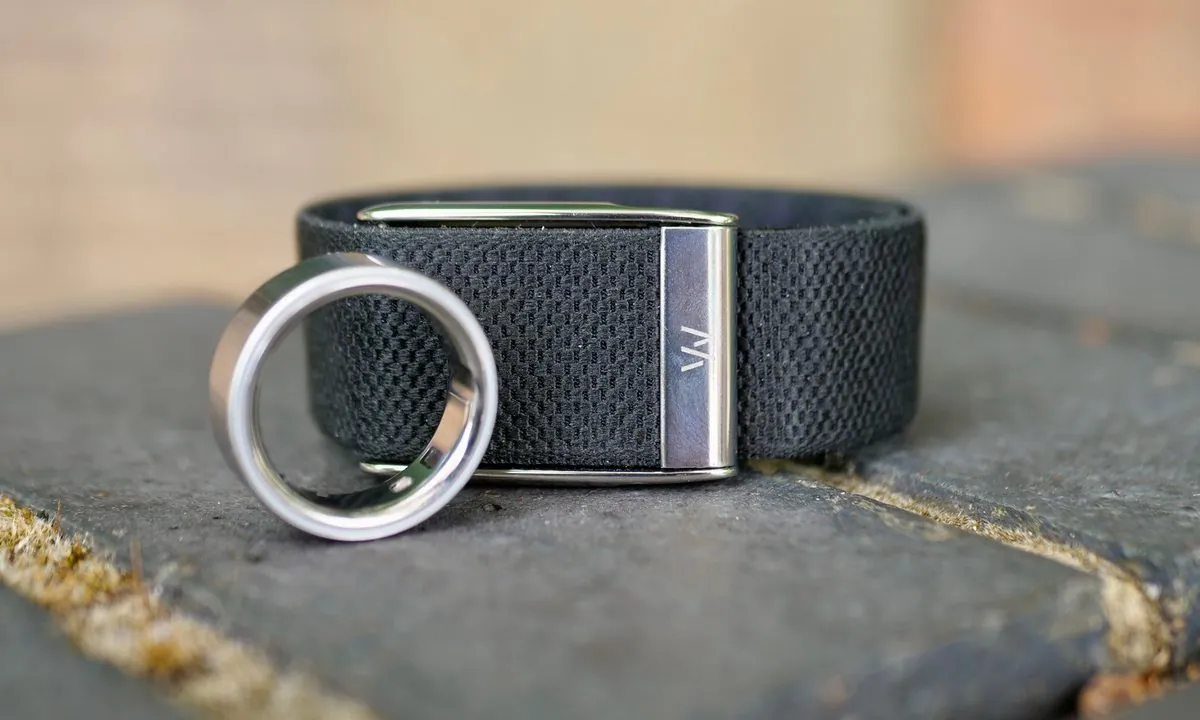
In a WHOOP vs. Oura Ring decision for sleep and recovery tracking around home workouts, training style matters more than a broad claim that one device is more accurate. WHOOP is the stronger fit when dumbbell strength work and deliberate session logging drive the week. Oura is more compelling when the priority is understanding sleep after yoga, Pilates, or indoor cycling—and the user is willing to correct or tag workouts that the ring misses.
| Home-training pattern | Better fit | Why | Main compromise |
|---|---|---|---|
| Dumbbell strength and grip-heavy sessions | WHOOP | Strength Trainer and muscular-load tracking connect resistance work to strain and recovery guidance.[1] | Requires an ongoing membership and more intentional workout logging. |
| Yoga or Pilates with sleep as the main concern | Oura | Sleep-first interpretation, discreet overnight wear, and strong consumer sleep-tracker standing.[2][3] | Automatic workout detection may need correction or repeated tagging. |
| Indoor cycling | Oura for sleep; WHOOP for training load | Choose according to whether overnight interpretation or session strain matters more. | Oura reviewers have documented missed indoor-cycling detection.[2] |
| Mixed home routine with frequent strength work | WHOOP | It gives resistance training a more explicit place in the recovery workflow. | Some features depend on the selected membership tier.[1] |
What the morning recovery number actually represents
Both devices turn overnight signals into a simplified morning judgment. Heart rate variability, resting heart rate, and sleep are central to that process, but the resulting number is an algorithmic interpretation rather than a direct measurement of health. A high score means the device considers the recorded signals favorable relative to its model and, where applicable, the user’s baseline. It does not establish that the body is injury-free, fully recovered, or medically healthy.
Heart rate variability, or HRV, describes variation in the timing between heartbeats. The useful comparison is generally against the wearer’s own pattern, not somebody else’s number. Resting heart rate supplies another baseline-sensitive signal. Sleep adds duration and quality information, while the apps connect those overnight observations with recent activity. For a more detailed explanation of these inputs, see how sleep and recovery wearable data should be interpreted.
WHOOP: recovery tied closely to recorded strain
WHOOP’s workflow begins with continuous collection from a screenless wristband. After sleep, the app presents recovery guidance informed by signals including HRV, resting heart rate, and sleep. During the day, workouts generate strain, creating a visible loop between what happened in the training session, how much sleep WHOOP believes the user needs, and the following morning’s recovery assessment.[1]
That loop is particularly useful for home strength training because WHOOP does not have to treat every demanding session as primarily cardiovascular. Its muscular-load system is intended to account for the stress of resistance training, while Strength Trainer provides a structured way to record the workout. WHOOP also says muscular load can increase its calculated Sleep Need, so a dumbbell session can influence the night’s recommendation even when it did not produce the sustained heart-rate pattern of an indoor cycling workout.[5]
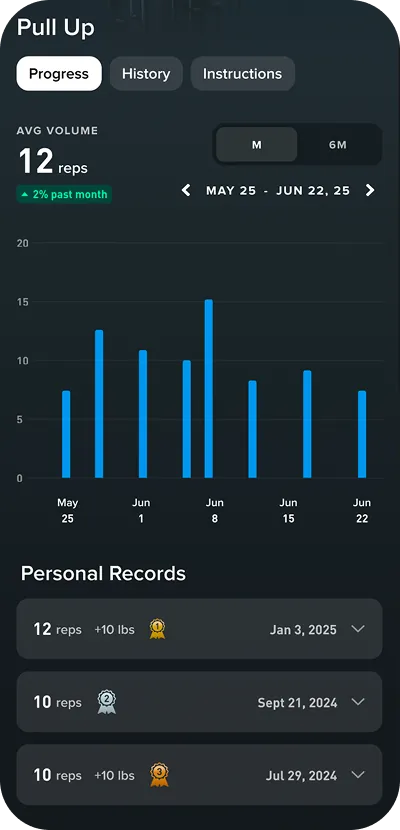
The price of that context is user effort. A structured strength workout is more informative when the exercises and session are logged correctly. If a set is omitted, an activity is classified incorrectly, or the workout begins without the intended tracking mode, the record may need attention afterward. Someone who wants the wearable to disappear during training must still decide whether opening the app before or after each lifting session is an acceptable routine.
WHOOP’s output can still be useful without treating it as an instruction that must be obeyed. A low-recovery morning might justify examining sleep, recent strain, and subjective soreness before selecting a lighter workout. It does not independently prove that training would be unsafe. Likewise, a favorable score does not overrule pain, illness, or poor technique.
Oura: sleep first, with activity feeding into readiness
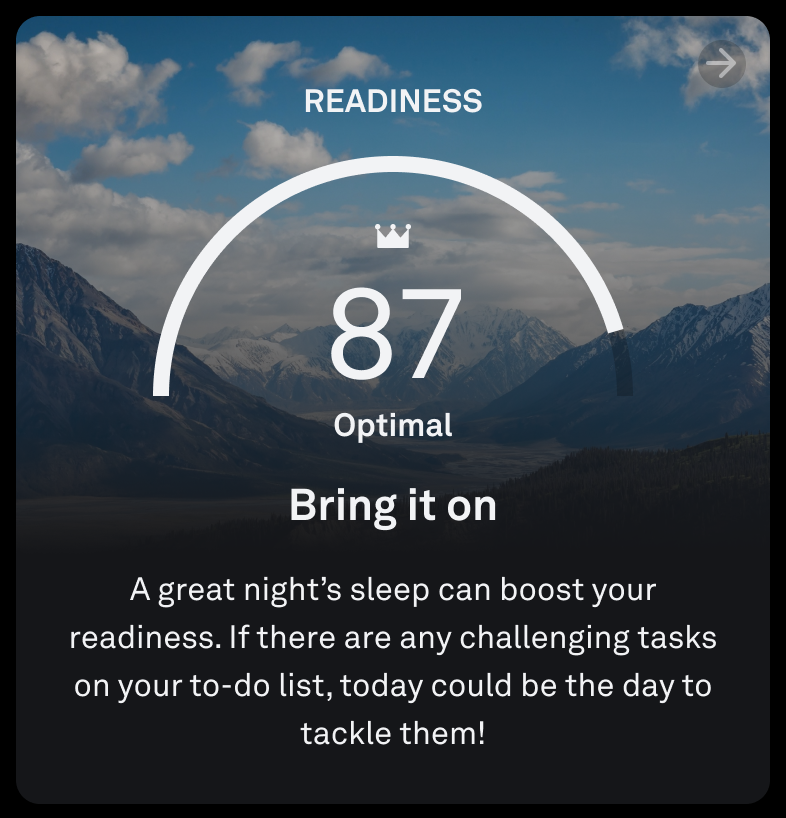
Oura separates its overnight interpretation into a Sleep Score and a broader Readiness Score. Both run from 0 to 100. Oura labels 85 and above as optimal, 70–84 as good, and results under 70 as an indication to pay attention.[6][7] Those are Oura’s own wellness bands, not clinical thresholds.
The Sleep Score packages signals associated with the night’s sleep, while Readiness places sleep beside recent physiological and activity patterns. The app shows personalized contributors so the wearer can inspect why the score moved instead of seeing only the final number.[6][7] Oura’s contributor descriptions are more useful than the score alone: they can reveal whether the app is reacting to sleep timing, overnight recovery, recent activity, or a change from the user’s usual pattern.
This sleep-centered presentation is a substantial reason to choose Oura. Sleep Foundation selected Oura as its top consumer sleep tracker for 2026, while also noting that access to the full experience requires membership.[3] That is an independent editorial recommendation, not proof that every wearer will receive more accurate sleep staging or better outcomes than with WHOOP.
Oura is less persuasive when the previous day’s home workout is missing or mislabeled. A polished Readiness Score cannot fully explain training context that never entered the record. The practical question is therefore whether the ring recognizes the activities in the reader’s actual week—or whether manual tagging becomes part of owning it.
How the choice changes across a home-workout week
Dumbbell strength work
Dumbbell training exposes the clearest difference. Sets of presses, rows, squats, and curls can be muscularly demanding without creating the same heart-rate response as a long cardio session. WHOOP’s muscular-load calculation gives that demand an explicit role, and Strength Trainer helps associate the load with the exercises performed.[1][5]
The wrist-band form also avoids placing a rigid ring between the hand and a dumbbell handle. That does not make WHOOP invisible—wrist positioning, straps, or gloves can still affect comfort—but the form is generally easier to reconcile with grip-heavy work than a ring that the wearer may prefer to remove. Removing Oura protects comfort, but it also creates a gap unless the session is added later.
For a strength-led routine, WHOOP therefore wins on training context rather than on an unsupported claim of universally superior sensors. The user still has to provide clean session information. People who consistently forget to start, confirm, or correct workouts should discount some of that theoretical advantage.
Yoga and Pilates
For yoga and Pilates, the decision shifts toward Oura when sleep is the main purpose of the purchase. The ring can remain unobtrusive overnight, and its app gives sleep a dedicated score rather than treating it only as one part of a training platform. For a quiet mobility session, detailed muscular-load accounting may add little to the recovery picture.
Workout detection is the catch. In CNET’s Oura Ring 5 review, the reviewer reported that Pilates recognition improved after weeks of repeatedly tagging sessions.[2] That is one person’s observation, not a guarantee that the ring learns every wearer’s routine. It does show the ownership pattern a buyer should anticipate: detection may improve with correction, but the corrections themselves take time.
Readers concerned about this gap can compare it with the site’s Oura home-workout accuracy testing. The useful buying question is not whether automatic detection works in principle, but how often the user will tolerate opening the app to repair the exercise history.
Indoor cycling
Indoor cycling produces a stronger cardiovascular signal than yoga, but a ring still has little hand motion to help identify what is happening. CNET reviewers documented weaker automatic detection for indoor cycling with Oura.[2][4] This supports a narrow conclusion: a rider may need to start or add the session manually. It does not establish that the ring’s overnight heart-rate or sleep data are inaccurate.
WHOOP fits riders who want the session’s cardiovascular strain integrated into daily coaching. Oura fits riders who already get workout details from the bike or another app and mainly want a sleep-focused overnight view. In the latter setup, duplicate performance metrics are less valuable than a readable explanation of why sleep or readiness changed.
Wearability and battery only matter when they change the record
Neither device is designed around checking a display during a workout. WHOOP is explicitly screenless, and Oura places its results in the phone app rather than on the ring. This reduces mid-session distraction but makes the app responsible for starting structured features, reviewing scores, and correcting activities.
CNET reported roughly 14 days of battery life for WHOOP 5.0.[1] The meaningful consequence is fewer opportunities to lose an overnight record because the device is charging. Any battery estimate remains conditional on settings and use, however. A shorter advertised interval can still work if charging becomes habitual; a long one offers little benefit if the device is routinely removed for dumbbell sessions and forgotten afterward.
Comfort is similarly personal. A ring can feel less noticeable in bed, while a soft wrist band may be easier during gripping. Buyers uncertain about the form factor should consider the broader smart-ring versus fitness-watch trade-offs for home workouts before treating either design as universally more comfortable.
The cost models can settle a close decision
WHOOP uses a subscription-only model in which the device is included with membership. CNET listed US annual prices of $199 for WHOOP One, $239 for Peak, and $359 for Life, along with a lifetime hardware warranty while membership remains active.[1] Higher tiers unlock additional features, so comparing the cheapest plan with every feature mentioned in a review can create a misleading bargain.
Oura requires a hardware purchase and then a membership for the complete app experience. CNET reported Oura Ring 5 pricing starting at $400 and membership at about $6 per month or $70 per year.[2] Its earlier Ring 4 review listed that generation from $349 to $499.[4] The hardware remains owned if membership is canceled, but the useful software experience is reduced.
| Illustrative two-year ownership | Calculation | Approximate total |
|---|---|---|
| WHOOP One | $199 × 2 annual terms | $398 |
| Oura Ring 5 at starting price | $400 hardware + ($70 × 2 years) | $540 |
| Oura Ring 4 at former starting price | $349 hardware + ($70 × 2 years) | $489 |
The cheapest two-year line is not automatically the better purchase. WHOOP’s lower entry cost continues only while the subscription is paid, and a buyer may need Peak or Life for a desired gated feature. Oura asks for more money at the start but separates the owned ring from the continuing membership. The relevant comparison is the tier and model that contain the features the buyer will actually use.
Which one should a home exerciser buy?
Choose WHOOP when dumbbell strength sessions anchor the week, muscular load should affect recovery guidance, and deliberate workout logging is acceptable. Its band format and Strength Trainer make the stronger case for grip-heavy home training, provided the continuing plan cost is justified.
Choose Oura when the central purpose is sleep interpretation and the workouts are mostly yoga, Pilates, indoor cycling, or mixed activity already recorded elsewhere. Its Sleep and Readiness presentation better suits that priority, but buyers should expect imperfect automatic detection and occasional tagging rather than assuming every home session will appear unaided.
In either case, use the daily score as wellness guidance that organizes HRV, resting heart rate, sleep, and recent activity. It is a proprietary recommendation, not a medical measurement or permission slip to train through pain.
References
- Whoop 5.0 Review — CNET
- Oura Ring 5 Review — CNET
- Best Sleep Trackers 2026 — Sleep Foundation
- Oura Ring 4 Review — CNET
- How WHOOP Measures Muscular Load — WHOOP, April 2026
- Sleep Score — Oura
- Readiness Score — Oura
This is general fitness education, not medical advice. For diagnosis or treatment of pain or injury, consult a qualified clinician.
Pick your next session
Browse all routines to find an appropriately-spaced next session.
Spot something off?
This content sits adjacent to health guidance — tell us if a citation or figure needs a correction.