
How Fitness Tracker Rings Measure Recovery: HRV, Readiness Scores, and Sleep — and Which Models Do It Best
Fitness tracker rings are the most practical wearable form factor for overnight recovery tracking, but their readiness scores vary significantly by brand. This guide compares how Oura, RingConn, Samsung, and Ultrahuman measure HRV, sleep, and recovery — and which ring suits your training profile and budget.
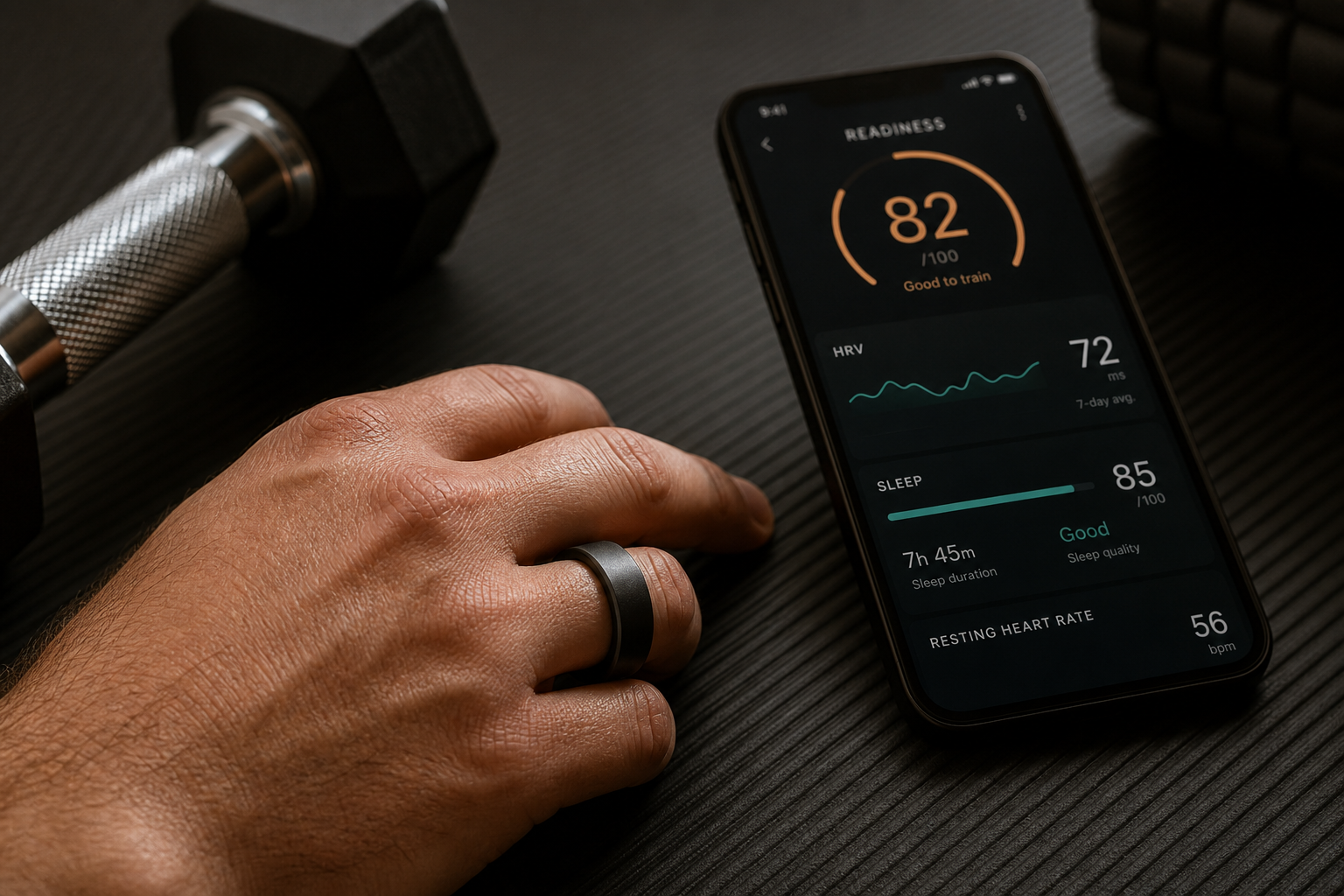
Why Recovery Tracking Is the Killer App for Fitness Rings
Wrist-based fitness trackers have a fundamental problem when it comes to recovery monitoring: most people do not want to sleep in a bulky smartwatch. The charging cycle alone creates a barrier — you either take it off to charge during the night and miss data, or you wear it to bed and wake up with a dead battery. Fitness tracker rings solve this by being small, lightweight, and unobtrusive enough to wear 24 hours a day, including during sleep, while still delivering multi-day battery life.
This form-factor advantage matters because the most validated recovery biomarkers — heart rate variability (HRV), resting heart rate (RHR), and body temperature — are best measured during sleep, when external movement and stress are minimized. A ring worn overnight captures these signals continuously without the user having to remember to put it on before bed or tolerate a chunky device on their wrist. The result is a more complete and consistent data set for calculating daily readiness or recovery scores.
For home fitness enthusiasts and intermediate athletes who train regularly, this continuous overnight data is the primary value proposition. A ring does not need to replace your workout watch — it complements it by handling the recovery side of the equation while you sleep, leaving the wrist free for GPS, real-time heart rate, and on-wrist controls during exercise.
- Comfort: Rings weigh between 3 and 6 grams, compared to 30–80 grams for a typical sports watch.
- Battery life: Most rings last 4–12 days on a single charge, eliminating the nightly charging habit that disrupts sleep tracking on watches.
- No screen distraction: A ring has no display to light up or buzz during the night, preserving sleep quality.
- Continuous wear: The form factor is comfortable enough for 24/7 use, meaning no data gaps from taking the device off.
How Rings Measure Recovery: The Key Biomarkers
Fitness tracker rings use a combination of photoplethysmography (PPG) sensors, accelerometers, and in some cases temperature sensors to capture the physiological signals that underpin recovery assessment. These raw data streams are then processed through proprietary algorithms that produce a single daily readiness or recovery score. Understanding what each signal represents helps you evaluate whether a ring's scoring system aligns with your training needs.
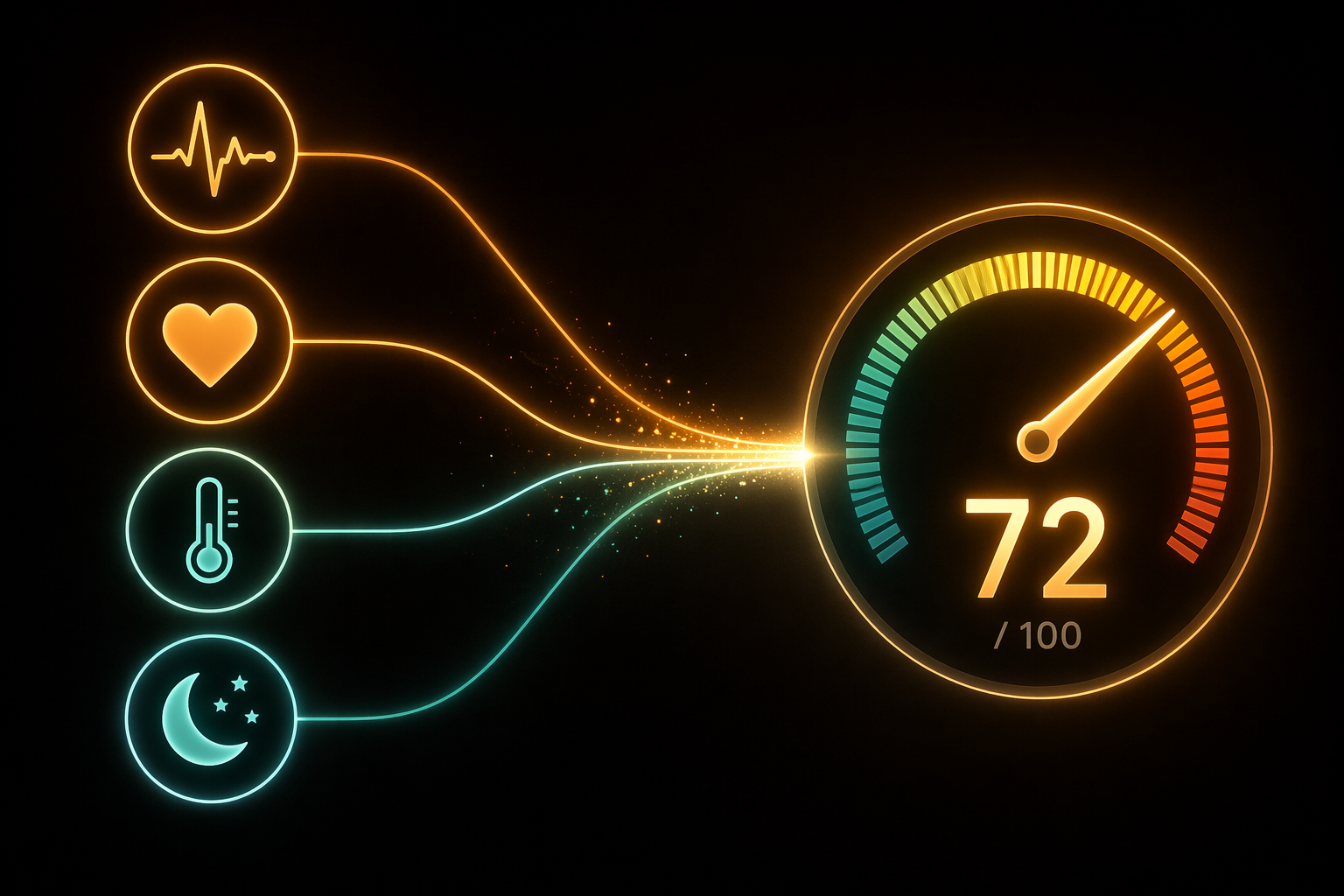
Heart Rate Variability (HRV)
HRV measures the variation in time between consecutive heartbeats. Contrary to what the name might suggest, a higher HRV is generally associated with a more resilient and recovered nervous system, while a lower HRV can indicate accumulated stress, poor sleep, or insufficient recovery. Rings measure HRV during sleep, typically capturing a five-minute window of the deepest sleep phase to produce a consistent nightly baseline. This is the single most important biomarker for recovery assessment because it reflects the balance between your sympathetic (fight-or-flight) and parasympathetic (rest-and-digest) nervous systems.
Resting Heart Rate (RHR)
Your resting heart rate is the lowest heart rate recorded during sleep or a period of complete rest. A lower RHR over time generally indicates improved cardiovascular fitness, while an elevated RHR compared to your personal baseline can signal insufficient recovery, dehydration, or the onset of illness. Rings track RHR continuously throughout the night and report the nightly low, which serves as a simple but effective recovery indicator.
Body Temperature
Some rings, including the Oura Ring 4 and Ultrahuman Ring AIR, include a skin temperature sensor that measures overnight temperature deviations from your personal baseline. A sustained elevation of 0.5°C or more can indicate the onset of illness or significant physiological stress. While not a direct recovery metric in the same way HRV is, temperature trends provide valuable context for interpreting readiness scores, especially when combined with HRV and RHR data.
Sleep Quality and Stages
Rings use accelerometer data and heart rate patterns to estimate sleep stages: light, deep, and REM sleep. Deep sleep is particularly important for physical recovery because it is when growth hormone release peaks and tissue repair occurs. Rings also track sleep duration, efficiency (percentage of time in bed actually asleep), and latency (time to fall asleep). These sleep metrics feed directly into readiness scores — a night with insufficient deep sleep will typically lower your readiness score the following day.
The Evidence Base: How Accurate Are Smart Rings?
The accuracy of smart ring sensors has been validated in peer-reviewed research. A systematic review published in PMC found that smart rings achieve a heart rate correlation of r²=0.996 and an HRV correlation of r²=0.980 when compared to clinical-grade electrocardiogram (ECG) equipment. For sleep detection, the same review reported sensitivity rates between 93% and 96%, meaning rings correctly identify sleep versus wake states at a level comparable to polysomnography, the gold standard for sleep measurement.
These validation results are important because they establish that the raw sensor data from rings is reliable. The accuracy of the final readiness score, however, depends on how each manufacturer's algorithm interprets that data — and that is where the brands diverge significantly. A ring can capture perfect HRV data but still produce a misleading readiness score if the algorithm weights the wrong factors or lacks sufficient personal baseline data.
It is also worth noting that these accuracy figures come from controlled lab settings. Real-world conditions — movement during sleep, varying skin tones, ambient temperature changes, and ring fit — can reduce accuracy. The systematic review provides the strongest objective benchmark available, but individual results will vary.
Head-to-Head: Readiness and Recovery Scoring Systems Compared
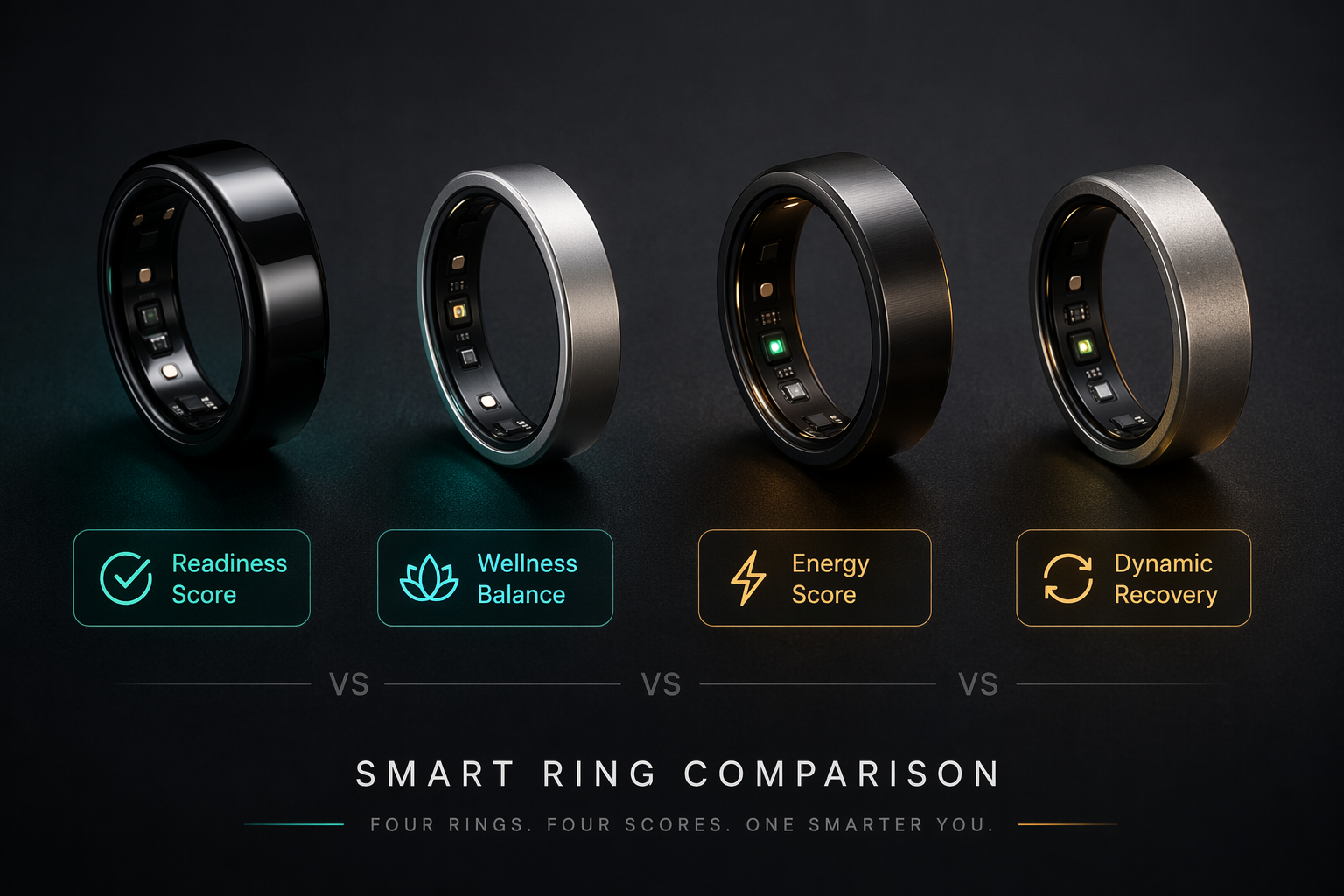
The four major fitness tracker rings on the market — Oura Ring 4, RingConn Gen 2, Samsung Galaxy Ring, and Ultrahuman Ring AIR — each offer a daily readiness or recovery score, but the methodology, data transparency, and subscription cost differ substantially. The table below provides a direct comparison of the key dimensions that matter for recovery-focused buyers.
| Feature | Oura Ring 4 | RingConn Gen 2 | Samsung Galaxy Ring | Ultrahuman Ring AIR |
|---|---|---|---|---|
| Readiness/Recovery Score Name | Readiness Score | Wellness Balance | Energy Score | Dynamic Recovery |
| Monthly Subscription Cost | $5.99/month ($71.88/year) | $0 (no subscription) | $0 (no subscription) | $0 (no subscription) |
| 3-Year Total Cost (Ring + Subscription) | $349 (ring) + $215.64 = $564.64 | $249 (ring) + $0 = $249 | $399 (ring) + $0 = $399 | $349 (ring) + $0 = $349 |
| Key Biomarkers Used | HRV, RHR, body temp, sleep stages, respiratory rate | HRV, RHR, sleep stages, SpO2 | HRV, RHR, sleep stages, skin temp | HRV, RHR, body temp, sleep stages, movement |
| Algorithm Transparency | Moderate — Oura explains general factors but does not publish exact weights | Low — RingConn provides limited detail on how Wellness Balance is calculated | Low — Samsung Energy Score methodology is not publicly documented in detail | Moderate — Ultrahuman provides more context on recovery drivers than most competitors |
| Personal Baseline Required | Yes — 2 weeks for initial calibration | Yes — approximately 1 week | Yes — approximately 1 week | Yes — approximately 1 week |
| Battery Life | 4–7 days | 10–12 days | 5–7 days | 4–6 days |
| Platform Compatibility | iOS and Android (full features on both) | iOS and Android | Android only (Samsung phones recommended for full features) | iOS and Android |
The subscription cost difference is the single most important financial factor. Oura Ring 4 requires a $5.99/month membership to access readiness scores, HRV data, and detailed sleep analysis. Over three years, that adds $215.64 to the $349 purchase price, bringing the total to $564.64. RingConn Gen 2, Samsung Galaxy Ring, and Ultrahuman Ring AIR all provide their readiness scores and recovery data without any subscription, making them significantly more affordable over time.
Algorithm methodology also varies. Oura's Readiness Score is the most established and has been refined over multiple generations of hardware and software. It incorporates the widest range of biomarkers, including respiratory rate and body temperature, and provides a detailed breakdown of which factors are driving the score up or down. Ultrahuman's Dynamic Recovery score is similarly transparent, offering contextual insights into why your recovery is trending a certain way. RingConn's Wellness Balance and Samsung's Energy Score are newer and less documented, making it harder to assess how they weight different inputs.
Where Rings Fall Short: Workout Tracking and High-Intensity HR
Fitness tracker rings excel at overnight recovery monitoring, but they have significant limitations during exercise. Understanding these gaps is essential for setting realistic expectations and deciding whether a ring should be your primary wearable or a recovery-focused companion to a wrist-based tracker.
- High-intensity heart rate accuracy: PPG sensors on rings struggle to maintain accuracy above approximately 150 BPM. During running, HIIT, or cycling intervals, the ring's optical sensor can lose contact with the skin due to hand movement and grip changes, producing unreliable readings. Wrist-based optical sensors generally perform better in this range, and chest straps remain the gold standard.
- No built-in GPS: Rings do not include GPS receivers. For outdoor running, cycling, or hiking, you will need to carry your phone or wear a GPS watch to track distance, pace, and route. Rings can use connected GPS from your phone, but this drains the phone battery and is less convenient than a watch with onboard GPS.
- Strength training logging: Rings have limited ability to automatically detect and log strength training exercises. While some rings can count reps for basic movements like bicep curls or squats, they cannot distinguish between a deadlift and a Romanian deadlift, track the weight used, or log rest periods accurately. Manual logging in the companion app is the primary workaround.
- No on-wrist display: A ring has no screen, which means you cannot glance at your wrist to see your heart rate, pace, or workout duration during exercise. You must check your phone or rely on audio cues from a paired app. This is a deliberate design choice for comfort and battery life, but it is a real limitation during structured workouts.
If your primary training focus is low-to-moderate intensity activities like walking, yoga, Pilates, or steady-state cardio, a ring alone may be sufficient. But if you do high-intensity interval training, heavy strength work, or outdoor endurance sports, plan to supplement the ring with a wrist-based tracker or chest strap for workout-specific metrics.
Which Ring Should You Buy? A Decision Framework by Training Profile
The right fitness tracker ring depends on your training habits, budget tolerance for subscriptions, and ecosystem preferences. The table below maps each ring to a specific training profile and use case, helping you match the device to your situation rather than chasing the highest spec sheet.
| Ring Model | Best For | Why | Key Trade-off |
|---|---|---|---|
| Oura Ring 4 | Athletes who want the most validated and feature-rich readiness score and are willing to pay for it | Most established algorithm, widest biomarker set, longest track record of software updates and research validation | $5.99/month subscription adds significant long-term cost; 4–7 day battery life is shorter than competitors |
| RingConn Gen 2 | Value-focused buyers who want strong battery life and zero subscription cost | 10–12 day battery life is the best in class; no subscription means lower total cost of ownership; solid recovery tracking for the price | Wellness Balance algorithm is less transparent and less validated than Oura's; brand is newer with less established customer support |
| Samsung Galaxy Ring | Android users, especially those already in the Samsung ecosystem | Energy Score integrates with Samsung Health; no subscription; seamless pairing with Samsung phones and Galaxy Watches | Android-only — no iOS support; Energy Score methodology is not publicly detailed; best features require a Samsung phone |
| Ultrahuman Ring AIR | Subscription-free buyers who want a strong recovery focus and more algorithm transparency | Dynamic Recovery score provides contextual insights; no subscription; includes body temperature and movement tracking | Availability in the US is currently uncertain due to Oura's patent dispute and import ban — verify before purchasing |
For most home fitness enthusiasts who train 3–5 days per week and want to optimize recovery without a subscription, the RingConn Gen 2 offers the strongest value proposition. Its 10–12 day battery life means you can wear it continuously without worrying about charging, and the absence of a subscription keeps the total cost at $249. The Wellness Balance score is less refined than Oura's Readiness Score, but for the price difference — $564.64 vs. $249 over three years — it is a compelling trade-off.
If you are already invested in the Samsung ecosystem with a Galaxy phone and potentially a Galaxy Watch, the Samsung Galaxy Ring is the most convenient choice. The Energy Score integrates directly with Samsung Health, giving you a unified view of your recovery and activity data without juggling multiple apps. The main limitation is platform lock-in — if you switch to an iPhone in the future, the ring becomes unusable.
For athletes who prioritize data depth and algorithm maturity above cost, the Oura Ring 4 remains the benchmark. Its Readiness Score has been refined over multiple hardware generations and is supported by the most published research. The subscription cost is a real consideration — $71.88 per year adds up — but for those who want the most comprehensive and validated recovery metrics available in a ring form factor, Oura is the proven choice.
Regardless of which ring you choose, remember that the readiness score is a tool, not a command. It provides data to inform your training decisions — whether to push hard, take an easy day, or schedule a rest day — but it should not override how you feel. The most effective use of a fitness tracker ring is to establish your personal baselines over several weeks, learn how your body responds to different training loads, and use the readiness score as one input among many in your recovery decision-making.
This is general fitness education, not medical advice. For diagnosis or treatment of pain or injury, consult a qualified clinician.
Pick your next session
Browse all routines to find an appropriately-spaced next session.
Spot something off?
This content sits adjacent to health guidance — tell us if a citation or figure needs a correction.