
How to Build a Recovery Routine Using Whoop Data: A 30-Day Starter Plan
A structured, week-by-week protocol for new Whoop users to turn their recovery score into daily action. Learn how to set up journal habits, read HRV and RHR trends, use Strain Target, and build a personalized recovery routine based on member data.
Why a 30-Day Plan? The Most Common Whoop Mistake
New Whoop users typically fall into the same trap: they check their recovery score each morning, see a green number or a red number, and then proceed with their day without changing a single behavior. The score becomes a passive report card — interesting to look at, but disconnected from action. That pattern is the fastest way to feel like the subscription isn't delivering value.
The device's real utility isn't the number itself. It's the decision framework that number unlocks — provided you build the habits to act on it. A structured 30-day protocol solves this by breaking the process into weekly phases that layer on top of each other: first you learn to log consistently, then you learn to read your data in context, then you use that context to guide daily exertion, and finally you build a personalized recovery routine based on what your own body tells you.
Week 1: Set Up Your Journal Habits
The single most important thing you can do in your first week is build the habit of logging your daily behaviors in the Whoop journal. This comes before any attempt to change your training or recovery routines. Without consistent journal data, the recovery score is just a number with no context — you won't know why it's high or low, and you won't be able to identify patterns that matter for your specific physiology.
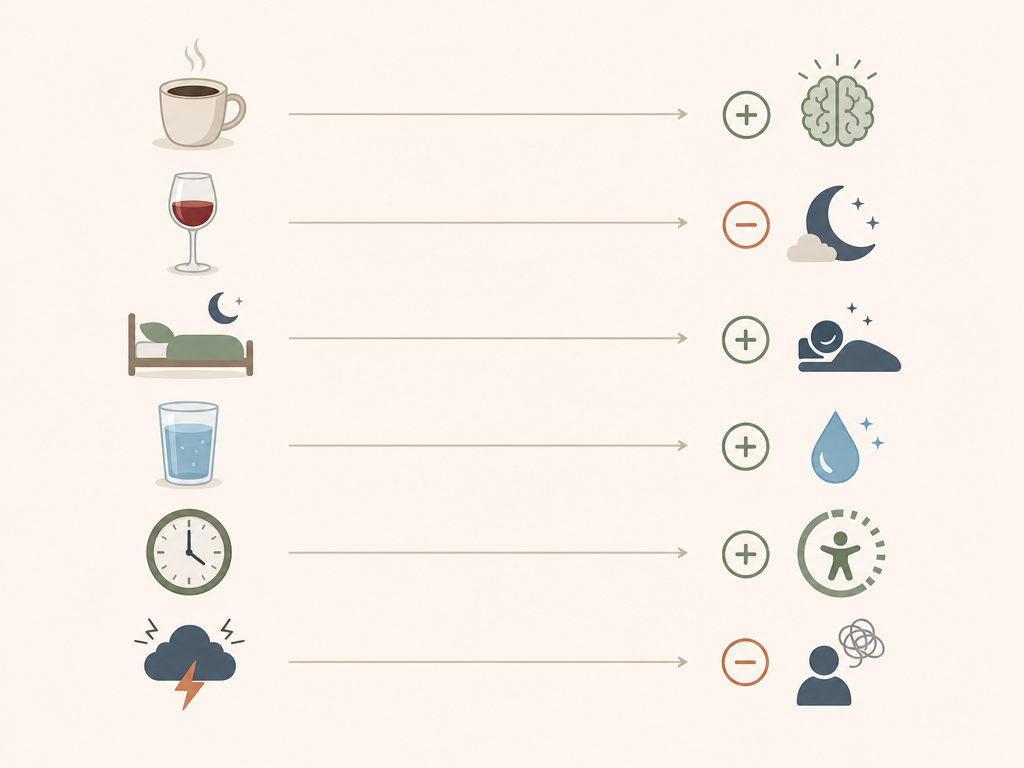
Focus on logging these six lifestyle factors every day. You don't need to change them yet — just log them honestly:
- Alcohol consumption — number of drinks, if any
- Caffeine intake — timing and approximate amount
- Sleep timing — when you went to bed and when you woke up
- Hydration — rough water intake during the day
- Last meal timing — when you ate your final food of the day
- Stress level — subjective rating of your daily stress
The journal feature is accessible directly in the Whoop app. It takes about 30 seconds to complete each morning or evening. The goal for Week 1 is 100% logging compliance — not perfect habits, just complete data. After a few weeks of consistent logging, you'll have a clear view of what helps you recover faster and what habits tank your progress, as noted in CNET's review of the device.
Week 2: Learn to Read Your Recovery Context
By the start of Week 2, you have seven days of journal data and a growing set of recovery scores. Now it's time to move beyond the color — green, yellow, red — and start paying attention to the three physiological metrics that drive that score: heart rate variability (HRV), resting heart rate (RHR), and sleep performance.
Whoop calculates recovery and estimates readiness to train using HRV, resting heart rate, sleep performance (actual sleep versus needed sleep), and respiratory rate. The recovery percentage is contextualized within a personalized range, not a universal one. That means a 58% recovery — which happens to be the average nightly recovery for Whoop owners — might be a strong score for one person and a weak score for another, depending on their baseline.
What to Watch Each Morning
- HRV trend: Is your HRV moving up, down, or holding steady over the last 3–5 days? A rising trend generally indicates positive adaptation. A sharp drop often signals accumulated fatigue, poor sleep, or a lifestyle factor you logged the previous day.
- Resting heart rate: An elevated RHR (even 2–3 bpm above your baseline) is one of the earliest signs that your nervous system is under strain. It can precede a low recovery score by a day or two.
- Sleep performance: This compares your actual sleep duration and quality against your sleep need. Consistently falling short by 30–60 minutes will drag your recovery down over multiple days, even if any single night looks fine.
During Week 2, don't change your training volume yet. Your only job is to observe the relationship between what you logged in your journal and what your recovery metrics did the next morning. You're building pattern recognition, not forcing behavior change.
Week 3: Use Strain Target to Match Exertion to Recovery
Week 3 is where the recovery score stops being a retrospective report and becomes a proactive coaching tool. The Strain Target feature in the Whoop app provides activity level recommendations based on your recovery and shows you in real time how close you are to reaching your goal. It tells you how long and hard to work out to meet that target — whether to keep pushing or whether you're overdoing it.
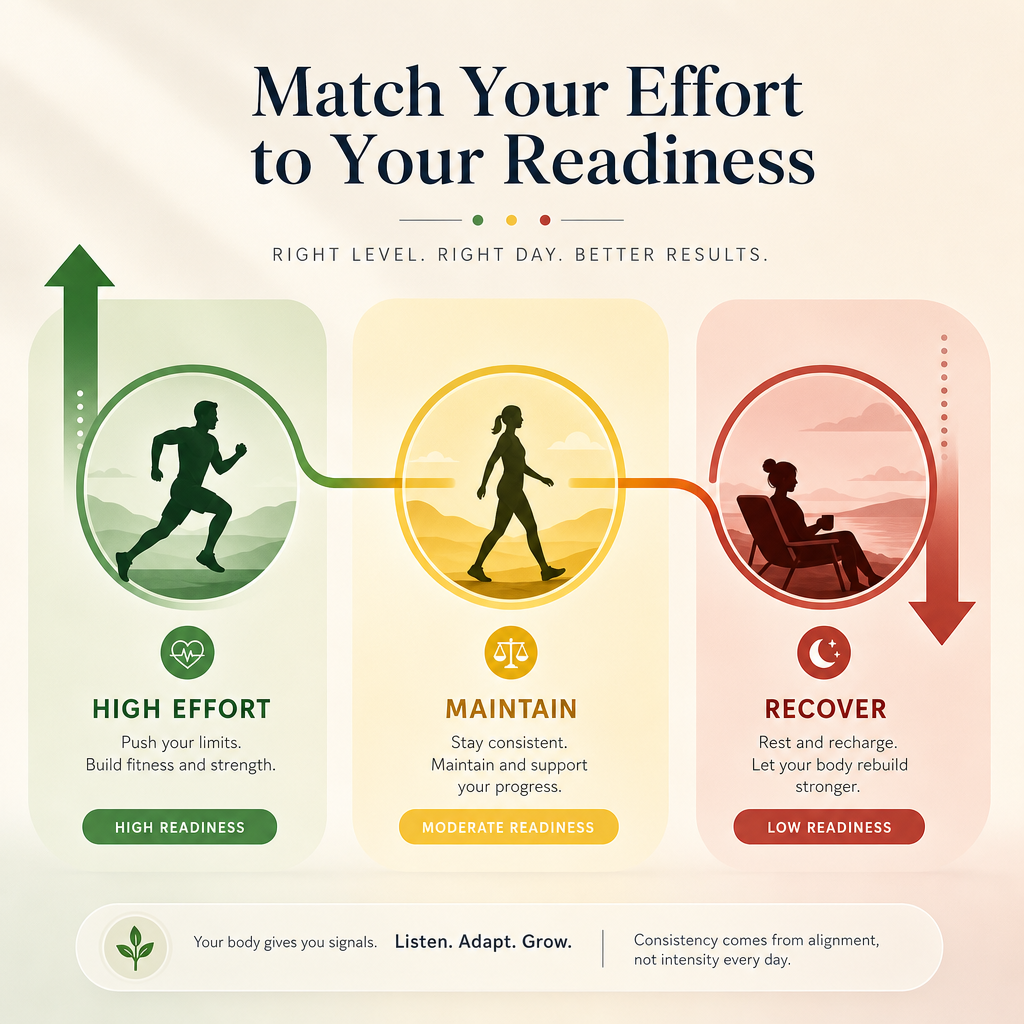
The decision framework is straightforward once you understand the three zones:
| Recovery Zone | Strain Target | Recommended Approach |
|---|---|---|
| Green (67%+) | High (12–18+) | Push — your body is ready for intense training. Aim for your hardest session of the week. |
| Yellow (34–66%) | Moderate (8–12) | Maintain — stick to your planned workout but avoid max-effort sets or extra volume. |
| Red (0–33%) | Low (under 8) | Rest or active recovery — prioritize mobility, walking, or light stretching. Skip high-intensity work. |
The Strain Target is dynamic — it adjusts based on your recovery trend, not just the single morning score. If you've had three green days in a row, your target on the fourth green day will be higher than it was on the first. Conversely, if you're trending downward across several days, the target will lower even if today's score is still green. This prevents the common mistake of training hard on a green score that follows several days of accumulated fatigue.
Week 4: Build Your Personal Recovery Activity Protocol
By Week 4, you have three weeks of journal data, you understand your recovery trends, and you've practiced matching exertion to recovery using Strain Target. Now it's time to build a personalized recovery routine — a short list of activities you can deploy on low-recovery days to actively improve your state, rather than just resting passively.
According to Whoop member data, the five most popular recovery activities logged are meditation, stretching, breathwork (labeled "increase relaxation" in the app), ice baths, and massage therapy. But popularity doesn't equal effectiveness. The same data shows that two activities stand out for their measurable impact:
- Meditation — consistently shows a positive effect on next-day recovery scores across a large sample of members.
- Massage therapy — members who logged massage closer to bedtime saw a 1% positive impact on recovery, while those who logged it further from bedtime saw a 0.6% impact. Timing matters.
Other activities like stretching, ice baths, and breathwork also showed an overall positive effect on recovery, though the magnitude varies by individual. Your job in Week 4 is to select 2–3 activities from this list, test them on red and yellow recovery days, and log them in your journal so you can see which ones correlate with better scores for you.
How to Identify Your Top Journal Correlations After 30 Days
After 30 days of consistent journal logging, you have enough data to start identifying meaningful patterns. Whoop's AI Coach — which uses a conversational interface powered by ChatGPT and has memory of previous interactions — can interpret your specific journal correlations and give personalized advice based on your actual data. You can ask it questions like "What's my top positive journal correlation this month?" or "Which habits are hurting my recovery the most?"
If you prefer to review the data manually, here's the process:
- Open the Whoop app and navigate to the Journal section, which shows your logged behaviors alongside the recovery score for each day.
- Look for behaviors that consistently precede green recovery days. These are your top positive correlations — things like early bedtime, no alcohol, or high hydration.
- Identify behaviors that consistently precede red or low-yellow recovery days. These are your top negative correlations — often alcohol, late meals, or high stress.
- Focus on your top 3 positive and top 3 negative correlations. Trying to optimize all 20+ journal factors at once is overwhelming and unsustainable.
Meaningful patterns typically emerge after 2–3 weeks of consistent logging, but the 30-day mark gives you enough data points to distinguish genuine correlations from random variation. A behavior that shows up in your journal 25+ times over the month is far more reliable than one logged only 5 times.
When to Deviate from the Score: Life Events and Context
The recovery score is a powerful guide, but it's not infallible. There are real-world situations where the number should be interpreted with context rather than followed rigidly. Learning to recognize these situations is what separates a thoughtful user from someone who outsources their decision-making to an algorithm.
- Menstrual cycle phases — HRV naturally drops during the luteal phase and rises during the follicular phase. A red score during your luteal phase may be normal and doesn't necessarily mean you're overtraining. Track your cycle alongside your recovery to establish phase-specific baselines.
- Travel and time zone changes — Jet lag disrupts sleep timing, HRV, and RHR for 2–5 days. Expect artificially low recovery scores during travel and don't use them to make training decisions. Focus on getting back to your normal sleep schedule first.
- Illness — If you're fighting a cold, flu, or infection, your recovery score will likely drop into the red. This is expected. Do not train through illness even if the score is green — your body needs energy for immune function, not exercise performance.
- High-stress life events — A major work deadline, family emergency, or emotional stressor can suppress HRV and elevate RHR independently of your physical training load. In these cases, prioritize sleep and stress management over hitting your Strain Target.
The most experienced Whoop users develop a feel for when to trust the score and when to override it. That judgment comes from months of data, not days. Give yourself permission to be wrong sometimes — the goal is long-term pattern recognition, not perfect daily compliance.
Red Flags: Orthosomnia and Overtraining
Wearable recovery tracking comes with two significant risks that every user should be aware of: orthosomnia and the green-score trap.
Orthosomnia is a term used to describe an obsessive preoccupation with achieving perfect sleep data. When you have a device that quantifies your sleep performance down to the minute, it's easy to become anxious about hitting your numbers — which ironically makes it harder to fall asleep. If you find yourself checking your sleep performance immediately upon waking and feeling frustrated or anxious about a score below 90%, you may be experiencing orthosomnia. The solution is to step back: check your recovery once in the morning, make your decision about the day's training, and don't reopen the app until the next day.
The green-score trap is the opposite problem: seeing a green recovery and assuming you're fully recovered, even when your body is sending clear signals that it needs rest. A green score means your physiological metrics are in a favorable range relative to your baseline — it doesn't mean you're immune to accumulated fatigue, minor illness, or overtraining. If your muscles are sore, your joints ache, or your motivation is completely absent, listen to those signals even if the app says green.
A systematic review published on medRxiv in 2024 found that the Whoop appears to have acceptable accuracy for two-stage sleep and heart rate metrics, with clinical applications continuing to expand across sports performance, medical condition correlation, and sleep health behaviors. But accuracy doesn't mean infallibility. The device is a guide, not a doctor. If you experience persistent low recovery, unexplained fatigue, or symptoms that concern you, consult a healthcare provider rather than trying to optimize your way out of it with journal tweaks.
This is general fitness education, not medical advice. For diagnosis or treatment of pain or injury, consult a qualified clinician.
Pick your next session
Browse all routines to find an appropriately-spaced next session.
Spot something off?
This content sits adjacent to health guidance — tell us if a citation or figure needs a correction.