
Which Skechers Mesh Sneakers Are Quietest for Apartment Walking?
We tested top Skechers mesh walking shoes in a small apartment to find which models stay quiet on hard floors, protect bare surfaces, and remain comfortable for hours of indoor walking. The Go Walk 8 wins overall, but the trade-off between noise and arch support means no single pick fits every session.
- Test space profile
- Small apartment with hardwood and vinyl plank floors, short hallway, living-room loop, compact walking pad.
- Floor damage risk
- low
- No-drill compatible
- ✓
- Test date
The quietest Skechers mesh sneaker in a small apartment was not the one I would choose for every home-walking session. On hardwood and vinyl plank, the Go Walk Joy made the softest contact: more of a muted foam tap than a shoe slap. But after longer loops through the hallway and time on a compact walking pad, the better apartment shoe was the Skechers Go Walk 8. It stayed quiet enough, felt more secure underfoot, breathed well, and had a more confidence-building outsole than the bare-foam models.
That distinction matters if the workout is happening above someone else’s ceiling. A shoe can be soft, light, and almost silent for ten minutes, then become the wrong shoe once the session turns into forty-five minutes of repeated steps on hard flooring. For this test, the Go Walk 8 was the best overall Skechers mesh sneaker for home walking in an apartment. The Go Walk Joy was the quietest for short hardwood sessions. The Max Cushioning Arch Fit was the better choice when arch support mattered more than walking-pad lightness.
How The Apartment Test Was Run
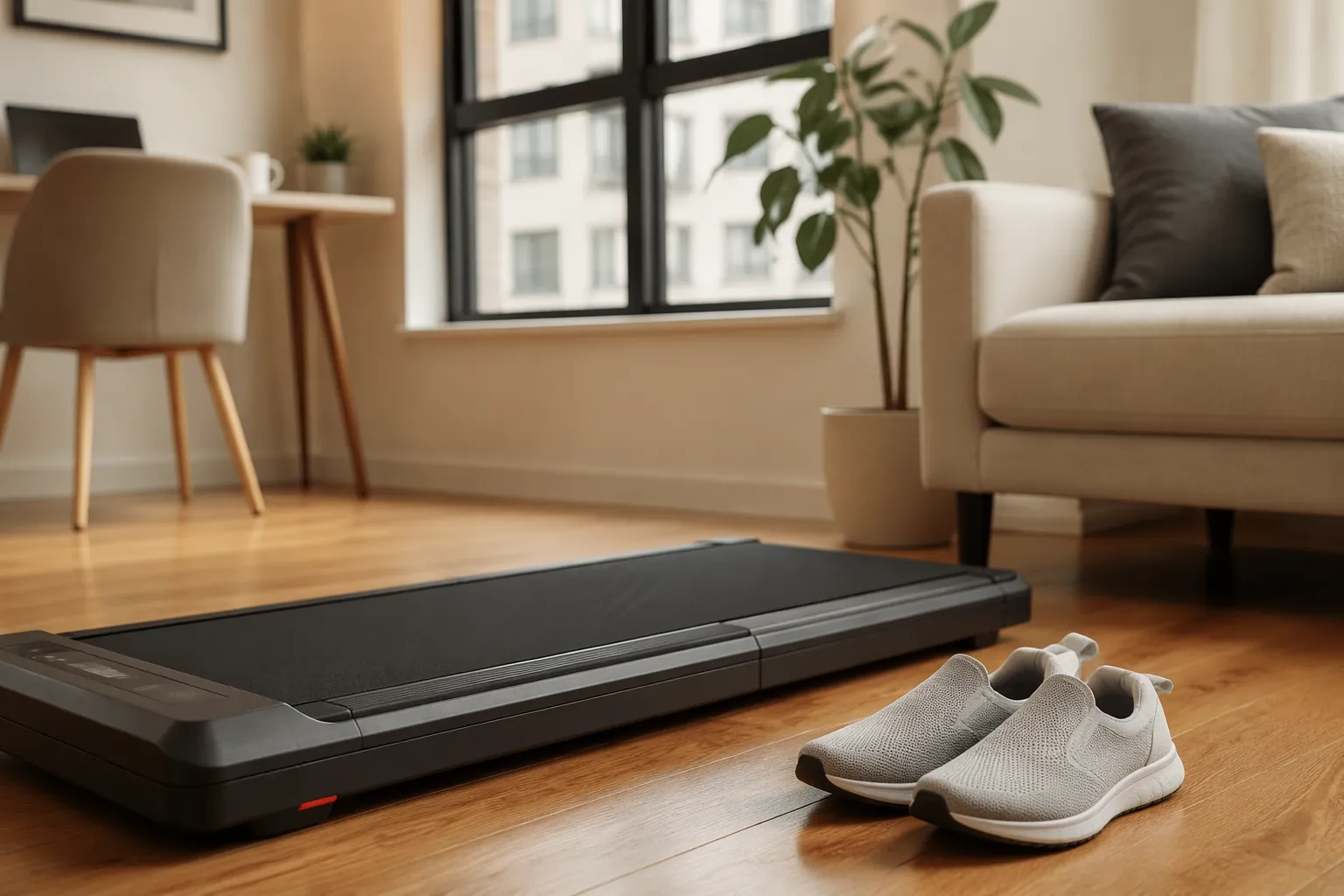
The test space was deliberately ordinary: hard floors, a short hallway, a living-room walking loop, and a compact walking pad. The point was not to replace outdoor road testing. It was to answer the smaller question apartment walkers actually run into: which shoe stays tolerable when every step repeats in the same room?
Each pair was judged on four apartment-specific behaviors: how much sound it made on bare floor, whether the outsole felt floor-safe and non-marking, how it behaved on a walking pad belt, and whether the comfort held up when the session moved from casual pacing to sustained indoor walking. Breathability and washability mattered too, because indoor walking shoes collect sweat and dust even when they never leave the apartment.
| Model | Best Apartment Use | Main Trade-Off |
|---|---|---|
| Skechers Go Walk 8 | Best overall balance for apartment walking and walking-pad sessions | Not the absolute quietest on bare floors |
| Skechers Go Walk Joy | Quiet short sessions on hardwood or vinyl plank | Less support and no rubber outsole protection |
| Skechers Max Cushioning Arch Fit | Longer sessions where arch support is the priority | Heavier, taller, and less natural on compact walking pads |
| Skechers Go Walk 6 | Light home walking if breathability is not the main concern | Exposed-foam outsole and weaker breathability data |
| Skechers Go Walk Workout Walker | More rubber and structure when grip matters | More shoe than many apartment walkers need |
Best Overall: Skechers Go Walk 8
The Go Walk 8 won because it made the fewest compromises. It did not disappear underfoot the way the Go Walk Joy can on hardwood, but it was quiet enough that the sound stayed in the room rather than becoming the main feature of the workout. The knit mesh upper felt better during longer indoor sessions than a warmer, more structured walking shoe, and the outsole gave a steadier landing than exposed foam alone.
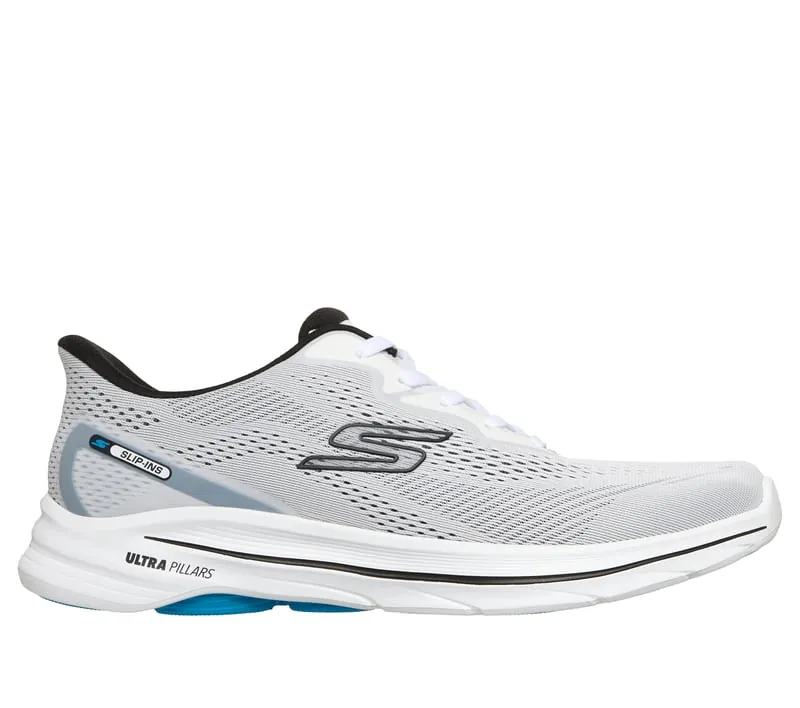
This is where the apartment test separated “soft” from “livable.” On bare flooring, the Go Walk 8 had enough cushioning to dull the contact sound without feeling mushy during repeated hallway turns. On the walking pad, it did not feel as bulky as a max-cushion shoe, and the outsole had a more planted feel than the lightest foam-bottom options. That matters on compact pads, where a slightly wide or tall shoe can make the belt feel narrower than it is.
The outside praise for this model is useful, but it should stay in its lane. Women’s Health cited podiatrist Melissa Lockwood, DPM, calling the Go Walk 8 “the high-end Skecher,” which supports the idea that it sits above the more basic comfort-walking models in the line.[1] That does not automatically make it the best shoe for every foot or every floor. In an apartment, its advantage is more specific: it combines breathable mesh, cushioning, and outsole stability without becoming too loud or too clumsy for indoor walking.
Quietest On Hard Floors: Skechers Go Walk Joy
The Go Walk Joy is the pair I would reach for when the goal is a short, quiet walk across hardwood, not a serious walking-pad session. It is light, simple, washable, and easy to keep by the door or under a desk. Outdoor Gear Lab measured the women’s Go Walk Joy at 5.16 ounces per shoe and gave it a 7/10 comfort score, noting that it performed well in a 10,000-step walking test.[2] That lightness was obvious indoors.
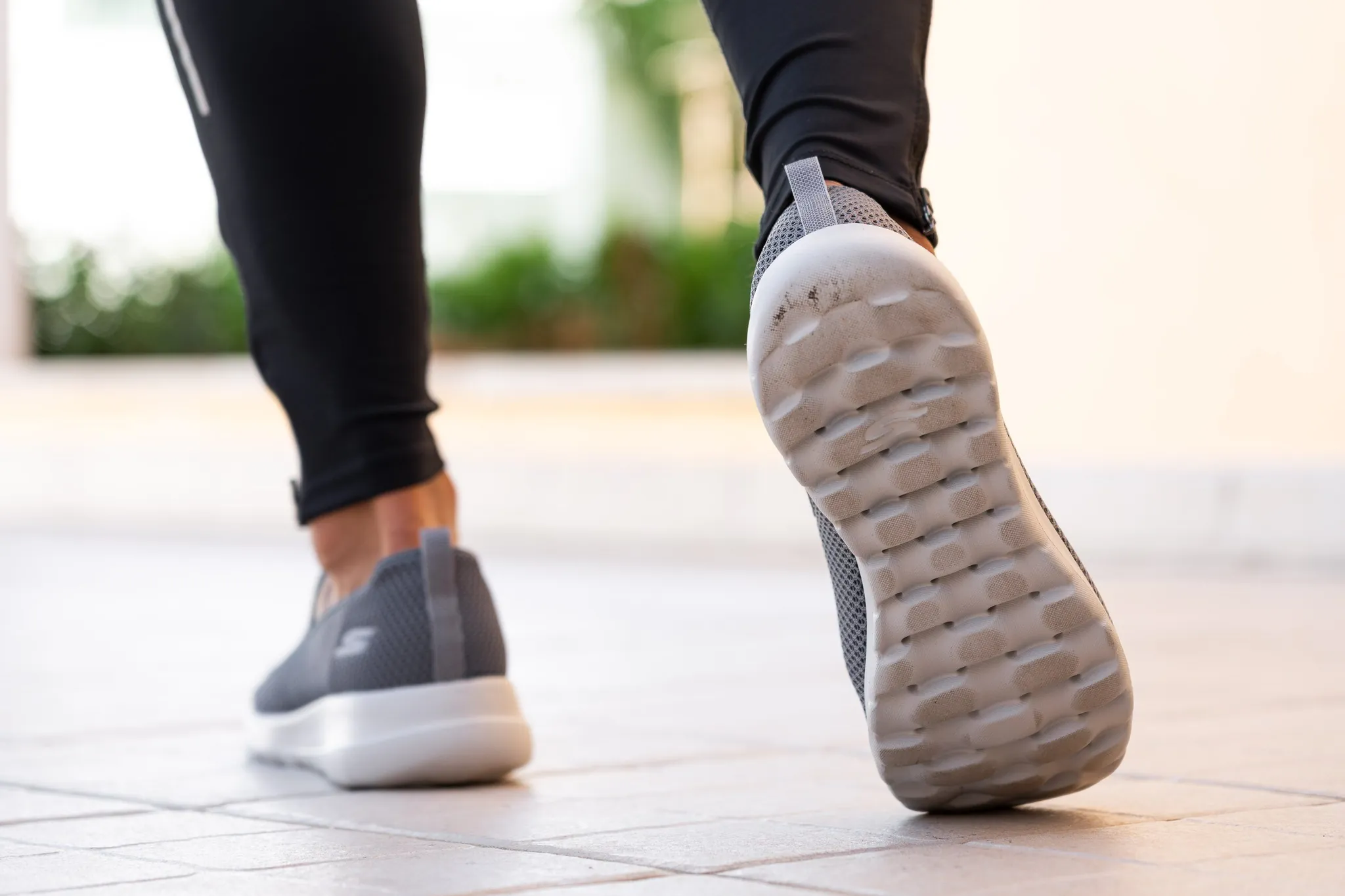
The reason it sounds so polite on bare floor is also the reason I would not over-recommend it. RunRepeat measured the Go Walk Joy with 0.0 mm of outsole rubber, compared with a 3.1 mm average in its lab data.[3] In apartment terms, that exposed foam is doing two things at once: it softens contact sound, and it removes the protective rubber layer that usually takes abrasion. The result is a shoe that can feel wonderfully quiet while also raising fair questions about wear if it becomes the daily walking-pad shoe.
On hard floors, the Go Walk Joy had the least slap. On the walking pad, its lightness was pleasant, but the lack of arch support became more noticeable as the session stretched. That is not a moral failure of the shoe; it is a use-case boundary. For short indoor pacing, desk breaks, and gentle evening laps around the apartment, it is the quietest pick. For repeated longer sessions, especially for someone who already knows they want arch structure, it asks too much of the foot.
Best Support: Max Cushioning Arch Fit
The Max Cushioning Arch Fit felt like the grown-up answer when support was the main complaint. It had more underfoot presence, more arch structure, and a more protective feel than the Go Walk Joy. For apartment walkers who finish longer sessions with tired arches rather than annoyed neighbors, that trade-off may be worth it.
The problem is that a supportive shoe can become a lot of shoe in a small space. The men’s Max Cushioning Arch Fit is listed at 12.5 ounces, and RunRepeat measured a 36.0 mm heel stack, described as 15% taller than average.[4] On open floors, the cushioning is welcome. On a compact walking pad, the height and platform can make each step feel less nimble, especially if the belt is narrow or the walker naturally drifts side to side.
This was also the model where noise became less about outsole slap and more about total step mass. A heavier, taller shoe does not have to be harsh, but it can transmit a duller thud if the walker lands heavily. For someone in a detached house, that may be a non-issue. In an upstairs rental, forty minutes of that sound is exactly the kind of thing that makes a person start lowering their stride without noticing.
Why Exposed Foam Is Both Helpful And Suspicious
The most apartment-friendly sound often came from the least protected outsole. Foam has a softer contact note than firmer rubber, especially on hardwood and vinyl plank. It also tends to feel less grabby during slow indoor shuffling, which can make a shoe seem quieter because the foot rolls through instead of catching and squeaking.
That is why the RunRepeat outsole measurements are helpful but not decisive. The Go Walk Joy and Go Walk 6 both recorded 0.0 mm of rubber outsole thickness in RunRepeat’s lab data.[3][5] For apartment use, that helps explain the quiet foam-on-floor feel. It also points to the durability trade-off: the same material that cushions sound is the material taking the abrasion from hard floors, dust, and walking-pad belts.
This is also where floor safety needs a calmer vocabulary than “non-marking” as a blanket promise. In the apartment test, none of the preferred models behaved like a black work-shoe outsole smearing across a kitchen floor. But floor finishes vary, dust changes friction, and walking pad belts add another surface entirely. A renter with pale vinyl plank or a security deposit on the line should still do a small hidden-area check before making any indoor shoe the daily driver.
The Walking Pad Changes The Answer
A shoe that is quiet on hardwood is not automatically quiet on a walking pad. The belt adds its own sound, friction, and rhythm. A soft outsole can reduce footfall noise but still make the belt squeak faintly. A high-stack supportive shoe can feel comfortable under the arch but make the walking surface feel smaller. A very light shoe can glide nicely at low speeds and then feel underbuilt when the session gets longer.
The Go Walk 8 handled that mix best. It was not the quietest single shoe on bare floor, but it was the most consistent across floor walking and pad walking. The Go Walk Joy was nicer for short, low-speed apartment laps. The Max Cushioning Arch Fit was nicer when the foot needed support more than the setup needed minimalism.
If the walking pad itself is the louder half of the setup, changing shoes will only solve part of the problem. Belt noise, motor pitch, floor vibration, and shoe contact all stack together. For that side of the equation, see our guide to the quietest walking pads for apartments.
Where Go Walk 6 And Workout Walker Fit
The Go Walk 6 sits close to the Go Walk Joy in the apartment conversation because of its exposed-foam outsole. RunRepeat measured 0.0 mm of outsole rubber on the Go Walk 6 as well, which again suggests a quieter but less protected bottom surface.[5] The bigger caution is breathability: RunRepeat’s smoke test scored the Go Walk 6 at 2/5.[5] For home walking, where there is no outdoor breeze and sessions may happen in warm rooms, that matters more than it might in a casual errand shoe.
The Go Walk Workout Walker moves the other direction. Tom’s Guide reviewed it with a Goodyear rubber outsole and Skechers’ Arch Fit system, which the brand says was developed with 20 years of data and 120,000 foot scans.[6] RunRepeat also recorded a 0.48 friction coefficient for the Go Walk Workout Walker on wet concrete.[7] Those are useful signals if grip and structure matter, but they do not make it the default apartment pick. More outsole and more structure can be reassuring; they can also add the kind of shoe presence that a small-space walker was trying to avoid.
Washability Is Not A Bonus Feature Indoors
Machine-washable mesh is easy to undersell until the shoe never leaves the apartment. Indoor walking shoes pick up dust from floors, sweat from longer sessions, and the faint stale smell that comes from being used often but never aired out on a real walk. Across the Go Walk line, washable mesh uppers are a practical advantage for apartment use, especially for anyone keeping a dedicated pair indoors.
That does not mean the upper should decide the purchase by itself. A washable shoe with the wrong outsole still creates the wrong daily problem. It only becomes a meaningful advantage once the noise, support, and surface behavior are already acceptable.
A Brief Floor-Safety Caveat
There is also a trust reason to avoid treating any walking-shoe outsole as automatically safe on smooth indoor floors. ClassAction.org has tracked lawsuit allegations involving Skechers Go Walk shoes and falls on smooth floors.[8] That does not prove that every Go Walk model is unsafe, and it does not speak directly to this apartment test. It is simply a reminder that “comfortable walking shoe” and “predictable on every indoor surface” are not the same claim.
For renters, the practical response is modest: test the shoe on the actual floor, with the actual dust level, at the speed you plan to use. Pay attention to squeaks, sliding at turns, and any visible residue after a few minutes. If the shoe is going onto a walking pad, test it there separately; belt material can change the feel completely.
Which Pair To Choose
Choose the Go Walk 8 if you want the best overall Skechers mesh sneaker for apartment walking. It is the safest recommendation for someone splitting time between bare floors and a walking pad, because it balances quietness, cushioning, breathable mesh, and outsole stability better than the others tested.
Choose the Go Walk Joy if your sessions are short, your floor is the main concern, and you prize a light, quiet step over arch support. It is the most neighbor-conscious on bare hardwood or vinyl plank, but the exposed-foam outsole and minimal support make it a narrower recommendation.
Choose the Max Cushioning Arch Fit if longer sessions leave your arches tired and you can accept a heavier, taller shoe on the walking pad. It is not the most pad-friendly or the quietest-feeling option, but it solves a different problem than the Go Walk Joy.
The final test is the room itself. Shoe noise and walking-pad noise interact, and the best apartment setup is the one where both are quiet enough that you stop shortening your stride for the people downstairs.
References
- Best Skechers for Walking, Women’s Health.
- Skechers Go Walk Joy - Women's Review, Outdoor Gear Lab.
- Skechers GO WALK Joy - Ecstatic Review, RunRepeat.
- Best Skechers Walking Shoes, RunRepeat.
- Skechers GO WALK 6 Review, RunRepeat.
- Skechers Go Walk Workout Walker review, Tom’s Guide.
- Best Skechers Walking Shoes, RunRepeat.
- Skechers Go Walk Lawsuit Investigation, ClassAction.org.
This result comes from one real apartment under the stated conditions — it is a strong signal, not a guarantee your space will measure identically.
Builds this evidence supports
No build currently links to this specific test. Browse all builds with a matching tag.
Spot something off?
If this result didn't match your own space, let us know — floor-damage and noise claims carry real deposit-risk consequences if we get them wrong.