
Replicate Adrien Broner's 45-Day Transformation at Home
Adrien Broner's Locked-In-A-Thon shows that a boxing-style regimen with 2-3 daily sessions can produce visible results in 7 days. This article breaks down his actual routine and shows how to replicate it at home in a small space with minimal or no equipment.
- Equipment tier required
- none
- Duration
- 45 min
- Difficulty
- beginner
- Target area
- full body
- Space footprint needed
- 5x5 ft
- Noise level
- low
The useful part of the Adrien Broner 45 day fitness transformation streaming story is not the warehouse, the celebrity drop-ins, or the motivational fog machine around being “locked in.” It is the footage from the first week: DeenTheGreat posted a July 17, 2026 side-by-side clip showing Broner with visibly less belly fat after seven days of the Locked-In-A-Thon.[1] That is enough to pay attention. It is not enough to claim a completed 45-day transformation.
As of July 24, 2026, the event is still in progress. The Locked-In-A-Thon launched on Kick on July 8, 2026, was described as a 45-consecutive-day stream from a warehouse gym, and is expected to run into roughly late August if it stays on schedule.[2] So the honest reading is narrow: Broner’s first-week visual change is documented; his full 45-day outcome is not.
What Broner Was Reportedly Doing
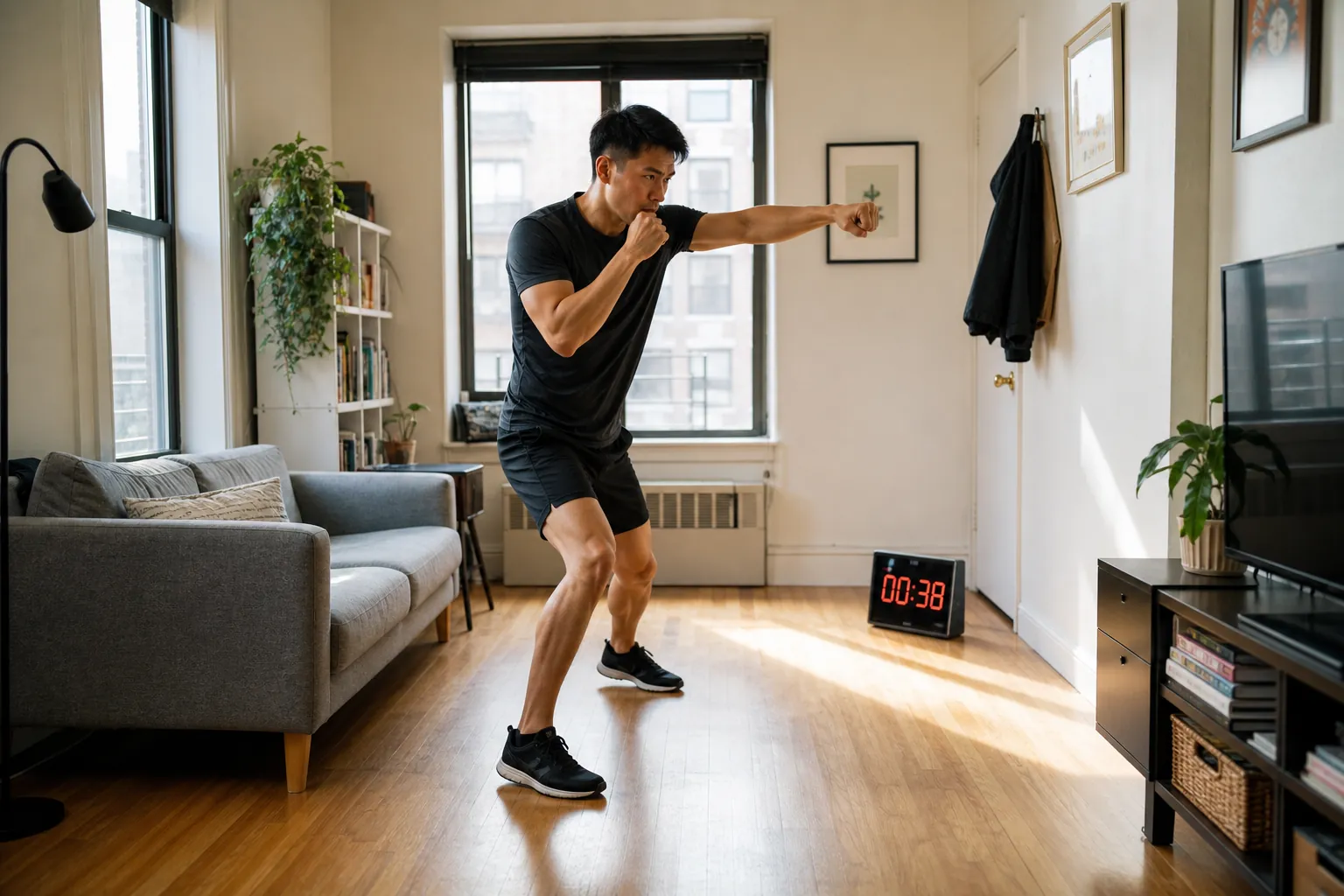
The reported routine was not mysterious. Coverage of the stream described Broner doing 2–3 daily sessions built around morning treadmill work up to 7 miles, boxing fundamentals, shadow boxing, footwork, punch combinations, push-ups, pull-ups, ab work, clean eating, no alcohol, and recovery work such as ice baths.[3] That is a lot of volume, and it matters more than any single exercise.
The stream also had the exact ingredients that make boxing internet travel fast: DeenTheGreat co-hosting, a 24/7 Kick setup, Claressa Shields publicly saying Broner “just needs motivation,” Ryan Garcia responding on X, and Ray J appearing on the stream.[2][4] Fine. That explains why the clips spread. It does not tell a renter what to do at 7 a.m. between a sofa and a wall.
The training signal is clearer than the spectacle: Broner increased daily movement, repeated boxing-specific rounds, added bodyweight strength, reduced obvious recovery blockers, and did it publicly enough that skipping was part of the pressure. At home, the public stream can disappear. The repeated work cannot.
The Home Version Runs on Rounds
For a small-apartment version, use boxing rounds as the spine: 3 minutes of work, 1 minute of rest. That one timer setting solves most of the fake complexity. It gives you a hard cardio block without needing a treadmill, a bag, gloves, or a coach yelling over music.
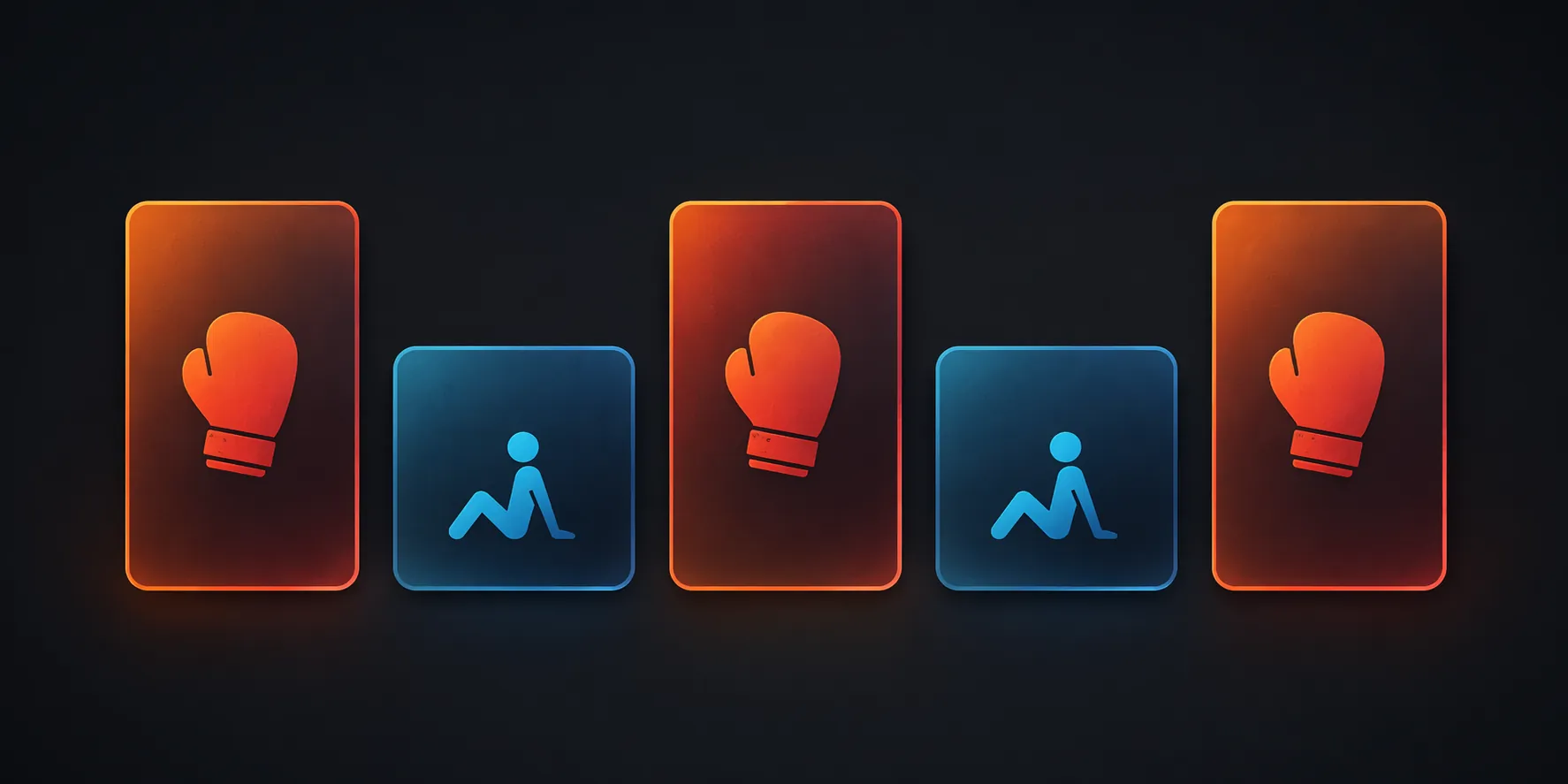
Shadow boxing is not a cute substitute for “real” boxing conditioning. No-equipment boxing workouts can use footwork, defensive movement, and punch combinations without a bag or gloves, and that makes the method unusually friendly to tight rooms.[5] Small-space boxing drills are also commonly built around controlled movement patterns rather than long travel distance, which is why a 5x5 ft square can be enough when the feet are disciplined.[6]
| Broner-style element | Apartment translation | What to watch |
|---|---|---|
| Morning treadmill up to 7 miles | Low-noise cardio intervals or brisk outdoor walk if available | Keep it repeatable; do not turn day one into a punishment |
| Boxing fundamentals and shadow boxing | 3-minute rounds of stance, footwork, jabs, crosses, slips, and combinations | Stay light on the feet without bouncing loudly |
| Push-ups, pull-ups, abs | Push-up variations, planks, dead bugs, mountain climbers, optional pull-up bar | Stop before form collapses |
| Clean eating, no alcohol, ice baths | Simple meals, hydration, sleep, optional cold exposure | Support the training; do not make recovery theater the main event |
Session 1: Morning Cardio Without a Treadmill
Broner’s reported morning treadmill work went as high as 7 miles.[3] Most people copying this at home do not need to fake that with an hour of stomping in place above a neighbor’s ceiling. The target is daily aerobic work before the day starts eating your schedule.
If you can walk outside, take the easy win: 20–45 minutes at a pace that makes conversation possible but not lazy. If you must stay indoors, use 3-minute rounds instead:
- Round 1: March in place with high hands, soft feet, and steady breathing.
- Round 2: Step-touch left and right, adding a jab on each step.
- Round 3: Alternating knee lifts with light cross-body punches.
- Round 4: Quiet shadow-box shuffle, staying inside your 5x5 ft square.
- Rest 1 minute between rounds; repeat the full block only if your breathing and joints still feel controlled.
The apartment rule is simple: if the movement makes the floor thud, swap it. March instead of run. Step instead of jump. Pivot instead of hop. A quiet round you complete six days in a row beats a dramatic round that gets retired after one complaint from downstairs.
Session 2: Shadow Boxing and Footwork in 5x5 ft
This is the part closest to the boxing stimulus in Broner’s setup. Clear a square. Put the timer where you can see it. Start in stance: feet staggered, knees soft, hands up, chin tucked. You are not trying to look violent in a mirror. You are trying to stay balanced while your heart rate climbs.
A beginner can start with 3 rounds of 2 minutes instead of forcing full boxing rounds immediately. An intermediate trainer can use 6–9 rounds of 3 minutes, with 1 minute of rest between rounds. The same room works for both; the difference is density, coordination, and fatigue management.
| Round | Beginner focus | Intermediate focus |
|---|---|---|
| 1 | Stance, guard, forward-back steps | Jab while stepping in and out |
| 2 | Jab-cross, reset after every combo | Jab-cross-slip-cross |
| 3 | Left-right side steps, no crossing feet | Jab-cross-hook, pivot out |
| 4 | Optional: repeat best round | Defense round: slips, rolls, pullbacks |
| 5–9 | Skip until ready | Mix combinations while staying quiet and balanced |
The footwork should be smaller than your ego wants. Take half-steps. Return to stance after combinations. Keep the rear heel light. If you drift into furniture, the problem is not the apartment; it is the size of your steps.
A 3-Round Starter Block
- Round 1: Jab only. Step in, jab, step out, reset. Add a slip every fourth jab.
- Round 2: Jab-cross. Throw two punches, bring both hands back to guard, move your feet before throwing again.
- Round 3: Jab-cross-hook. After the hook, pivot a quarter turn and reset inside the square.
Rest means rest. Walk slowly, shake the arms out, breathe through the nose if you can, and start the next round when the timer says so. Do not spend the minute scrolling the same clip that made you start.
Session 3: Bodyweight Conditioning
Broner’s reported conditioning included push-ups, pull-ups, and ab work.[3] At home, keep the same categories without pretending every apartment has a safe place to hang from. Push. Brace. Pull if you can.
| Category | No-equipment choice | Upgrade if available |
|---|---|---|
| Push | Incline push-ups on a counter, regular push-ups, or slow knee push-ups | Push-up handles |
| Core | Plank, dead bug, hollow hold, slow mountain climber | Foam mat |
| Pull | Prone W raises or towel isometric rows against your own tension | Doorway pull-up bar only if safely installed |
| Legs | Squat to calf raise, reverse lunge, wall sit | Mini band |
Use the same timer. A clean conditioning finisher can be 3 rounds: 40 seconds push-ups, 20 seconds rest, 40 seconds core, 20 seconds rest, 40 seconds squats, 40 seconds rest. That fits inside one small room and does not require impact.
If you already train, make the exercises harder before making the room louder. Slow the lowering phase of push-ups. Hold planks longer. Add a pause at the bottom of squats. For apartment fitness, control is usually the better progression than chaos.
The One-Week Apartment Plan
Broner’s first-week clip is the reason this routine is being examined, so the home version should start with a week, not with a heroic 45-day calendar.[1] The point is to build visible momentum: more sweat, more consistency, sharper movement, less drifting through workouts.
| Day | Morning | Boxing block | Conditioning |
|---|---|---|---|
| 1 | 20-minute walk or 4 quiet cardio rounds | 3 beginner rounds | 2 easy circuits |
| 2 | 20–30-minute walk or 5 quiet cardio rounds | 3–4 rounds | 2 circuits |
| 3 | Easy walk or mobility if sore | 3 technique rounds | Core only |
| 4 | 25–35-minute walk or 5 cardio rounds | 4–6 rounds | 3 circuits |
| 5 | 20-minute easy walk | 3 rounds, sharper combinations | 2 circuits |
| 6 | 30–45-minute walk or 6 quiet cardio rounds | 6 rounds if form holds | 3 circuits |
| 7 | Easy walk | Light 3-round review | Stretching or core |
Beginners should treat this as one main workout plus optional walking. Intermediate readers can split it into 2 daily sessions: morning cardio, then boxing and conditioning later. The reported Broner setup involved 2–3 sessions a day, but that volume is a ceiling to grow toward, not a personality test.[3]
Equipment: Timer First, Everything Else Optional
The required equipment list is almost rude: a timer. A phone works. Put it on the floor, set the intervals, and stop negotiating with the workout.
- No bag required: shadow boxing supplies the movement, rhythm, and conditioning.
- No gloves required: bare hands are fine when you are not hitting anything.
- Foam mats are optional: useful for planks, push-ups, and reducing floor noise.
- Jump rope is optional: effective, but not neighbor-friendly in many buildings.
- Pull-up bar is optional: only use one if your doorway and installation are genuinely safe.
This is where boxing beats a lot of home cardio trends. You can make a round brutally hard by punching faster, moving cleaner, changing levels, and reducing sloppy pauses. You do not have to slam your feet into the floor to prove effort.
Food, Alcohol, and Recovery Stay in Their Lane
Clean eating, no alcohol, and ice baths were part of the reported Locked-In-A-Thon environment.[3] They matter, especially if the goal is visible body-composition change, but they are not the workout. For a home trainer, the practical version is less glamorous: eat protein-forward meals, stop turning late nights into recovery debt, hydrate, and do not let alcohol erase the consistency you built in the morning.
Ice baths can stay optional. Sleep cannot. If soreness changes your punch mechanics or makes your knees bark during footwork, reduce rounds before you start shopping for recovery gadgets.
What You Can and Cannot Replicate
You cannot honestly replicate Broner’s whole setup unless you also have a warehouse gym, a 24/7 stream, social pressure, visitors, and a schedule built around training. You also cannot claim his final 45-day result yet, because the event is still ongoing as of July 24, 2026.[2]
You can replicate the useful structure immediately: daily cardio, boxing-style rounds, bodyweight conditioning, simple food boundaries, and enough repetition for your body to notice. A week of that in a 5x5 ft space is not a celebrity transformation. It is a real start, and it is available without a treadmill, heavy bag, gloves, or a downstairs-neighbor apology tour.
References
- 4-Weight Champion Adrien Broner Shows Positive Transformation Following 7-Day Workout — BodyBuildingBros
- Adrien Broner's Redemption Era Begins as He and DeenTheGreat Launch 45-Day Locked In-A-Thon on Kick — BALLERALERT
- Adrien Broner Determined to Get Back in Shape With 45-Day Streaming Marathon — Complex
- Claressa Shields Reacts to Adrien Broner's 45-Day Fitness Challenge — Yahoo Sports, July 20, 2026
- The No-Equipment Boxing Workout You Can Do Anywhere — BoxingInsider
- Top Boxing Workouts You Can Do In A Small Space For Effective Training — RareBreed
What a small equipment investment adds
We don't have a build tagged to this exact tier yet. Browse all builds.
How often should you repeat this?
See our recovery and rest reference for citation-anchored rest-interval guidance.
Spot something off?
Tell us if a movement, tier assumption, or duration didn't match your experience.