
How to Avoid Bear Encounters While Hiking for Exercise
Fitness hikers move faster and more quietly than casual hikers, often solo during dawn and dusk when bears are most active, which raises the risk of surprise encounters. This article provides adjusted noisemaking tactics, on-body bear-spray carry options, and route-planning strategies tailored to exercise hiking constraints.
- Equipment tier required
- none
- Duration
- 60 min
- Difficulty
- intermediate
- Target area
- legs
A fast dawn hike feels like clean discipline: light shoes, steady breathing, no wasted stops, enough climbing to count as a real workout before the day starts. In bear country, that same efficiency changes the safety math. You are moving quickly, often alone, often during active feeding windows, and often more quietly than you think. The problem is not that fitness hiking is reckless. The problem is that a good workout rhythm can look a lot like a surprise-encounter setup.
Most bear-safety guidance is written for slower hikers who are already talking, stopping, and traveling in groups. A fitness hiker has to translate that guidance into habits that still work while climbing hard, sweating, and keeping pace. The goal is not to turn the hike into a lecture march. It is to make yourself detectable before you are close, keep deterrent reachable without breaking stride, and choose routes and times with bear behavior in mind.
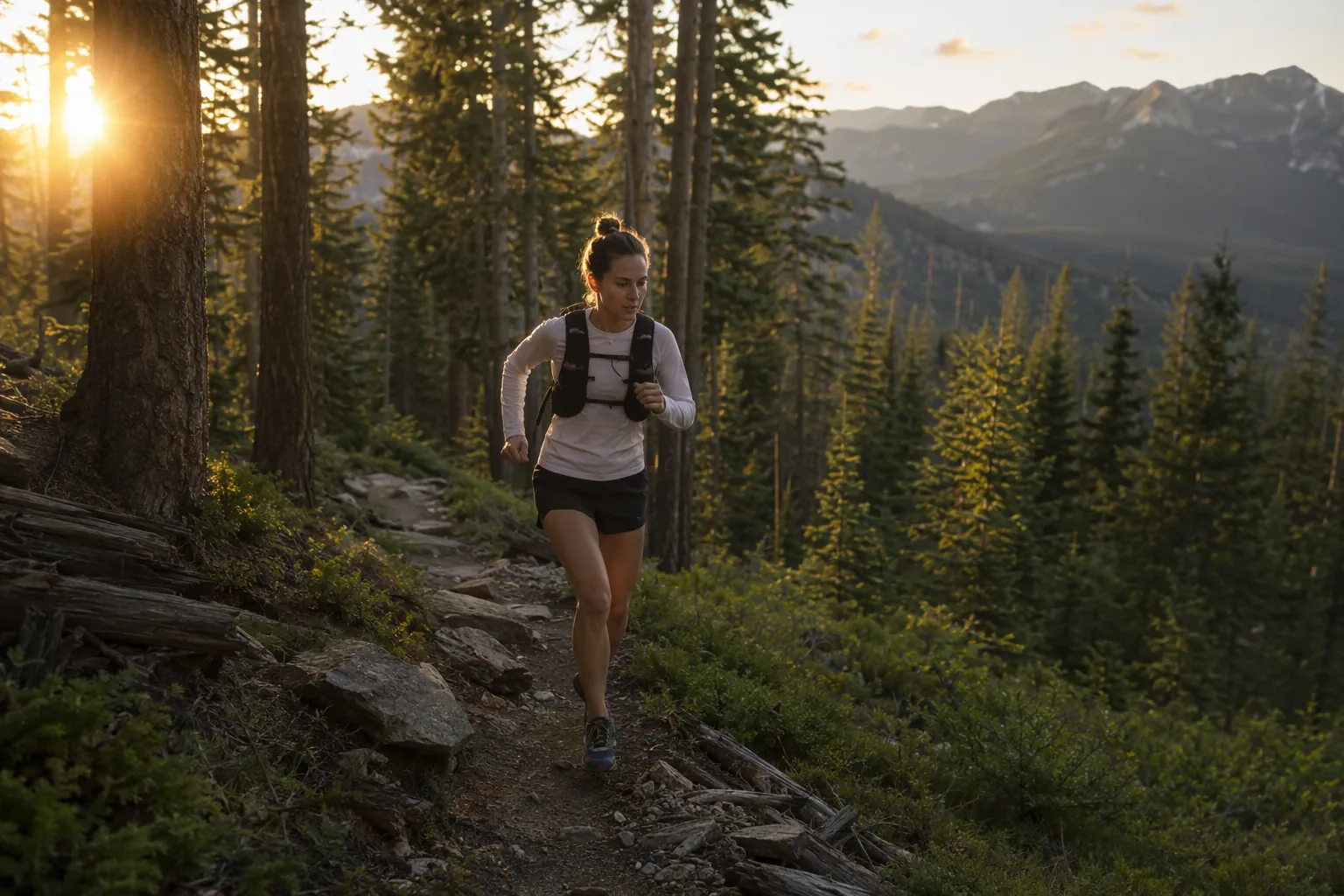
Where the workout changes the bear-encounter risk
There is no major study that isolates “fitness hikers” as a separate bear-risk category. The risk profile comes from applying established bear-avoidance guidance to the way exercise hikers actually move: faster pace, less conversation, solo travel, and early or late starts. The National Park Service advises hikers to make noise, stay alert, avoid surprising bears, be especially careful near dawn and dusk, and travel in groups when possible; those are exactly the points where a workout hike often drifts in the wrong direction.[1]
A casual group may announce itself without trying. Four people talking up a trail are noisy, wide, and slow enough to give wildlife more warning. A solo hiker pushing uphill does the opposite: head down, breath controlled, feet quick, maybe a podcast in one ear. If you are moving two to three times faster than a casual hiker, the bear has less time to hear, identify, and move away from you. That does not make an encounter likely on every trail. It does mean surprise prevention has to be built into the workout instead of remembered after the fact.
Plan the hike around bear activity, not just heart-rate zones
Dawn and dusk are popular workout windows because they are cool, quiet, and easy to fit around work. They are also periods when bears may be more active, and NPS guidance flags dawn, dusk, and night as times to be especially cautious in bear country.[1] REI gives similar backcountry guidance, advising extra caution during early morning and late evening travel.[2] That does not automatically mean “never hike early.” It does mean an early solo speed hike on a tight, brushy, low-visibility trail deserves a different decision than an early hike on a broad, well-used route with clear sightlines.
Route choice matters more when you are unwilling to slow down much. A fitness hike already has intensity built in, so choose a route that reduces surprise: wider tread, longer sightlines, regular human use, fewer blind bends, and less dense vegetation tight to the trail. Be more conservative near berry patches, salmon streams, carcass-prone areas, fresh scat, digging, or heavy animal sign. If the route forces you through loud water, thick brush, or tight corners, plan to make more noise there or pick another trail for the hard effort.
| Workout choice | Bear-country adjustment |
|---|---|
| Solo dawn climb | Use a busier, open route; avoid tight brush and blind turns when possible |
| Steady uphill pace | Add deliberate voice noise before corners, rises, and noisy water |
| Minimal carry setup | Keep bear spray on your body, not in a pack pocket |
| Dog as running partner | Keep the dog leashed or leave it home on higher-risk trails |
| Earbuds or quiet focus | Keep ears available and use a noisemaking cadence you can maintain |
Make noise in a way that fits fast movement
“Talk to your group” is useful advice if you have a group and are moving at talking pace. It is less useful when you are alone, breathing through a climb, and trying to keep the session aerobic. The underlying rule still holds: bears generally should not be surprised at close range. The adaptation is to make intentional, human sound at predictable points instead of relying on casual conversation that is not happening.
Use your voice, not just equipment. NPS guidance emphasizes making noise so bears know you are there, especially where visibility is limited.[1] Alaska Department of Fish and Game similarly advises hikers in bear country to make noise, particularly in thick brush, near streams, or when approaching blind areas.[3] For a fitness hiker, that means a short, conversation-level call before a blind turn, when cresting a rise, when entering dense vegetation, and near loud water that can mask footsteps.
One practical cadence comes from University of Northern British Columbia campus guidance cited by Canadian Running Magazine: call “Hey bear!” about every 50 paces while running or moving through wildlife habitat.[4] Treat that as a field-useful exercise cue, not as a higher authority than NPS or state wildlife guidance. Its value is that it gives a solo mover a repeatable rhythm. You do not have to count every step for an entire hike; you can use the idea to avoid long silent stretches when the trail gets enclosed.
This is also where earbuds become more than a preference. If audio keeps you from hearing movement, huffs, branches breaking, other hikers, or your own quietness, it is working against the job. If you use them anyway, keep volume low enough to hear the trail and do not let a podcast replace voice calls. The bear does not know you are “alert” because your watch says you are in zone two.
A workable noisemaking rhythm
- On open trail with good sightlines: stay alert and make occasional human sound.
- Before blind corners and rises: call out before you arrive, not after you are already in the turn.
- Near loud water, wind, or dense brush: increase the frequency of voice calls because your footsteps disappear.
- When passing fresh sign or food sources: slow enough to scan, call out, and be ready to turn around if the trail feels wrong.
- If you cannot bring yourself to make noise on a route, choose a different route for the workout.
Bear spray only helps if it is reachable while you are moving
Bringing bear spray and being able to use it are not the same habit. A canister in the back pocket of a running vest, under a rain shell, or buried in a waist pack is a comfort object, not a response tool. The Interagency Grizzly Bear Committee advises carrying bear spray where it is immediately accessible and states that it should not be stored in a backpack.[5]
For exercise hiking, the carry method has to survive bounce, sweat, arm swing, and climbing. A hip holster works well if it stays fixed and does not migrate behind you. A chest holster can work with a hydration vest or light pack if it does not interfere with breathing or pole use. The test is simple: while walking fast uphill, can you reach the canister with one hand, remove the safety, and point it without taking off your pack or turning your body into a knot? If not, change the setup before the next hike.
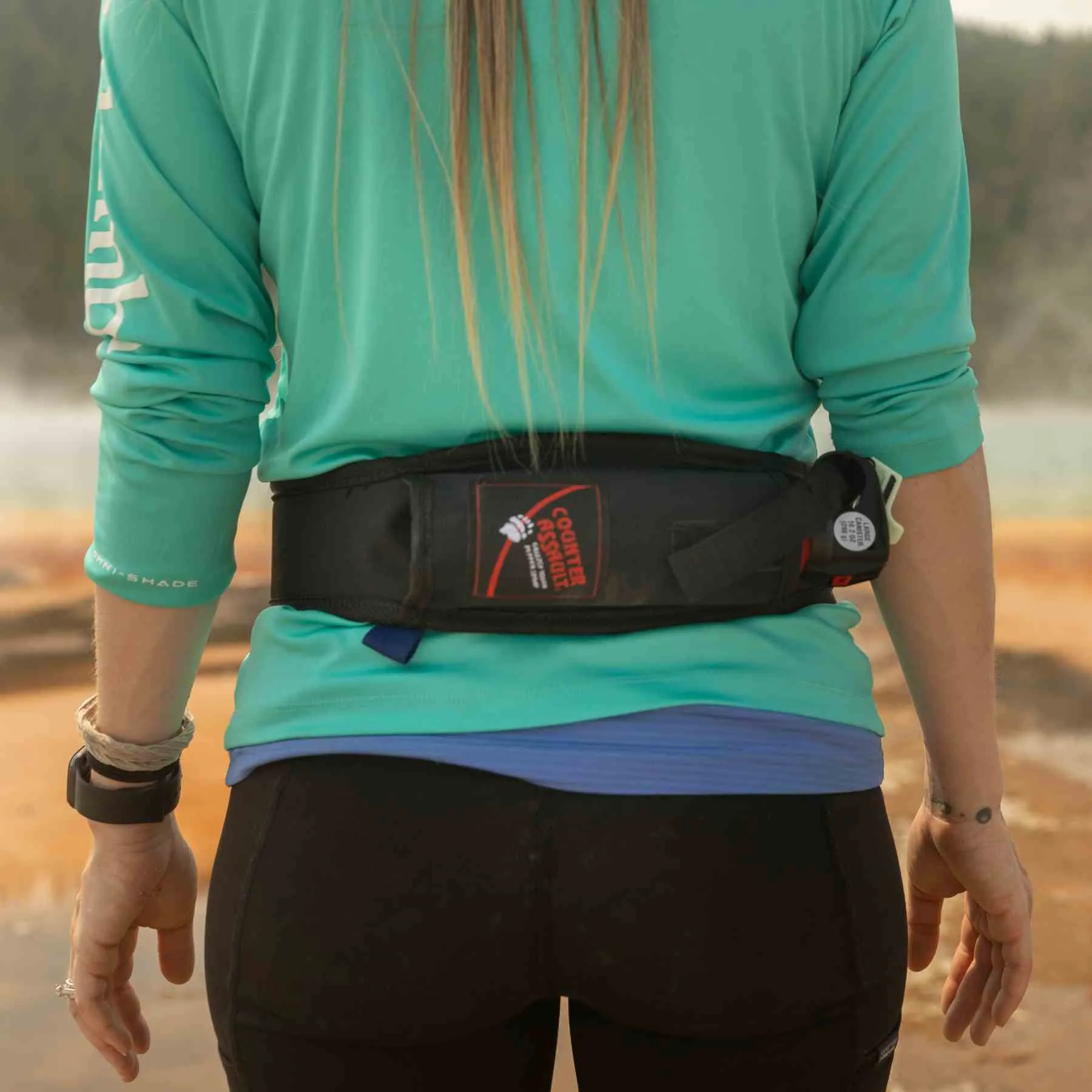
The reason this matters is not theoretical. A widely cited study of bear-spray incidents in Alaska found that spray stopped undesirable behavior in 92% of brown bear incidents and 90% of black bear incidents among the analyzed cases; 98% of people using bear spray were uninjured.[6] REI summarizes the same practical takeaway for backcountry travelers: bear spray is a proven deterrent when carried and used correctly.[2] Those figures do not mean spray is magic, and they come heavily from Alaska bear contexts, where brown and grizzly bear encounters are a major part of the evidence base. They do mean a reachable canister is worth treating like part of the workout kit, not optional emergency clutter.
Wind is the caveat people sometimes use to dismiss spray, but the better response is to train around it. The Alaska bear-spray analysis reported that wind affected about 7% of spray incidents, often in sheltered wooded areas.[6] That is enough to respect wind, not enough to justify burying the canister. Know the spray range and instructions for the product you carry, practice drawing an inert trainer if available, and check wind direction before deploying if the situation gives you time. If it does not, a packed-away canister is still worse.
The carry test before you leave the trailhead
- Can you draw the spray with either hand while wearing your actual vest, belt, or pack?
- Does the holster stay stable when you jog, climb stairs, or swing your arms?
- Can you reach it after adding gloves, a wind shell, or trekking poles?
- Is the expiration date valid and the safety clip intact?
- Do local rules allow bear spray, and does the product meet local or agency requirements?
Solo hiking and dogs are not minor details
Group-size advice is easy to resent when your whole routine depends on a quick solo start. Still, it is one of the few simple risk modifiers. NPS guidance says groups of four or more people are less likely to be attacked, and REI also notes the protective value of hiking in groups in bear country.[1][2] If a group hike is unrealistic, do not pretend the margin is the same. Compensate with a more conservative route, more deliberate noise, reachable spray, and a lower threshold for turning around when conditions stack up badly.
Dogs deserve the blunt version. University of Calgary research found that dogs were involved in 49 of 92 studied black bear attacks.[7] That does not mean every dog causes trouble or that every bear encounter with a dog becomes an attack. It does mean an off-leash dog can turn your clean workout into a fast-moving wildlife problem you no longer control. In bear country, leash the dog, keep it close, or leave it home for routes where surprise risk is already elevated.
Adjust by region and species before you copy a routine
Bear-country tactics are not identical everywhere. Grizzly and brown bear country, black bear country, and places with both species can have different local rules, seasonal closures, food-storage requirements, and spray recommendations. NPS guidance stresses that bear behavior varies by situation and that visitors should follow the rules for the specific park or area they are entering.[1] IGBC bear-spray guidance is built for grizzly bear country but is also commonly used as a standard for selecting and carrying spray in broader bear-aware travel.[5]
This matters for a fitness hiker because routines travel badly. The sunrise loop that feels ordinary near home may be a poor template on a vacation trail with different species, limited visibility, seasonal food sources, or stricter regulations. Before you chase the same pace in a new place, check the land manager’s current bear advisories, trail closures, spray rules, and recent activity reports. If local guidance is more conservative than your normal habit, use the local guidance.
A bear-aware exercise hike routine
The easiest system is the one you can repeat before you are awake enough to negotiate with yourself. Build the bear-country version of the workout the same way you build shoes, water, and route distance into the routine.
- Pick the route with visibility first, intensity second. If you want speed, choose a trail that gives bears more warning and gives you more sightline.
- Treat dawn and dusk as higher-caution windows. Move the start later when the trail is enclosed, remote, or rich in food sources.
- Carry bear spray on your body. Hip or chest carry beats any location that requires removing a pack.
- Use voice noise as part of the pace. Call before blind corners, near water, in brush, and during long quiet stretches.
- Keep the dog leashed or skip the dog. Do not add an uncontrolled animal to a solo, fast, early hike.
- Change the workout when risk factors stack. Solo, dawn, brush, wind noise, fresh sign, and unreachable spray should not all be present on the same hard-effort trail.
The standard is not fear, and it is not abandoning exercise hiking in bear country. It is stopping the quiet drift from “efficient workout” to “undetectable surprise.” Choose the trail and time more deliberately. Make human sound at the pace you actually move. Keep bear spray reachable on your body. Leash the dog. And be honest when a solo dawn push is the wrong format for that particular trail.
References
- Staying Safe Around Bears, National Park Service.
- Backpacking in Bear Country, REI Expert Advice.
- Living With Bears, Alaska Department of Fish and Game.
- What to do if you have a wildlife encounter while running, Canadian Running Magazine.
- Bear Spray, Interagency Grizzly Bear Committee.
- Efficacy of Bear Deterrent Spray in Alaska, Journal of Wildlife Management, 2008.
- Dogs and bears: a dangerous combination, University of Calgary.
What a small equipment investment adds
We don't have a build tagged to this exact tier yet. Browse all builds.
How often should you repeat this?
See our recovery and rest reference for citation-anchored rest-interval guidance.
Spot something off?
Tell us if a movement, tier assumption, or duration didn't match your experience.