
Best Budget Steaks for High-Protein Meal Prep
The cheapest steaks at the counter are also the highest-protein ones — lean round and sirloin cuts like eye of round, top sirloin, and bottom round beat ribeye and T-bone on both price and protein-to-fat ratio. This guide ranks the best budget steaks for high-protein home meal prep using 2026 prices, cooked-weight protein math, and USDA fridge-and-freezer storage rules.
- Equipment tier required
- none
- Duration
- 30 min
- Difficulty
- beginner
- Target area
- full body
At the meat counter, the ribeye usually looks like the reward. The lean round steak looks like the practical choice someone buys after checking the price twice. For a home lifter trying to build high-protein steak meal prep on a budget, that practical cut is usually the better buy. In April 2026, USDA average retail beef reached a record $9.64 per pound, up about 13% year over year, in a market shaped by the smallest cattle herd in 75 years.[1] When beef is that expensive, the question is not which steak sounds best on a menu. It is which steak gives you enough cooked protein for repeated training meals without turning one grocery run into a splurge.

The annoying little twist is that the cheaper steaks are not the nutritional consolation prize. The lean round and sirloin cuts that get ignored next to ribeye often have the stronger protein-to-fat ratios. They ask more from the cook, because they dry out faster, but on the buying side they are exactly where a home lifter should start.
The budget steak ranking that actually helps meal prep
Prices below are point-in-time references from national or published 2026 coverage, not a promise about your store. Local sales, club packs, regional supply, and butcher counter trimming can move the number. The ranking still works because it compares the two things that matter for meal prep: what the cut tends to cost and how much protein it gives relative to fat.
| Rank | Cut | Why it belongs in high-protein meal prep | 2026 price reference | Protein-to-fat usefulness | Best prep role |
|---|---|---|---|---|---|
| 1 | Eye of round steak | Very lean, cheap, and protein-dense; the best pure protein-per-dollar steak pick when cooked carefully. | Under about $6/lb in cited 2026 coverage.[3] | About 7:1 protein-to-fat ratio.[2] | Slice thin for bowls, wraps, rice plates, or post-workout meals where sauce and sides can add moisture. |
| 2 | Sirloin-tip side steak | Another lean, high-ratio cut that keeps steak in the rotation without paying ribeye prices. | Around $10/lb in cited 2026 coverage.[3] | About 7:1 protein-to-fat ratio.[2] | Batch-cook quickly, slice across the grain, and use in meals that will be reheated gently. |
| 3 | Top sirloin | The best compromise cut: still lean enough for protein-focused meals, but more forgiving and flavorful than the round cuts. | Often around $10–12/lb, with $8–10/lb sale pricing cited by a butcher in 2026.[4] | Not as extreme as eye of round, but still a strong lean steak choice for repeated meals. | Buy steaks when on sale, or break down a larger piece into steaks, roast, and stir-fry portions. |
| 4 | Bottom round | Cheap and lean, but tougher; useful when the cooking method fits the cut. | Around $6/lb in cited 2026 coverage.[3] | About 4:1 protein-to-fat ratio, with roughly 20g protein per 3 oz cited in the high-protein steak guide.[2] | Better for roast-style prep, thin slicing, or moisture-heavy meals than for steakhouse-style slabs. |
| Splurge, not protein value | Ribeye, T-bone, porterhouse | Better tenderness and flavor, worse protein-per-dollar math. | Roughly $16–22/lb in cited 2026 coverage.[3] | Roughly 1:1 to 1.5:1 protein-to-fat ratio.[2] | Save for meals where taste and tenderness are the point, not for the cheapest weekly protein base. |
That table is the whole argument in grocery-store form. A half-pound raw portion of a sub-$6/lb lean cut starts around the $3 range before cooking loss. A half-pound raw portion of a $16/lb ribeye starts around $8. The exact cooked yield will vary, but the starting gap is large enough that the cheaper cut does not need perfect math to win.
This is also why steak meal prep should not begin with marbling. Marbling helps the eating experience. It does not help the protein budget. If you are trying to line up meals after garage workouts, dumbbell sessions, or a simple home strength plan, the leaner cuts put more of the purchase toward protein instead of fat.
Use cooked-weight protein, not package optimism
Raw weight is what you pay for. Cooked weight is what lands in the container. For meal prep, those cannot be treated as the same number. Water and fat loss during cooking change the final weight, and lean steak that looks modest in the package can still produce a serious protein serving once cooked and portioned.
A practical range is better than a fake-precise number. Lean cooked steak is commonly framed around 25–31g protein per 100g, and a 6 oz cooked lean steak can land around 42–48g protein.[5] That is enough to anchor a high-protein meal without needing to pretend every dinner has to be a giant steak.
| Cooked portion | Protein expectation | How to use it |
|---|---|---|
| 3 oz cooked lean steak | Roughly half of a large steak portion; bottom round is cited around 20g per 3 oz.[2] | Useful when paired with eggs, Greek yogurt, beans, pasta, or another protein source. |
| 100g cooked lean steak | About 25–31g protein.[5] | A clean planning unit if you weigh cooked portions into containers. |
| 6 oz cooked lean steak | About 42–48g protein.[5] | A full post-workout meal anchor for many lifters, especially with rice, potatoes, vegetables, or pasta. |
The International Society of Sports Nutrition position stand for exercising individuals gives a broad daily protein range of 1.4–2.0 g/kg/day.[6] That is a target range for a day, not a command to eat steak at every meal. A 6 oz cooked lean steak simply makes one meal easier to count.
If steak is sharing the week with chicken, eggs, tuna, or dairy, that is normal. Steak does not have to carry the whole plan. For a cheaper everyday protein base, the 7-Day High-Protein Chicken Meal Prep for Home Workouts guide is the obvious companion, and frankly chicken will usually beat steak if maximum protein-per-dollar is the only goal. The reason to keep budget steak in the rotation is variety, iron-rich meals, and the fact that a well-portioned steak bowl is easier to look forward to after the fourth workout of the week.
Eye of round: the best buy if you can cook lean steak without abusing it

Eye of round is the cut that makes the budget argument hardest to ignore. It is lean, often priced under about $6/lb in the cited 2026 coverage, and listed with a 7:1 protein-to-fat ratio.[2][3] That combination is rare in the steak case. It is also why eye of round should not be judged by ribeye standards. It is not plush. It is not forgiving. It is a protein tool.
For meal prep, the mistake is cooking it like a thick celebratory steak and then complaining that it eats like a shoe. Eye of round needs help: brief high-heat cooking, thin slicing across the grain, marinades, pan sauces, broth, salsa, chimichurri, or a bowl format where rice and vegetables carry moisture. It does well when the container is built as a meal, not as a lonely slab of reheated lean beef.
Use it when the meal already has a soft landing: steak and rice bowls, steak tacos, steak over potatoes, steak with noodles, or sliced steak beside eggs. If you are building around a post-workout carbohydrate meal, the protein-dose logic in the spicy rigatoni post-workout meal prep piece transfers cleanly: decide the protein target first, then let the starch and sauce make the meal repeatable.
Sirloin-tip side steak: nearly the same protein logic, usually a higher sticker
Sirloin-tip side steak sits close to eye of round nutritionally, with the same cited 7:1 protein-to-fat ratio, but the cited 2026 price is closer to $10/lb.[2][3] That still beats the premium steak case, but it is no longer an automatic buy if eye of round or top sirloin is on sale nearby.
The buying rule is simple: choose sirloin-tip side steak when the price is meaningfully below top sirloin or when the pieces look easier to portion. It belongs in the same cooking lane as other lean cuts. Do not overcook it, do not leave it thick and dry for Thursday lunch, and do not expect fat marbling to rescue a harsh reheat.
Top sirloin is the best meal-prep compromise
Top sirloin deserves more respect than it gets in budget steak lists because it solves a real home-cooking problem. Eye of round may be the protein-per-dollar star, but top sirloin is easier to enjoy three times in a week. A butcher cited by Simply Recipes in February 2026 described top sirloin as a strong cheap-steak pick, with typical pricing around $10–12/lb and sale pricing around $8–10/lb.[4]
The better move, if you have freezer space and the upfront budget, is buying a larger top sirloin piece. The same butcher guidance points to buying a 12–15 lb whole piece and breaking it down into steaks, a roast, and stir-fry portions.[4] That is the kind of advice that turns a steak ranking into a meal-prep system.
| From one larger top sirloin buy | How it helps the week |
|---|---|
| Steaks | Cook fresh in the first couple of days, when texture matters most. |
| Roast portion | Cook once, chill, and slice thin for bowls, sandwiches, potatoes, or salads. |
| Stir-fry strips | Freeze flat in meal-size packs so a weeknight protein meal does not start from a full butcher-counter decision. |
Top sirloin also tolerates a little more variety. You can grill or pan-sear steaks, slice leftovers cold, cube it for bowls, or cut strips for fast meals. It is still not ribeye, and that is fine. The point is not to fake luxury; it is to buy a leaner steak that survives real repeat eating.
Bottom round is useful when the cooking method matches the cut
Bottom round is cheap, lean, and usually tougher. It is cited around $6/lb, with about 20g protein per 3 oz and a 4:1 protein-to-fat ratio.[2][3] That makes it a good budget option, just not the cut to buy when you want thick, tender steak portions all week.
Treat bottom round as a slicing cut. Cook it in a way that lets you cut it thin, then put it where texture is not carrying the whole meal: rice bowls, brothier meals, sauced plates, or salads with an acidic dressing. If your plan is to cook four plain steaks and microwave them dry, bottom round will punish that plan quickly.
Where ribeye, T-bone, and porterhouse still win
Premium steaks win on tenderness, fat-driven flavor, and the pleasure of eating steak as steak. Ribeye is popular for a reason. T-bone and porterhouse give you a steakhouse experience that lean round cuts cannot honestly copy. The issue is that they are poor answers to a protein-per-dollar question.
With cited 2026 prices around $16–22/lb and protein-to-fat ratios roughly in the 1:1 to 1.5:1 range, these cuts put much more of the grocery spend toward fat, flavor, and tenderness.[2][3] That may be exactly what you want for a Saturday dinner. It is rarely the best use of money for four reheated training meals.
Cooking lean steak so it still gets eaten on day three
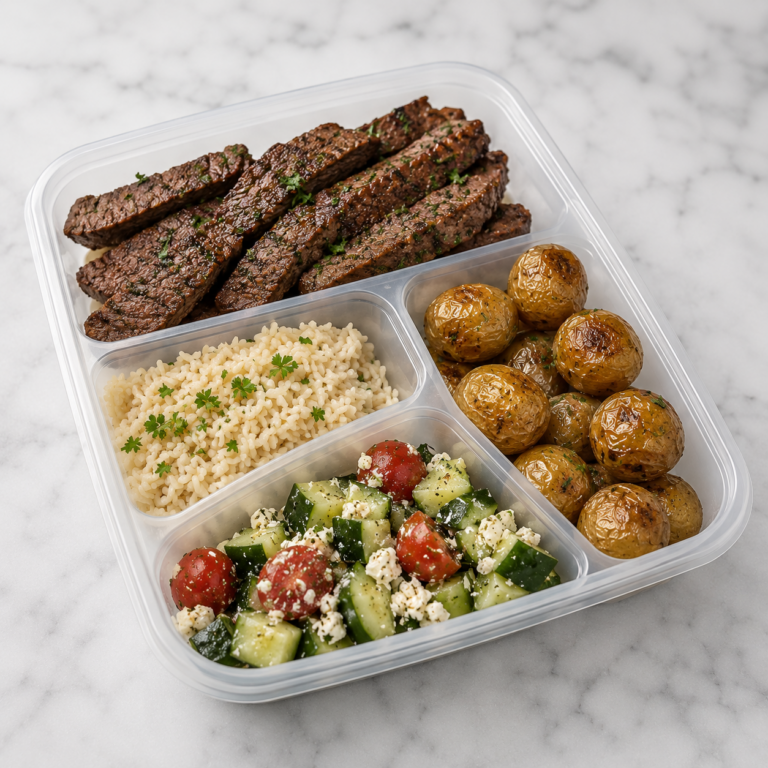
Lean steak meal prep fails less at the buying stage than at the reheating stage. Eye of round, sirloin-tip side steak, top sirloin, and bottom round need a plan for moisture because they do not have ribeye’s fat cushion.
- Cook lean steaks no more than necessary for your preference, because reheating adds more heat later.
- Slice across the grain before portioning so the meat eats more tenderly.
- Pack steak with moisture: salsa, broth, pan juices, yogurt sauce, chimichurri, tomato sauce, or vegetables that release liquid.
- Keep some portions unsliced if you will eat them cold or gently warmed, but slice thin for microwave lunches.
- Reheat only until hot enough to eat; repeated aggressive reheating is where lean steak turns from budget win into chewing practice.
A useful weekly pattern is to cook the most texture-sensitive portions first and freeze the rest early. Eat top sirloin steaks or freshly cooked eye of round in the first couple of days. Use sliced sauced portions later. Freeze extra portions instead of pretending they will taste better after sitting all week.
Storage rules set the real size of the batch
The refrigerator, not the frying pan, decides how ambitious steak meal prep should be. USDA FSIS guidance says cooked leftovers can be kept 3–4 days in the refrigerator and 3–4 months in the freezer.[7] That means a Sunday steak cook is not automatically a five-day fridge plan.
| Meal-prep decision | Practical move |
|---|---|
| Cooking steak for 2–3 days | Refrigerate portions you will eat soon, especially the meals where texture matters. |
| Cooking more than 3–4 days of steak | Freeze the later portions instead of pushing the fridge window. |
| Buying a large top sirloin piece | Break it down before freezing so you can thaw one meal-size pack instead of a whole roast. |
| Using lean round cuts | Freeze with sauce, marinade, or planned bowl components when possible so the reheat has moisture. |
This is where steak prep connects back to training. If your home routine depends on repeatable meals, the freezer is part of the program. For older lifters trying to keep strength work consistent, that repeatability matters as much as the steak choice itself; the same idea shows up in the muscle-maintenance-after-50 home routine, where the food has to support the habit instead of complicating it.
The buying rule
When protein-per-dollar matters, start with eye of round, sirloin-tip side steak, top sirloin, and bottom round. Use cooked-weight portions to count protein, cook lean cuts in ways that protect moisture, keep refrigerated leftovers within the USDA 3–4 day window, and freeze the rest. Save ribeye, T-bone, and porterhouse for meals where tenderness and flavor are the reason you are buying steak.
References
- U.S. Meat Consumption Increases Despite Rising Prices, American Farm Bureau Federation Market Intel, May 2026.
- The 5 Best High-Protein Cuts Of Steak, Bodybuilding.com.
- The Steak Cut With The Most Protein Is Also Surprisingly Affordable, The Takeout, March 2026.
- I Asked a Butcher To Name the Best Cheap Steak—He Said It's 'Very Flavorful', Simply Recipes, February 2026.
- How Much Protein Is In Steak?, ATHLEAN-X.
- International Society of Sports Nutrition position stand: protein and exercise, Journal of the International Society of Sports Nutrition.
- Leftovers and Food Safety, USDA Food Safety and Inspection Service.
What a small equipment investment adds
We don't have a build tagged to this exact tier yet. Browse all builds.
How often should you repeat this?
See our recovery and rest reference for citation-anchored rest-interval guidance.
Spot something off?
Tell us if a movement, tier assumption, or duration didn't match your experience.