
Your No-Equipment Desafío Extremo Home Workout Challenge
Turn your living room into a mini Desafío Extremo training ground with this no-equipment circuit inspired by the show's Territorial, Power, Immunity, and Punishment challenges.
- Equipment tier required
- none
- Duration
- 30 min
- Difficulty
- beginner
- Target area
- full body
- Space footprint needed
- 6×6 ft
- Noise level
- jumping
You do not need a beach, a tower, a mud pit, or a production crew to borrow the training logic of La Isla: Desafío Extremo. You need a clear patch of floor, a timer, and a smarter translation than “do burpees because the show looks hard.” The useful version of a Desafío Extremo home workout asks what the show is testing—hauling, balancing, holding, sprinting under fatigue, staying calm when the round gets ugly—and turns that into bodyweight work that fits between a couch and a coffee table.
For English-dominant fans who know Telemundo but have not followed every episode: La Isla: Desafío Extremo is the U.S. adaptation of the Colombian format The Challenge, with contestants divided into teams such as Águilas, Tiburones, and Panteras, competing through escalating challenge formats before the game moves toward individual survival and a cash prize listed at $200,000.[1][2][3] Its first-season premiere drew 1.03 million viewers, and the second-season premiere drew 1.14 million viewers in Nielsen-reported figures cited by Wikipedia, so this is not a random fitness fantasy attached to a tiny reference point.[1]
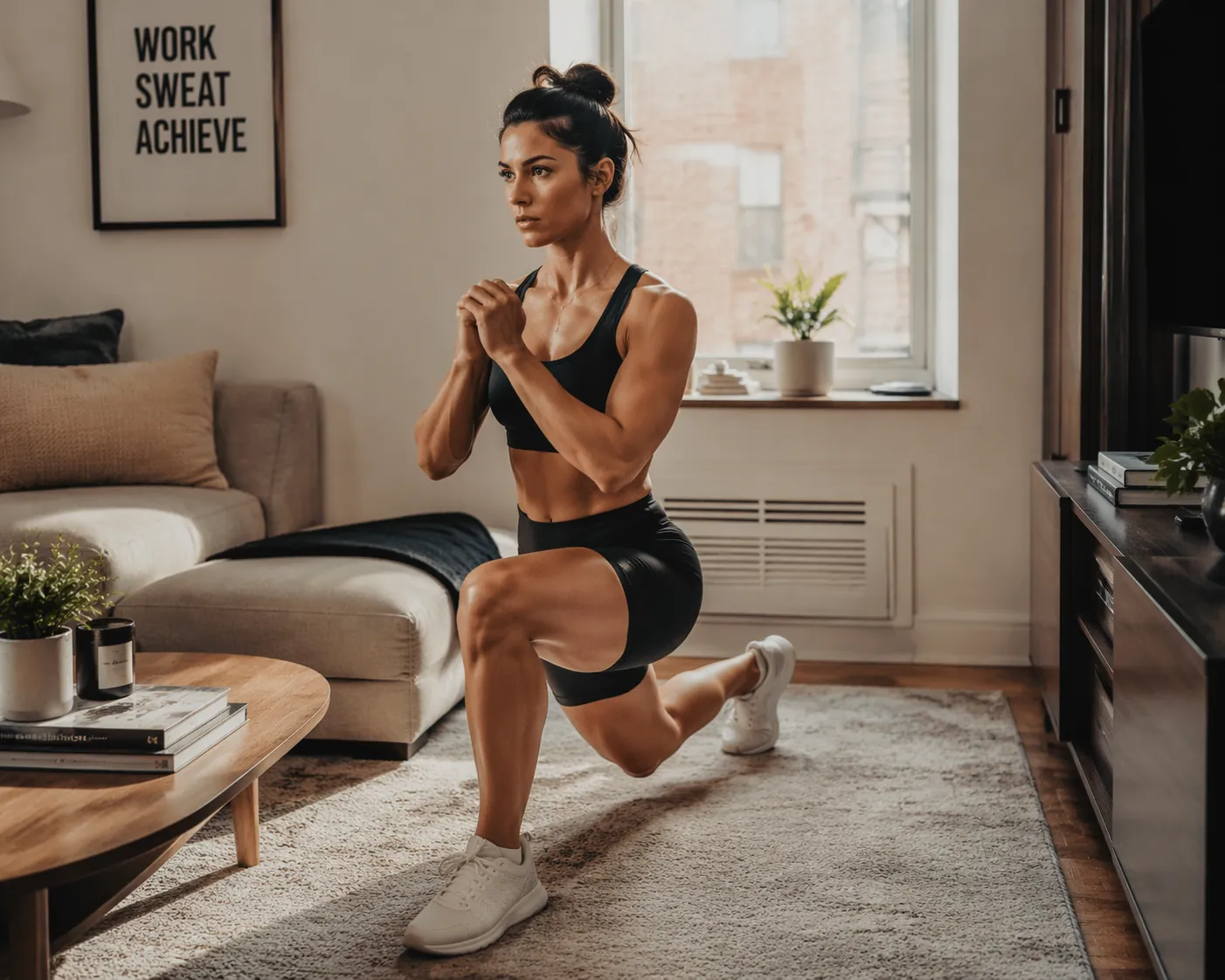
The show’s appeal is not just that people suffer beautifully on camera. It is that the challenges keep changing the demand. One round looks like a carry. Another becomes a balance problem. Another asks tired people to build, hold, climb, or survive a consequence. That is where the home version becomes interesting. A living-room workout cannot reproduce the terrain of Turkey or the Dominican Republic, where the series has filmed, but it can reproduce the shift in physical qualities: legs, trunk, lungs, grip-like tension, balance, and composure under fatigue.[1][2]
If you like this style of competition-inspired training, the same principle shows up in our no-equipment UFC fighter workout and NFL training camp home routine: the goal is not cosplay. It is choosing exercises that match the demand.
The Desafío-to-living-room translation
Wikipedia’s episode descriptions document recurring La Isla challenge structures across seasons, including Territorial, Power, Immunity, and Punishment challenges.[1][2] The exercise mapping below is FitAtHome’s interpretation of those formats, not an official Telemundo workout and not a claim about how contestants train.
| Show challenge type | What it usually asks from the body | Home bodyweight equivalent | How it should feel | Apartment modification |
|---|---|---|---|---|
| Territorial | Moving with purpose, covering ground, hauling or traveling under pressure | Reverse lunges, bear-crawl steps, slow lateral lunges | Legs working like you are carrying something even without equipment | Keep steps short; use a rug edge as your lane |
| Power | Explosive effort, fast transitions, repeated bursts | Burpees, squat jumps, mountain climbers, fast step-backs | Breathing spikes, but form stays organized | Swap jumps for squat-to-calf-raise or step-back burpees |
| Immunity | Holding position, balancing, staying composed while tired | Planks, wall sits, single-leg balance, hollow holds | Stillness gets difficult; shaking is allowed, collapsing is not | Use a wall, couch back, or fingertip support for balance |
| Punishment | A consequence round after fatigue has already built | Short AMRAP finisher with simple moves | Urgent, uncomfortable, controlled | Cap it tightly; no all-out jumping if neighbors are below |
That translation is also consistent with how obstacle-style fitness is usually built at home: repeated bodyweight patterns can train strength endurance, power, and conditioning without machines when the exercises are selected and progressed well.[6][7] The difference here is the theme. Instead of a generic circuit, each block borrows a job from the show.
Set up your 6×6 ft island
Clear roughly 6×6 ft of floor. That is enough for reverse lunges, a plank, a squat, a wall sit, mountain climbers, and a compact burpee variation. Move the coffee table instead of trying to work around it. If you are on hardwood or tile, use a mat or rug that does not slide. If you have downstairs neighbors, treat jumping as optional, not heroic.
You will use three intensity levels:
- Base: quiet, joint-friendly, no jumping.
- Standard: moderate speed, some impact if your floor and body tolerate it.
- Finale: harder pace, still clean enough that you could repeat the workout next week.
If you need more low-noise options, keep our apartment boxing drills and small-apartment boxing footwork drills nearby for substitutions. Footwork teaches the same discipline this circuit needs: move sharply without shaking the building.
Warm up like you have a challenge coming
Take five to seven minutes. A cold start is where the fantasy version of this workout gets people in trouble. The warm-up should make your ankles, hips, shoulders, and trunk ready for fast changes without turning into the workout itself.
- March in place or step side to side for 60 seconds.
- Do 8 slow bodyweight squats, pausing at the bottom just long enough to check knee and foot position.
- Do 6 reverse lunges per side, short range at first.
- Hold a high plank for 20 seconds, then press back into a gentle down-dog shape for 20 seconds.
- Do 10 slow mountain climber steps, bringing one knee forward at a time.
- Stand on one leg for 15 seconds per side, using a fingertip on the wall if needed.
You should finish warmer, not cooked. Save the drama for the circuit.
The no-equipment Desafío Extremo circuit
Run the circuit for 3 rounds if you are new or returning after time off. Use 4 rounds if you already train consistently. Rest 45 to 75 seconds between blocks, and 90 seconds between full rounds. The exercises stay simple because fatigue will make them honest.
| Block | Exercise | Work | Rest | Low-noise option |
|---|---|---|---|---|
| Territorial | Reverse lunge march | 40 seconds | 20 seconds | Step back softly; no knee slam |
| Territorial | Bear-crawl forward/back or plank shoulder taps | 30 seconds | 20 seconds | Use shoulder taps if crawling is too cramped |
| Power | Squat jump or fast bodyweight squat | 30 seconds | 20 seconds | Squat to calf raise |
| Power | Step-back burpee or full burpee | 30 seconds | 30 seconds | Hands down, step back, step in, stand tall |
| Immunity | Wall sit | 40 seconds | 20 seconds | Stand higher if knees complain |
| Immunity | Forearm plank | 30 to 45 seconds | 30 seconds | Elevate hands on couch if needed |
| Immunity | Single-leg balance | 20 seconds per side | 20 seconds | Use fingertip wall support |
| Punishment | AMRAP: 4 lunges, 4 mountain climbers per side, 2 burpees or step-backs | 3 minutes | Finish | Remove jumps; keep breathing under control |
Territorial block: make travel feel like work
Territorial challenges on the show are about gaining or defending position inside the game structure, and the episodes repeatedly frame challenge outcomes as changing where teams stand.[1][2] At home, that becomes lower-body travel. Reverse lunges are the cleanest substitute because they train one leg at a time, demand balance, and create the feeling of moving under load even when your hands are empty.
For the reverse lunge march, step back only as far as you can control. Your front foot stays planted. Your front knee tracks over the middle toes. Your torso remains tall instead of folding forward like you are searching for the remote under the couch. Alternate sides for 40 seconds.
Then choose bear-crawl steps or plank shoulder taps. Bear crawls are more show-like because they create crawling pressure through the shoulders and trunk, but many apartments do not have enough safe floor for them. Two small steps forward and two small steps back are plenty. If that still feels crowded, hold a high plank and tap opposite shoulder without rocking your hips. The job is trunk control while tired, not covering mileage.
Power block: burst without wrecking the room
Power rounds should spike your breathing. They should not turn into a furniture hazard. Use squat jumps only if your knees, ankles, floor, and neighbors can tolerate them. Land as if you are trying not to wake anyone: ball of foot, then heel, knees soft, ribs stacked over pelvis. If the landing is loud, switch immediately to fast squats or squat-to-calf-raise.
The burpee choice is similar. A full burpee fits the explosive theme, but the step-back burpee is usually the better living-room version. Put your hands down, step one foot back, step the other back, pause in a plank, step in, and stand tall. Add the jump only if it stays quiet and organized. If your wrists dislike the floor, use couch-incline burpees with your hands on the front edge of a stable sofa.
Mountain climbers can appear here or in the finisher. Keep them compact. Drive the knees under your body, not out to the sides, and stop before your shoulders creep up toward your ears. The show makes chaos look entertaining; your training should make chaos unnecessary.
Immunity block: the quiet part that exposes everything
Immunity-style work belongs in the middle-to-late part of the round, when your breathing is already elevated. That is when holds start to resemble the show’s tension better than another random set of cardio. A wall sit makes the legs hold position. A plank makes the trunk resist sagging or twisting. A single-leg balance asks the nervous system to stay precise when you would rather rush.
For the wall sit, slide down only to a depth you can own. Thighs do not need to be perfectly parallel. If your knees feel pinchy, come higher. Press your whole back into the wall and breathe through your nose for at least part of the hold. That one detail changes the mood: instead of simply waiting for your legs to burn, you are practicing control inside discomfort.
For the forearm plank, think zipper, not collapse. Draw the lower ribs slightly toward the pelvis, squeeze the glutes lightly, and push the floor away. If your low back takes over, elevate your forearms or hands on the couch. A shorter clean plank beats a long banana-shaped one.
The single-leg balance is intentionally unglamorous. Stand tall, lift one foot, and hold. To make it harder, turn your head slowly left and right or hover your hands away from your body. To make it safer, keep one fingertip on the wall. Falling into the TV stand is not a training adaptation.
Punishment block: a consequence, not a meltdown
Punishment challenges in the series function as consequence rounds inside the game.[1][2] In the workout, that becomes a short AMRAP: as many quality rounds as possible in 3 minutes. The word quality matters. This is not where you fling yourself into the floor because the title says extremo.
Repeat this sequence for 3 minutes:
- 4 alternating reverse lunges
- 4 mountain climbers per side
- 2 burpees, step-back burpees, or squat-to-stand reps
Count completed rounds if you enjoy tracking. If counting makes you sloppy, ignore the score and keep the pace steady. The finisher should feel like a final push after the game has already taken something out of you. It should not make you dread stairs tomorrow.
How to scale the challenge
Pick the version that matches your current training, not the version that matches your favorite contestant’s confidence in a confessional.
| Level | Rounds | Power choices | Holds | Punishment finisher |
|---|---|---|---|---|
| Base | 2 to 3 | Fast squats, step-back burpees, slow mountain climbers | 20 to 30 seconds | 2 minutes |
| Standard | 3 | Squat jumps if quiet, step-back or full burpees | 30 to 45 seconds | 3 minutes |
| Finale | 4 | Controlled jumps, full burpees, faster climbers | 45 seconds | 3 minutes after every other round, or once at the end |
Do not increase everything at once. Add one round, or make the holds longer, or make the finisher faster. One variable at a time keeps the workout trainable. It also makes it easier to notice whether your limiting factor is legs, lungs, wrists, balance, or recovery.
Season 2 winner Gary Centeno’s live-finale result is a useful reminder that broad physical readiness matters in this kind of survival-style competition setting.[5] That does not mean this circuit prepares you for the actual show. It means the show rewards a mix of capacities, and a good home version should train more than one favorite move.
Small-apartment rules that make the workout usable
A 6×6 ft workout lives or dies by boundaries. Before you start, mark your working area visually: rug corners, floor seams, or two imaginary lines from couch to wall. You should know where your hands and feet will land before the timer starts.
- Keep lunges reverse, not forward, if space is tight. Forward lunges travel and can pull you into furniture.
- Use step-back burpees instead of jumping burpees when training upstairs.
- Put hands on a couch for incline planks or burpees if wrists or floor space are limiting.
- Choose plank shoulder taps instead of bear crawls if your room is narrow.
- Turn all jumps into calf raises when noise matters.
- Stop a set when the room starts deciding your form. Dodging furniture is not agility training.
For an even more compact day, borrow the structure but cut the menu: lunges, wall sit, plank, step-back burpee. That four-move version still covers travel, hold, trunk, and power. If you want a separate tiny-space lower-body option, this 5-move glute workout is quieter and shorter.
Form cues for the moves most likely to get messy
Reverse lunges
Step back on railroad tracks, not a tightrope. Lower with control, press through the front foot, and return to standing without launching off the back leg. If balance is shaky, shorten the step and slow the tempo.
Burpees
Hands land under shoulders. Feet step or hop back to a real plank. Hips do not sag before the feet return. If the push-up appears, it must be a push-up, not a collapse with a hopeful recovery.
Mountain climbers
Start slower than you think. Your shoulders stay stacked over your hands, and each knee drive returns to a plank before the next one starts. Speed is earned by keeping the plank shape.
Wall sits
Feet should be far enough from the wall that your knees do not shoot far past your toes. Press the back into the wall. If your knees feel sharp discomfort, stand higher or switch to a squat hold above parallel.
Planks
A plank is a full-body hold, not an elbow appointment. Push through the forearms or hands, keep the neck long, and breathe. If you cannot breathe, the version is too hard for today.
Where to place this in your week
Use this workout one to three times per week depending on your recovery and other training. If you already do strength work, place it on a conditioning day. If this is your main workout, alternate it with easier mobility, walking, or low-impact cardio. The circuit has enough squatting, lunging, planking, and bracing that doing the hardest version every day will make it worse, not more extreme.
For a power-focused no-equipment day, try our MMA home workout. For a more striking-based conditioning session, use this boxing workout at home with no equipment. If you want a compact celebrity-style circuit, Anthony Joshua’s 9-move home workout sits in the same family of simple moves done with serious intent.
The boundary: inspired by the show, built for your floor
La Isla: Desafío Extremo has the scale of outdoor television: teams, locations, eliminations, prize stakes, and the pressure of being watched.[1][3][4] Your living room has baseboards, neighbors, and a floor you probably do not want to dent. Those are different worlds.
What transfers is the physical language. Territorial becomes controlled travel. Power becomes short bursts. Immunity becomes holds and balance. Punishment becomes a capped finisher that asks for effort after fatigue has arrived. That is enough to make the circuit feel connected to the show without pretending an apartment is an island.
References
- La isla: desafío extremo, Wikipedia
- La isla: desafío extremo season 1, Wikipedia
- Telemundo Premieres La Isla: Desafío Extremo, Adaptation of the Caracol Television Hit Format The Challenge, Caracol Internacional
- Here’s the Full Cast of ‘La Isla: Desafío Extremo’ Season 2, Remezcla
- Gary Centeno Wins Telemundo’s Hit Reality Competition La Isla: Desafío Extremo in Tonight’s Epic Live Finale, NBCUniversal Telemundo, December 2, 2025
- Build Muscle Without Equipment, Spartan
- The 7 Best At-Home Workout Routines: The Ultimate Guide for Training Without a Gym, Nerd Fitness
What a small equipment investment adds
We don't have a build tagged to this exact tier yet. Browse all builds.
How often should you repeat this?
See our recovery and rest reference for citation-anchored rest-interval guidance.
Spot something off?
Tell us if a movement, tier assumption, or duration didn't match your experience.