
An Indoor Kayak Workout for Small Apartments, No Gear
This 20-30 minute circuit trains the pull, push, rotate, and stabilize pattern behind paddling using bodyweight moves and water-filled jugs — no equipment to buy, no jumping, and no drilling, so it fits a rental apartment's noise and deposit limits. It keeps a recreational kayaker's conditioning water-ready between trips, while making clear that conditioning alone doesn't replace on-water stroke practice.
- Equipment tier required
- none
- Duration
- 30 min
- Difficulty
- beginner
- Target area
- Full body
- Space footprint needed
- yoga mat area
- Noise level
- low
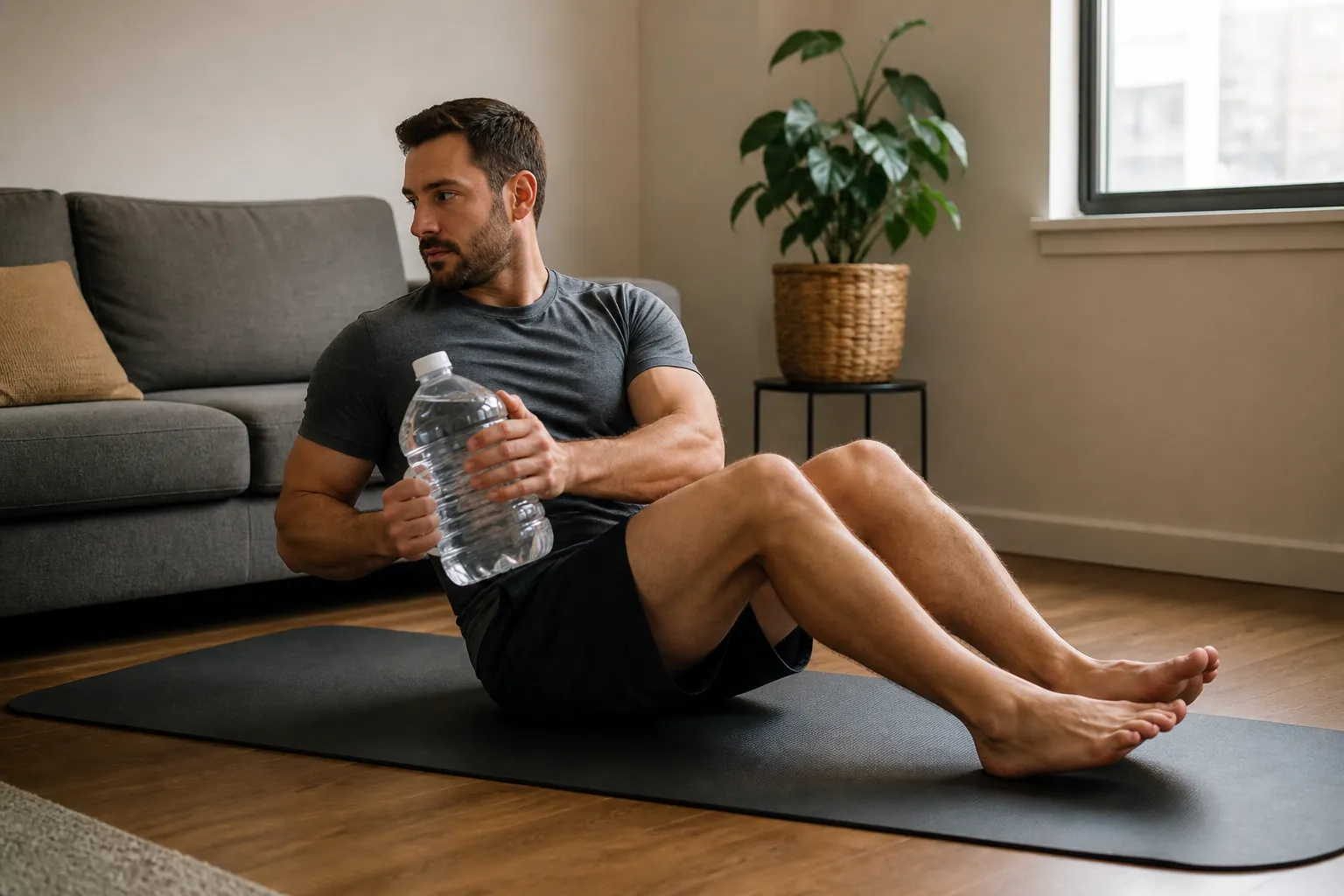
You can get a useful indoor kayak workout in a yoga-mat-sized patch of an apartment floor. This 20–30 minute circuit uses bodyweight and water-filled jugs, with no jumping, drilling, gym membership, or machine required. It is quiet enough for a rental and gives a recreational paddler a practical way to maintain conditioning between trips.
The organizing pattern is simple: pull, push, rotate, and stabilize. Those demands show up in the back and chest, but also in the trunk, hips, and legs that help transfer force through a stroke. The exercises below borrow that pattern without pretending that a living-room workout can reproduce blade placement, stroke timing, or the feel of moving water.
The Apartment Kayak Circuit
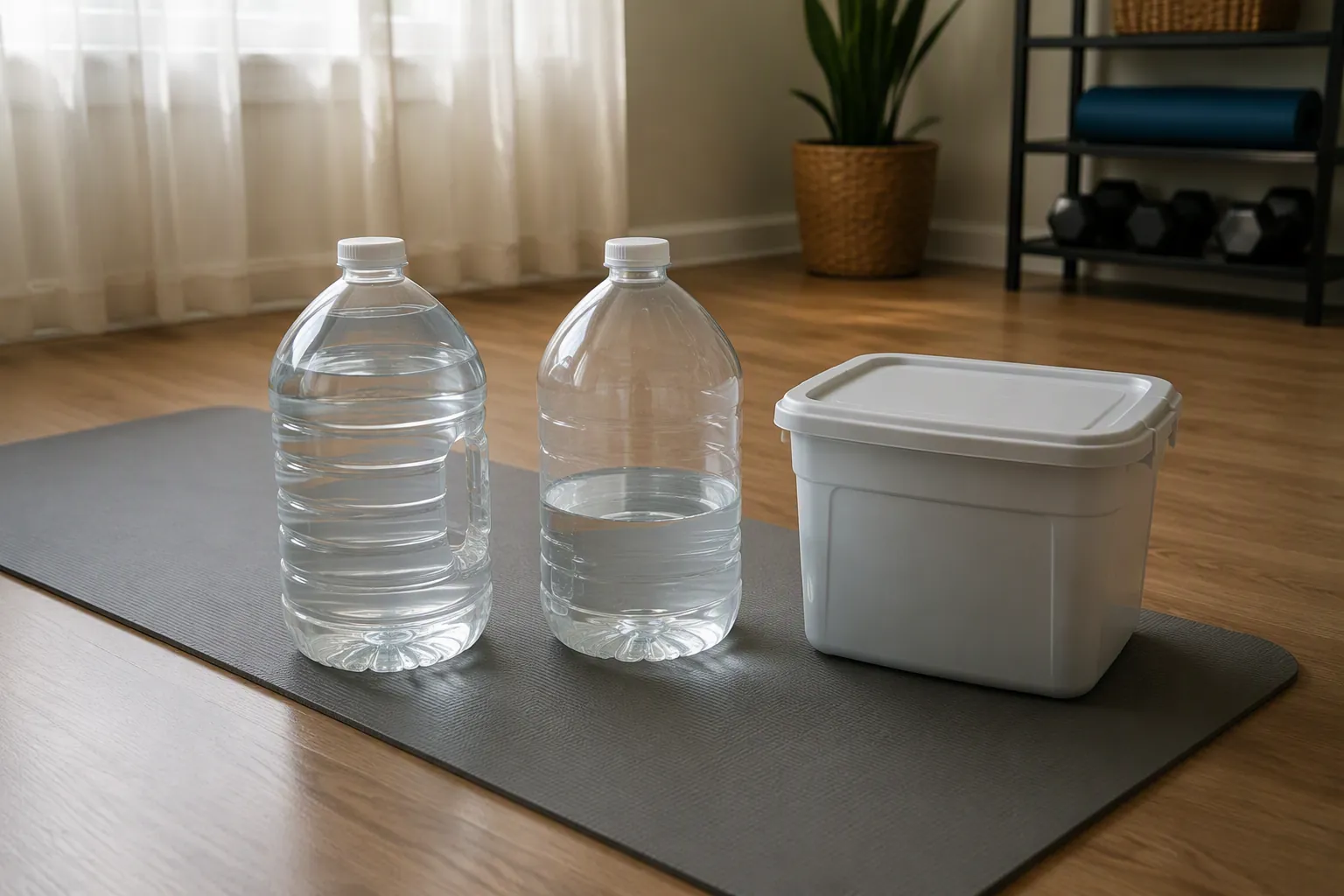
Clear a mat or a small section of floor, fill one gallon jug, and keep a towel nearby in case the handle or container gets slippery. A full gallon jug weighs roughly 8–9 pounds, while a half-filled jug weighs about 5 pounds.[1] Start lighter than you think you need; a shifting container is a poor training partner and a spilled jug is a poor apartment strategy.
- Warm up for several minutes with quiet shoulder circles, hip hinges, torso rotations, and alternating bird-dog reaches.
- Complete the seven exercises below in sequence.
- Rest briefly between exercises and take a longer pause between rounds. Move slowly enough to keep the jug, feet, and hands under control.
- Perform 2–4 rounds, 2–3 times per week. The Appalachian Mountain Club uses this range for its home paddling workout.[1]
- Finish with easy shoulder, hip, and trunk movement rather than bouncing or jumping.
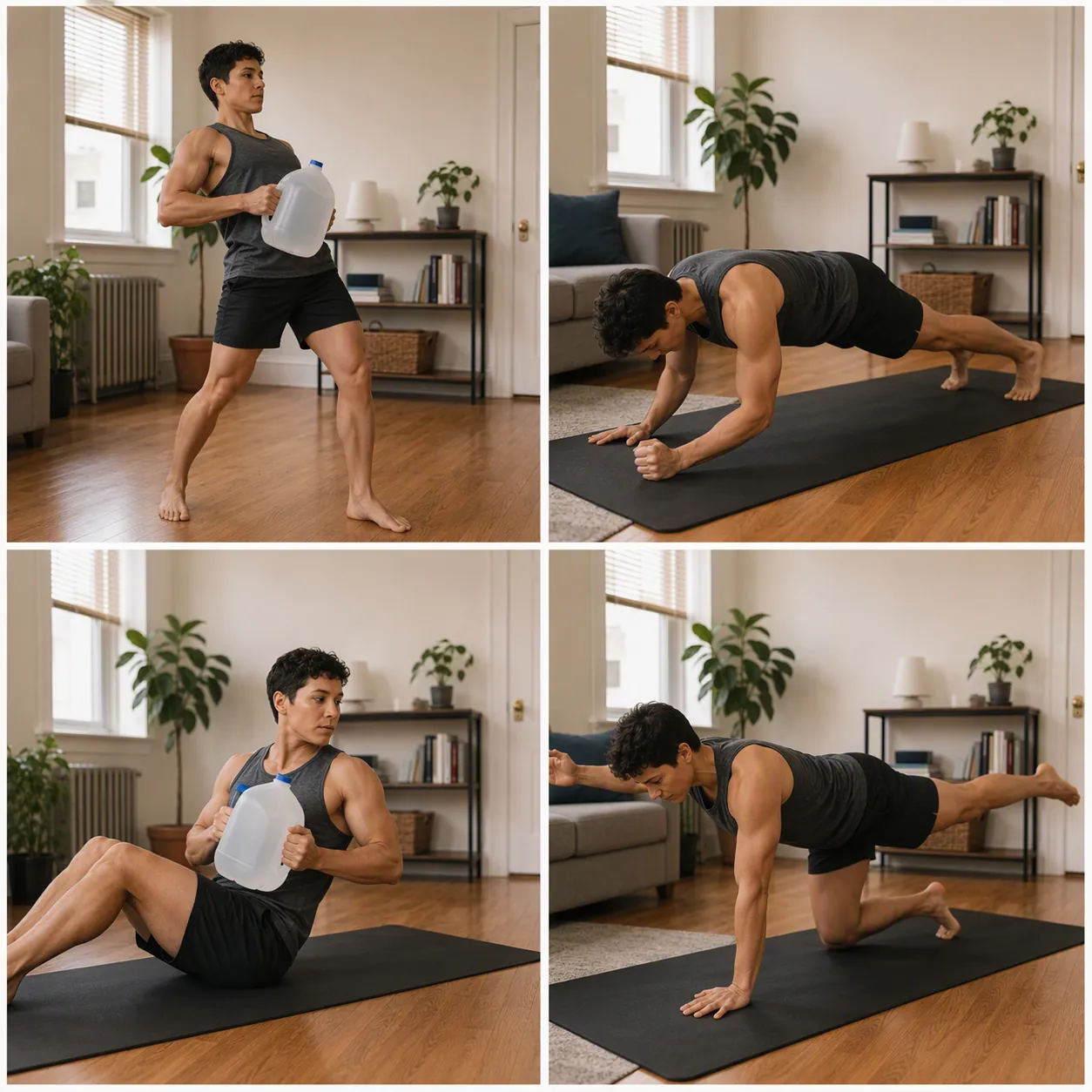
How to Do Each Move
Plank Press or Plank-Up
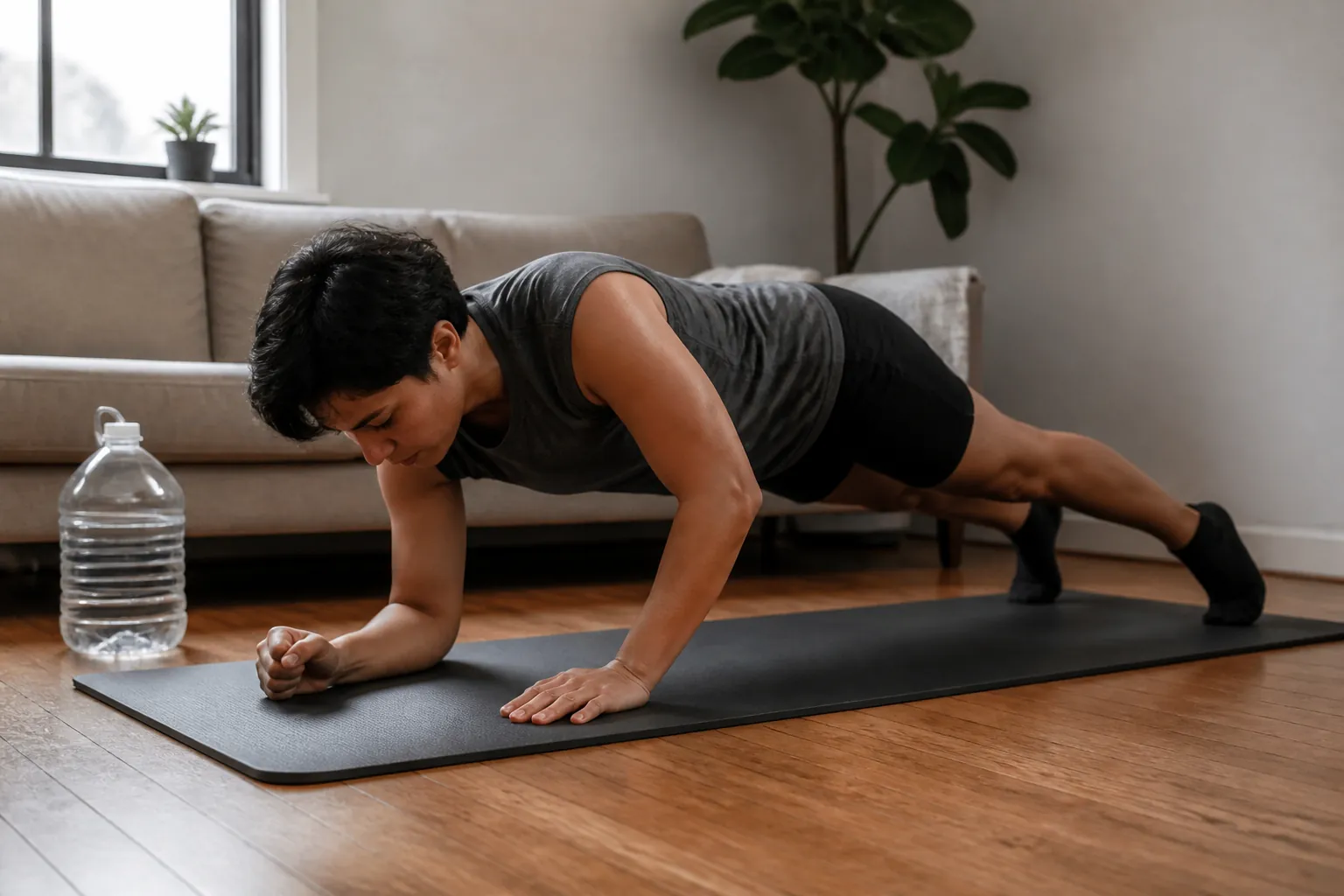
Start in a high plank with your hands beneath your shoulders. Lower one forearm to the floor, then the other, and press back up one hand at a time. Alternate the leading arm on each repetition. Use your knees on the mat if your hips start rotating or your lower back begins to sag.
This is the circuit’s quiet push-and-stabilize exercise. The moving arms work while the trunk resists twisting, which matters more for paddling than simply accumulating fast push-ups. Keep the mat in place and lower your forearms gently; there is no benefit to thumping elbows into a thin apartment floor.
Prone Scapular Stabilization
Lie face down with your forehead hovering just above the mat or resting lightly on a folded towel. Reach your arms overhead, then draw the shoulder blades down and back as you bring the arms toward your sides. Return slowly. Keep the movement small and leave the jug out of this exercise.
The goal is control around the shoulder blades, not a dramatic lift of the chest. It is useful preparation for repeated pulling because it asks the upper back to organize the shoulder rather than letting the neck do all the work.
Single-Arm, Single-Leg Romanian Deadlift
Stand with your feet about hip-width apart. Shift your weight onto one leg, hold the jug in the opposite hand if you are ready for load, and hinge forward while extending the free leg behind you. Keep your back long and your hips as square to the floor as possible. Stand tall by driving through the planted foot, then switch sides.
Begin with bodyweight and use a wall or the back of a sturdy chair for balance. The single-arm load links the hinge, hip stability, and anti-rotation demands without requiring a wide stance or a large training area. Set the jug down between sides instead of dropping it.
Seated Trunk Rotation With Extension
Sit on the mat with your knees bent and feet grounded. Hold the jug close to your chest, lean back slightly with a tall spine, and rotate your rib cage from one side to the other. Extend the arms toward the outside of the rotation only if you can keep the movement controlled. Keep the jug close for an easier version.
This is the most obvious paddling-pattern exercise in the circuit, but it should remain a trunk rotation rather than a hurried side-to-side swing. Let the ribs and shoulders turn together while the hips stay stable. If the jug makes the movement sloppy, use both hands with no load.
Triceps Dips
Use the edge of a stable, non-rolling sofa or a sturdy chair pushed against a wall. Place your hands beside your hips, slide forward slightly, and bend your elbows to lower yourself a short distance before pressing back up. Keep your shoulders away from your ears. A floor-based close-grip push-up from the knees is the better choice if the furniture moves.
The movement supplies another controlled press without needing overhead clearance or a rack. Test the furniture before committing your weight to it, and skip the exercise entirely if the setup makes noise or leaves marks on the floor.
Supine Lat Pullover
Lie on your back with your knees bent and feet flat. Hold a light jug with both hands above your chest. Keeping a soft bend in your elbows, lower the jug toward the floor behind your head, then bring it back over your chest. Stop before your ribs lift or your lower back arches.
Use no load until you know the range your shoulders can control. The jug should travel quietly and remain firmly capped. This floor-based pull emphasizes the lats and trunk position without needing a cable station or a bar overhead.
Bird Dog
Start on your hands and knees with your hands under your shoulders and knees under your hips. Extend one arm and the opposite leg, pause while keeping your hips level, and return them to the floor. Alternate sides. For a smaller movement, extend only the arm or only the leg.
This closes the circuit with quiet balance and trunk control. The floor area needed is minimal, and there is no reason to rush. Imagine balancing a glass of water across your lower back; the point is to keep the pelvis steady while the limbs move.
Making the Workout Work in a Rental
A mat is useful for comfort and floor protection, but the circuit does not require a specialized surface. Place it away from furniture edges, use controlled transitions, and put the jug down rather than dropping it. If your downstairs neighbor can hear the exercise, the solution is usually slower movement and less load, not more padding and faster repetitions.
One jug is enough to begin. Hold it with both hands for the pullover and rotation, or use it in one hand for the single-leg hinge. A half-filled jug gives you an easier starting load. Larger lidded household containers can also serve as improvised weights; Hart Adventure Racing lists gallon water containers and larger kitty-litter containers among its home-loading options.[2] Only use a container with a secure handle and lid, and keep the load close to the floor when you are testing it.
How to Progress Without Buying a Machine
Progress first by making the movement cleaner: slower lowering, a brief pause in the extended position, a steadier trunk, or a fuller controlled range. Then add a round within the 2–4-round range, use a fuller jug, or choose a harder version such as a full plank instead of a knee plank. Keep the exercise quiet and stop a set when balance or position breaks down.
Bodyweight and jugs are enough for a recreational paddler whose immediate goal is to stay generally conditioned between outings. They provide adjustable resistance and a repeatable movement routine without turning the living room into a gym.
The zero-gear tier has a clear ceiling. If the jug no longer provides a meaningful challenge, you need more structured loading, or you are preparing for a demanding event, resistance bands or heavier implements make progression easier to measure. If the missing ingredient is stroke timing, blade placement, or feedback on efficiency, neither a jug nor this circuit solves it. That requires time on the water or, where appropriate, a kayak ergometer.
References
- A Home Workout to Stay in Paddling Shape, Appalachian Mountain Club
- 12 Kayaking Strength Exercises to Boost Your Adventure Race Paddling, Hart Adventure Racing
What a small equipment investment adds
We don't have a build tagged to this exact tier yet. Browse all builds.
How often should you repeat this?
See our recovery and rest reference for citation-anchored rest-interval guidance.
Spot something off?
Tell us if a movement, tier assumption, or duration didn't match your experience.