
What the NYRR 9+1 2027 Changes Mean for Home Training
NYRR's 2027 9+1 program now requires a free drawing entry, a $99 Pass, and quarterly race-selection deadlines to earn guaranteed 2028 NYC Marathon entry. For home treadmill runners, the mostly 5K/4M/10K qualifying slate can be trained for indoors — with one catch: the three virtual 5Ks must be GPS-tracked outdoors.
- Equipment tier required
- $300-800
- Duration
- Varies min
- Difficulty
- beginner
- Target area
- legs

As of August 26, 2026, if you want to use the NYRR 9+1 program in 2027 for guaranteed entry to the 2028 TCS New York City Marathon, the first workout is not a tempo run. It is a calendar check. Your NYRR membership must be active by September 16, 2026, at 11:59 p.m. ET. The free drawing entry window runs September 17–29. The drawing is October 1. If selected, you must pay the $99 9+1 Program Pass fee by October 4 or your selection is forfeited. The first race-selection survey also runs October 1–8, before member early registration on October 14 and general registration on October 16.[1][2]
That is the practical shape of the NYRR 9+1 program changes for 2027: guaranteed marathon entry is still possible, but the path now starts with eligibility, a drawing, a paid Pass, quarterly race preferences, invitation windows, race claims, qualifying races, volunteering, virtual-run rules, and membership status. For a home-treadmill runner, the training is not the scariest part. The system is.
| Date or window | What has to happen | Why it matters |
|---|---|---|
| By Sept. 16, 2026, 11:59 p.m. ET | Have an active NYRR membership | Without this, you are not eligible to enter the 2027 9+1 Program Pass drawing. |
| Sept. 17–29, 2026 | Enter the free drawing | This is the gate into the 2027 9+1 pathway for 2028 marathon guaranteed entry. |
| Oct. 1, 2026 | Drawing takes place | Selected members can move forward to payment and race selection. |
| By Oct. 4, 2026 | Pay the $99 Pass fee | If you miss payment, NYRR says the selection is forfeited. |
| Oct. 1–8, 2026 | Submit the first race-selection survey | This affects which early-2027 races you may be invited to claim. |
| Oct. 14, 2026 | Member early registration opens | Matched Passholder entries must still be claimed on time. |
| Oct. 16, 2026 | General registration opens | Unclaimed or unmatched spots move into the wider registration cycle. |
What the $99 Pass buys, and what it does not
NYRR announced the 2027 change on August 6, 2026. For the 2027 program year, which leads to guaranteed entry for the 2028 marathon, the organization is capping Pass access at at least 15,000 members selected through a free-to-enter drawing. Selected runners pay a $99 fee, including the processing fee, and NYRR is eliminating the former Member Plus and Family Plus tiers.[2]
The Pass is not a marathon entry, and it is not nine race entries sitting in your account. It gives a selected NYRR member access to the 2027 9+1 pathway. To finish that pathway, you still need nine qualifying NYRR races, one qualifying volunteer opportunity, and an active NYRR membership through December 31, 2027. The eventual 2028 TCS New York City Marathon entry is guaranteed but non-complimentary, meaning the marathon entry fee still has to be paid later.[4]
If you are already working on the 2026 program for 2027 marathon entry, NYRR says that program is unchanged: complete nine qualifying races and one qualifying volunteer opportunity in 2026, and keep membership active through December 31, 2026.[4] The new drawing-and-Pass structure is the 2027 program year problem.
The quarterly race-selection process is where people can lose time
The 2027 Passholder Race Selection Process is not normal race shopping with a 9+1 badge attached. NYRR says Passholders will receive quarterly surveys roughly two weeks before each quarterly registration launch. In each survey, runners must choose at least three races for that quarter. NYRR then matches Passholders to a limited number of race invitations across the year: one invitation for January–March, one for April–June, two for July–September, and two for October–December.[3]
A match is not finished until you claim it. Once registration opens, NYRR says matched Passholders have seven days to claim the entry. If you do not claim it in that window, the invitation is forfeited.[3] For anyone who trains well but hates administrative loose ends, this is the part to over-manage: survey deadline, registration opening, seven-day claim window, race date, volunteer date, membership renewal.
The math also explains why NYRR recommends adding virtual races. The quarterly invitation structure provides six matched in-person race opportunities across the year. To reach nine qualifying races, NYRR recommends three Premium-tier virtual 5Ks: Resolution Run, Global Running Day, and Run for Thanks.[3]
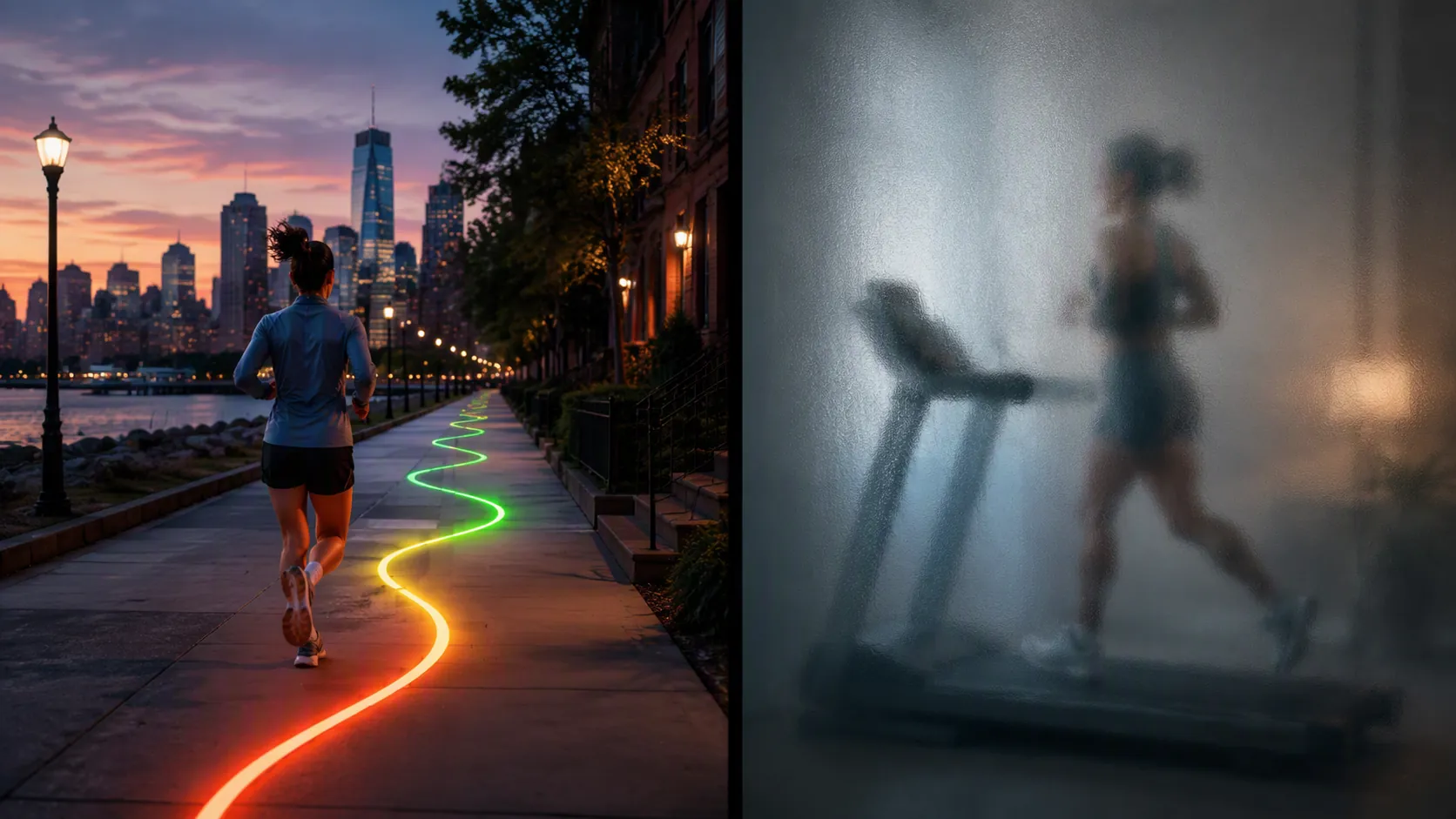
The treadmill exception that can ruin a clean 9+1 year
The three recommended NYRR virtual 5Ks are the one place where a home treadmill runner cannot simply upload indoor mileage. NYRR virtual racing is powered by Strava, and NYRR states that treadmill runs and manual uploads are excluded. To count, these virtual races need to be completed outdoors with GPS tracking through Strava.[5]
That is a major policy difference from some other virtual-race setups. For example, FitAtHome’s runDisney virtual race treadmill guide works because those virtual events can be completed on a treadmill. NYRR’s Premium-tier virtual 5Ks are not that kind of virtual run. If your 2027 9+1 plan depends on those three 5Ks, put three outdoor GPS runs on the calendar now, not after a treadmill file gets rejected.
How competitive is the new gate?
NYRR has not published official selection odds for the 2027 9+1 Program Pass drawing. Runner’s World estimated that 75 to 80 percent of drawing entrants would be selected, and reported that NYRR did not dispute that estimate. The same article contrasted that with roughly 1 percent acceptance among more than 240,000 applicants in the 2026 general marathon drawing.[6]
That comparison should be read carefully. The 9+1 Pass drawing is not the same applicant pool or the same product as the general marathon drawing. Still, it gives useful scale: the new 9+1 gate may be far more reachable than the general marathon lottery, but it is no longer the simpler member pathway many runners built their year around.
Why the home-training side is manageable
NYRR has not published the full 2027 qualifying race calendar yet, so no one should pretend to know the exact slate. Based on the recent qualifying-race pattern, though, the accessible 9+1 menu has typically leaned heavily toward short races such as 5Ks, 4-milers, and 10Ks, with the three recommended Premium-tier virtual 5Ks filling important gaps. That matters because those distances are very trainable from a home treadmill, even in a small apartment setup.
The goal is not to make the treadmill magically identical to Central Park, Prospect Park, or a crowded race start. The goal is to build enough aerobic volume, leg durability, pacing discipline, and short-race comfort that the in-person race day is familiar in effort, even if the surface and crowd are not.
NYRR’s own treadmill guidance is useful here. Gemma Ward recommends using incline work to simulate New York City hills such as the Queensboro Bridge and Cat Hill, keeping the safety cord attached, managing ventilation, and using unstructured fartlek pickups when indoor running gets mentally flat.[7] Runner’s World’s treadmill 5K and 10K plans are also built around effort and time rather than only outdoor splits, and its 10K plan includes two strength days per week.[8][9]

A practical treadmill base for a 5K, 4M, and 10K-heavy year
For most home-based runners trying to survive a full 9+1 year, the better plan is not to peak nine separate times. Build a repeatable short-race base, then adjust the week of each race. A workable rhythm looks like this:
- Two to three easy treadmill runs per week at conversational effort, usually with a 1–2 percent default incline if that feels natural and does not distort form.
- One quality session per week, alternating short pickups, hill-style incline surges, tempo intervals, or 5K-effort repeats.
- One longer easy run most weeks, long enough to make a 10K feel routine rather than special.
- Two strength sessions per week, kept simple: squats or sit-to-stands, hinges, step-ups, calf raises, lateral hip work, and core stability.
- One real rest day or very light mobility day, especially during weeks with an in-person race or volunteer shift.
If you are starting from a lower base, make the easy runs boring on purpose. The 9+1 year rewards consistency more than heroic individual workouts. You need to keep showing up for race mornings, survey windows, volunteer duties, and ordinary workweeks without turning every treadmill session into a test.
| Race demand | Home-treadmill translation | Race-week adjustment |
|---|---|---|
| 5K | Short pickups, 5K-effort intervals, and relaxed easy mileage | Keep one light sharpening session, then arrive fresh. |
| 4M | Blend 5K-style speed with slightly longer tempo segments | Do not add volume just because the race is a mile longer than 5K. |
| 10K | Longer easy runs, tempo intervals, and controlled progression runs | Reduce strength load late in the week if your legs feel flat. |
| Rolling NYC course feel | Incline surges rather than constant steep climbing | Use effort, not treadmill pace, as the guide on hills. |
| Premium NYRR virtual 5K | Train indoors if useful, but complete the actual race outdoors with Strava GPS | Check watch, phone, Strava connection, and route before race day. |
The three outdoor GPS 5Ks need their own mini-plan
Treat the NYRR virtual 5Ks as outdoor race appointments, not optional errands. Pick a safe route with reliable GPS reception, avoid tunnels and dense signal-blocking areas if possible, and do not make the route so stoplight-heavy that the file becomes a mess. The important thing is not a perfect performance; it is a valid GPS-tracked completion that NYRR will accept under its virtual racing rules.[5]
The week before each virtual 5K, keep your treadmill structure normal but reduce friction: one short session with a few pickups, one or two easy runs, no new incline experiment, no new shoes, no late-night strength workout that leaves your calves sore. The outdoor run is the official qualifying action. The treadmill is preparation.
A 2027 home-runner checklist that leaves fewer surprises
The cleanest way to manage the year is to separate the program into two tracks: NYRR compliance and training readiness. They overlap on race day, but they fail for different reasons. A runner can be fit and still miss a claim window. A runner can claim every race and still forget that the virtual 5K has to be outdoors.
| Track | What to monitor | Failure point to avoid |
|---|---|---|
| Membership | Active status before the 2026 drawing deadline and through Dec. 31, 2027 | Letting membership lapse after doing the work. |
| Pass drawing | Entry Sept. 17–29, drawing Oct. 1, payment by Oct. 4 | Being selected and then forfeiting by missing payment. |
| Quarterly race selection | Survey submission and at least three race choices per quarter | Assuming the Pass automatically registers you. |
| Race claiming | Seven-day claim window after registration opens | Seeing the invitation too late. |
| Qualifying races | Six matched in-person opportunities plus three recommended Premium virtual 5Ks | Counting a race that is not 9+1 eligible. |
| Virtual 5Ks | Outdoor Strava GPS completion | Using a treadmill or manual upload. |
| Training | Short-race aerobic base, incline work, strength, recovery | Overtraining for one race and compromising the next quarter. |
For the training calendar, pencil in blocks rather than perfect race-specific peaks until NYRR publishes the 2027 race calendar. Keep January through March conservative if winter travel and weather complicate outdoor racing. Build spring and summer around short-race consistency. Use fall to finish any remaining qualifying pieces early enough that December does not become a panic month.
The decision before September 17
If the goal is guaranteed 2028 New York City Marathon entry through the 2027 NYRR 9+1 program, the first move is administrative: active membership by September 16, drawing entry between September 17 and 29, payment by October 4 if selected, and the first quarterly race-selection survey by October 8. After that, the treadmill can do a lot of the work. It just cannot do the Strava GPS races for you.
References
- Changes to NYRR Membership and the 9+1 Program — NYRR
- New York Road Runners Improves Access to Year-Round Races—Revamps NYRR 9+1 Member Program — NYRR, August 6, 2026
- 9+1 Passholder Race Selection Process — NYRR
- 9+1 Program — NYRR
- NYRR Virtual Racing Powered by Strava — NYRR
- As NYC Marathon Demand Soars, NYRR Overhauls 9+1 Program — Runner’s World
- How to Run on a Treadmill — NYRR, 2025
- 5K Treadmill Workout plan — Runner’s World
- 10K Treadmill Training Plan — Runner’s World
What a small equipment investment adds
We don't have a build tagged to this exact tier yet. Browse all builds.
How often should you repeat this?
See our recovery and rest reference for citation-anchored rest-interval guidance.
Spot something off?
Tell us if a movement, tier assumption, or duration didn't match your experience.