
The Real Risks of Testosterone for Home Workouts
Fitness influencers on social media promote testosterone replacement therapy (TRT) as a shortcut to gains, but systematic studies reveal serious risks they routinely omit. This article examines the evidence behind the controversy and helps home exercisers make an informed decision.
- Equipment tier required
- none
- Duration
- 15 min
- Difficulty
- beginner
- Target area
- full body
A lot of men do not arrive at testosterone through a clinic door first. They arrive after months of training at home, buying better dumbbells, tightening up protein, sleeping a little more, and still looking roughly the same in the mirror. Then the algorithm starts serving a cleaner story: maybe the missing piece is not your program, your discipline, or your garage setup. Maybe it is testosterone.
That is where the controversy around testosterone, home workouts, and fitness influencers becomes more than internet drama. The problem is not that every man on TRT is abusing a drug, or that no one ever needs testosterone replacement therapy. Some men do. The problem is what happens when a prescription hormone is marketed like the next upgrade after adjustable dumbbells, creatine, and a better bench.
The marketing pressure is not imaginary. A University of Sydney study of high-reach social media posts about testosterone found 46 posts reaching accounts with a combined 6.8 million followers; 72% had undisclosed financial ties, and none cited scientific evidence, according to the university and The Guardian’s coverage of the research.[1]
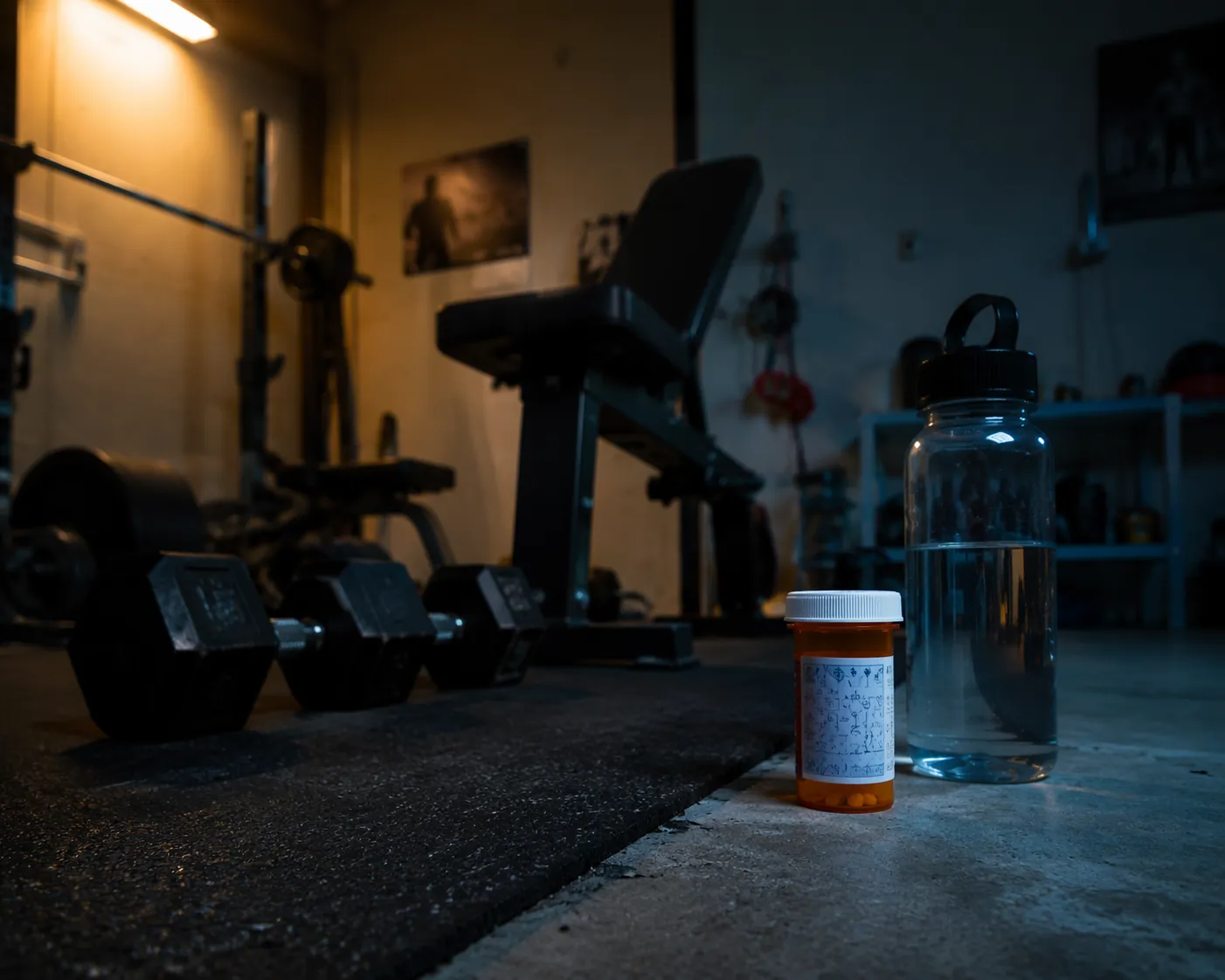
The more uncomfortable evidence is what happens after that marketing does its job. In a 2022 secret-shopper study discussed by urologist Dr. Justin Dubin, a healthy 34-year-old man with a normal testosterone level of 675 ng/dL contacted seven online clinics, said he wanted to preserve fertility, and still six of the seven clinics offered him TRT.[2]
That is the whole sales path in miniature: a normal lab, a young man, a stated fertility concern, and almost universal willingness to prescribe. It turns the vague worry about influencer hype into a concrete failure of safeguards.
The pitch works because it starts with a real frustration
Home training has a special way of making doubt louder. There is no coach watching your sets, no training partners pushing load, no gym environment reminding you that progress is usually slow. You can do a reasonable program for months and still wonder whether the guys online are playing a different game.
TRT content slides into that gap neatly. It often does not sound reckless. It sounds responsible: get labs, optimize hormones, stop accepting low energy, stop wasting time. For a tired man training alone before work or after the kids are asleep, that language can feel less like a shortcut and more like permission to take himself seriously.
But the word “optimization” does a lot of hiding. It can blur the difference between treating clinically low testosterone and using testosterone as a performance aid. It can make a drug with fertility, blood, cardiovascular, and dependency concerns sound like a lifestyle correction. It can also shift the burden of proof onto the insecure customer: if you are not progressing, maybe you are the one failing to act.
Prescription demand has grown alongside that cultural pressure. IQVIA data cited in a 2026 Levels guide says U.S. testosterone prescriptions rose from 7.3 million in 2019 to more than 11 million in 2024.[3] A 2025 conference abstract from Dubin and colleagues reported that 13.5% of men under 40 said they used testosterone supplements, though that figure should be treated carefully because it was presented as a conference abstract rather than a full peer-reviewed manuscript.[4]
That does not prove social media caused every prescription or every supplement purchase. It does show the market is large enough that weak disclosure is not a small problem. When a clinic funnel, an influencer discount code, and a disappointed home lifter meet in the same place, the missing warnings matter.
The online clinic problem is not just convenience
Telehealth can be useful. Lab access can be useful. Men who are embarrassed to talk about sexual symptoms, fatigue, or depression may be more willing to start a medical conversation from home. None of that requires pretending that a high-converting sales funnel is the same thing as careful medical gatekeeping.
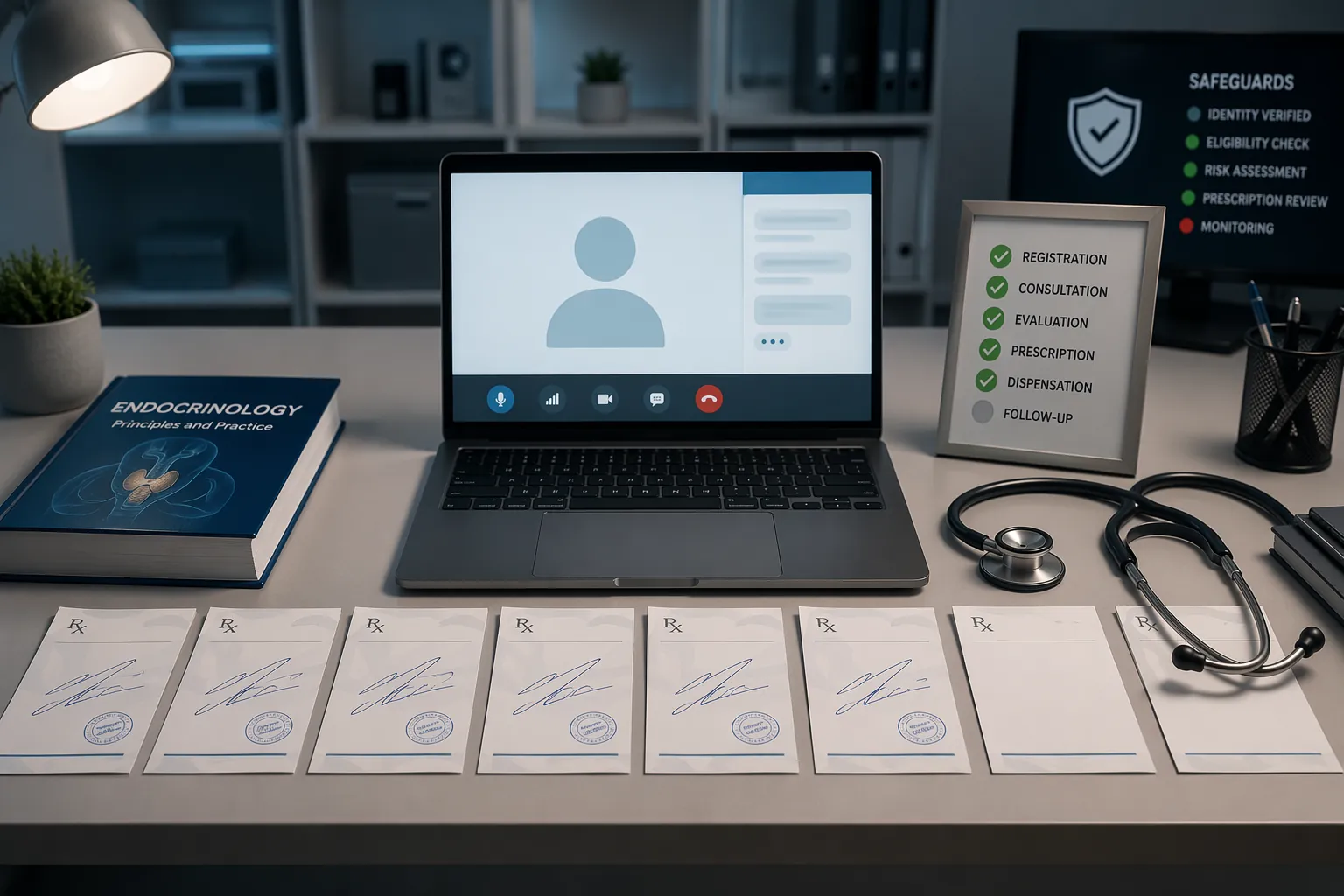
The secret-shopper finding is hard to brush off because the fictional patient did not look like a borderline case. He was 34. His testosterone was normal. He directly said fertility mattered to him. If six of seven clinics still offered TRT, the issue is not just one careless provider. It suggests the screening process can bend toward conversion even when obvious reasons for caution are on the table.[2]
That matters for home exercisers because most are not walking in with a medical chart and a long relationship with an endocrinologist or urologist. They are often walking in with a symptom list that could come from poor sleep, stress, under-eating, overtraining, alcohol, depression, or simply expecting drug-assisted progress from drug-free training. A responsible clinician has to sort through those possibilities. A sales page does not.
The U.K. has seen a related strain from private TRT demand. The Guardian reported in 2025 that private clinics were charging about £1,800 to £2,200 per year, while NHS clinics were being overwhelmed by young men seeking treatment they may not need.[5] The U.S. market is different, but the pattern is familiar: private demand grows faster than careful public understanding.
The fertility risk is not a fine-print inconvenience
If there is one risk that should never be buried under “talk to your doctor,” it is fertility. Exogenous testosterone can suppress the body’s own signaling for sperm production. This is not theoretical. Dubin said 65% of men become sterile within four months of starting TRT; after stopping, sperm recovery can take 12 to 24 months, and some men never return to their baseline production.[2]
For a healthy man in his 20s, 30s, or early 40s who trains at home and thinks he might want children later, that is not a minor trade. It changes the timeline of a family. It may mean fertility treatment, waiting, uncertainty, and conversations with a partner that no influencer has to sit through.
This is also where the casual marketing feels most dishonest. Muscle gain is shown immediately: before-and-after photos, tighter shirts, better pumps, more confidence. Fertility harm is delayed, private, and easy to omit. A man may not discover the cost until he is no longer shopping for gains but trying to start a family.
Anyone considering TRT who might want children should ask directly about fertility preservation before treatment starts. That discussion may include alternatives or adjuncts, but the key point is simpler: preserving fertility cannot be an afterthought added once the prescription is already normalized.
Testicular atrophy, blood changes, and the cost of “feeling optimized”
Testicular atrophy gets joked about online because embarrassment is easier than explanation. But the mechanism is straightforward enough: when outside testosterone tells the body there is plenty available, the testes may reduce their own production. For some men, that means shrinkage and a harder road back to natural production if they stop.
That possible long-term dependency is one of the least convenient parts of the sales pitch. Starting TRT can be much easier than stopping it. If natural production remains suppressed, a man who began because he wanted better home-workout progress may find himself managing injections, labs, symptoms, dose adjustments, and medical follow-up for years.
Then there is erythrocytosis, an increase in red blood cell concentration. The phrase sounds technical, so it is easy to skip. The practical issue is that thicker blood can raise concern for clotting and cardiovascular strain, which is why responsible TRT monitoring includes blood work rather than just symptom check-ins and progress photos.
For a medically hypogonadal man under competent care, monitoring is part of the treatment. For a healthy home lifter buying into an influencer’s “low T symptoms” checklist, the same monitoring can become an afterthought. That is backwards. The less clear the medical need, the more heavily the risks should weigh.
The heart-safety talking point is easier to misuse than to understand
The evidence on cardiovascular risk is often presented online as if one study ended the conversation. The TRAVERSE trial, published in 2023, enrolled 5,246 men ages 45 to 80 and found no increased risk of heart attack or stroke in the testosterone group compared with placebo. That is important evidence, especially for older men with a legitimate diagnosis and medical monitoring.[6]
It is not a permission slip for every 28-year-old trying to add size in a garage gym. The trial population was older than the social media audience most likely to be targeted by performance-oriented TRT content. The trial also reported higher rates of atrial fibrillation and pulmonary embolism in the testosterone group, which is exactly the kind of caveat that tends to disappear when a result gets turned into a reel.[6]
Blood pressure adds another layer. In February 2025, the FDA required testosterone product labeling to note blood pressure increases, with reporting around the change citing an average increase of 0.3 mmHg.[7] That average number is small, but labeling changes are not written for gym arguments. They are written because a drug has effects that clinicians and patients need to track.
In June 2026, the Department of Health and Human Services asked the FDA to soften some testosterone warning language, and experts quoted by CNN cautioned that the request should not be read as a green light for indiscriminate use.[7] A request is not a final rule. Even if label language changes, it would not erase fertility suppression, blood monitoring, diagnostic standards, or the mismatch between older clinical trial participants and younger men chasing faster gains.
Where legitimate TRT begins
The cleanest dividing line is not whether someone lifts at home, wants muscle, or feels tired. The medical gate is clinical hypogonadism: real symptoms plus total testosterone below 300 ng/dL, confirmed on two separate tests. That threshold is not a do-it-yourself diagnosis. It is the point where a doctor should be involved in a proper evaluation.
Symptoms matter because a number alone can mislead. Fatigue, low libido, mood changes, poor recovery, and reduced strength can overlap with low testosterone, but they can also come from poor sleep, calorie deficits, medications, alcohol, life stress, untreated sleep apnea, depression, or inconsistent training. A single home test or one low-normal lab does not sort that out.
A serious medical conversation should include repeat morning testing, symptom review, fertility goals, hematocrit and blood monitoring, prostate-related screening where appropriate, cardiovascular history, medication review, and a plan for follow-up. That is a different process from clicking through a quiz that already seems to know the answer.
| If the reason is... | The safer interpretation is... |
|---|---|
| “My home workouts are not building muscle fast enough.” | That is not, by itself, a medical indication for TRT. |
| “An influencer said my symptoms sound like low T.” | Symptoms need clinical evaluation because they overlap with many non-testosterone problems. |
| “My testosterone was below 300 ng/dL once.” | Repeat testing and physician interpretation are still needed. |
| “I want children later.” | Fertility risk should be discussed before any prescription decision. |
| “TRAVERSE showed testosterone is safe.” | The trial does not directly answer performance-driven use in younger healthy men. |
What to ask before trusting the advice
Before taking TRT advice from any influencer, clinic ad, or affiliate page, look for what is missing. The omissions usually tell you more than the confidence.
- Do they clearly separate diagnosed hypogonadism from performance enhancement?
- Do they mention that TRT can suppress sperm production and may cause infertility?
- Do they explain testicular atrophy and possible difficulty stopping treatment?
- Do they discuss erythrocytosis, blood pressure, atrial fibrillation, pulmonary embolism, and ongoing lab monitoring?
- Do they disclose clinic relationships, sponsorships, affiliate income, or financial incentives?
- Do they cite evidence, or just show physique results and talk about feeling better?
If the content gives you the upside in sharp focus and the downside as a blur, treat that as part of the product. Risk disclosure is not decoration. It is the difference between medical consent and marketing.
The practical answer for most healthy men training at home is not complicated: wanting faster gains is not enough evidence to justify TRT. If there are real symptoms, get evaluated by a qualified physician, repeat the labs, talk directly about fertility, and ask how treatment would be monitored. If the only person making the case is an influencer or a clinic funnel, the burden of proof has not been met.
References
- University of Sydney testosterone influencer study, University of Sydney, Feb. 3, 2026 / The Guardian, Jan. 22, 2026
- WBUR On Point interview with Dr. Justin Dubin on online TRT clinics and fertility risk, WBUR, Feb. 2025
- 2026 Guide citing IQVIA testosterone prescription data, Levels, 2026
- Dubin et al. testosterone supplement use in men under 40 conference abstract, 2025
- Private UK TRT clinics and NHS demand report, The Guardian, Nov. 2025
- Cardiovascular Safety of Testosterone-Replacement Therapy, New England Journal of Medicine, 2023
- HHS request to soften testosterone warning labels and expert cautions, CNN, June 20, 2026
What a small equipment investment adds
We don't have a build tagged to this exact tier yet. Browse all builds.
How often should you repeat this?
See our recovery and rest reference for citation-anchored rest-interval guidance.
Spot something off?
Tell us if a movement, tier assumption, or duration didn't match your experience.