
You’ve downloaded Nike Training Club, scrolled through 300 workouts, done a few strength sessions and a yoga class. It feels good, it’s free, and the trainers are decent. So why does that nagging feeling persist that maybe you’re missing something a paid app could give you?
I’ve tested dozens of fitness apps. Free ones have gotten genuinely good. Nike Training Club is completely free with 300+ workouts led by certified trainers. Caliber Strength Training has a free‑forever version with 500+ exercises and video demos. FitOn gives thousands of classes with celebrity trainers. And Alo Wellness Club supposedly became free – but CNET still lists it at $20/mo. I’d check before banking on it.
So when does paying actually change the outcome? The answer isn’t “more workouts.” Free already gives you variety. The real difference is structure, progression, and accountability. Let’s walk through each price tier and see where the line falls.
What Free Apps Can't Do: Progressive Overload

You’ve probably heard “progressive overload.” It sounds technical. It’s simple: to get stronger you need to gradually increase the weight, reps, or volume. Your body adapts to a fixed load. If you keep doing 10‑pound curls week after week, strength gains stop.
Free apps give you variety – a different workout each day, keeps things fresh. But they almost never algorithmically increase the load or reps for you. Nike Training Club gives you a great sweat today, but won’t tell you to add five pounds next week. Caliber free gives a huge library, no personalized progression. For maintenance, variety is enough. For measurable strength, you need the app to track your history and push the numbers forward.
Paid apps like Stronger By The Day ($15/mo) and Caliber Pro ($19/mo) do this automatically. They adjust sets, reps, and weights based on your last session. Free tiers cannot because they don’t store your performance data. So here’s the first hard question: do you want to get stronger week over week, or just move and feel good? If it’s the latter, free is fine. If the former, you’re about to enter the $10–$15 range.
The $8–15/mo Tier: Structure, Not Just Variety
At this price point you’re paying for a program that makes you follow a logical arc – periodized plans, class sequencing, and in some cases real progressive overload tracking. Here’s what you get for the cost of one coffee subscription:
| App | Monthly Price | Best For |
|---|---|---|
| Stronger By The Day | $15 | Science‑based strength programming with periodization; user reported lifting more weight within a month |
| Apple Fitness+ | $10 | Wearable integration (Apple Watch), 12 workout types, multiple trainer modifications |
| Peloton App | $13 | Massive library of live & on‑demand classes; best if you already have a bike or treadmill |
| Down Dog | $7.99 | Highly configurable yoga, barre, and HIIT; 60,000+ unique session configurations |
What ties these together is they don’t just dump workouts on you. Stronger By The Day follows a periodization model – strength block, hypertrophy block, deload. Apple Fitness+ organizes classes so you can build a weekly split. Peloton combines cycling, strength, yoga into programs. Down Dog creates a unique sequence every session based on your level.
If you have a specific strength or yoga goal, this tier holds the best value. The CNET reviewer who used Stronger By The Day reported lifting more weight than before pregnancy within a month. That’s a measurable outcome from a $15 app.
$15–25/mo: Nutrition and Customization – but Only If You Use Them
At $19–$25 per month, apps start offering integrated meal plans, fully customizable program parameters, and multiple trainers. But I’ll be upfront: these features only matter if you actually use them.
| App | Monthly Price | Notable Features |
|---|---|---|
| EvolveYou | $22.99 | 8–67 week customizable routines; meal planner with vegan/vegetarian/pescatarian options; multiple trainers |
| Sweat | $25 | 50+ programs, 13,000+ workouts, pregnancy programs, all‑female instructors, 1M+ monthly users |
| Caliber Pro | $19 | Group coaching, progressive overload programming, 500+ exercise library with demos |
| Bloom Method | $29.99 | Prenatal/postnatal focus, pelvic floor health, birth preparation classes |
The nutrition plan integration in EvolveYou and Sweat is a genuine upgrade – but only if you actually meal‑plan. If you don’t track macros or prep meals, the nutrition feature is just noise. Same with customizable programs: if you’re happy with a preset plan, you don’t need $23/mo customization.
Be wary of “women‑specific” marketing. Sweat, EvolveYou, Bloom Method target women, but multiple sources show general apps like Caliber and Nike Training Club got equal or better expert scores. Gender targeting is a secondary differentiator, not a primary one. Life‑stage needs – prenatal, postpartum – are a legitimate reason to consider this tier. Bloom Method and Sweat’s pregnancy programs are well‑regarded. But for general strength training, Caliber Pro ($19/mo) gives you progressive overload without the pink tax.
$199/mo: Human Coaching – Luxury, Not Necessity
Future charges $199 per month for a real human coach who designs custom workouts and communicates daily. That’s 10–13 times the $15–25 tier. The evidence suggests it works for consistency. But the question is whether you need human accountability or an automated program.
My take: Future is a luxury purchase, not a logical upgrade. If you’ve tried structured apps like Stronger By The Day or Caliber Pro and found you can’t stick with them, then a human coach might fill that gap. But if you haven’t tried the $15 option first, jumping to $199 is premature. Future also assumes you have certain equipment – you can’t just do bodyweight. Check the gear requirements before committing.
Match Your Need to a Tier
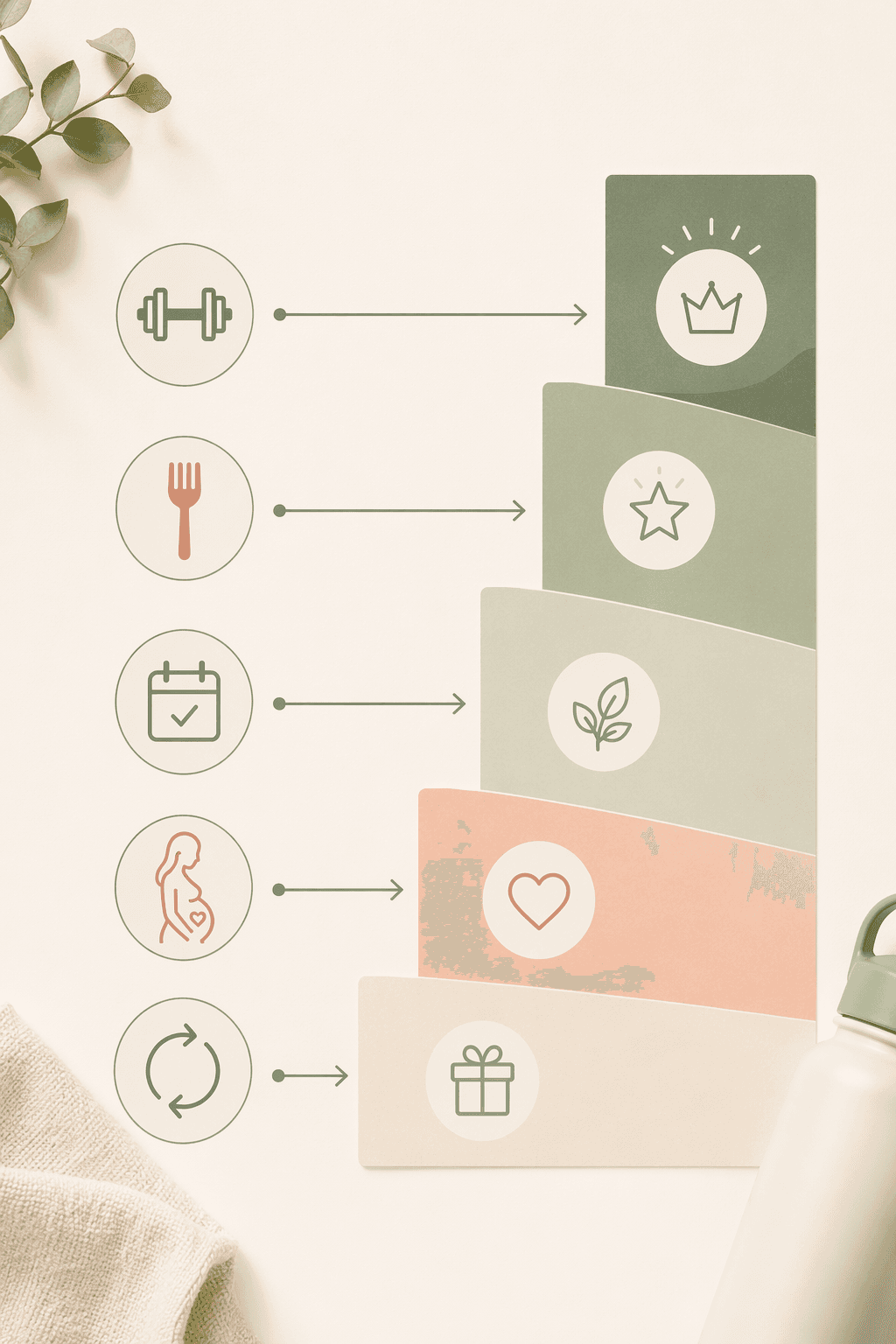
| Your Need | Recommended Tier | Example App |
|---|---|---|
| General fitness, variety, maintenance | Free | Nike Training Club, Caliber free, FitOn |
| Progressive overload for strength | $15–$19/mo | Stronger By The Day, Caliber Pro |
| Yoga or barre with high configurability | $7.99/mo | Down Dog |
| Wearable integration & class variety | $10/mo | Apple Fitness+ |
| Integrated nutrition & meal planning | $22.99+/mo | EvolveYou, Sweat |
| Prenatal/postnatal programming | $25–$29.99/mo | Sweat, Bloom Method |
| Human accountability after failing with apps | $199/mo | Future |
If you don’t see your need on this list – you just want to move more and feel less stiff – stick with free. You already have what you need.
Hidden Costs Most Roundups Skip
- Equipment assumptions: Peloton app is best if you already own a Peloton bike or treadmill. For bodyweight only, value drops.
- Annual vs. monthly: EvolveYou is $22.99/mo or $119/yr ($9.92/mo). Sweat is $25/mo or $135/yr ($11.25/mo). If you’re sure you’ll use it, annual cuts the effective price in half.
- Alo Wellness Club’s free status: Good Housekeeping said it became free, but CNET still lists $20/mo. Verify before deciding.
The Bottom Line
Free apps are excellent for general fitness, variety, and maintenance. The $10–$15 range gives you structure and progressive overload – the best value for strength. $19–$25 adds nutrition and customization, but only if you’ll use them. Future at $199 is a luxury for consistency-failures only.
Here’s the test: open a free app. Use it for four weeks. If after that month you can’t articulate exactly what’s missing – “I want an algorithm that automatically increases my squat weight,” “I need a meal plan matched to my macros,” “I stick to nothing without a human checking in” – then don’t pay. You already have what you need.
Comments
Join the discussion with an anonymous comment.