
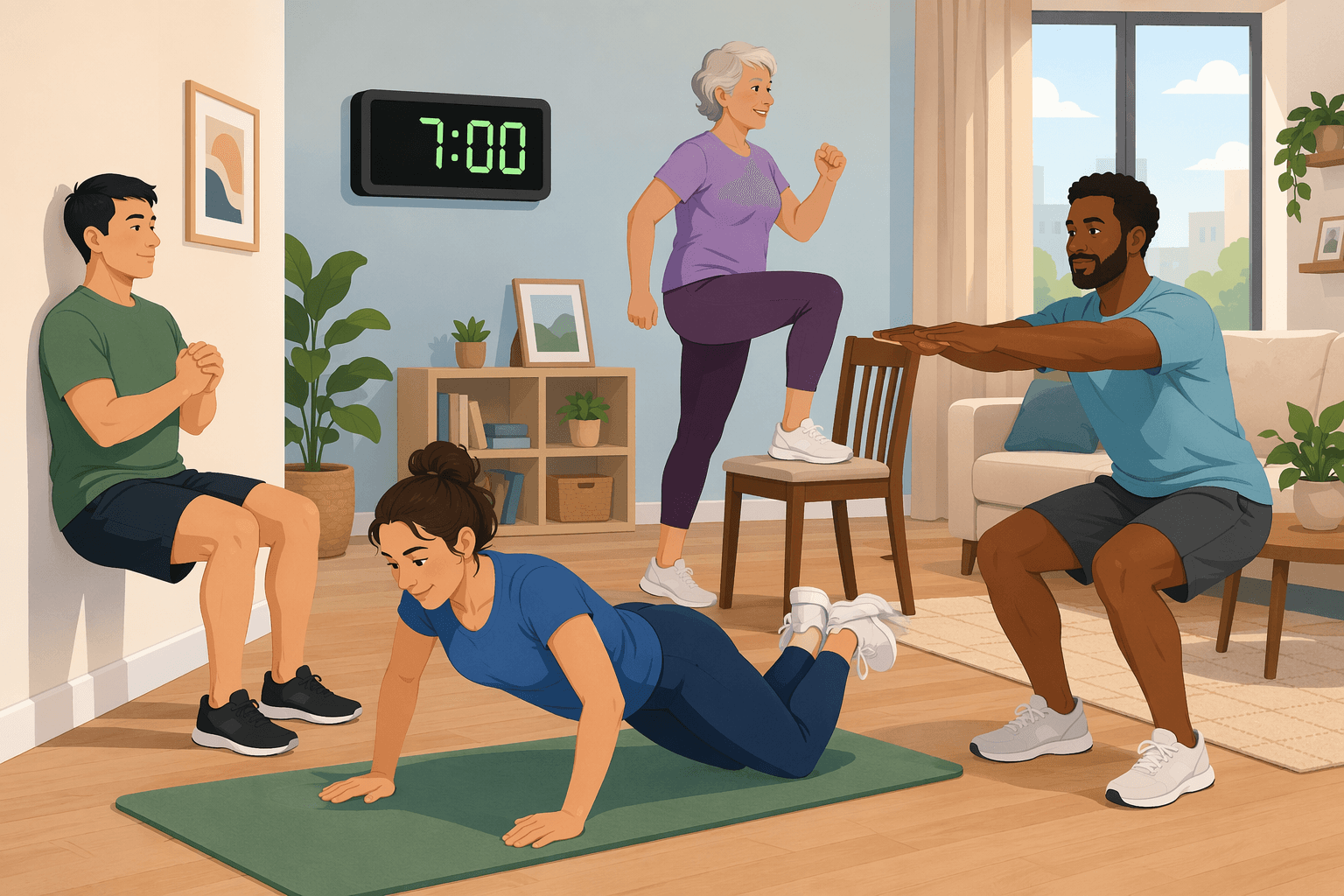
You have seen the headline a hundred times: Science says 7 minutes is all you need. The 7‑minute workout has been shared, bookmarked, and turned into apps. But when I went back to the original 2013 paper that started it all, I found something the headlines left out: that paper was not a clinical trial of the 12‑exercise routine. It was a program proposal, backed by 18 references to related HIIT research. The specific protocol – jumping jacks, wall sits, push‑ups, the whole sequence – was never tested in that study.
Does that mean the workout is useless? No. The direct studies that came after it tell a more nuanced story. But the gap between the viral promise and the actual evidence is wide enough that any beginner deciding whether to invest time in this routine deserves to see it clearly.
What the 2013 Paper Actually Said
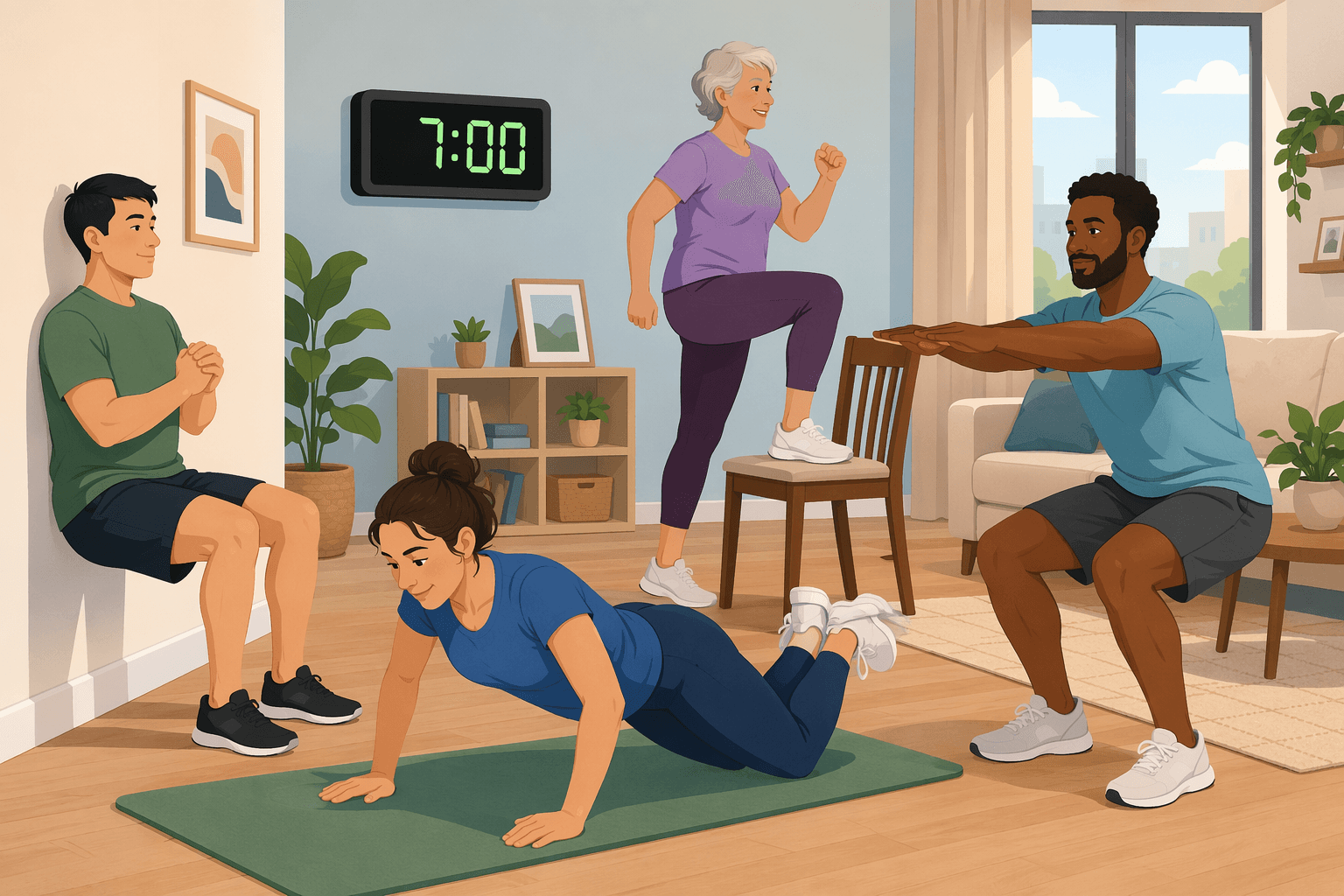
In 2013, Brett Klika and Chris Jordan published High‑Intensity Circuit Training Using Body Weight in the ACSM’s Health & Fitness Journal. They laid out a 12‑exercise circuit targeting all major muscle groups using only a chair and a wall. Each exercise lasts 30 seconds, followed by 10 seconds to transition. The target intensity: about 8 out of 10 on perceived effort.
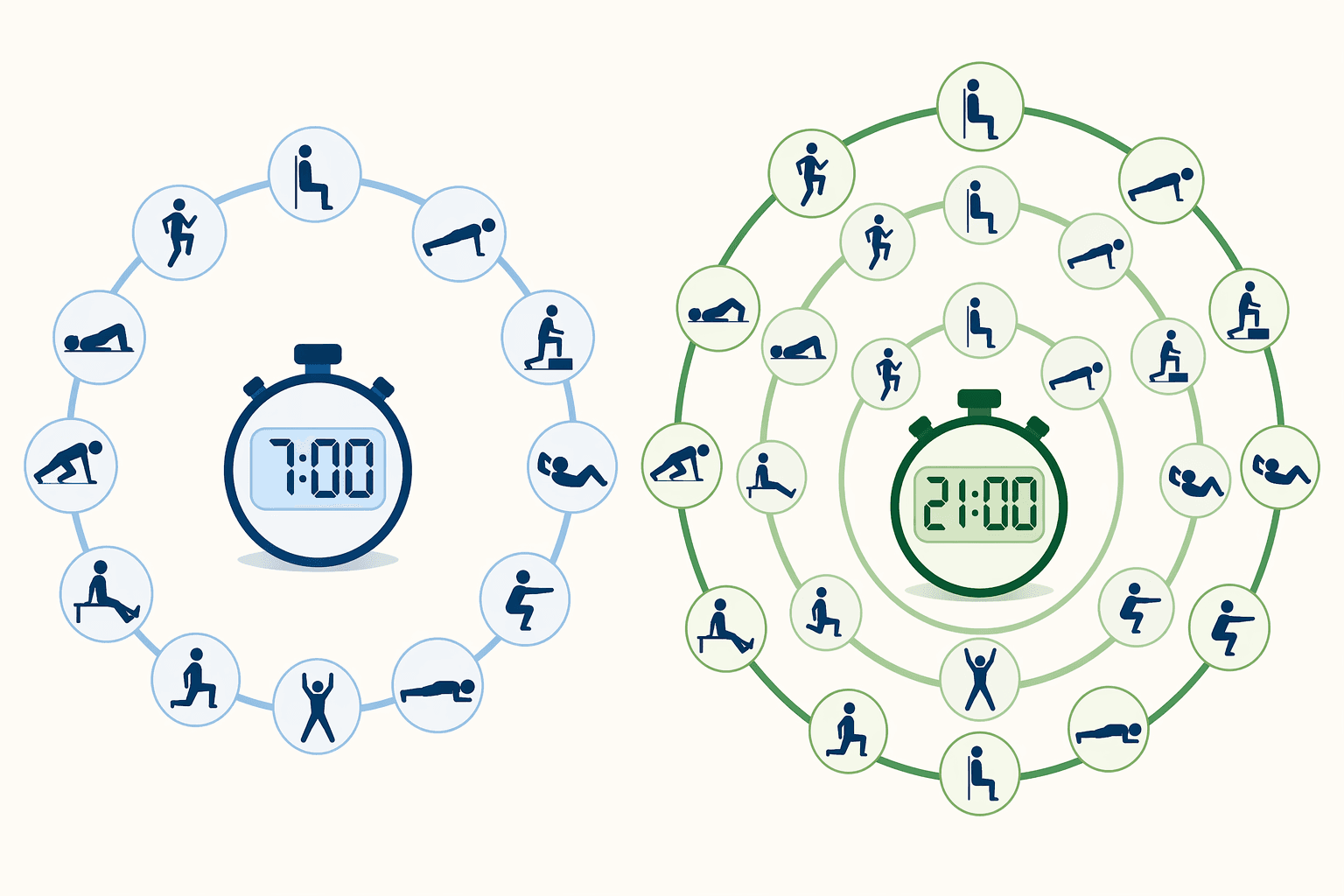
Here is the part that matters. The authors explicitly recommended performing the circuit 2 to 3 times – totalling 14 to 21 minutes – to align with ACSM guidelines for high‑intensity exercise of at least 20 minutes. The paper also noted that high‑intensity circuit training may be inferior for creating absolute strength, power, or sport‑specific endurance compared to traditional programs.
Your move: If you are doing one circuit, you are doing an exercise snack, not the full workout. To get the dose the science actually suggests, you need to do the circuit two or three times.
What the Direct Studies Found—and What They Didn’t
Because the original paper was a proposal, the real test came from later studies that directly put the 12‑exercise protocol through controlled trials. The results show real benefits – but only in specific areas. Here is what the numbers actually say:
| Study | Participants | Duration | Key Finding |
|---|---|---|---|
| Mattar (2017) | 29 adults, 18–30 | 6 weeks, daily | ~4 cm waist reduction; body fat and weight loss without diet change |
| Schmidt (2016) | 96 healthy adults | 8 weeks | 7‑min and 14‑min groups both improved push‑up endurance vs control |
| Riegler (2017) | 14 men and women | Single session | Lower peak VO₂max and heart rate than time‑matched HIIT cycling |
| Armas (2020) | 12 healthy active adults | Single session (crossover) | Higher heart rate during activity (145.2 vs 126.3 bpm); similar cardiometabolic response; lower post‑exercise diastolic BP |
| Poon (2023) | Sedentary men and women | Single session | Enjoyed the 7‑min workout more than 30 min moderate cycling or 7 min HIIT cycling; found it ‘less boring’ |
The Mattar and Schmidt studies give the strongest case for beginners: measurable changes in waist circumference and push‑up endurance over 6–8 weeks. But notice the sample sizes: 29 and 96, respectively. And the participants were mostly young and healthy. That means the evidence is solid for that population, but it is not a blanket guarantee.
The Riegler finding matters more than most articles let on. When the bodyweight circuit was compared head-to-head with HIIT cycling for the same time, the circuit produced lower peak oxygen uptake. If your goal is to improve cardiovascular performance, this workout is weaker than other interval options. Armas confirmed that the circuit can spike heart rate higher than cycling HIIT, but the overall aerobic stimulus still falls short.
I would not dismiss the Poon enjoyment finding as fluff. If a sedentary person sticks with a workout because it feels less boring, that is a meaningful behavioral win. But enjoyment in a single lab session does not guarantee you will still like it on day 30 of the same 12 exercises. Real-world adherence is another question.
Now add the limitations the original authors themselves flagged, and what later studies confirm: this routine is not designed for strength or power gains. Advanced exercisers plateau quickly. The same 12 exercises repeated daily can become monotonous. And despite the viral name, a single 7‑minute pass is an incomplete dose – the intended prescription is 2–3 rounds.
What it can do, based on the evidence: improve muscle endurance, reduce waist circumference by a few centimeters in 6–8 weeks, and serve as a legitimate entry point for someone who currently does nothing. As a Men's Health UK article put it: “If you have no specific fitness or strength goals and are starting from a sedentary position, the 7‑minute workout can improve fitness.” That is honest and actionable.
So Who Actually Benefits?
I would recommend the 7‑minute workout to someone who is sedentary, has no specific performance goals, and needs the lowest possible barrier to starting. The direct evidence shows it can reduce waist circumference and improve muscle endurance in as little as 6–8 weeks. That is real progress for someone going from zero to something.
“When it comes to exercise, anything is better than doing nothing, even if it’s just seven minutes.”
Start with one circuit to build the habit. The Cleveland Clinic recommends modifications from day one: step jacks instead of jumping jacks, knee push‑ups, side planks from knees. Give yourself rest days – Lawton suggests alternating with walking or light activity on off days. Once one circuit feels manageable, aim for two. That is when you are getting the dose the original authors intended.
If you are not sure where to start, or if you want a routine tailored to your specific goal, available time, and space, take a look at our Home Fitness Decision Guide for complete beginners. It walks you through the choices that matter – so you do not have to trust a viral headline alone.
Comments
Join the discussion with an anonymous comment.