
Best Home Exercise Equipment for Every Budget: From $200 Starter to $2,500+ Complete Setup
A practical, tiered guide to buying home exercise equipment at three realistic budget levels. We break down what to buy at $200, $1,000, and $2,500+, including trade-offs, total cost of ownership, and how the $1,000 tier breaks even against a gym membership in roughly 18 months.
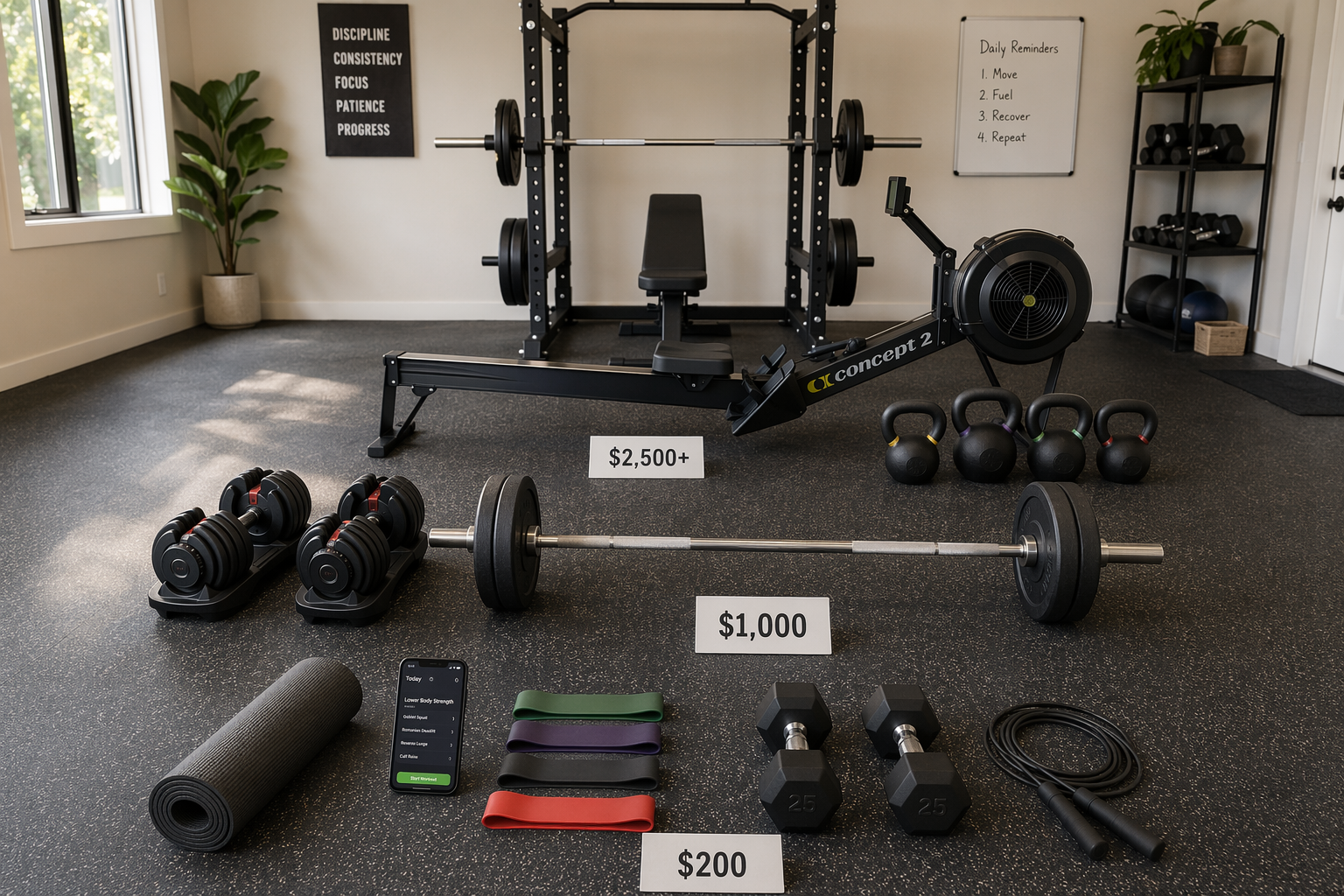
Why Your Budget Tier Determines What You Should Buy
Most home exercise equipment guides fail at the starting line. They assemble a single "best of" list that mixes a $30 jump rope with a $3,000 smart gym, as if the same person is shopping for both. That approach ignores a basic reality of purchase evaluation: a buyer with $200 to spend has fundamentally different needs, constraints, and acceptable trade-offs than a buyer allocating $2,500.
This guide takes a different approach. Instead of one flat ranking, we segment recommendations into three clear budget tiers — under $200, $500–$1,000, and $1,500–$2,500+. Each tier comes with explicit trade-offs, space considerations, and a realistic picture of what you can expect for your money. We also include break-even math against the average gym membership, so you can evaluate equipment as an investment rather than an expense.
If you are completely new to exercise and unsure what equipment — if any — you actually need, start with our beginner's guide to working out at home before spending any money. That guide helps you identify your goals, available time, and space constraints first. This article assumes you have already done that self-assessment and are ready to buy.
Tier 1: Under $200 — The Starter Essentials
A fully functional starter home gym does not require a four-figure investment. According to exercise physiologists at Cleveland Clinic, you can begin with basic equipment and build slowly. Personal trainer Jacob Siwicki pegs a complete starter setup — mat, bands, and basic dumbbells — at $200–$300. At this tier, you are not building a powerlifting gym or a cardio studio. You are buying the minimum viable toolkit for consistent, progressive strength training and light cardio.
What to Buy at This Tier
- A quality yoga mat. The Manduka PRO Yoga Mat ($144) is a lifetime purchase at 6mm thick, but you can find serviceable options for $20–$40. Your mat is your floor for bodyweight work, stretching, and core training.
- Resistance bands. Fabric bands — such as the Vergali set at $19.79 — are recommended over rubber because they stay in place during squats, glute bridges, and lateral walks. Cleveland Clinic notes that resistance bands can produce similar strength gains to free weights when used with progressive overload.
- A single pair of dumbbells. A moderate weight (15–25 lbs for most beginners) covers goblet squats, rows, overhead presses, and bicep curls. The CAP Barbell Rubber Coated Dumbbell Set with Rack (150 lb set) starts around $140, but you can buy a single pair for far less.
- A jump rope. The cheapest cardio machine ever invented. A $10–$20 speed rope provides high-intensity interval conditioning in a 6x6-foot patch of floor.
This tier is ideal for absolute beginners, apartment dwellers with minimal storage, or anyone who wants to establish a workout habit before investing heavily. The trade-off is limited weight progression — a single dumbbell pair will eventually become too light — and no dedicated cardio machine beyond the jump rope.
Tier 2: $500–$1,000 — The Core Strength Gym
This is the sweet spot for anyone serious about strength training at home. For roughly $1,000, you can build a complete power rack, barbell, weight plate, and bench setup that will serve you for years. Garage Gym Reviews founder Coop Mitchell published a detailed $1,000 budget home gym guide (updated May 2026) that demonstrates exactly how to hit this price point without buying cheap equipment.
The $1,000 Core Setup
| Item | Recommended Model | Price (as of June 2026) | Key Specs |
|---|---|---|---|
| Power Rack | Titan T-3 Series | $465–$689 | 11-gauge steel, 1,000–1,100 lb capacity |
| Barbell | Rogue Bar 2.0 | Under $300 | 190K PSI tensile strength, lifetime warranty |
| Weight Plates | REP Iron Plates | ~$0.89/lb | Standard cast iron, 255–300 lb set |
| Flat Bench | REP FB-5000 | $239 | 1,000 lb rated, 3" x 3" 11-gauge steel |
| Jump Rope | Any speed rope | $10–$20 | Cardio supplement |
The Titan T-3 Series power rack is the centerpiece. At $465–$689, it offers 11-gauge steel construction and a weight capacity of 1,000–1,100 lbs — enough for virtually any home lifter. The Rogue Bar 2.0 (under $300) comes with a lifetime warranty and 190K PSI tensile strength, matching bars that cost twice as much a decade ago. The REP FB-5000 flat bench ($239) is rated for 1,000 lbs and uses the same 11-gauge steel as the rack.
The trade-off at this tier is space. A power rack footprint is roughly 4x4 feet, and you need additional room for the barbell, bench, and loading plates. A spare bedroom, garage corner, or basement area of at least 8x8 feet is recommended. Flooring — rubber stall mats from a farm supply store at roughly $40–$60 each — is an additional cost not included in the $1,000 figure.
For small-space dwellers who cannot accommodate a power rack, adjustable dumbbells are the high-ROI alternative at this tier. A pair of BowFlex 552 SelectTech Dumbbells ($429.99) plus a REP AB-3000 Adjustable Bench ($369.99) and a TRX GO Suspension Trainer ($139.95) totals roughly $940 — the "starter stack" proposed by The Consumer's Guide. This setup covers push, pull, squat, hinge, and carry movements in a fraction of the floor space.
Tier 3: $1,500–$2,500+ — The Complete Setup with Cardio
At this tier, you are building a home gym that can replace a commercial gym membership entirely — strength training, dedicated cardio, and recovery all in one space. The core strength foundation from Tier 2 remains, but you add a purpose-built cardio machine and upgrade components where it matters.
The $2,500 Complete Build
| Component | Recommended | Price | Notes |
|---|---|---|---|
| Power Rack | Titan T-3 Series | $465–$689 | Same as Tier 2; still the best value |
| Barbell | Rogue Ohio Bar | $295–$370 | 190K PSI, lifetime warranty, knurling upgrade |
| Weight Plates | REP or Rogue bumper plates | $1.00–$1.50/lb | Bumper plates allow deadlift drops |
| Adjustable Bench | REP AB-3000 / FB-5000 | $239–$370 | Adjustable for incline/decline work |
| Rowing Machine | Concept2 RowErg | $990 | 500 lb capacity, 57 lbs, stores vertically |
| Flooring | Rubber stall mats (2–4) | $80–$160 | 4x6 ft mats, 3/4 inch thick |
| Total | ~$2,200–$2,600 | Excludes shipping and tax |
The Concept2 RowErg ($990) is the recommended cardio addition for three reasons. First, it works both upper- and lower-body muscles simultaneously — Cleveland Clinic and Garage Gym Reviews both describe it as the best full-body cardio machine per square foot of floor space. Second, it stores vertically or separates into two pieces, making it viable even in tighter spaces. Third, its 500 lb weight capacity and proven durability mean it holds resale value better than almost any other home gym machine.
An alternative path at this tier is a smart gym system. The Tonal 2 ($4,295 retail, $3,545 on sale as of June 2026) delivers 250 lbs of digital resistance (125 lbs per arm) and requires a $59.95/month membership with a 12-month minimum. PCMag's five-year ownership cost analysis puts the Tonal 2 at $8,682 total — substantially more than the $2,500 build above. Smart gyms make sense for users who prioritize guided programming and extreme space efficiency (wall-mounted, no floor footprint), but the subscription cost changes the long-term economics significantly.
Which Tier Is Right for You? A Decision Framework
The right tier depends on three variables: your training goals, your available space, and your commitment level. The table below maps each tier to a reader profile so you can self-identify before reading the detailed recommendations.
| Tier | Budget | Best For | Key Equipment | Space Needed | Gym Membership Break-Even |
|---|---|---|---|---|---|
| Tier 1: Starter | $200–$300 | Beginners, apartment dwellers, habit-builders | Mat, bands, single dumbbell pair, jump rope | Closet or corner (6x6 ft) | N/A — not replacing a gym membership |
| Tier 2: Core Strength | $500–$1,000 | Strength-focused lifters, small-space upgraders | Power rack, barbell, plates, bench OR adjustable dumbbells + bench | 8x8 ft (rack setup) or 4x6 ft (dumbbell setup) | ~18 months at $65/month |
| Tier 3: Complete | $1,500–$2,500+ | Committed home gym builders, cardio seekers | Tier 2 setup + Concept2 RowErg + flooring | 10x10 ft minimum | ~2–3 years at $65/month (includes cardio machine) |
If you are unsure, start at Tier 1. A $200 starter setup lets you train consistently for 3–6 months. If you stick with it, you will know exactly which upgrades matter to you — heavier weights, a barbell, a rower — and can skip directly to Tier 2 or Tier 3 without wasting money on intermediate purchases you do not need.
Equipment Deep Dives: Key Specs and Trade-Offs
Three pieces of equipment deserve deeper analysis because they appear across multiple tiers and have the highest impact on your training experience.
Adjustable Dumbbells: The Space-Saving Powerhouse

Adjustable dumbbells are the single highest-ROI purchase for home gyms with space constraints. A pair of BowFlex 552 SelectTech Dumbbells ($429.99) replaces 15 separate dumbbell pairs, according to The Consumer's Guide. The TYZDMY Adjustable Dumbbells ($269.99) offer a similar range — 5 to 52.5 lbs per hand in 15 increments — at roughly 60% of the BowFlex price.
| Model | Price | Weight Range | Increments | Best For |
|---|---|---|---|---|
| BowFlex 552 SelectTech | $429.99 | 5–52.5 lbs per hand | 15 increments (5 lbs steps) | Users who want proven durability and brand support |
| TYZDMY Adjustable | $269.99 | 5–52.5 lbs per hand | 15 increments (5 lbs steps) | Budget-conscious buyers who still want full range |
The trade-off: adjustable dumbbells are wider than fixed dumbbells at the same weight, which can make exercises like goblet squats or close-grip presses feel different. They also have moving parts (dial mechanisms, locking collars) that require occasional maintenance. For most home users, the space savings far outweigh these drawbacks.
Concept2 RowErg: The Best Cardio Per Square Foot
The Concept2 RowErg ($990) is the most recommended cardio machine across every major home gym review site in our research. Garage Gym Reviews calls it the best rowing machine, The Consumer's Guide calls it the "undisputed best full-body cardio machine per square foot of floor space," and Cleveland Clinic endorses rowing as a full-body workout that engages both upper- and lower-body musculature.
| Spec | Concept2 RowErg |
|---|---|
| Price | $990 |
| Weight Capacity | 500 lbs |
| Machine Weight | 57 lbs |
| Storage | Stores vertically or separates into two pieces |
| Resistance Type | Air (adjustable damper) |
| Warranty | 2 years frame, 5 years monitor |
The RowErg's air resistance means the harder you pull, the more resistance you feel — it scales naturally with effort. It stores vertically in about 2x2 feet of floor space, or separates into two pieces for closet storage. The PM5 monitor tracks distance, pace, calories, heart rate (with optional chest strap), and connects via Bluetooth to apps like ErgData, Zwift, and Apple Health.
Titan T-3 Series Power Rack: The Budget Gold Standard
The Titan T-3 Series power rack appears in both Tier 2 and Tier 3 builds for good reason. At $465–$689, it offers 11-gauge steel construction and a weight capacity of 1,000–1,100 lbs — specs that match racks costing twice as much. Garage Gym Reviews gives it a 5/5 footprint score, noting that its compact design fits standard 8-foot ceilings.
| Spec | Titan T-3 Series |
|---|---|
| Price Range | $465–$689 |
| Steel Gauge | 11-gauge |
| Weight Capacity | 1,000–1,100 lbs |
| Footprint | ~48" x 48" |
| Pull-Up Bar | Included (multiple grip positions) |
| J-Hooks | Included (2 pairs) |
The trade-off: Titan's customer service and shipping times have historically been less consistent than Rogue's. The rack uses 1-inch holes (Westside hole spacing) rather than the 2-inch spacing found on some competitors, which gives you more adjustment options for J-hook and safety bar placement. For the price, it is the best entry point into barbell training at home.
Frequently Asked Questions About Home Gym Costs
Below are answers to the most common questions we hear from readers evaluating home gym purchases.
| Question | Answer |
|---|---|
| How long does it take to break even on a home gym? | At $65/month for a gym membership, a $1,000 home gym breaks even in roughly 18 months. A $2,500 setup with a rower breaks even in about 3 years. After that, your only costs are occasional plate additions and maintenance. |
| Can I build a home gym for under $500? | Yes. A functional starter setup — mat, resistance bands, a single dumbbell pair, and a jump rope — costs $200–$300. Adding an adjustable dumbbell set brings you to $470–$600, which still qualifies as under $500 if you buy the budget-friendly TYZDMY option at $269.99. |
| What is the single best piece of equipment for a small apartment? | Adjustable dumbbells. A single pair replaces 15+ individual dumbbell pairs and takes up roughly 2 square feet of floor space. Pair them with a folding bench and resistance bands, and you can perform virtually every major strength movement. |
| Are smart gyms worth the subscription cost? | It depends on your usage. A Tonal 2 costs $8,682 over five years including the $59.95/month membership. That is more than three times the cost of a $2,500 traditional setup. Smart gyms make sense if you value guided programming, have very limited wall space, and will use the subscription consistently. If you are price-sensitive or prefer self-directed training, a traditional setup is more economical. |
| Do I need a power rack to build strength at home? | No. Adjustable dumbbells, resistance bands, and a bench can build significant strength for 12–18 months. A power rack becomes necessary when your squat and deadlift weights exceed what you can safely handle without spotter arms. Most intermediate lifters will eventually want one, but beginners can start without it. |
This result comes from one real apartment under the stated conditions — it is a strong signal, not a guarantee your space will measure identically.
Builds this evidence supports
Cable Machine Alternatives That Save Space and Money
Compare the best cable machine alternatives for home gyms – from resistance bands and pulley systems to suspension trainers and compact digital units – and find the right option for your space and budget.
How to Choose a Compact Home Gym That Works for Your Space, Budget, and Noise Tolerance
This article provides a structured decision framework for apartment dwellers and small-space residents to match their specific floor footprint, noise sensitivity, and budget to the most suitable compact home gym strategy — whether that's an all-in-one machine, modular build, smart digital system, or band/bodyweight setup.
The Garage Gym Reality Check: What Equipment Actually Fits in a Single-Car Garage
Most garage gym guides assume a two-car space. This article uses real dimensions, real equipment footprints, and three layout templates to show what fits—and what doesn't—in a single-car garage (10x20 to 12x20 ft).
Spot something off?
If this result didn't match your own space, let us know — floor-damage and noise claims carry real deposit-risk consequences if we get them wrong.