
Exercise Bike vs. Smart Trainer vs. Spin Bike: Which Home Cardio Machine Should You Buy?
Many buyers waste money because they don't distinguish between traditional exercise bikes, smart bike trainers (which require a road bike), and studio spin bikes. This guide provides a decision framework to route you to the correct category before you compare specific models.
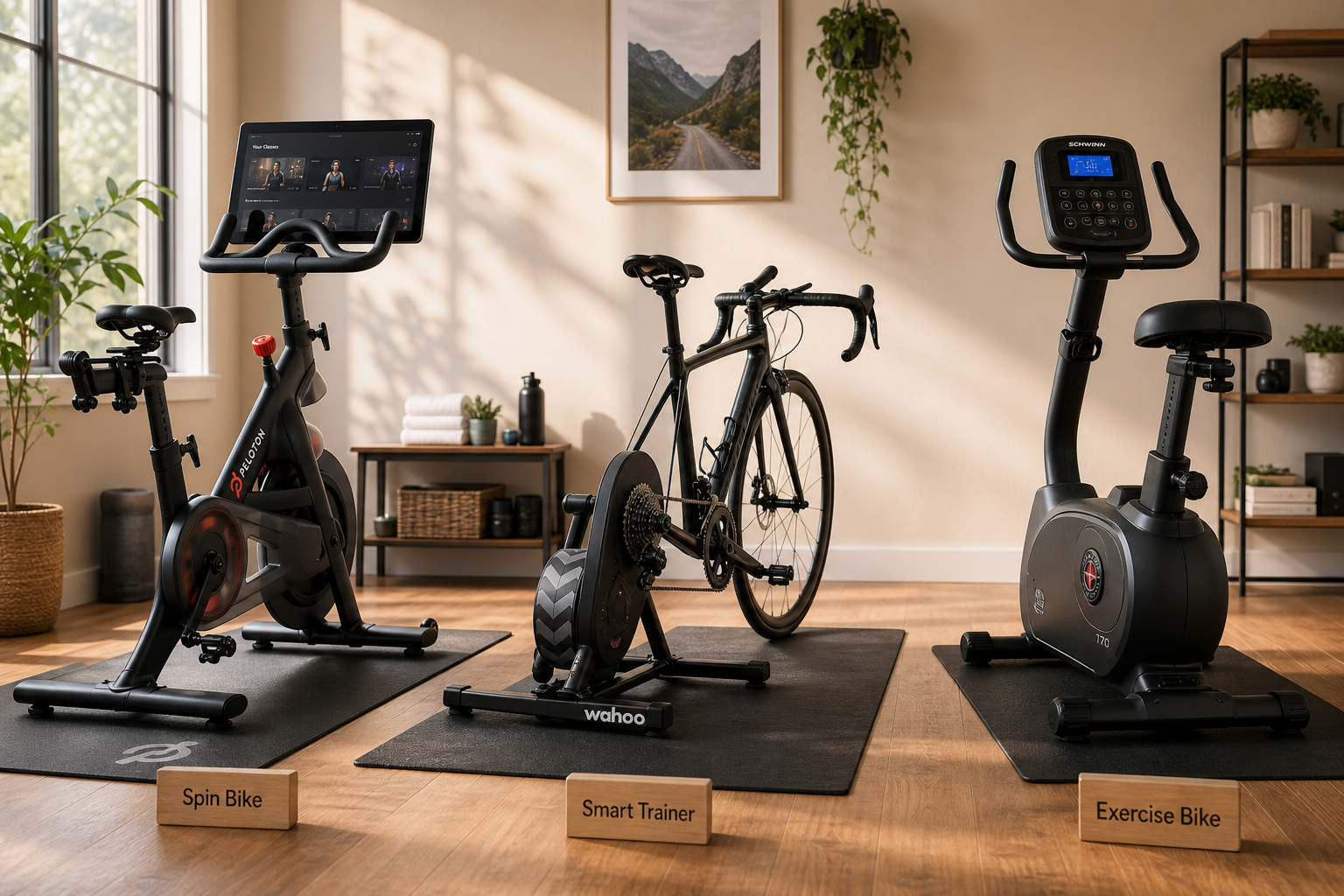
The Three-Category Distinction: Why Most Buyers Get It Wrong
The single most expensive mistake in the home cardio market isn't picking the wrong brand — it's picking the wrong category. A buyer who wants a Peloton-like experience but buys a smart trainer without owning a road bike ends up with a $1,000 paperweight. A road cyclist who buys a traditional exercise bike loses the power data and ride feel they actually need. And a budget-conscious buyer who picks a cheap spin bike expecting app integration may find themselves locked into a platform they hate.
Here is the core distinction that most buying guides skip:
- Traditional exercise bikes (upright, recumbent, air, and fan bikes) are self-contained machines. You sit on them and pedal. No additional equipment required. Examples: Schwinn IC4, Concept2 BikeErg, Schwinn Airdyne AD6.
- Smart bike trainers (Wahoo KICKR, Zwift Hub) are devices you mount your existing road bike onto. They provide resistance, power measurement, and app connectivity, but they are useless without a bike to attach. They occupy very little space and are more affordable than a full spin bike, but the addressable audience is limited to people who already own a road bike.
- Studio spin bikes (Peloton Bike+, NordicTrack X24, Echelon EX-5S) are dedicated machines designed to replicate a studio cycling class experience. They come with large screens, integrated speakers, and platform-specific software. They are the most expensive category and almost always carry a mandatory subscription.
The global home fitness equipment market was valued at $12.88 billion in 2025 and is projected to reach $22.99 billion by 2034, with cardio equipment making up 58.72% of that market. With that much money flowing into the space, getting the category right before you compare specific models is the difference between a purchase you use daily and one that gathers dust.
Decision Matrix: Price, Space, and Ideal User Profile
Use this table to self-identify which category fits your situation. Do not skip this step — it will save you hours of comparing models that are wrong for you.
| Dimension | Traditional Exercise Bike | Smart Bike Trainer | Studio Spin Bike |
|---|---|---|---|
| Price range | $210 – $1,100 | $500 – $1,300 (plus cost of road bike) | $1,500 – $2,800 |
| Floor space needed | 6–10 sq ft (varies by model) | 2–4 sq ft (trainer only; bike stored separately) | 6–8 sq ft |
| Storage footprint | Permanent setup; some foldable models available | Small; trainer can be stored in a closet when not in use | Permanent setup; heavy and difficult to move |
| Requires a road bike? | No | Yes — this is the critical requirement | No |
| Subscription required? | No (optional for app connectivity) | Optional (Zwift, TrainerRoad, etc.) | Yes — $12 to $44/month for full functionality |
| Best for | Non-cyclists, general fitness, budget-conscious buyers, small-space dwellers | Existing road cyclists who want structured indoor training with power data | Class-takers, Peloton loyalists, buyers who want a premium experience |
| Power data accuracy | Varies; some models (Schwinn IC4) transmit power via Bluetooth | Very high — designed for structured training and racing simulations | Moderate to high; sufficient for class-based workouts |
If you are an absolute beginner and still unsure which category fits your goals, start with the Home Fitness Decision Guide for a step-by-step pathway before making any purchase.
Best Picks in Each Category
Once you have identified your category, here are the top models worth your attention. These recommendations are based on verified test data from multiple independent review teams, not manufacturer claims.
Traditional Exercise Bikes
| Model | Price | Resistance Type | Key Features | Subscription |
|---|---|---|---|---|
| Schwinn IC4 | $999 | Magnetic, 100 micro-levels | 40 lb flywheel, Bluetooth connectivity to Peloton, Zwift, JRNY; 1-year JRNY membership included | $0/month after trial |
| Concept2 BikeErg | $1,100 | Air | 58 lbs, 5-year frame warranty, highly durable, used by CrossFit and rowing communities | $0/month |
| Schwinn Airdyne AD6 | $899 | Fan (air) | Fan-based resistance, no subscription, loud at high speeds, excellent for HIIT | $0/month |
| Yosuda Indoor Cycling Bike | $340 – $440 | Friction (budget) or magnetic | 35 lb flywheel, 6.11 sq ft footprint, 270 lb weight capacity, no screen | $0/month |
This result comes from one real apartment under the stated conditions — it is a strong signal, not a guarantee your space will measure identically.
Builds this evidence supports
No build currently links to this specific test. Browse all builds with a matching tag.
Spot something off?
If this result didn't match your own space, let us know — floor-damage and noise claims carry real deposit-risk consequences if we get them wrong.