
AI Strength Training Apps in 2026: Can an Algorithm Replace Your Coach?
AI-powered strength apps like Shred, Fitbod, and JuggernautAI now rival mid-range personal trainers in programming quality at a fraction of the cost. This article examines what AI gets right, where it still falls short, and who should choose an algorithm over a human coach.
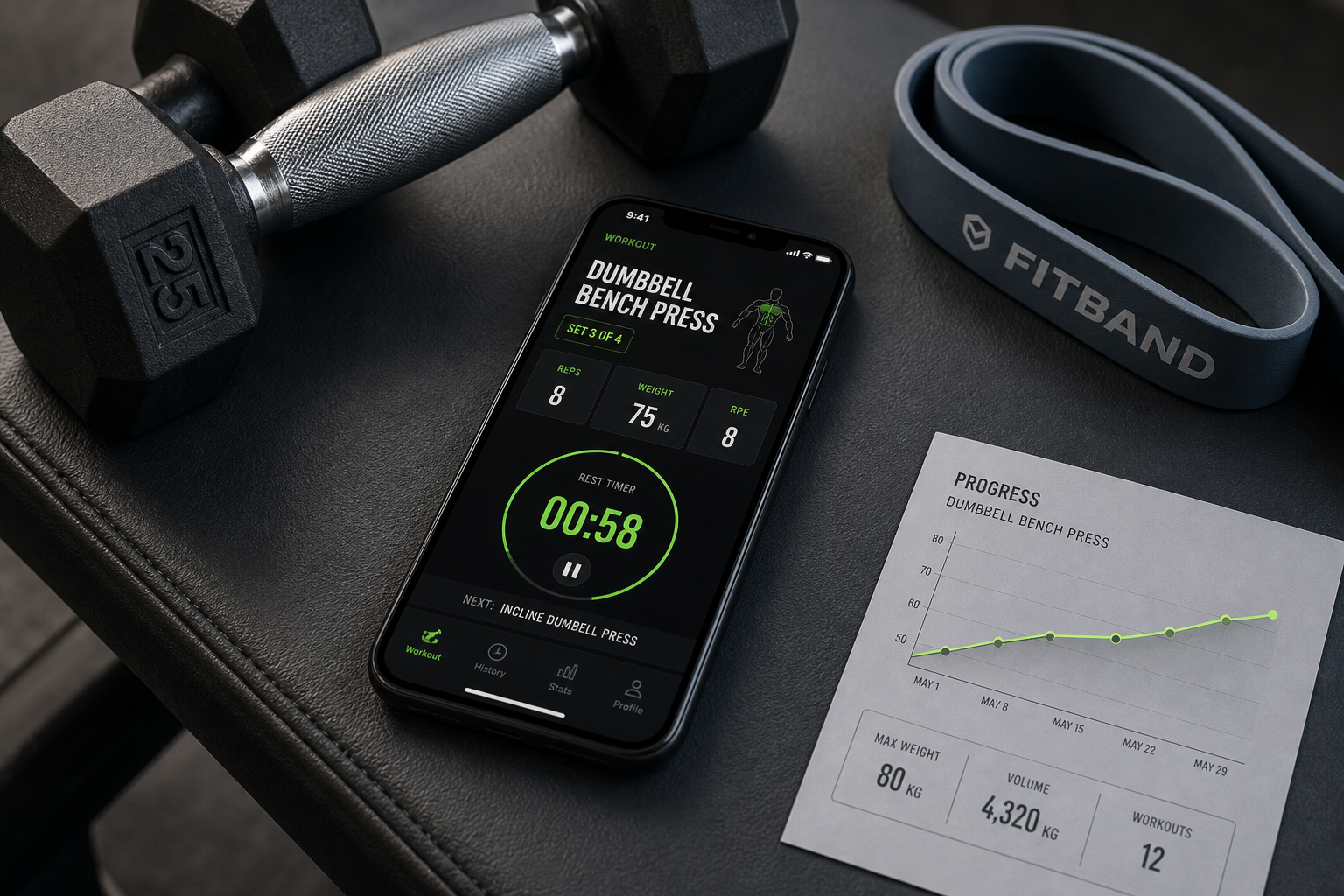
The 2026 AI Fitness Landscape: From Novelty to Necessity
Not long ago, AI-powered workout apps were little more than rep counters with a fancy label. By mid-2026, that description feels like a relic. The current generation of strength training applications has evolved into adaptive programming engines that generate personalized, recovery-aware training plans — and they do it at a price point that makes a mid-range personal trainer look like a luxury expense.
The shift is not subtle. Apps like Shred, Fitbod, and JuggernautAI now use algorithms that analyze your logged sets, reported fatigue, sleep quality, and even soreness levels to adjust your next workout in real time. They automate progressive overload, adapt to whatever equipment you have available, and structure volume around your individual recovery rate. For an intermediate lifter who already knows how to squat and deadlift with decent form, these tools can deliver programming quality that rivals what you would get from a $300-per-month in-person coach.
But the question at the center of this article is not whether AI apps are impressive — they clearly are. The real question is whether they can replace a human coach, or whether they are best understood as a powerful supplement to coaching knowledge. We have covered the broader AI versus human coaching debate in a separate analysis, but here we focus specifically on strength training applications and the unique capabilities — and limitations — of their algorithms.
How the Leading AI Apps Differ: Algorithms, Pricing, and Training Philosophy
Not all AI strength apps work the same way. Their underlying algorithms, training philosophies, and price points vary significantly, which means the right choice depends heavily on your goals and experience level. Below is a structured comparison of the five most relevant apps in this space.
| App | Monthly Price | Core AI Feature | Exercise Library | Best For |
|---|---|---|---|---|
| Shred | $9.99/mo | AI-powered circuit coaching with camera-based form tracking; rated 4.3/5 by GGR testers | Not specified in sources | Lifters who want form feedback via camera and structured circuit programming |
| Fitbod | $12.99/mo (or $79.99/yr) | AI algorithm tracks muscle recovery across every logged set and auto-adjusts volume to avoid overtraining | 900+ exercises | Home gym users and intermediate lifters who need equipment-adaptive programming |
| JuggernautAI | $35/mo (14-day free trial) | Powerlifting-focused algorithm that adjusts daily loads based on user-reported fatigue, soreness, and sleep | Not specified in sources | Serious strength athletes and powerlifters who want daily, recovery-aware load adjustments |
| Load Muscle | Free tier available | AI plan generator that creates programs from a large exercise library | 4,000+ exercises (self-reported) | Budget-conscious lifters who want AI-generated plans without a subscription commitment |
| Edge | Not specified in sources | Hybrid model: AI-generated programming with 24/7 access to real human coaches who review form and adjust plans | Not specified in sources | Lifters who want the best of both worlds — AI efficiency with human oversight |
The pricing spread is notable. Shred and Fitbod sit at the lower end of the market at $9.99 and $12.99 per month respectively, while JuggernautAI commands $35 per month — a price that reflects its powerlifting-specific algorithm and the depth of its daily adjustment logic. Edge occupies a unique hybrid position, combining AI programming with real human coach access, though its pricing was not disclosed in the available sources.
What AI Gets Right: Progressive Overload, Equipment Adaptation, and Recovery-Aware Programming
The strongest argument for AI-driven strength apps is their ability to automate the three most tedious and error-prone aspects of programming: progressive overload, equipment adaptation, and recovery management. These are precisely the areas where many lifters — even experienced ones — stall or make mistakes.
Automated Progressive Overload
Progressive overload — the gradual increase of stress placed on the body during training — is the fundamental driver of strength gains. But doing it correctly requires tracking every set, rep, and weight, then making systematic adjustments over time. AI apps handle this automatically. Fitbod, for example, analyzes every set you log and adjusts future workouts to ensure you are consistently challenging your muscles without exceeding your recovery capacity. The result is a self-correcting training loop that removes the guesswork.
The data supports the effectiveness of this approach. A study cited by JEFIT from the Journal of Strength and Conditioning Research found that lifters who used systematic tracking combined with intelligent progression recommendations achieved 23% better strength gains over 12 weeks compared to those using basic logging alone. That is a meaningful difference — and it speaks directly to the value of algorithmic programming over manual, ad-hoc planning.
Equipment Adaptation for Home Gym Users
One of the most practical advantages of AI apps is their ability to adapt workouts to whatever equipment you have. This is especially valuable for home gym users, who often work with a limited set of dumbbells, a barbell, resistance bands, or a cable machine. Fitbod's algorithm, with its library of over 900 exercises, can substitute movements based on available equipment while maintaining the intended training stimulus. If you only have dumbbells up to 50 pounds, the app will not program a 200-pound barbell squat — it will find a single-leg or tempo variation that achieves a similar effect within your equipment constraints.
For readers training at home, our guide to the best workout apps for home fitness covers which platforms handle equipment constraints best across different home gym setups.
Recovery-Aware Programming
Perhaps the most sophisticated capability of modern AI strength apps is their ability to factor recovery into programming decisions. JuggernautAI, for instance, asks users to report their fatigue, soreness, and sleep quality each day, then adjusts the day's loads accordingly. If you slept poorly and feel run down, the algorithm reduces volume or intensity — not because you are being lazy, but because training hard in a recovered state produces better long-term results than grinding through fatigue.
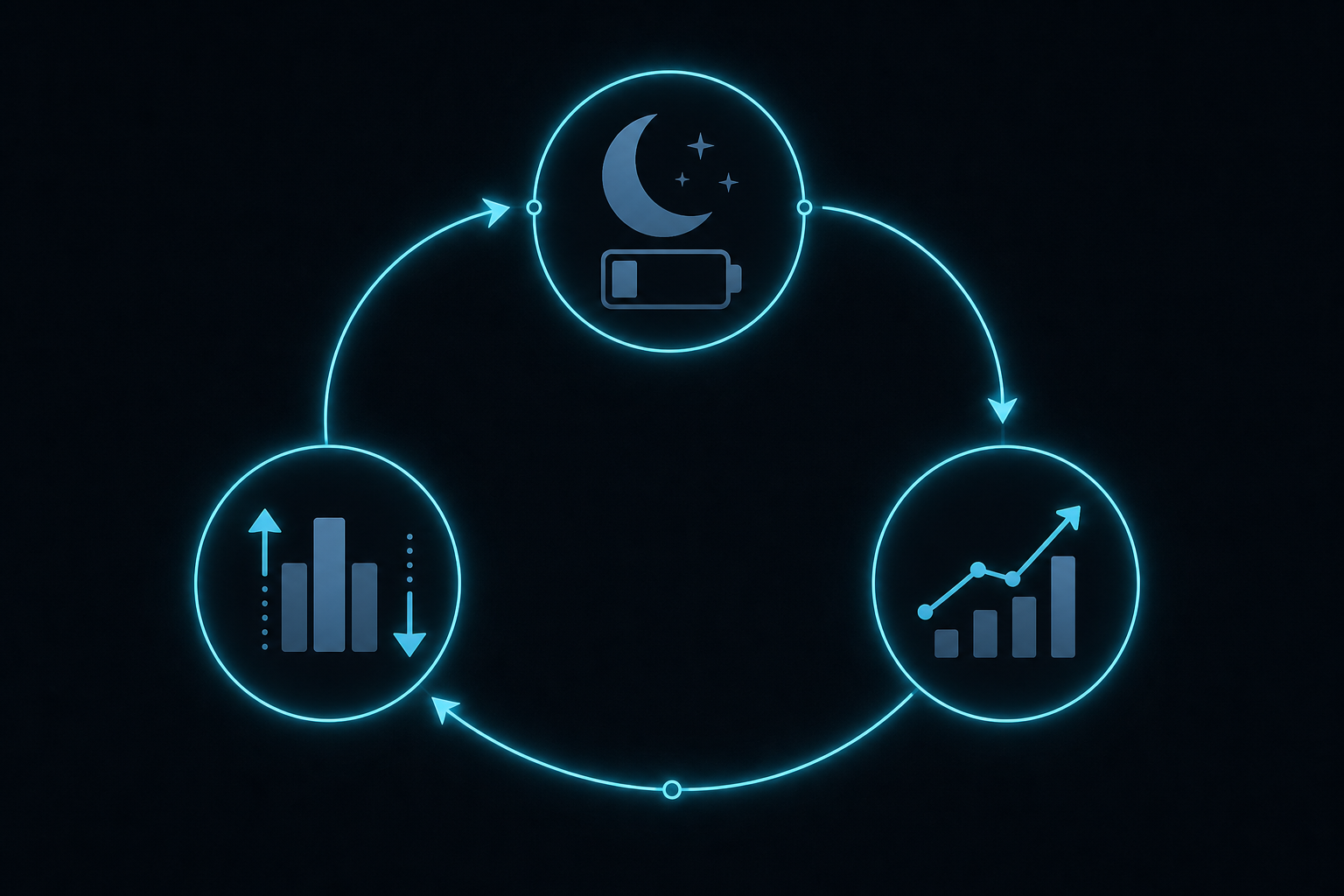
Fitbod takes a different approach to the same problem. Instead of asking for subjective reports, its algorithm analyzes your logged training history to estimate which muscle groups are recovered and which are still fatigued. It then adjusts volume for each muscle group accordingly — a technique that prevents the common mistake of training a muscle that is still recovering from a previous session.
What AI Still Misses: Form Feedback, Periodization Nuance, and Accountability
For all their algorithmic sophistication, AI strength apps have three critical blind spots that no amount of code has fully solved.
- Real-time form feedback. An algorithm cannot watch your squat depth, notice your knees caving in on a deadlift, or tell you to retract your scapulae before a bench press. Shred's camera-based form tracking is a partial solution — it uses your phone's camera to analyze movement patterns and provide feedback. But this feature has privacy implications, as it requires camera access and video processing. Readers concerned about data collection should consult our workout tracker app data privacy guide for a detailed breakdown of what fitness apps collect and share.
- Long-term periodization structure. A skilled coach designs programs in multi-month blocks — hypertrophy phases, strength peaking cycles, deload weeks, and competition prep. AI apps excel at day-to-day and week-to-week adjustments, but they generally lack the ability to build and execute a coherent 12- or 16-week periodization plan that accounts for long-term goals, competition schedules, or lifestyle factors like travel and work stress.
- Accountability and motivation. This is the most commonly cited limitation, and it is a real one. A human coach creates a relationship — they know when you are slacking, they check in, they push you when you need pushing, and they adjust the plan based on conversations that go beyond numbers. An algorithm cannot do any of this. If you are the type of lifter who needs external accountability to show up consistently, an AI app alone will likely not cut it.
The Cost Comparison: AI Apps vs. Human Coaches
The cost difference between AI apps and human coaching is dramatic, and it is often the deciding factor for lifters who are on the fence. The table below lays out the monthly and annual costs side by side.
| Option | Monthly Cost | Annual Cost | What You Get |
|---|---|---|---|
| Shred (AI app) | $9.99/mo | ~$119.88/yr | AI circuit coaching with camera-based form tracking |
| Fitbod (AI app) | $12.99/mo | $79.99/yr (discounted) | Adaptive AI programming across 900+ exercises |
| JuggernautAI (AI app) | $35/mo | ~$420/yr | Powerlifting algorithm with daily fatigue-based load adjustments |
| Load Muscle (AI app) | Free tier available | Free | AI-generated plans from 4,000+ exercises |
| Future (human coach, app-based) | $199/mo | ~$2,388/yr | One-on-one coaching with personalized programming and accountability |
| In-person personal training | $300–$600/mo | $3,600–$7,200/yr | In-person form coaching, accountability, and real-time adjustments |
This result comes from one real apartment under the stated conditions — it is a strong signal, not a guarantee your space will measure identically.
Builds this evidence supports
No build currently links to this specific test. Browse all builds with a matching tag.
Spot something off?
If this result didn't match your own space, let us know — floor-damage and noise claims carry real deposit-risk consequences if we get them wrong.