
12 Tested Home ACL Recovery Exercises for Athletes
We tested 12 home ACL recovery exercises and ranked them by how effectively they rebuild quad strength. Learn which exercises to prioritize and how to progress safely based on research-backed evidence.
- Citation source
- E3 Rehab, MOON Knee Group
- Evidence level
- general guideline
A long ACL exercise list is not the same thing as a useful home plan. The question that matters for an athlete is narrower: which movements rebuild quadriceps strength on the injured or surgical side, and which ones mostly make you feel busy?
We performed 12 common ACL recovery exercises in a home setting, checked what equipment they actually require, looked for the easiest ways to compensate, and ranked them against published rehab protocols and loading evidence. This is not a clinical trial, and it is not a substitute for your surgeon or physical therapist. It is a practical ranking for the work athletes often do between appointments.
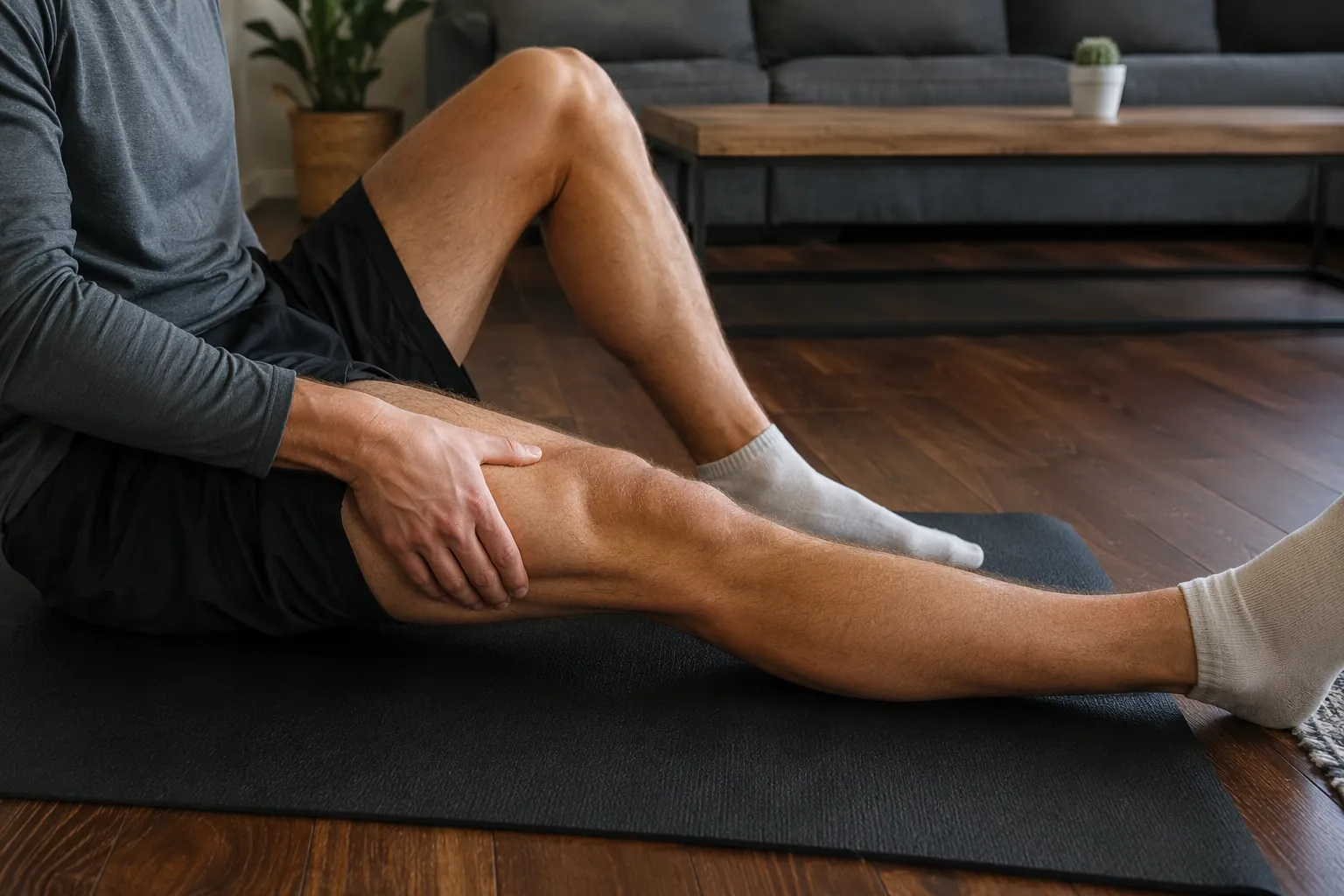
The Ranking: 12 Home ACL Exercises, Tested for Quad Strength Priority
| Rank | Exercise | Tier | Why it ranks here | Main way athletes cheat it |
|---|---|---|---|---|
| 1 | Quad sets | Highest evidence for early quad strength | Directly targets quadriceps activation early, when inhibition is often the main problem; high-volume early protocols include up to 1,000 reps per day. | Pressing through the hip or glute instead of visibly tightening the quad. |
| 2 | Seated isometric leg extension, 90-60 degrees | Highest evidence for early quad strength | Builds quad force without moving through a large range; cited loading evidence reports zero ACL graft strain in the 90-60 degree range. | Pushing at the wrong knee angle or turning it into a painful max-effort strain. |
| 3 | Straight leg raise | Highest evidence for early quad strength | Useful only when the athlete can lock the knee first; it exposes quad lag quickly. | Lifting the leg with a slightly bent knee and calling it clean. |
| 4 | Short arc quad | Quad-focused bridge exercise | Helps connect quad activation to knee extension through a small, controllable range. | Using momentum or letting the knee drift instead of finishing the squeeze. |
| 5 | Mini squat | Functional loading | Introduces two-leg loading and position control, but can hide surgical-side offloading. | Looking level while shifting weight to the uninvolved leg. |
| 6 | Step-up | Functional loading | Makes the recovering leg accept more bodyweight and begins to resemble daily and sport positions. | Pushing off the floor leg instead of driving through the working leg. |
| 7 | Split squat | Functional loading | Raises the strength demand and makes side-to-side differences harder to ignore. | Keeping most load on the back leg or shortening the range to avoid the quad. |
| 8 | Lateral step-down | Later functional control | Useful for single-leg control once basic strength is present; too easy to turn into a hip-drop drill if rushed. | Letting the pelvis collapse or tapping the floor heavily. |
| 9 | Stationary bike | Conditioning and range support | Good for controlled movement and low-impact conditioning, but not a primary quad-strength builder by itself. | Counting easy spinning as strength work. |
| 10 | Single-leg balance | Control and confidence support | Important later, especially for position awareness, but it does not replace resisted quad work. | Standing still on a locked knee without controlling the hip, knee, and foot. |
| 11 | Heel slides | Supplementary but necessary | Helps restore knee flexion range of motion; valuable, just not a quad-strength centerpiece. | Yanking into range instead of moving smoothly. |
| 12 | Ankle pumps | Supplementary but necessary | Useful early for circulation and gentle movement; it belongs in rehab, not in the strength ranking. | Treating it as evidence that the leg has been trained. |
The top three are not the flashiest. They are the ones that most directly answer the early ACL problem: can the athlete voluntarily contract the quadriceps, keep the knee straight, and begin loading the recovering side honestly? E3 Rehab’s ACL rehab series highlights quad sets as a major early exercise and notes that the University of Delaware protocol includes up to 1,000 quad-set repetitions per day; the same source summarizes evidence that isometric knee extensions between 90 and 60 degrees of knee flexion place zero strain on the ACL graft while training the quadriceps.[1]
That does not make every athlete ready for every exercise on this list. Swelling, graft type, meniscus repair restrictions, pain response, and surgeon-specific instructions can change the order. The ranking is a way to prioritize questions and home work, not a license to skip medical clearance.
Why Quad Sets Still Deserve First Place
Quad sets look too simple to athletes who are used to measuring work by sweat. Sit or lie with the leg straight, tighten the front of the thigh, press the back of the knee toward the floor or towel, hold, relax, repeat. Nothing about that looks like sport.
But after ACL injury or reconstruction, the quadriceps often does not behave like a normal muscle waiting to be strengthened. It can be inhibited, delayed, and easy to bypass. A quad set gives immediate feedback: the kneecap should lift slightly, the thigh should harden, and the knee should move toward full extension. If the athlete cannot make that happen cleanly, loading more complex patterns usually gives the body more ways to hide the problem.
The volume matters because this is partly a re-education problem. High-repetition quad sets are not glamorous, but their job is to restore a reliable contraction many times per day. That is why seeing them in high-volume early protocols should change how athletes value them.[1]
- Good rep: the quad visibly tightens before the leg moves, and the knee reaches or moves toward full extension.
- Questionable rep: the hip clenches, the foot presses hard, but the front of the thigh barely changes.
- Stop-and-ask sign: increasing joint pain, new swelling, or an inability to regain the same extension afterward.
The 90-60 Degree Isometric Leg Extension Is More Useful Than Many Athletes Think
Open-chain knee extension has a reputation problem in ACL circles because not every angle and loading strategy is treated the same. The useful distinction is range. The cited evidence summarized by E3 Rehab reports zero ACL graft strain during isometric knee extension between 90 and 60 degrees of knee flexion.[1]
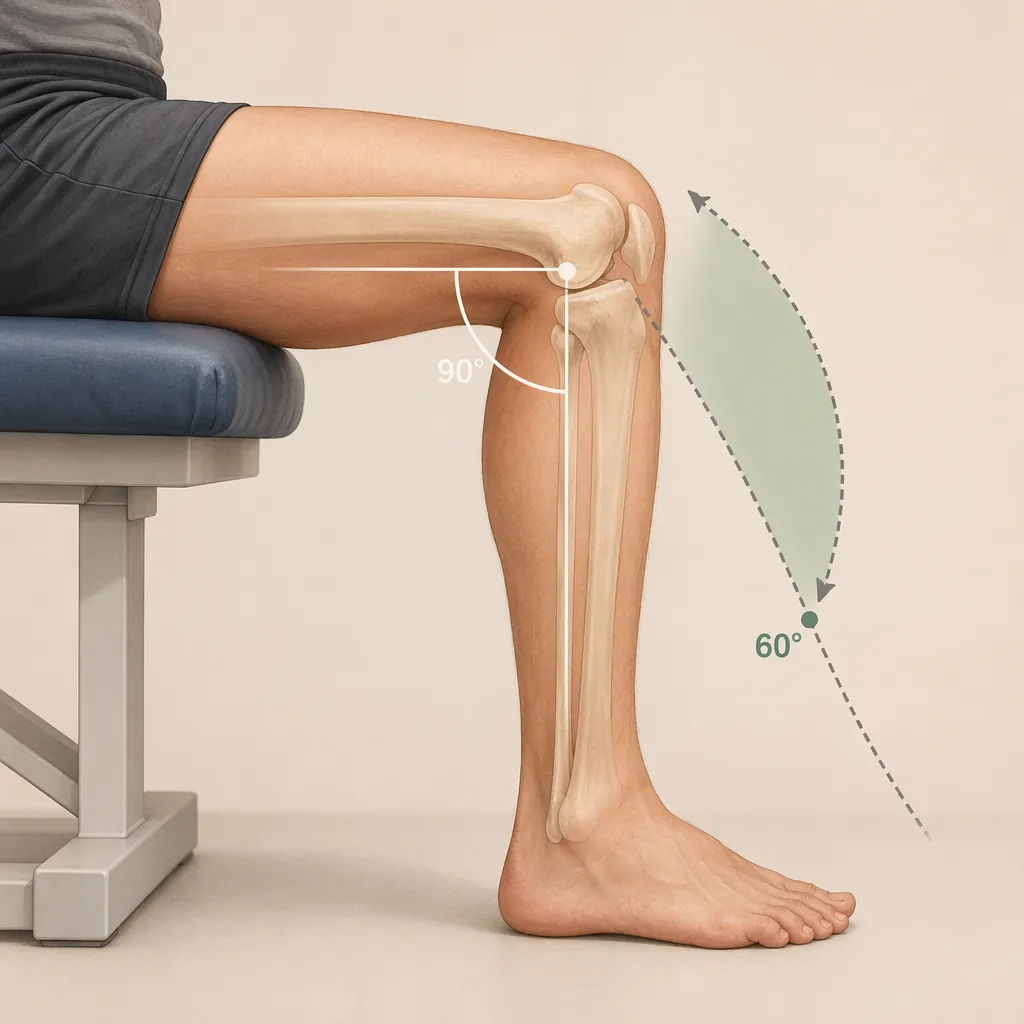
At home, this can be done seated with the knee bent, the foot pressing into an immovable object, a strap, or a fixed resistance setup. The point is not to kick hard through the whole range. The point is to create a controlled quadriceps contraction at a researched angle, hold it, breathe, and repeat without joint irritation.
This ranked second because it gives the quad a clearer strength demand than a quad set while still being easy to control. It is also harder to fake than it looks. If the athlete leans back, braces through the arms, or turns the effort into a whole-body strain, the knee may be doing less work than the video suggests.
Straight Leg Raises Count Only When There Is No Lag
The straight leg raise is a common early ACL exercise in phased protocols, including the MOON Knee Group’s patient-facing rehabilitation material.[2] It is also one of the easiest exercises to over-credit.
The athlete should lock the knee first, then lift the entire leg while keeping that lock. If the heel rises but the knee softens, the hip flexors are helping the athlete avoid the exact quadriceps demand the exercise is supposed to train. That is not a small detail. A straight leg raise with lag tells you the quad is not yet controlling extension well enough.
For that reason, straight leg raises sit behind quad sets and isometric leg extensions. They are valuable, but only after the athlete can produce a clean quad contraction. Add ankle weight or band resistance too early and the body usually finds a workaround.
Functional Exercises Are Where Cheating Gets Expensive
Mini squats, step-ups, split squats, and lateral step-downs are not lower in the ranking because they are unimportant. They are lower because they are less honest unless the athlete is watched carefully or given clear constraints.
The uncomfortable part is that a squat can look symmetrical while the recovering leg quietly does less work. Jeremy Burnham, MD’s ACL exercise guide cites research showing that athletes may unknowingly offload the surgical leg during squats even when the movement appears balanced.[3] That is exactly why squats alone are a poor proof of quad recovery.
At home, the fix is not to make the movement look harder. It is to make the loading more visible. Use a mirror, film from the front and side, or place each foot on a separate bathroom scale if your therapist approves that kind of feedback. The goal is not perfect aesthetics. The goal is to catch the shift before the body rehearses it for hundreds of reps.
The mini squat belongs in the middle phase because it reintroduces two-leg loading without forcing deep knee flexion. Keep the range modest, the feet even, and the pressure equal through both legs. If the hips drift away from the recovering side, reduce the range or return to more direct quad work.
A step-up is useful because the working leg has to raise the body. It becomes much less useful when the trail leg pushes off the floor. Start with a low step, pause briefly at the top, and make the recovering leg do the climb. Height and speed come later.
The split squat raises the demand because the legs can no longer share load as easily. It is also where athletes often protect themselves by shortening the range, leaning away, or letting the back leg take over. Treat it as a progression, not a badge.
A lateral step-down asks more of single-leg control. It should not appear just because the athlete is bored. The knee, hip, pelvis, and foot all have to stay organized while the other heel lightly reaches toward the floor. A heavy tap is usually a sign the athlete is dropping, not controlling.
The Support Exercises Still Matter, Just Not Equally
Heel slides, ankle pumps, balance work, and bike sessions should not be thrown out because they rank lower for quad strength. They solve different problems.
- Heel slides help restore knee flexion range of motion.
- Ankle pumps provide gentle early movement and circulation support.
- Stationary biking can help maintain low-impact conditioning and comfortable knee motion.
- Single-leg balance helps rebuild position awareness once the athlete is ready for it.
Verywell Health’s home ACL exercise reference includes several of these basic movements, including heel slides, quad sets, straight leg raises, and balance work, which reflects how common they are in home rehab plans.[4] The mistake is giving all of them equal billing. A heel slide may be necessary, but it is not the same category of stimulus as a hard, clean quadriceps contraction.
How the Progression Usually Changes Across Phases
The MOON Knee Group separates ACL rehabilitation into phases, beginning with early swelling control, range of motion, quad activation, and straight leg raises, then progressing toward mini squats, step-ups, balance, and later single-leg control work.[2] That kind of structure is useful because it keeps athletes from treating rehab as a menu where the hardest-looking exercise must be the best one.
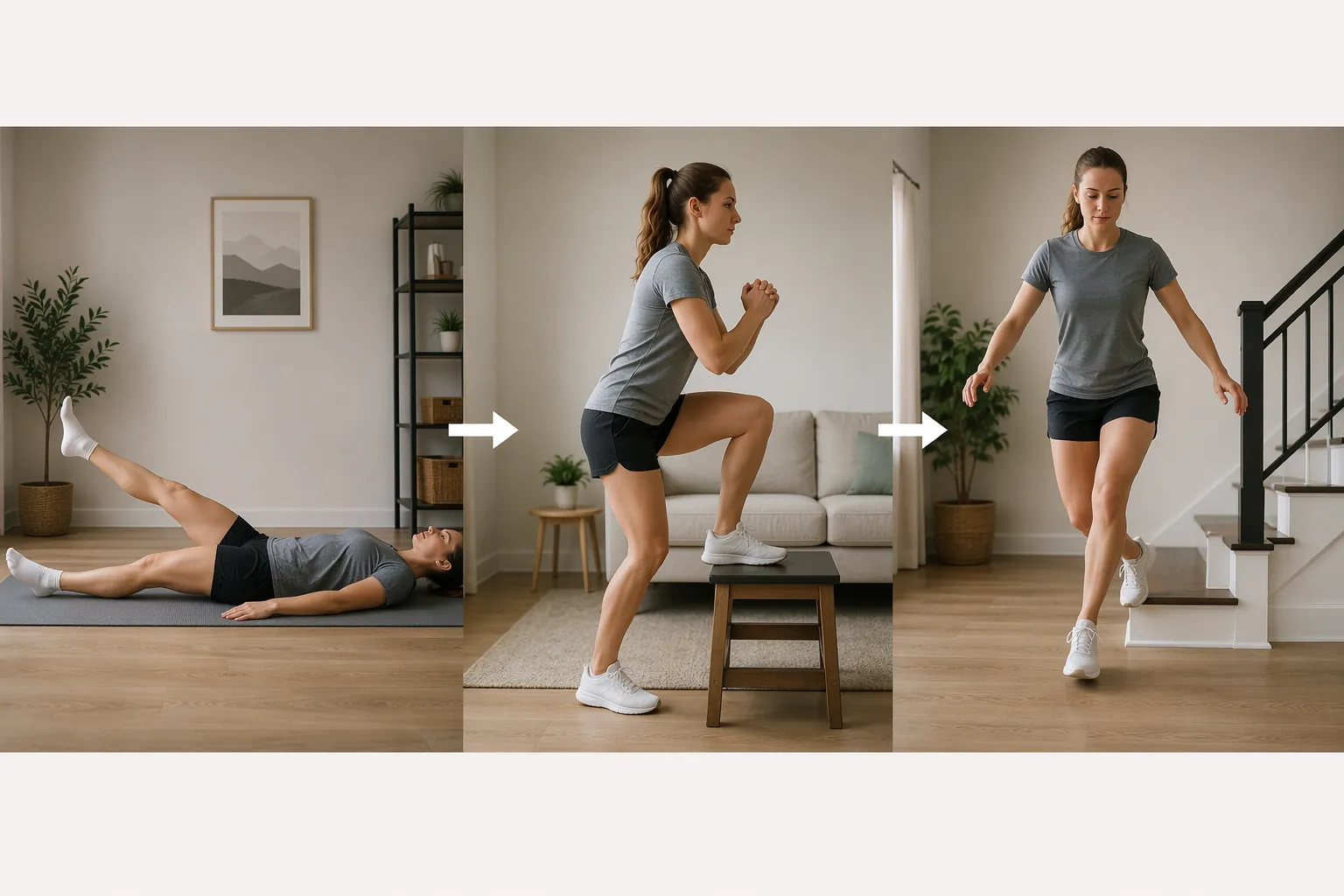
| Rehab emphasis | Home exercises that usually fit | What has to be true before pushing harder |
|---|---|---|
| Early phase: activation, extension, swelling control | Quad sets, heel slides, ankle pumps, straight leg raises if there is no lag | The knee can reach the allowed range, swelling is controlled, and the quad can contract on command. |
| Middle phase: controlled loading | Isometric leg extensions in the researched range, short arc quads, mini squats, step-ups, bike as tolerated | The athlete can load the recovering leg without shifting away from it. |
| Later phase: single-leg control and higher strength demand | Split squats, lateral step-downs, single-leg balance, more demanding step variations | The movement stays controlled under fatigue, and objective strength testing supports progression. |
This is also where a motivated athlete needs restraint. A later-phase exercise performed with early-phase strength is not advanced rehab. It is compensation practice.
Equipment You Actually Need at Home
Most of the useful work does not require a home gym. A firm mat, towel, chair, low step, resistance band, and eventually simple load options are enough for many of these exercises. A stationary bike can be useful for controlled conditioning and range work if your clinician clears it.
If you are building a small setup, prioritize equipment that improves consistency rather than equipment that makes rehab look harder. A stable step is more useful than a wobbly box. A band you can anchor safely is more useful than a heavy dumbbell you cannot control. For broader home-conditioning choices during recovery, FitAtHome’s guide to cardio at home can help separate low-impact options from exercises that may not fit your current restrictions.
Benchmarks Matter More Than Exercise Variety
The further an athlete gets from surgery or injury, the less useful a simple exercise checklist becomes. The question changes from “Can I do this movement?” to “Is the recovering leg strong enough compared with the other side?”
That is where Limb Symmetry Index, or LSI, enters the conversation. Return-to-sport testing resources commonly discuss strength and hop-test symmetry, with 70% LSI often used as a benchmark before running and 90% or higher used before return to sport.[5] A published ACL rehabilitation case series also describes using objective criteria, including limb symmetry measures, to guide progression rather than relying only on time or appearance.[6]
Those numbers should not be treated as personal clearance from an article. They are benchmarks to discuss with a clinician who can test strength, swelling response, movement quality, pain, graft status, sport demands, and psychological readiness. Quad strength is central, but it is not the whole return-to-sport decision.
The risk data are sobering enough without exaggeration. In a prospective cohort study of young athletes after ACL reconstruction, Grindem and colleagues reported that those who met return-to-sport criteria had a 5% reinjury rate, compared with 38% in those who did not.[7] Kyritsis and colleagues reported that athletes who did not meet discharge criteria before return to professional sport had a higher risk of ACL graft rupture.[8]
A clean squat video, a harder band, or a longer home workout does not prove the involved limb is ready. Objective testing is what keeps confidence from outrunning capacity.
What to Bring Back to Your Physical Therapist
Home rehab improves when the next clinic visit starts with better information. Instead of saying, “I did my exercises,” bring notes that expose whether the surgical side is really working.
- Which quad exercises produce a visible contraction, and which still feel delayed or weak.
- Whether straight leg raises stay locked through every rep or develop lag with fatigue.
- Whether mini squats and step-ups show a weight shift away from the recovering side.
- Whether swelling, stiffness, or pain increases later that day or the next morning.
- Which benchmarks your therapist wants before running, jumping, cutting, or sport practice.
That information is more valuable than adding three new exercises because you are impatient. The better question is not how many ACL exercises you can collect. It is whether the recovering quadriceps is taking its share of the work.
Where This Ranking Stops
These 12 home ACL recovery exercises can meaningfully support quadriceps rebuilding when they are prioritized correctly: activation first, safe and direct quad loading next, functional loading only when the athlete stops hiding from the involved leg. They do not replace strength testing, sport-specific progression, cutting mechanics, psychological readiness work, or clinician oversight.
For an athlete, the hard part is accepting that the boring exercises may be the ones that protect the later ones. Looking strong and being symmetrical are not the same thing.
References
- ACL Rehab, E3 Rehab
- ACL Rehabilitation Phase 1, MOON Knee Group
- ACL Rehab Exercises, Jeremy Burnham, MD
- ACL Rehab Exercises, Verywell Health
- ACL Return To Sport Testing, The Prehab Guys
- Criterion-Based Rehabilitation Program with Return to Sport Testing Following ACL Reconstruction: A Case Series
- Simple decision rules can reduce reinjury risk by 84% after ACL reconstruction: the Delaware-Oslo ACL cohort study, British Journal of Sports Medicine, 2016
- Likelihood of ACL graft rupture: not meeting six clinical discharge criteria before return to sport is associated with a four times greater risk of rupture, British Journal of Sports Medicine, 2016
This is general fitness education, not medical advice. For diagnosis or treatment of pain or injury, consult a qualified clinician.
Pick your next session
Browse all routines to find an appropriately-spaced next session.
Spot something off?
This content sits adjacent to health guidance — tell us if a citation or figure needs a correction.