
Can the Taco Bell Melty Pepper Jack Steak Burrito Fit Your Weight Loss Diet?
Wondering if Taco Bell's new Melty Pepper Jack Steak Burrito can fit into your weight loss plan? This article breaks down its 440-calorie, 18g protein nutrition and shows how to strategically stack it into a training day without sabotaging your deficit.
Primary source: American College of Sports Medicine sports nutrition guidance
Claim type: explainer
Last reviewed:
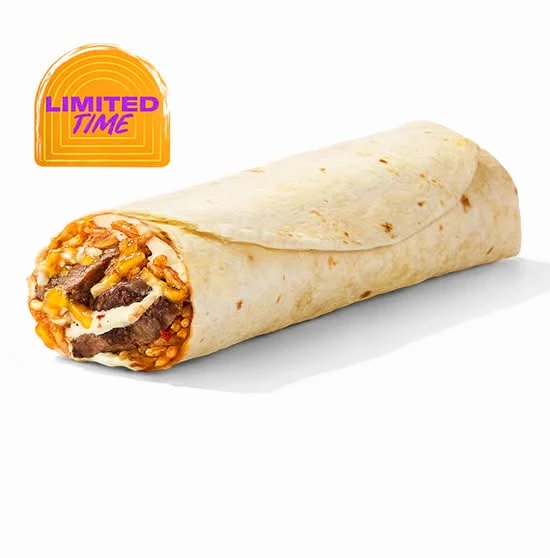
Quick verdict: the Taco Bell Melty Pepper Jack Steak Burrito can fit a weight loss diet after a home workout if you plan the rest of the day around it. It is not a clean little protein bomb, and it is not a diet disaster. At 440 calories, 18g protein, 49g carbs, 20g fat, and 1040mg sodium, the $3 Melty Pepper Jack Steak Burrito is a workable occasional recovery meal for someone cutting on roughly 1500–1800 calories, especially if the alternative is skipping food for hours after training.[1][2]
The catch is that “fits” does not mean “does all the work.” The carbs are useful after lifting. The calories are manageable. The protein is close to the lower end of a good post-workout target, but still short. The sodium is the part that can quietly wreck the rest of the day if breakfast, lunch, and snacks were already packaged or restaurant-heavy.
The Nutrition Math Before the Excuses
The burrito launched in July 2026 as a limited-time Taco Bell item, with $3 pricing reported at launch, though price and availability can vary by location in Q3 2026.[2] The useful thing here is that the core numbers are plain enough to make a decision without pretending this is meal prep.
| Item | Amount | What it means on a cut |
|---|---|---|
| Calories | 440 | About one substantial meal inside a 1500–1800 calorie day |
| Protein | 18g | Helpful, but below the common 20–40g post-workout benchmark |
| Carbs | 49g | Useful after resistance training, especially if the session was not followed by another meal |
| Fat | 20g | Not outrageous, but high enough that this is not a lean recovery meal |
| Sodium | 1040mg | High enough that the rest of the day needs to stay lower-sodium |
| Reported price | $3 | Cheap for convenience food, though local pricing can vary |
On a 1500-calorie day, 440 calories takes up a little under a third of the budget. On an 1800-calorie day, it is closer to one quarter. That is not tiny, but it is not automatically disqualifying either. A burrito that lands here can be absorbed into a deficit if the other meals are built like they know this burrito happened.
After Training, the Carbs Are the Burrito’s Best Argument
For a moderate home resistance session—dumbbell rows, split squats, presses, hinges, push-ups, maybe some loaded carries if the apartment floor can tolerate it—the 49g of carbs is the part of this burrito that makes the most sense. Carbs after training help restore glycogen, and they make the meal feel more like recovery food than just a random late-night grab.[1][2]
That matters more when someone is dieting. A calorie deficit already makes training recovery less forgiving. If the post-workout choice is this burrito now or no food until much later, the burrito is usually the more practical move. Skipping the meal can look disciplined in a tracking app for a few hours, then turn into a worse decision when hunger catches up.
The burrito’s 20g of fat keeps the praise in check. Fat is not bad, and it does not cancel the meal, but it does make the burrito slower and heavier than a leaner post-workout plate. If someone is training again the next morning or already struggles to hit protein without overshooting calories, those 20g of fat are not free.
The Protein Is Useful, Just Not Enough to Carry the Meal
The International Society of Sports Nutrition benchmark cited in Healthline’s medically reviewed post-workout nutrition guide is 20–40g of protein after training to support muscle protein synthesis.[3] This burrito lands at 18g. That is close enough to be useful, but not close enough to call it ideal.
The difference between 18g and 20g is not magic. Nobody loses their workout because a burrito missed a line by 2 grams. But if this is the whole post-workout meal, the protein target is still underbuilt. That matters on a weight-loss diet because protein is doing several jobs at once: supporting lean mass, making the meal more filling, and reducing the chance that the next snack becomes a second dinner.
Healthline also notes a more flexible view of timing, including research suggesting the post-workout protein window may extend for several hours rather than closing immediately.[3] That makes the practical fix simple: do not panic about the burrito, but do not let it be the day’s last serious protein serving.
How to Stack the Rest of the Day
The American College of Sports Medicine’s sports nutrition guidance is blunt on one point that people underuse: recovery food should be planned in advance, not improvised after the workout is already over.[4] That is especially true here. The burrito can fit, but only if the rest of the day stops competing with it.
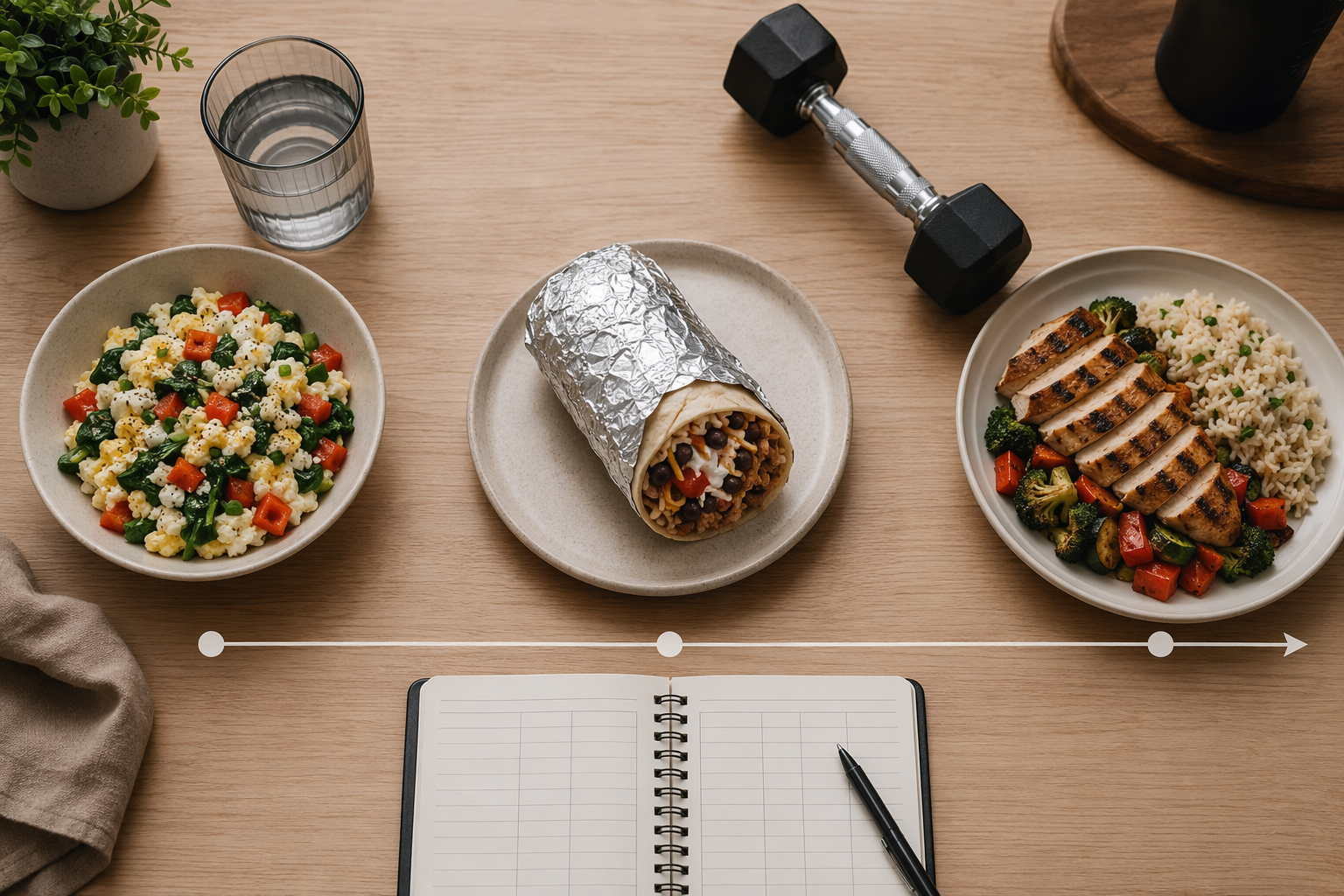
If the Melty Pepper Jack Steak Burrito is the post-workout meal, the rest of the day should lean in the opposite direction: higher protein, lower sodium, lower fat, and less calorie-dense. That does not require expensive supplements. It does require not acting surprised when a second salty convenience meal makes the numbers ugly.
| Meal slot | Better role if the burrito is planned | What to avoid |
|---|---|---|
| Breakfast | Anchor protein early with a simple lean meal | A low-protein pastry or salty frozen sandwich |
| Pre-workout snack, if needed | Keep it light and mostly carb-based | Adding another high-fat item before the burrito |
| Post-workout | Use the burrito as the carb-heavy convenience meal | Adding chips, soda, or a second entree by default |
| Dinner | Make it lean, high-protein, and lower-sodium | Restaurant leftovers, deli-heavy meals, or salty frozen dinners |
A hypothetical training day could look like this: a protein-forward breakfast, a normal workday lunch that is not sodium-heavy, the burrito after lifting, then a lean dinner built around chicken, fish, tofu, eggs, Greek yogurt, or another protein that does not bring much extra salt. The exact foods can change. The pattern is the point.
Where people fool themselves is treating the burrito as cheap protein and then eating the rest of the day like it was a salad. It is not. It is a 440-calorie fast-food burrito with useful carbs, some protein, a meaningful fat load, and a lot of sodium. If it goes into the log honestly, it can work. If it gets mentally discounted because it was post-workout, it becomes a problem.
Sodium Is the Main Caveat, Not a Scare Story
The 1040mg sodium number is the least flexible part of the burrito.[1][2] After a sweaty workout, sodium is not automatically wasted; sweat losses vary, and some sodium replacement can be part of recovery. But that does not turn a high-sodium fast-food item into a health food.
For a healthy person who trained, drank water, and kept the rest of the day mostly whole-food and lower-sodium, this is more of a planning issue than an emergency. For someone with hypertension, sodium sensitivity, or a clinician-directed sodium limit, this is a different decision. The burrito is not worth bending a medical boundary.
The practical rule is boring and useful: if this is the salty meal, do not stack more salty meals around it. That means skipping the chips, not pairing it with another sodium-heavy fast-food item, and making dinner look like actual food instead of another wrapper.
Small Ordering Tweaks That Actually Matter
The easiest calorie trim is removing the reduced-fat sour cream, which can save about 40 calories in a fast-food order context.[5] That does not transform the burrito, but it can be the difference between a meal that fits cleanly and one that forces annoying cuts later.
- If calories are tight: order the burrito as-is or remove sour cream, then stop there.
- If protein is the problem: add a lean protein serving later in the day instead of adding more fast food.
- If fullness is the problem and calories allow: pairing with black beans can add fiber and protein, but it should be logged as an addition, not treated as free.
- If sodium is already high that day: pick a different meal.
There is no need to turn the order into a puzzle. The big mistake is not the burrito. It is the combo creep: burrito plus chips, burrito plus soda, burrito plus another item because training made the meal feel earned. The original item is already using enough of the budget.
So, Is It Good for Weight Loss?
For weight loss, the Melty Pepper Jack Steak Burrito is a B- post-workout option for a budget home trainee. It is cheap, calorie-contained, and carb-useful after lifting. It also misses the preferred post-workout protein range and spends a large sodium chunk in one shot.
Use it occasionally after training when the rest of the day is already planned to be leaner, higher-protein, and lower-sodium. Do not make it a daily weight-loss staple, and do not call it optimal recovery just because one number on the label looks convenient.
References
- Melty Pepper Jack Steak Burrito, Taco Bell Wiki
- Taco Bell - New $3 Melty Pepper Jack Steak Burrito, Brand Eating, July 20, 2026
- What to Eat After a Workout, Healthline, March 27, 2026
- Ten Things You Need to Know About Sports Nutrition, American College of Sports Medicine
- How to Eat Fast Food and Still Lose Weight, Lose It!, March 11, 2025
Source: American College of Sports Medicine sports nutrition guidance
Have a question about this guidance?
This is a question and correction channel, not an open discussion thread — recovery topics sit close to a medical-advice boundary, so we review submissions rather than publishing them instantly.