
Batch-Prep This 40g Protein Copycat Taco Bell Burrito
Transform Taco Bell's classic bean burrito into a high-protein, batch-cooked recovery meal. Using four simple swaps, this recipe delivers 35–40g of protein per serving—within the ISSN post-workout window—while keeping calories near 400 and fitting a weekly meal-prep routine.
Primary source: International Society of Sports Nutrition (ISSN) Position Stand: Nutrient Timing
Claim type: guideline
Last reviewed:
Start with the actual fast-food target: a Taco Bell Bean Burrito is listed at 350 calories and 13g of protein, which works out to about 27 calories for every gram of protein.[1] That is not a moral problem. It is just a weak recovery meal if you have just finished squats in the garage, dumbbell rows in the bedroom, or a no-equipment circuit in the living room and want dinner to do more than fill the gap.
A useful copycat Taco Bell burrito for home gym meal prep does not need to pretend it came from the drive-thru. It needs to keep the warm tortilla, beans, cheese, and tangy sauce-adjacent comfort, then rebuild the parts that keep the original from pulling its weight after training.
A sensible target is 35–40g of protein at roughly 400 calories. That puts the burrito inside the International Society of Sports Nutrition’s post-exercise protein range of 20–40g, or about 0.25g/kg body weight, within the post-workout window for healthy exercising people.[2] ACSM’s general sports nutrition guidance also keeps the focus on practical recovery basics: enough carbohydrate, protein, and fluid to support the work you are asking your body to repeat.[3]
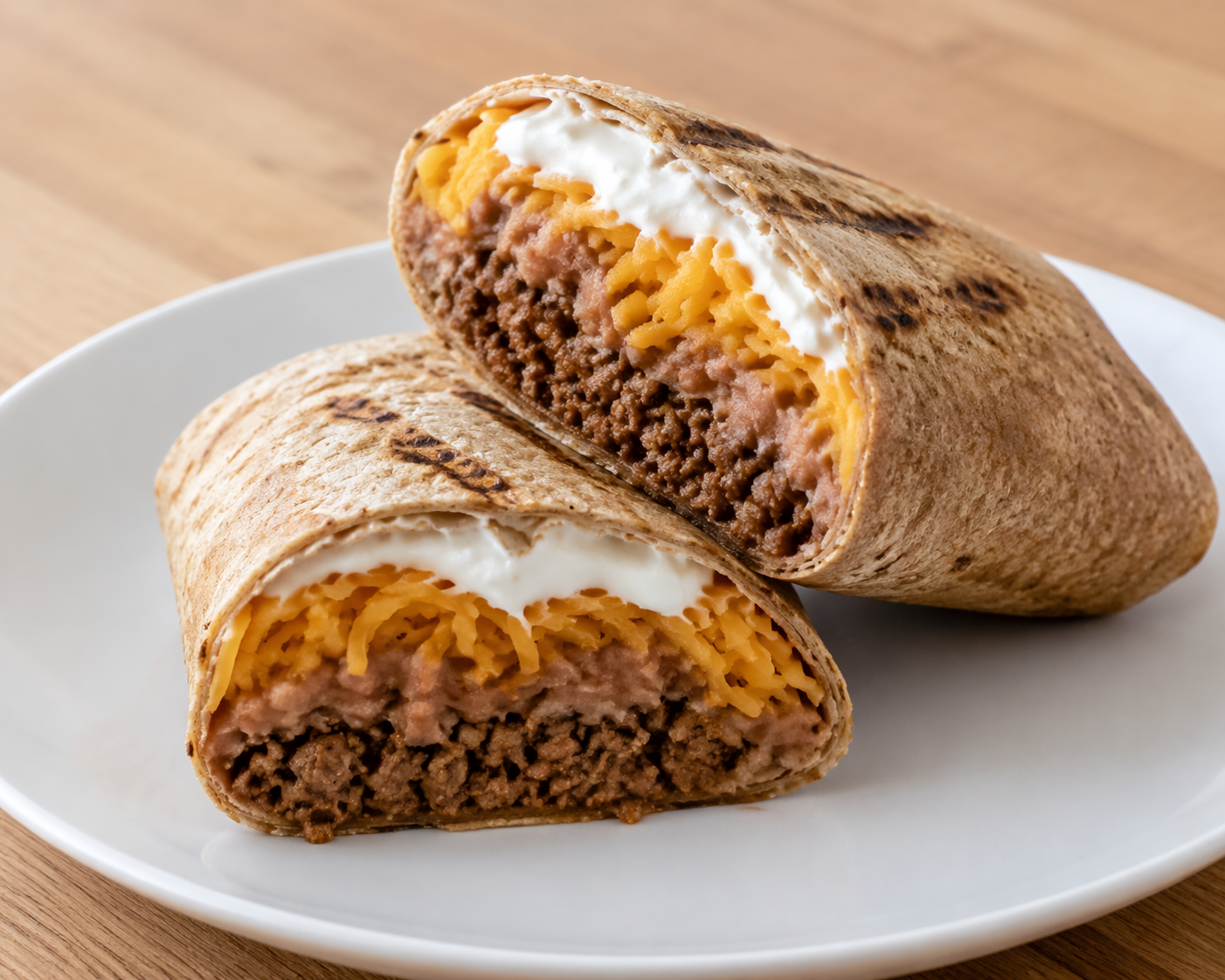
The Four Swaps That Make the Burrito Work
The copycat part lives in the eating cues: soft tortilla, seasoned filling, beans, cheddar, onion if you like it, and a creamy tang in the same general lane as the fast-food version. The recovery part comes from four swaps that change where the calories go.
| Fast-food-style element | Meal-prep swap | What it changes |
|---|---|---|
| Mostly bean-based filling | Lean ground beef or shredded chicken, with beans kept for texture | Moves the burrito from snack-level protein toward a recovery serving |
| Creamy sauce or sour cream feel | Plain Greek yogurt | Adds tang and moisture without spending many calories on fat |
| Standard flour tortilla | Low-carb tortilla | Frees calorie room for the protein filling |
| Full cheese load | Reduced shredded cheddar or Mexican blend | Keeps the melted-cheese signal without letting cheese carry the whole macro budget |
The first swap does the heavy lifting. Refried beans make the Taco Bell burrito familiar, so cutting them entirely is usually a mistake. The better move is to stop asking beans to be the main protein. Use seasoned lean ground beef when you want the burrito to taste closer to the fast-food idea, or shredded chicken when you want the cleanest path to the 35–40g protein target. Keep a smaller amount of beans in the filling so the burrito still has that soft, cohesive center instead of turning into dry meat rolled in a tortilla.
Greek yogurt is not there because every fitness recipe needs a spoonful of Greek yogurt. It is there because this burrito needs moisture and tang. Mixed with hot sauce, taco seasoning, or a little salsa, it replaces the creamy part that makes a burrito feel finished. Add it after cooking rather than simmering it hard in the pan, because the point is a cool, creamy contrast, not a chalky sauce.
The tortilla swap is less glamorous but important. A low-carb tortilla creates calorie space for the protein that actually changes the meal. If the tortilla you buy cracks when folded, warm it first and do not overfill it. A torn burrito is not a macro failure, but it is annoying enough to make the whole batch feel less worth repeating.
Cheese stays. Just use less of it than a restaurant burrito would make emotionally reasonable. A small layer of shredded cheddar or Mexican blend gives the filling that melted, salty pull. Removing it completely saves calories on paper and makes the burrito taste like an apology.
That basic setup is not theoretical. A high-protein burrito recipe can land around 37g of protein, which is enough to show that this style of meal can hit the target without turning into a bodybuilding stunt.[4] The exact number depends on the protein you choose, the tortilla label, and how hard you go on cheese, but the working range is clear: build each burrito around a real serving of lean meat or chicken, then use beans, yogurt, tortilla, and cheese to make it taste like something you would actually reheat.
A Batch Formula for 6–8 Burritos
The batch goal is 6–8 burritos in about 45 minutes. That is enough for a training week if you lift or train at home several times and do not want each session to end with a negotiation between cooking, delivery, and cereal.
- Protein: lean ground beef for the closest Taco Bell-adjacent flavor, or shredded chicken for the leanest version.
- Beans: refried beans or mashed pinto beans, used as part of the filling rather than the whole filling.
- Tortillas: low-carb tortillas that are flexible enough to fold after warming.
- Creamy layer: plain Greek yogurt mixed with hot sauce, taco seasoning, or salsa.
- Finishers: reduced shredded cheese, diced onion, taco sauce, or mild salsa, depending on how close you want the flavor profile to feel.
Cook the protein first and season it aggressively enough that it can carry the beans and tortilla. Taco seasoning, chili powder, cumin, garlic powder, onion powder, and a little salt all work in the expected direction. If you are using shredded chicken, moisten it with salsa or a spoonful of bean mixture so it does not dry out by the time Thursday’s burrito hits the microwave.
Warm the beans separately, then fold them into the cooked protein until the filling holds together. This is the part that keeps the burrito from eating like a wrap full of loose meat. If the filling looks dry in the pan, fix it now with salsa, taco sauce, or a small splash of water. Do not count on reheating to rescue a dry batch.
Lay out the tortillas, add the protein-bean filling, sprinkle on the reduced cheese, and add the Greek yogurt mixture only if the burritos are going straight to the fridge for near-term eating. For freezer burritos, keep wet sauces lighter or add them after reheating. Freezer burrito meal-prep guidance usually comes back to the same practical point: control moisture before wrapping, because ice and soggy tortillas are the tax you pay for rushing.[5]
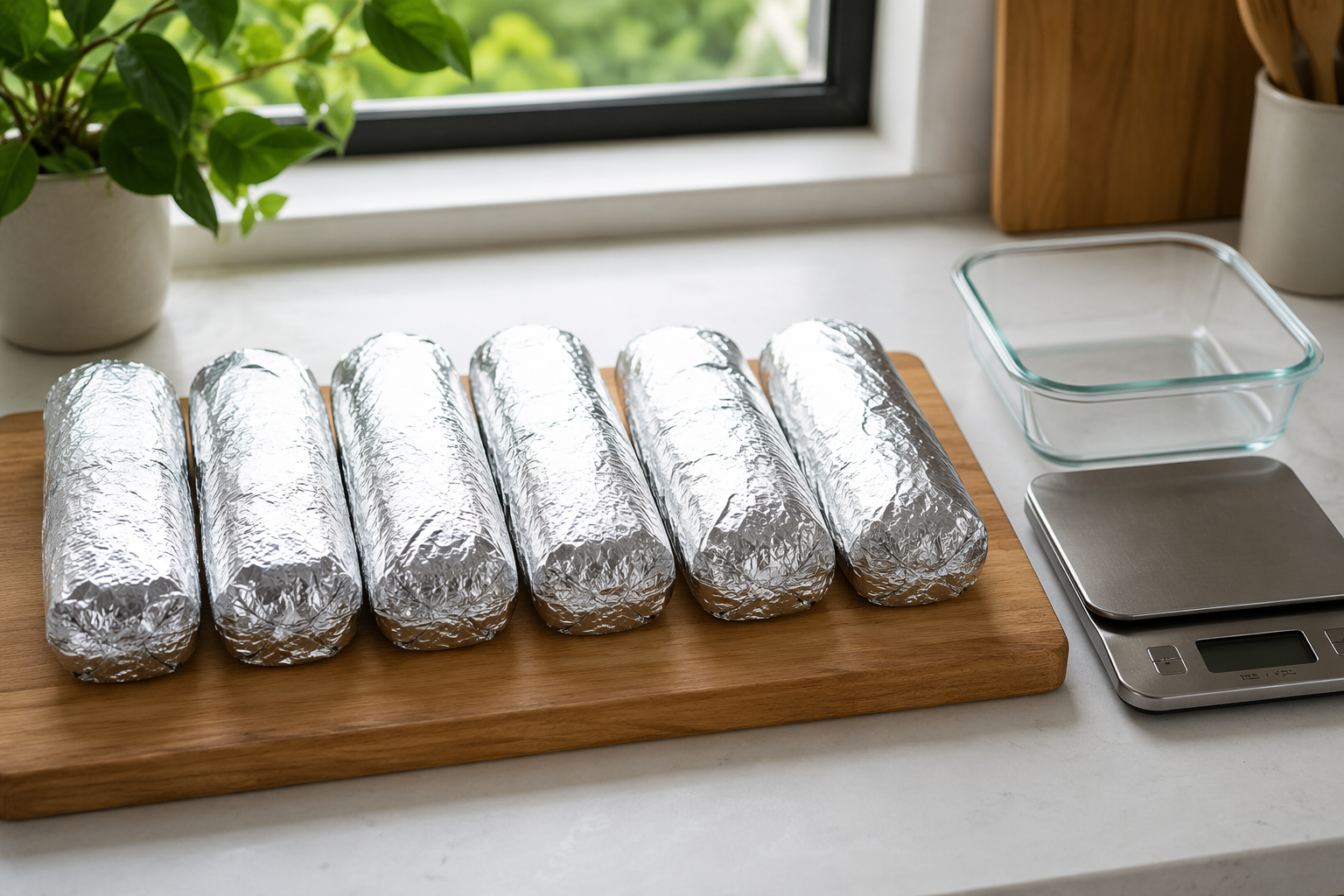
Wrapping without making future you angry
Fold the sides in first, roll tightly, then wrap each burrito in foil or another freezer-safe wrap. If you are refrigerating them, keep the seam side down so the burrito holds its shape. If you are freezing them, let the filling cool before wrapping so steam does not condense inside and soften the tortilla.
Labeling the protein choice matters more than it sounds. Beef and chicken versions reheat differently, and once everything is wrapped, optimism is not a storage system. A simple “beef” or “chicken” mark is enough.
Reheating so the tortilla survives
For a refrigerated burrito, unwrap it from foil before microwaving, heat until the center is hot, then finish it in a dry skillet or air fryer if you want the tortilla to firm back up. For a frozen burrito, thawing first gives you the most even result. If you heat from frozen, expect the outside to be ready before the center is, so use lower power at first rather than blasting it until the tortilla turns rubbery.
Add cold Greek yogurt sauce after reheating if texture matters to you. Heating yogurt inside the burrito can work when the amount is small, but it is not as reliable as using it like a finishing sauce. This is especially true if the burrito has been frozen.
Where the Macros Can Drift
The 35–40g protein and roughly 400-calorie target assumes a healthy home-gym athlete around 150–175 lb, using a lean protein, a low-carb tortilla, moderate beans, Greek yogurt, and a controlled amount of cheese. It is a recipe range, not a lab result. Taco Bell’s own nutrition can vary by formulation and location, and home burritos vary even more because grocery labels, scoop sizes, and tortilla brands are not standardized.[1]
- If protein is too low, increase the lean beef or chicken before adding more cheese.
- If calories are too high, check the tortilla first, then the cheese, then the amount of beans.
- If the burrito tastes flat, add sauce, onion, seasoning, or salsa before adding more fat.
- If the filling gets dry, add moisture to the protein-bean mixture during cooking, not after the burrito is wrapped.
- If your training volume is higher, adjust the serving size or pair the burrito with another carbohydrate source instead of pretending one burrito fits every session.
For a lighter training day, one burrito may be enough. For a harder lower-body session or a longer conditioning day, the same burrito may be only part of the meal. If you want the broader recovery context, pair this with how to recover from a bodyweight workout at home rather than trying to make one recipe answer sleep, hydration, total calories, and soreness management by itself.
Cost is usually friendly to this format because the expensive part is concentrated in the protein and stretched across a batch. In mid-2026 U.S. grocery terms, chicken versions will often be cheaper than lean beef versions, but the exact number depends heavily on region, store, package size, and whether you already keep tortillas, seasoning, and salsa around.
Make It Fit Your Training Instead of Chasing the Clone
A good copycat recovery burrito should remind you of Taco Bell, not audition as an official recreation. This version has not been sensory-tested against the current menu item, and it should not be described as identical. The point is narrower and more useful: take a recognizable bean-and-cheese fast-food craving and make it carry enough protein to justify a spot in the post-workout rotation.
Use lean ground beef when flavor matters most. Use shredded chicken when hitting the protein target with fewer calories matters most. Use more beans when you want the burrito softer and more familiar. Use less cheese when the macro budget is tight, but do not remove every pleasurable part and then wonder why the batch sits untouched.
The ISSN range is a useful guardrail for healthy exercising readers, not individualized medical advice.[2] If you are managing an injury, a medical condition, digestive limitations, weight-class requirements, or a specialized nutrition plan, get guidance from a qualified clinician or sports dietitian before treating a batch-prep burrito as your recovery strategy.
Once the burritos are wrapped, the decision is mostly made for the week. Train, reheat one, add the cold yogurt sauce if you kept it separate, and move on.
References
- Taco Bell Bean Burrito Nutrition Facts, FastFoodNutrition.org, link
- International Society of Sports Nutrition Position Stand: nutrient timing, Journal of the International Society of Sports Nutrition, link
- Ten Things You Need to Know About Sports Nutrition, ACSM, link
- Healthy High Protein Burrito, Skinny Fitalicious, link
- Meal Prep Freezer Burritos, Lexi's Clean Kitchen, link
Source: International Society of Sports Nutrition (ISSN) Position Stand: Nutrient Timing
Have a question about this guidance?
This is a question and correction channel, not an open discussion thread — recovery topics sit close to a medical-advice boundary, so we review submissions rather than publishing them instantly.