
Why Pink Salt Won't Help Your Home Workout Weight Loss Goals
The pink salt weight loss claim has no scientific backing—dietitians refute it and excess sodium can lead to water retention. Learn why the trend fails and get practical, budget-friendly hydration strategies for your home workouts.
Primary source: PMC study on pink salt mineral composition (2020)
Claim type: myth-check
Last reviewed:
Pink salt will not make a home workout leaner. If you are sweating in a hot apartment or garage gym, the useful part of the conversation is hydration; the weight-loss part is just sodium repackaged as a trend.
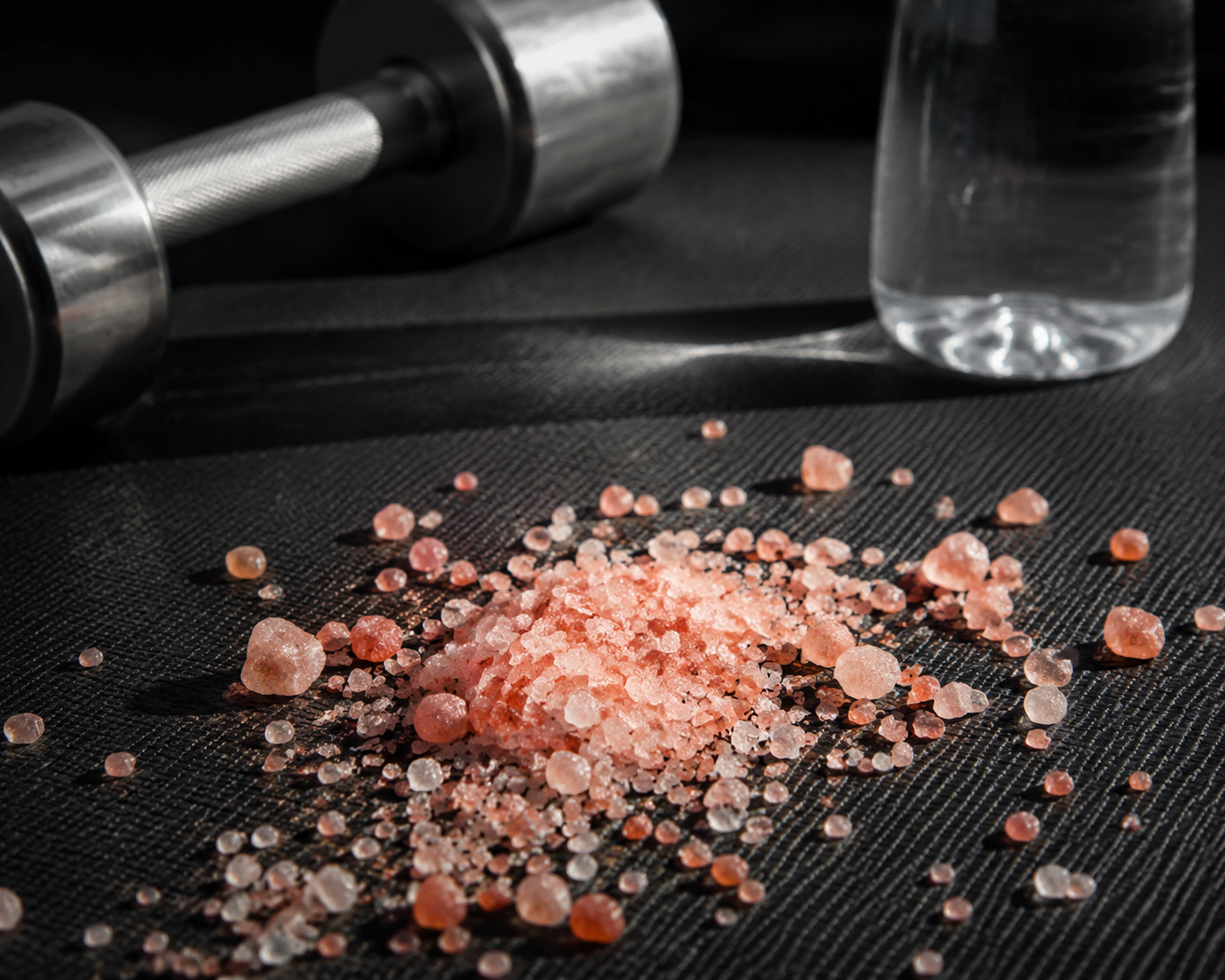
What the salt trend actually buys you
The mineral math is the part that usually ends the argument. In a peer-reviewed analysis of 31 pink salt samples, researchers found that you would need more than 30 g a day, or about 6 teaspoons, before the minerals become meaningful at all, and that amount would deliver 592% of the sodium standard dietary target [1].
| Finding | What it means |
|---|---|
| About 2,300 mg sodium per teaspoon [1] | That is not a special recovery ingredient; it is still sodium. |
| No added iodine [1] | If pink salt fully replaces iodized table salt, iodine intake can quietly drop. |
| One Peruvian-origin sample at 2.59 mg/kg lead, above FSANZ's 2 mg/kg limit [1] | That is not the kind of bonus a recovery drink needs. |
| More than 30 g per day for meaningful mineral intake [1] | The dose needed to make the minerals matter is far beyond a normal seasoning habit. |
That is why dietitians keep landing in the same place: there is no evidence that pink salt causes weight loss, and excess sodium can easily show up as water retention instead of progress. The trend borrows recovery language, but it does not change the basic physiology.
What sweaty home workouts actually need
If the workout is short, moderate, and you are not leaving a huge salt trail on the floor, plain water is usually enough. Sodium only becomes useful when sweat loss is large enough that you are trying to hold onto fluid, which is a hydration problem, not a fat-loss trick.
- Start the session already hydrated instead of trying to catch up after you are overheated.
- For longer or hotter sessions, sip water during the workout instead of waiting until the end.
- If you finish drenched, replace fluid and sodium with water plus a normal meal or snack that includes salt.
- If you want a rough check on sweat loss, weigh yourself before and after a hard session and replace the difference gradually.
- Cool the room first when you can: a fan, open window, cold towel, or another cheap fix often helps recovery more than a mineral gimmick.
If you have hypertension, kidney disease, or you know you are sodium-sensitive, check with a clinician before making salted water a habit. For everyone else, pink salt stays a seasoning, not a weight-loss strategy.
If you want the broader home-gym version of this, see Do You Need Electrolytes for Home Workouts? and Five Cooling Fixes Under $50 for Home Workouts Without AC for the practical side of hydration and heat control.
References
- An Analysis of the Mineral Composition of Pink Salt Available in Australia, PMC, 2020, https://pmc.ncbi.nlm.nih.gov/articles/PMC7603209/
Have a question about this guidance?
This is a question and correction channel, not an open discussion thread — recovery topics sit close to a medical-advice boundary, so we review submissions rather than publishing them instantly.