After a home workout, the best pasta for protein and fiber is not automatically the box with the loudest nutrition panel. It is the one that helps you get enough carbs back in, contributes meaningfully to your protein target, keeps you full without making dinner feel like a punishment, and is realistic enough to cook again next week.
Regular pasta is the baseline: about 7 grams of protein and about 2 grams of fiber per 2-ounce serving. The better high-protein, high-fiber pastas move that to roughly 10–25 grams of protein and 5–24 grams of fiber, depending on the flour blend and serving size used on the label.[1][2][3] That upgrade matters after training, but only if the pasta still works as dinner.
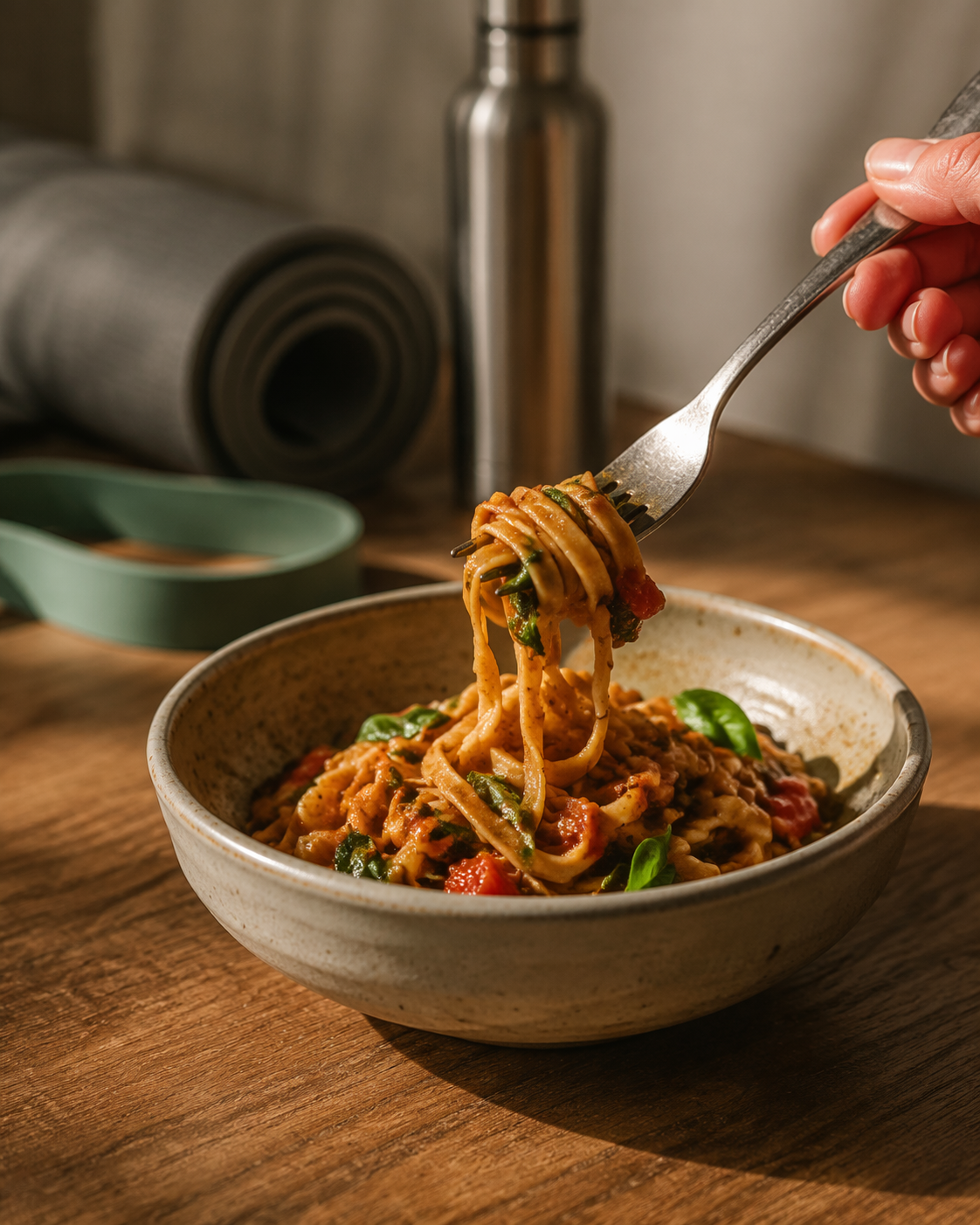
For recovery, the useful frame is simple: the International Society of Sports Nutrition recommendation commonly cited for post-workout nutrition is 20–40 grams of protein with adequate carbohydrates within about 2 hours after exercise to support muscle protein synthesis and glycogen resynthesis.[4] Pasta brings the carbohydrate side naturally. Higher-protein versions can cover part, most, or sometimes all of the protein side before you add chicken, tofu, shrimp, cottage cheese, or a higher-protein sauce.
The Best High-Protein High-Fiber Pastas, Ranked for Recovery
The ranking below uses 2 ounces dry as the main comparison point when the available data supports it. A few brands report nutrition on a different serving size, so those rows are flagged instead of forced into false precision. Taste notes come from published taste tests and dietitian roundups, not lab measurements, so they should guide expectations rather than settle arguments.
| Rank | Pasta | Protein | Fiber | Taste and texture read | Value and access | Best recovery fit |
|---|---|---|---|---|---|---|
| 1 | The Only Bean Edamame Spaghetti | 25g per 2oz | 11g per 2oz | Distinct legume taste; strong macro payoff | More specialty than supermarket-default | Maximum protein from the pasta itself |
| 2 | Kaizen Lupin Flour Pasta | 20g per 2oz | 15g per 2oz | Fiber-forward, more filling; texture may divide people | Specialty/online-leaning | Protein plus serious fullness |
| 3 | Brami Pasta | 21g per 3.5oz serving | 9g per 3.5oz serving | Lupini bean and semolina blend; rated especially wheat-like in taste tests | More premium than basic grocery pasta | Best chance of becoming a normal dinner habit |
| 4 | Garofalo High Protein | 19g | 12g | Durum-wheat base; positioned for traditional pasta texture without legume flour | Newer U.S. market entrant | Texture-first recovery meals |
| 5 | Barilla Protein+ | 10–17g per serving | Varies by shape/source | Familiar, mild, easy transition from regular pasta | About $2.99 for a 14.5oz box in cited retail coverage; widely available | Budget weekly staple |
| 6 | Banza Cavatappi | 11–14g per serving | 8–11g per serving | Chickpea flavor and texture are noticeable but broadly accepted | Widely available for a legume pasta | Gluten-free benchmark |
| Honorable mention | Fiber Gourmet / Carbe Diem | Lower-protein than recovery leaders | 24g fiber; 110 calories | Useful for calorie-conscious pasta swaps | More cutting-focused than recovery-primary | Max fiber when protein is coming from elsewhere |
The Only Bean earns the top spot because 25 grams of protein and 11 grams of fiber per 2-ounce serving is a real jump from standard pasta, not a cosmetic one.[1][2][3] If you come home from a strength session and want the pasta itself to do as much recovery work as possible, this is the obvious macro leader. It gets you into the lower end of the post-workout protein range before anything else lands in the bowl.
That does not mean it will be everyone’s best buy. Edamame spaghetti has a legume identity; it is not pretending to be bronze-cut wheat pasta from a neighborhood Italian market. With a strong sauce, vegetables, and maybe a salty or acidic finish, that is manageable. Plain with butter after a workout, it may ask more patience than a hungry person has.
Kaizen is the more interesting second-place choice than a straight runner-up. Its 20 grams of protein is already recovery-relevant, and its 15 grams of fiber per 2-ounce serving is one of the strongest fiber numbers in the group.[2][5] That combination can be useful when your post-workout meal also needs to hold you until the next real meal. The tradeoff is timing and tolerance: a very high-fiber bowl can feel great after a moderate lift and less great immediately after a hard conditioning session.
Brami deserves more respect than a protein-only ranking would give it. Its label is reported at 21 grams of protein and 9 grams of fiber per 3.5-ounce serving, so it should not be treated as a direct 2-ounce comparison without that caveat.[6] The reason it stays high is texture. Taste of Home and Chowhound both point to Brami as one of the most wheat-like options among protein pastas, helped by its lupini bean and semolina blend.[6][7] That matters because the pasta that tastes close enough to normal is often the one that survives beyond the first box.
Garofalo High Protein sits in the same practical lane. Its reported 19 grams of protein and 12 grams of fiber make it competitive, but the more important detail is the flour choice: it is positioned as a high-protein pasta made from durum wheat rather than legume flour, with U.S. market coverage appearing in 2025.[8] For people who keep bouncing off chickpea, lentil, or edamame noodles, that may matter more than winning the highest-protein contest.
Barilla Protein+ is the least exotic recommendation and one of the easiest to defend. It does not beat The Only Bean or Kaizen on macros, but published roundups report 10–17 grams of protein per serving, and cited retail coverage places it around $2.99 for a 14.5-ounce box.[1][6] More importantly, it is the kind of pasta a person can find at a normal grocery store, toss into a cart, and cook without turning recovery nutrition into a specialty shopping project.
Banza is the gluten-free benchmark rather than the universal winner. It is widely available, chickpea-based, and commonly reported around 11–14 grams of protein and 8–11 grams of fiber per serving.[1][7][6] Taste-test reactions conflict: one test may punish it for chickpea texture while another ranks it much more favorably. That is about right. Banza is not invisible in the bowl, but it is familiar enough now that many grocery shoppers already know whether they can live with it.
Why Pasta Can Work After a Workout
Pasta’s recovery case starts with carbohydrates. Training uses muscle glycogen, and a post-workout meal with adequate carbs helps refill that tank. That is why pasta can feel more like a meal than a protein shake: it is not only chasing protein grams; it is also bringing the energy substrate most people expect from dinner.
The higher-protein versions change the equation. A standard 2-ounce serving of regular pasta gives about 7 grams of protein, which is helpful but not enough to carry a recovery meal alone.[1][2][3] A serving of The Only Bean reaches 25 grams, Kaizen reaches 20 grams, and several other options land in the low-to-high teens. That means the bowl can contribute meaningfully to the 20–40 gram protein target instead of depending entirely on the topping.[4]
Fiber adds a different kind of value. It can make the meal more filling and slow the slide from “I ate” to “I am searching the pantry again.” But more is not always better right after training. If a very high-fiber pasta leaves you overly full, gassy, or unwilling to eat enough total food, the recovery meal has failed in a very ordinary way. Fiber Gourmet and Carbe Diem are good examples of the distinction: 24 grams of fiber and 110 calories are impressive numbers, but because these options are lower in protein than the recovery leaders, they fit better when your protein is coming from another source.[2]
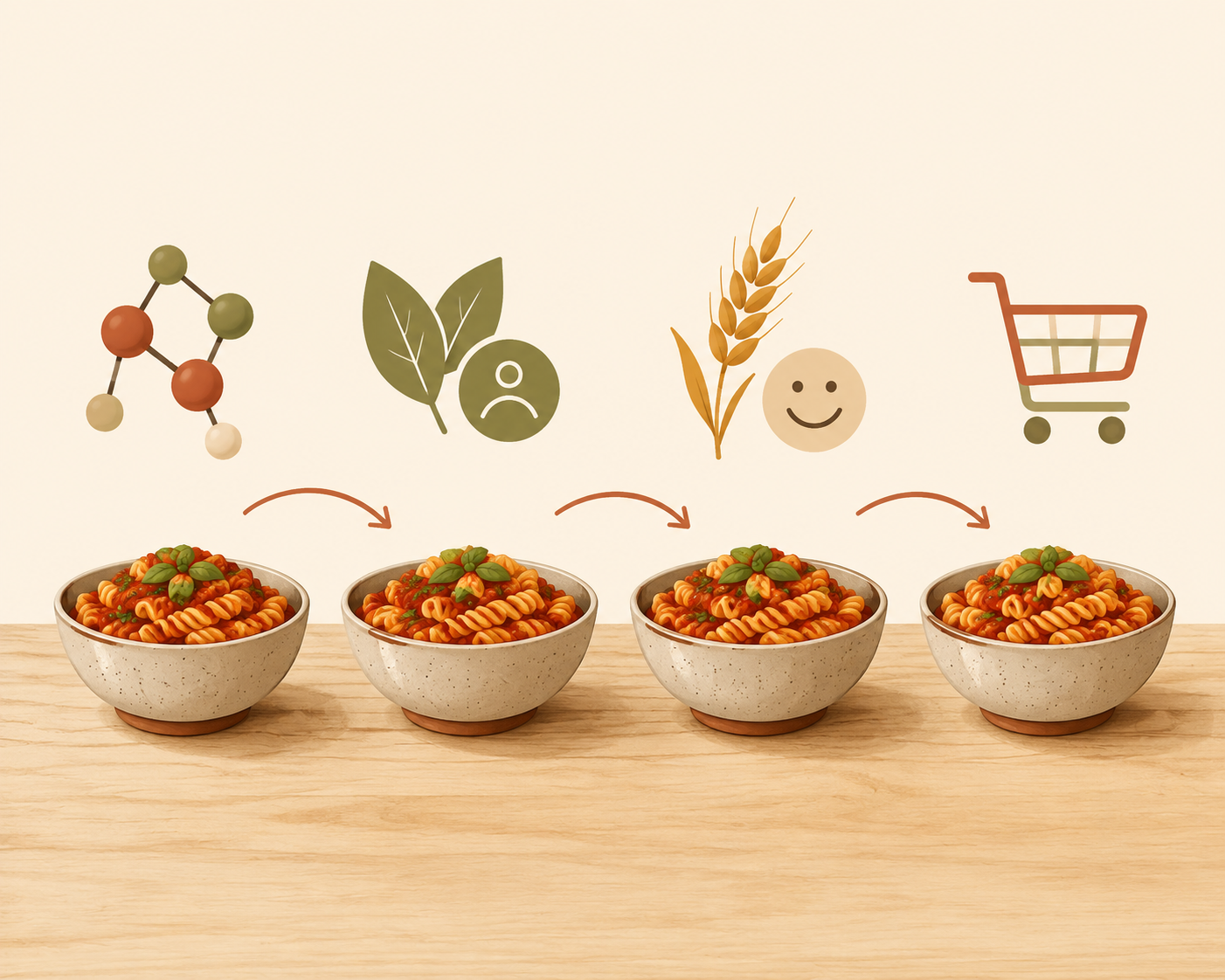
Choose by the Recovery Problem You Actually Have
Need the pasta itself to deliver as much protein as possible? Choose The Only Bean. It is the cleanest answer for the reader searching for the best pasta for protein and fiber because it leads on protein while still giving a meaningful 11 grams of fiber per 2-ounce serving.[1][2][3] Add tomato sauce, olive oil, and vegetables, and it already looks like dinner. Add shrimp, chicken, tofu, or lean ground turkey, and it becomes a much easier way to land in the full recovery range.
For post-workout hunger, choose Kaizen. The 20 grams of protein keeps it relevant for muscle repair, while the 15 grams of fiber pushes it toward fullness.[2][5] This is especially useful after strength training, long walks, lower-intensity conditioning, or any session where you want dinner to hold you for a while. If you train hard enough that your stomach needs a gentler first meal, start with a smaller portion or save the high-fiber bowl for later in the evening.
Texture is where Brami and Garofalo have the clearest case. Brami’s semolina blend gives it a more familiar bite than many pure legume pastas, and taste-test coverage has treated that wheat-like texture as its standout advantage.[6][7] Garofalo is worth watching for the same reason: a durum-wheat high-protein pasta has a clearer path to tasting like pasta rather than like a nutrition compromise.[8]
For an affordable weekly staple, buy Barilla Protein+. It may not produce the most dramatic before-and-after label comparison, but it is widely available, familiar, and inexpensive enough to become a weekly staple instead of a one-time experiment.[1][6] For many home fitness routines, that consistency beats a specialty box that looks perfect online and never gets reordered.
For gluten-free access, Banza is the safest benchmark. It is not the highest-protein or highest-fiber choice, and it will not fool everyone on texture, but it is broadly available and has enough protein and fiber to be a real upgrade from many gluten-free starch-based pastas.[1][7][6]
How to Build the Bowl So It Actually Recovers You
A high-protein pasta can be the base of a recovery meal, but it does not have to carry the whole plate by itself. That is especially true for pastas in the 10–17 gram protein range. If the pasta gets you halfway to the target, the topping can finish the job without turning dinner into macro accounting.
- For maximum protein: use The Only Bean or Kaizen, then add a lean protein if the rest of your day has been light.
- For a normal-feeling dinner: use Brami, Garofalo, or Barilla Protein+ with a familiar sauce and vegetables.
- For gluten-free recovery: use Banza with a protein-forward topping rather than expecting chickpea pasta alone to do everything.
- For high-fiber fullness: use Kaizen, Fiber Gourmet, or Carbe Diem when your stomach tolerates fiber well after training.
- For a lighter post-workout appetite: eat a smaller pasta portion first, then add a drink or snack later if you still need protein.
The easiest recovery plate is not complicated: pasta for carbs, a protein source for the remaining grams, vegetables for volume and micronutrients, and enough sauce or fat to make it taste like food. A bowl of Barilla Protein+ with chicken and broccoli may beat a technically superior legume pasta that sits unopened because nobody in the house likes it.
For readers building a broader routine around this meal, FitAtHome’s home gym athlete nutrition plan is the better place to think through daily macros. If you are deciding between a solid meal and a drink after training, the comparison of Fairlife milk, chocolate milk, and whey for post-workout recovery is the natural companion.
What the Labels and Taste Tests Do Not Settle
Serving size is the first nuisance. A 2-ounce dry serving is the cleanest comparison for most pasta, but not every product reports that way. Brami’s 21 grams of protein and 9 grams of fiber are listed for a 3.5-ounce serving in the cited coverage, which makes it a strong option but not a direct gram-for-gram match against 2-ounce labels.[6] When comparing boxes in a store, check the serving size before deciding one brand “wins.”
Taste tests are the second nuisance. They are useful because they catch the thing labels cannot: chalkiness, beany flavor, gumminess, and whether the noodle survives sauce. But they are still human panels eating specific shapes under specific conditions. Banza’s mixed placement across taste-test coverage is a good reminder that texture tolerance varies.[6][7] A legume pasta that one person calls earthy may be exactly what another person wants under a spicy tomato sauce.
Price is the third moving target. Barilla Protein+ has the clearest value advantage in the cited coverage, but specialty brands can swing with shipping, multipacks, retailer discounts, and local availability.[1][6] As of Q3 2026, the practical buying rule is to judge cost per meal you will actually repeat, not just cost per gram of protein on a spreadsheet.
The Fit-Based Verdict
The Only Bean is the best high-protein high-fiber pasta if your priority is maximum recovery contribution from the noodle itself. Kaizen is the better pick when fullness matters almost as much as protein. Brami and Garofalo are the texture-first choices for people who know they will not keep eating a pasta that feels too far from wheat. Barilla Protein+ is the best budget-and-access choice for a weekly post-workout pantry staple. Banza remains the gluten-free benchmark.
If the pasta alone does not get your meal into the 20–40 gram protein range, do not force the box to solve everything. Pick the pasta that fits your real constraint, then finish the plate with a lean protein and vegetables.
References
- 7 Best Protein Pastas 2026, Food Network
- 12 Best High Fiber Pasta Brands, According to Dietitians, Graciously Nourished
- What Is the Healthiest Pasta? The No. 1 Pick, According to a Dietitian, TODAY.com
- Post-Workout Nutrition: What to Eat After a Workout, Healthline
- High-Protein Pasta Approved by Dietitians, Prevention
- I Tried 4 Protein Pastas, and This One Is the Best, Taste of Home
- 9 Protein Pasta Brands, Ranked Worst To Best, Chowhound
- Pasta Garofalo Brings High-Protein Innovation to the U.S. Market, Italian Food News, 2025


Comments
Join the discussion with an anonymous comment.