
Why Beach Running Workouts Beat Treadmills for Free
Beach running offers a zero-equipment, zero-subscription cardio alternative to home treadmills. This guide breaks down the science-backed benefits, compares soft sand vs. packed sand, and provides a structured beach running workout plan.
Before you start
- Equipment required
- none
- Assumes build tier
- No specific tier required
- Noise level
- quiet
If the real choice is a treadmill purchase or a run on the beach, the math starts before the first step. Entry-level treadmills start around $200, can climb far higher, and still occupy real floor space even when folded; a folding unit still asks for stored space behind a sofa and deployed space when it is in use. Beach running costs $0 and takes zero apartment square footage, which is why the first comparison should usually be against the machine budget, the noise budget, and the storage budget, not just the sticker price. For a fuller breakdown, see FitAtHome's treadmill total cost of ownership, small-apartment treadmill footprint, and walking pad vs treadmill comparisons before deciding whether any home machine is still worth the footprint.
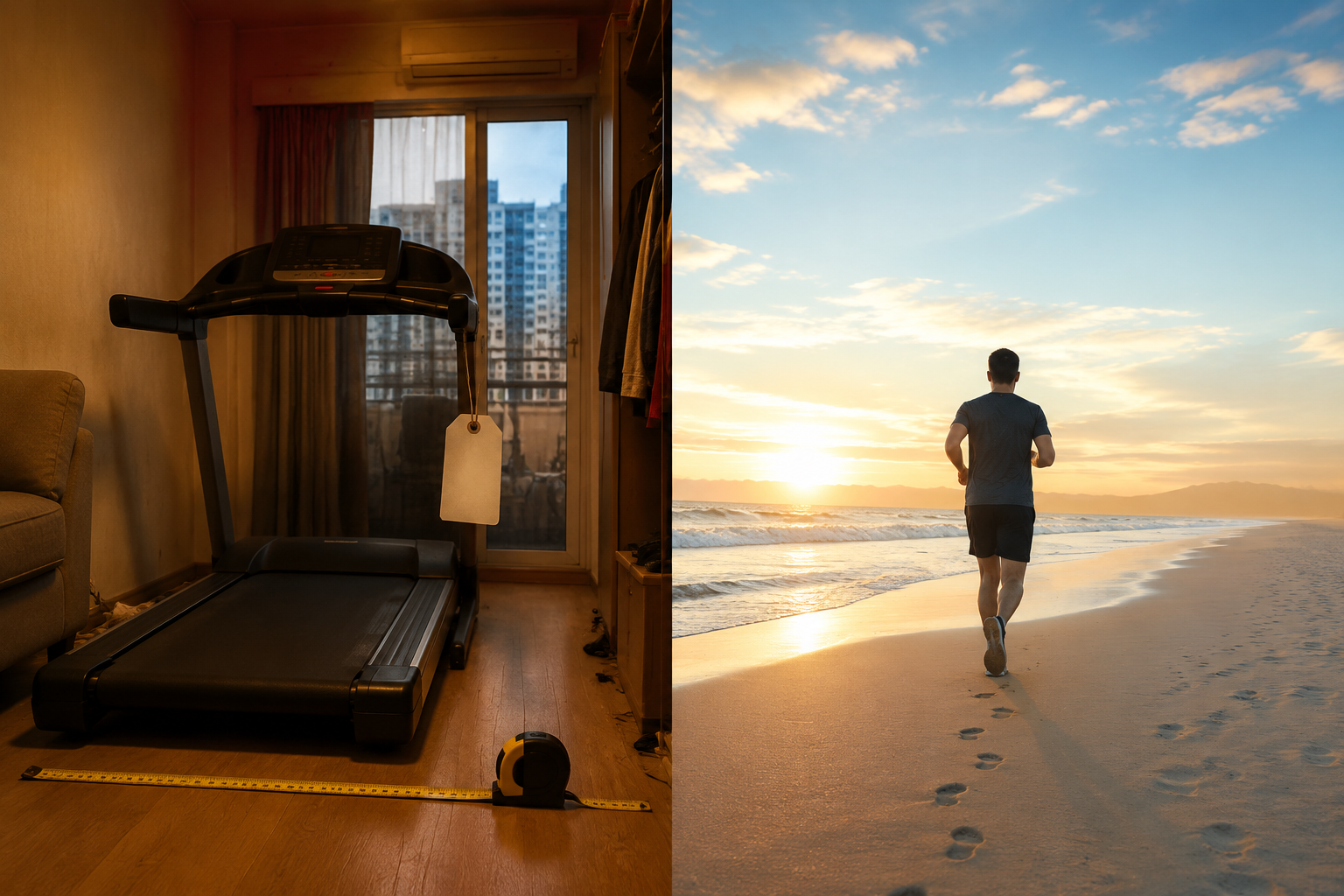
Why beach running can beat a treadmill for the right runner
There is no clean head-to-head study that directly compares beach running and treadmill running at matched speeds, so the honest comparison has to come from what each surface changes. Sand changes load, balance, and tissue demand. A treadmill changes pace control and convenience. That is enough to make beach running a credible replacement for a lot of routine cardio, but only if the runner understands which kind of sand is doing the work.
On soft, dry sand, the energy bill rises fast: one study found energy expenditure was about 1.6 times higher than on hard surfaces, with the gap largest at slower speeds [1]. Sand also forces the hips and knees to stabilize more aggressively; hip- and knee-stabilizing muscles work nearly twice as hard on sand as they do on firm ground [2]. The impact story is more nuanced. Soft sand appears to reduce impact force versus grass, but the oft-quoted 4x figure should be treated as a cited estimate rather than a settled universal number [3].
| Surface | What it changes | Best use |
|---|---|---|
| Soft dry sand | Highest energy demand, more stabilizer work, lower impact than firmer ground | Short strength-like intervals and occasional hard efforts |
| Packed wet sand | Much closer to a stable running surface, with only a modest softness advantage | Easy aerobic runs and longer sessions |
| Treadmill belt | Predictable pace and weather control, but no sand-specific balance or load | Night running, rehab precision, and year-round consistency |
Packed wet sand is the lane most runners will actually use, and that matters. It behaves more like a softer outdoor surface than a deep resistance tool, so it is the practical choice for easy mileage. Soft dry sand is the one that changes the workout. If the beach has both, the best beach for running workouts is usually the one with a long, predictable stretch of packed sand that stays runnable as the tide moves.
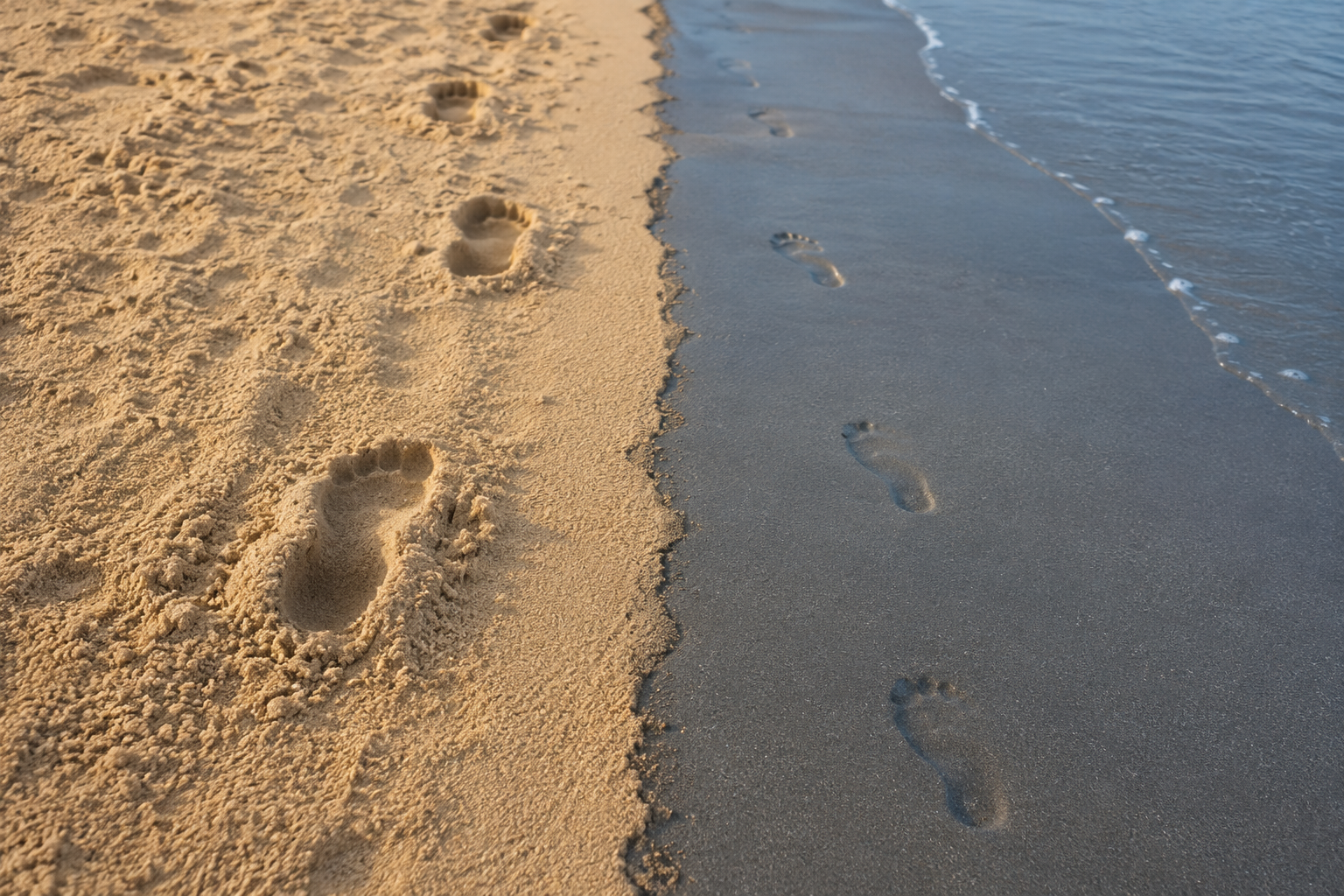
A beach running workout that actually fits the evidence
- Start on packed wet sand for the first two weeks and keep the effort easy enough that form stays smooth. That gives calves, feet, hips, and the smaller stabilizers time to adapt before the surface gets more demanding [6].
- Use packed sand for steady aerobic runs. It is the closest beach option to a normal run and the easiest place to build consistency without turning every outing into a strength session.
- Reserve soft dry sand for short intervals, not long runs. The higher energy cost and higher stabilizer demand are the point, but they also make overdoing it much easier.
- Do not increase time and intensity at the same time. Add one variable, let it settle, then add the next. That matters more on sand than on a treadmill because the surface itself is already raising the load.
The upside is not just theoretical. An 8-week sand preseason produced greater VO2 max gains than an equivalent grass program and reported about 10% less muscle soreness [4]. Sand plyometrics also improved sprint performance and change-of-direction speed in a 7-week program, while gym-floor plyometrics did not produce the same gains [5]. That does not make sand universally superior to every indoor session, but it does mean the beach is not just a scenic place to jog. It can change the training outcome.
When the $0 option stops being the better buy
Beach running starts to lose the argument when the reader needs weather control, darkness-safe routines, precise rehab work, or year-round consistency. Seasonal access matters too: some beaches are simply not usable in winter, some lose their wide running lane at high tide, and some become awkward or unsafe after dark. Uneven surfaces also raise the cost of a bad decision if the runner is already dealing with a cranky calf, Achilles tendon, or foot issue. In those cases, the treadmill still earns its place.
But if beach access is reliable and the runner can build in a gradual adaptation period, the smartest first move is usually to try the beach before financing a belt. That is the FitAtHome decision frame in plain terms: beach running is the $0 equipment tier, with real metabolic and neuromuscular advantages, while a treadmill stays on the table only if the beach option fails the runner's actual constraints. If the comparison still favors a machine, the next stop is the budget treadmill decision framework or the best budget treadmill under $1,000 path.
References
Don't have the gear this routine assumes? Find the build that covers it.
Wondering how much rest you need after this? Read our ACSM-cited recovery reference.
Questions about form, substitutions, or a correction? Leave it below.
Comments
Join the discussion with an anonymous comment.