
Small Treadmill Buying Guide: 7 Critical Specs to Check Before You Buy
A cross-category spec primer for apartment and small-space dwellers comparing walking pads, ultra-compact folding treadmills, and full-size folding treadmills. Learn the concrete thresholds for motor HP, deck length, noise, warranty, and subscription lock-in so you can compare apples to apples.
- Budget tier
- under $300–$1,000+
- Space type
- apartment
Items included: —
Why Most Small Treadmill Specs Are Misleading
The small treadmill market is not a single category. It is three distinct product types — walking pads, ultra-compact folding treadmills, and traditional folding treadmills — each built for a different use case and each with its own spec expectations. Most buying guides lump them together, which produces apples-to-oranges comparisons that leave shoppers confused about what a given number actually means.
A 2.0 HP motor is perfectly adequate in a walking pad. In a traditional folding treadmill, it signals a machine that will struggle to sustain jogging. A 47-inch deck is standard for a walking pad but dangerously short for a runner over 5'8". A 90-day warranty on a $300 walking pad is normal; the same warranty on a $1,000 folding treadmill is a red flag.
This guide provides a unified spec checklist with concrete thresholds for each product type. After reading it, you will be able to compare any small treadmill — walking pad, ultra-compact folder, or full-size folder — on the seven specs that actually determine whether it fits your space, your body, and your budget.
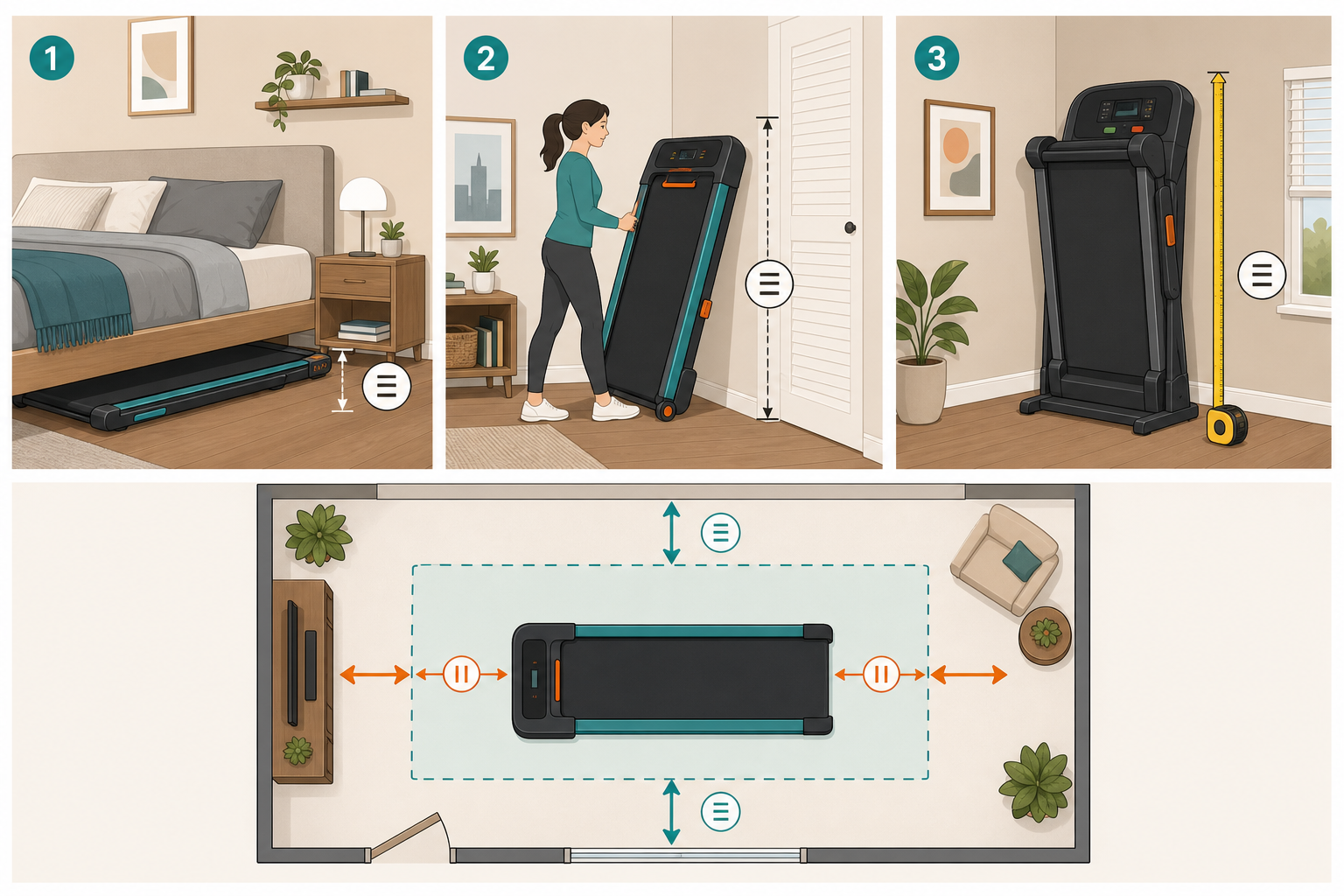
Spec 1: Folded Dimensions — Three Space Tiers
Folded height is the single most important dimension for apartment dwellers because it determines where the treadmill can live when not in use. The market breaks into three clear tiers.
| Tier | Folded Height | Typical Weight | Storage Location | Example Models |
|---|---|---|---|---|
| Under-bed walking pad | Under 6 inches | 45–80 lbs | Slides under a bed or couch | UREVO Strol 2E (5.1"), WalkingPad C2 (5.4") |
| Closet-storable compact | 6–10 inches | 80–110 lbs | Upright in a closet or against a wall | DeerRun A1 Pro (8"), WalkingPad X25 (folds twice) |
| Corner-storable vertical fold | Up to 71 inches tall when folded | 150–250 lbs | Stands vertically in a corner or against a wall | Horizon T101 (61" folded height), Sole F63 (72" folded height) |
Some links on this page are affiliate links — they may earn us a commission at no extra cost to you. Our tier and tests are decided before we ever check which links pay; see our full affiliate disclosure.
Spot something off?
Noise and floor-damage claims carry real deposit-risk consequences if we get them wrong — tell us if your experience with this build didn't match what's above.