Is the Nike Air Zoom Hyperslide Worth It for Home Workouts?
The Nike Air Zoom Hyperslide is a $249 recovery slide with heat and vibration, not a workout shoe. This test-based review compares it to passive slides and massage guns to help you decide if it earns a spot in your small-space home gym.
- Test space profile
- Small apartment living room; carpeted floor; limited floor space; shared walls.
- Floor damage risk
- low
- No-drill compatible
- ✓
- Test date
If you searched for the Nike Air Zoom Hyperslide for home workouts because you need shoes to lift, jump, lunge, or ride in, stop here for a second: this is not that shoe. It is a post-workout recovery slide. You would not use it for squats, treadmill intervals, HIIT, or strength circuits. If what you actually need is training footwear, look at workout shoes in the Nike Metcon or Free Metcon lane instead.
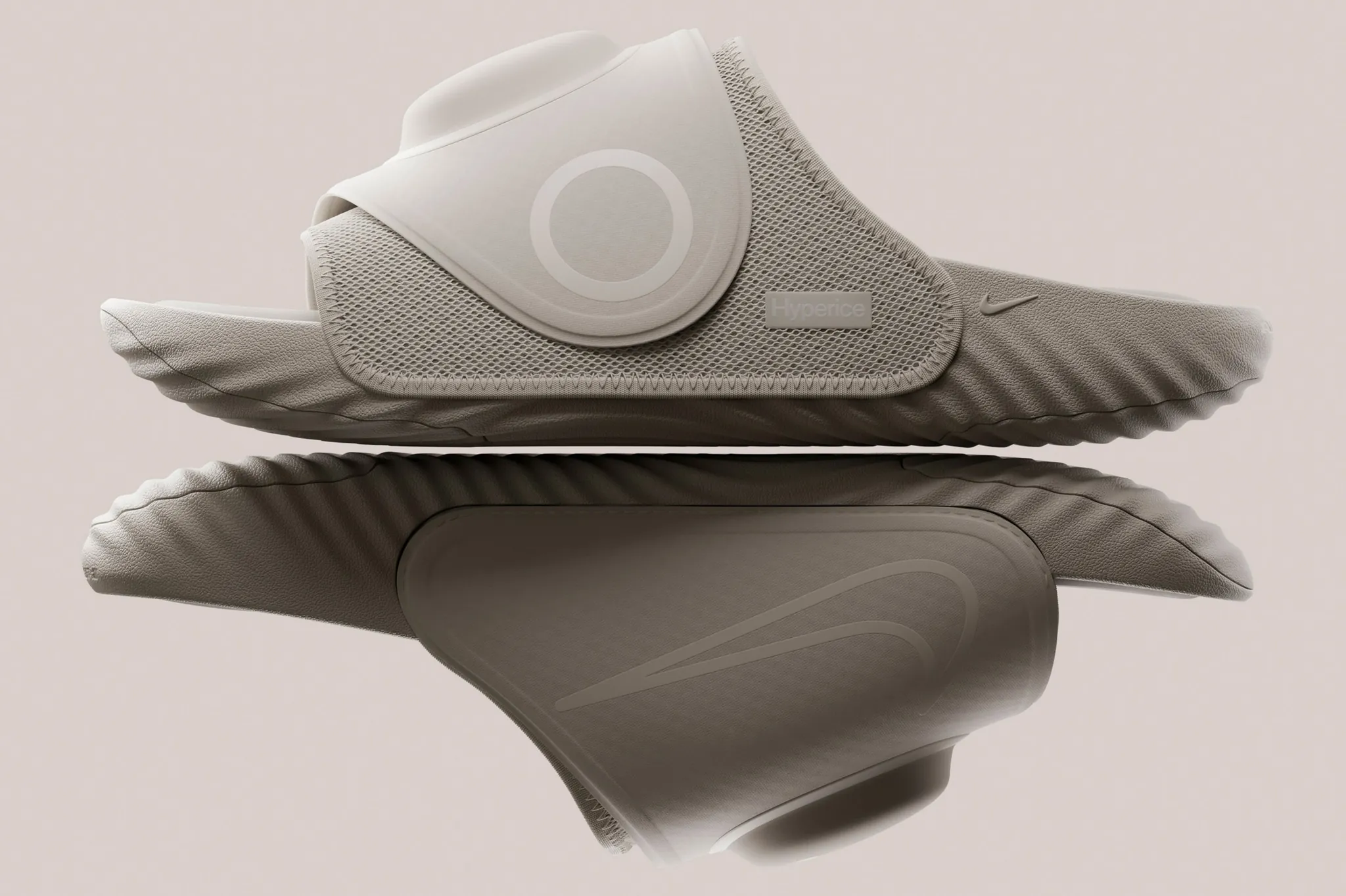
What Nike and Hyperice announced is a $249 slide with an Air Zoom sole unit and a removable Hyperice pod built into the top strap. The pod delivers heat from 109°F to 117°F, vibration from 50 Hz to 100 Hz, runs in 15-minute auto-shutoff cycles, attaches magnetically, charges over USB-C, and can be removed so the slide still works as normal footwear when the electronics are not in use or the battery is dead.[1]
That makes the buying question narrower, and more useful: does a foot-only, zero-setup recovery tool deserve $249 and permanent apartment space, or would that money work harder as cheaper recovery slides plus a compact massage gun?
What The Hyperslide Actually Does After A Home Workout
The Hyperslide is trying to remove the most annoying part of recovery gear: the extra task. You finish training, put the slides on, tap into heat and vibration, and keep moving around the apartment. There is no floor setup, no foam roller space, no percussion gun routine, and no lying down while deciding whether you have the patience to do the recovery thing you already know you should do.
The heat and vibration sit over the top of the foot, not under the arch, around the Achilles, or across the calves. That distinction matters. The Hyperslide may feel good after a workout, and it may make recovery easier to start, but its active tech is not treating the whole lower leg. It is not a replacement for calf work, plantar fascia work, compression boots, or a massage gun.
Nike announced the product with Hyperice on July 27, 2026, with release set for September 29, 2026.[1] So this is not a long-term tested review from weeks of apartment use. It is a practical value read based on official specifications and early press reports from the launch window.
$249 Is The Real Test
A $249 recovery slide has to beat more than bare feet. It has to beat the recovery tools a small-space home gym owner could buy instead. That is where the Hyperslide gets interesting and uncomfortable at the same time.
| Setup | Approximate Cost | What It Covers | Small-Apartment Tradeoff |
|---|---|---|---|
| Nike Air Zoom Hyperslide | $249 | Foot-focused heat, vibration, cushioning, walkable recovery | Very low setup and footprint, but foot-only active coverage |
| Crocs Mellow recovery slide | $40 | Passive cushioning | Cheap and simple, no active recovery features |
| HOKA Ora 3 | $60 | Passive cushioning | Easy daily wear, no heat or vibration |
| OOFOS OOahh Plus | $70 | Passive cushioning | Strong recovery-slide value, no electronics |
| Kane Revive OB | $78 | Passive cushioning | Still far cheaper than the Hyperslide |
| Roll Recovery Solace | $110 | Passive cushioning | Premium passive option, still less than half the Hyperslide |
| Crocs Mellow plus Theragun Mini-style setup | About $240 using $40 plus $200 | Foot cushioning plus whole-body percussion | More coverage, but more storage and more setup |
The passive-slide comparison is not flattering on price. Outside Online's 2026 roundup lists recovery slides including the Crocs Mellow at $40, HOKA Ora 3 at $60, OOFOS OOahh Plus at $70, Kane Revive OB at $78, and Roll Recovery Solace at $110.[4] Against that field, the Hyperslide costs roughly three to six times as much as a standard passive recovery slide.
The more serious comparison is not Hyperslide versus a $40 slide. It is Hyperslide versus a passive slide plus a compact massage gun. A $40 Crocs Mellow plus a $200 Theragun Mini-style device lands at about $240, essentially the same neighborhood as the $249 Hyperslide. That two-tool setup gives you passive foot cushioning and whole-body percussion. It can hit calves, quads, glutes, forearms, traps, and the spots that actually complain after home strength work.
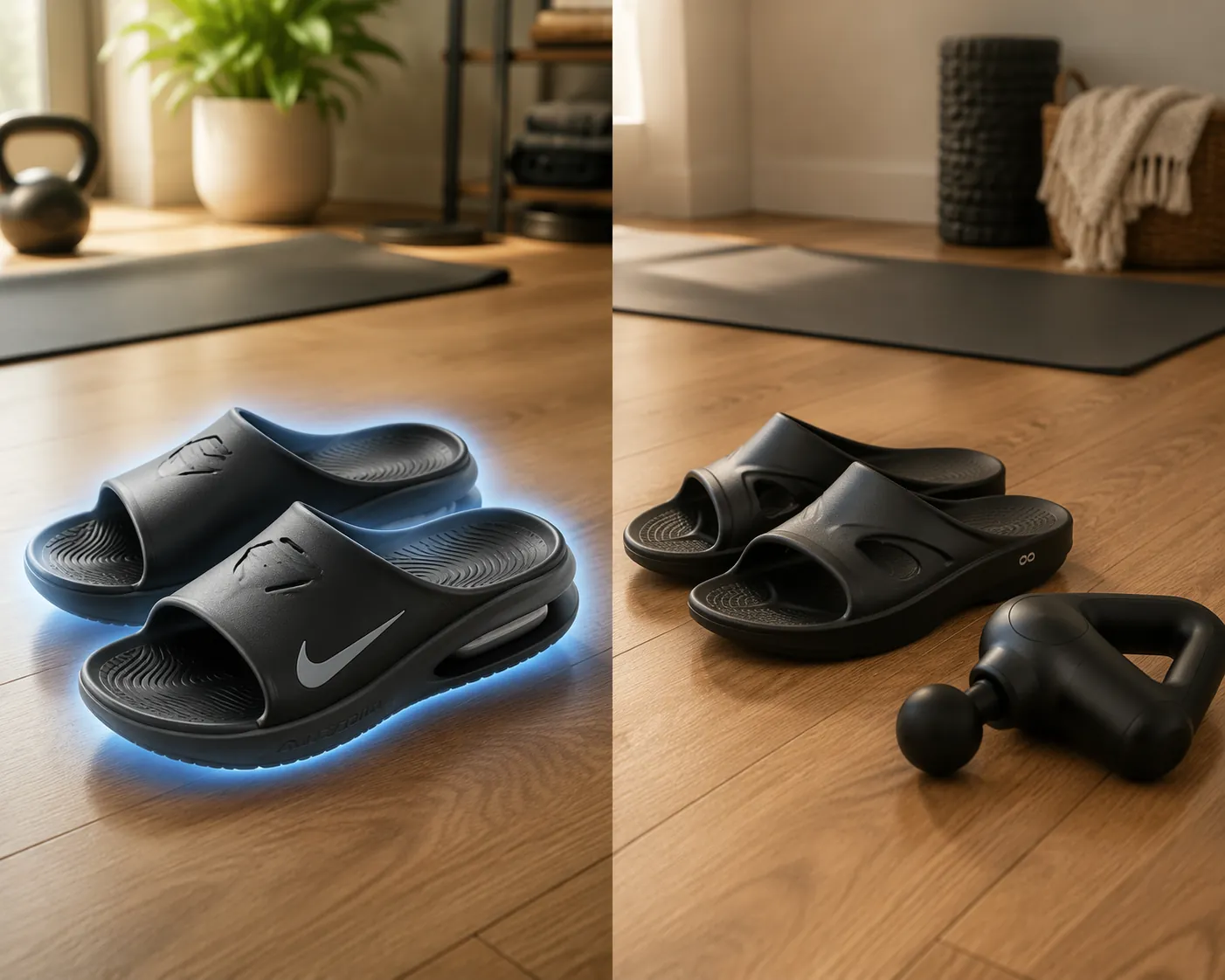
That does not automatically make the two-tool setup better. It makes it broader. Broader tools often lose in real apartments because they ask for one more step at exactly the wrong time. A massage gun has to be pulled out, aimed, held, and used deliberately. A foam roller asks you to get on the floor. A recovery slide asks almost nothing.
This is the Hyperslide's best argument: it may get used on days when better, broader tools stay in a drawer. That has value. It just has to be value you personally need, because $249 is not impulse money for someone who has already spent carefully on adjustable dumbbells, bands, a mat, and maybe one cardio machine.
The Small-Apartment Case Is Stronger Than The Spec Sheet Case
In a garage gym, the Hyperslide is a neat extra. In a one-bedroom apartment, it has a clearer job. It takes up about the space of normal slides, can be worn while walking around, and does not require claiming a rectangle of floor after the workout is over. That matters if your home gym is a yoga mat rolled out between a couch and a coffee table.
Early press reports indicate about one hour of battery runtime and about a three-hour recharge time.[2][5] With 15-minute auto-shutoff cycles, that works out to roughly four sessions per charge if you run the full cycle every time, or up to about six shorter post-workout uses if you do not drain a full session.
That is acceptable for a recovery device you use after training, not something you wear all evening with the motors running. The bigger annoyance is charging rhythm. If the pods live in the slides and you forget about them, the product still works as a normal slide because the pods are removable and the slide keeps its footwear function.[1] But the reason to pay $249 is the active recovery pod, so dead batteries turn it back into an expensive passive slide until you recharge.
Noise is the apartment detail I would not ignore. The Hyperslide should be quieter than a massage gun, and it avoids the thudding vibration that can travel through floors when you use percussion tools near shared walls or late at night. But a vibration motor is still audible in a quiet room, especially if someone else is reading, sleeping, or working nearby. If you already think carefully about noise for indoor training, the same logic from quiet apartment cardio applies here: lower noise is not the same as no noise.
Where It Beats Foam Rolling, And Where It Does Not
Foam rolling is cheap, broad, and useful if you actually do it. It also requires floor space, body positioning, and a little willingness to make recovery feel like another mini-workout. In a small apartment, that friction is real. If your foam roller lives behind a door and mostly gathers dust, the Hyperslide's put-it-on-and-walk design solves a behavior problem rather than a physiology problem.
But foam rolling and active recovery work cover more than the top of the foot. Calves, quads, adductors, glutes, lats, and upper back are simply outside the Hyperslide's active zone. If your home workouts leave your hips and legs tight, a slide with dorsal-foot heat and vibration is a comfort tool, not a full recovery plan. For technique and timing, a basic foam rolling and active recovery routine still reaches more tissue for less money.
The fair version is this: the Hyperslide beats floor-based recovery on convenience, not coverage. If convenience is the missing piece in your recovery habits, that is not a small win. If coverage is the missing piece, the Hyperslide is too narrow to be your main answer.
The Massage Gun Comparison Is The Hardest One For Nike
A compact massage gun is less elegant in a small apartment. It needs storage, it makes more noise, and using it well takes attention. It also goes where soreness actually is. After dumbbell lunges, it can hit quads and glutes. After rowing or pull-ups, it can hit forearms and upper back. After a run, it can work through calves. The Hyperslide cannot do that.
That is why the $70 passive slide plus $200 massage gun setup is so hard to dismiss. It gives you a comfortable thing to wear after training and an active tool for the rest of the body. The cost is roughly comparable to the Hyperslide, but the recovery territory is wider.
The Hyperslide wins only if the massage gun is the kind of tool you know you will not use. There is no shame in that. The best recovery device is not the one with the longest modality list; it is the one that survives the tired, sweaty, post-workout version of you. For some people, that version will put on slides and walk to the kitchen. It will not sit down for a percussion routine.
The Nike And Hyperice Part Matters, But It Should Not Decide The Purchase
The Nike/Hyperice pairing is why this product exists in this form. Fast Company described the engineering challenge as putting active recovery tech into a wearable slide rather than making another device you use separately.[6] Complex also covered the partnership as part of Nike and Hyperice's broader recovery collaboration.[7]
That background helps explain the unusual package: Air Zoom cushioning below, removable Hyperice pod above, heat and vibration controlled through the product interface and, according to Engadget, app control as part of the feature set.[3] It is more integrated than taping a heat pack to a sandal, which is the kind of sentence that sounds ridiculous until recovery tech gets expensive enough to require saying it.
FSA/HSA eligibility may change the effective price for some buyers. Engadget and The Gadgeteer both reported Hyperice's eligibility claim, but this is the kind of purchase where you should verify with your plan administrator before assuming reimbursement or tax savings.[2][3] If your plan covers it, the real cost could feel meaningfully lower. If it does not, it is still a $249 slide.
Who Should Consider It
The Hyperslide makes the most sense for a narrow buyer: someone who trains at home, has limited floor space, wants recovery to require almost no setup, and does not already own a massage gun or other active recovery device. It is especially defensible if your feet feel beat up after standing workouts, treadmill work, jump rope, court-style training, or long days on your feet, and you already know passive slides get daily use in your home.
- Consider it if you want recovery you can use while walking around the apartment.
- Consider it if floor-based recovery tools fail because you never actually get on the floor after training.
- Consider it if you do not already own a compact massage gun, compression tool, or other active recovery device.
- Consider it if FSA/HSA eligibility checks out for your specific plan and meaningfully lowers your effective cost.
Before buying any recovery gadget, it is worth running the same space, noise, and budget filter you would use for bigger home gym gear. A slide is small, but $249 still competes with upgrades that may affect more workouts. If you are still deciding where your limited home-gym money should go, start with the broader compact home gym buying questions before treating recovery tech as the next automatic add-on.
Who Should Skip It
Skip the Hyperslide if you came here looking for workout shoes. It is not training footwear. It is not built to be your lifting shoe, studio shoe, treadmill shoe, or all-purpose home-gym sneaker.
- Skip it if you already own and use a massage gun; you likely have broader active recovery coverage already.
- Skip it if your main soreness is calves, hips, back, shoulders, or quads rather than feet.
- Skip it if a $40 to $70 passive slide would solve your actual problem.
- Skip it if another $249 would be better spent on training equipment you still lack.
- Skip it if you expect one wearable slide to replace full-body recovery work.
The cleanest no-buy case is the $70 slide plus $200 massage gun route. It costs about the same, covers more of the body, and gives you more control over where active recovery goes. The tradeoff is friction: two devices, more storage, more intentional use, and more noise.
Verdict: Worth It Only For A Specific Home-Gym Owner
The Nike Air Zoom Hyperslide is worth considering if you want walkable, zero-setup foot recovery, train in a small apartment, and do not already own active recovery tools. Its best feature is not the heat range or vibration spec by itself. It is the chance that you will actually use it after a workout because it behaves like something you were going to put on anyway.
It is not worth it if you need workout shoes, want full-body recovery coverage, already use a massage gun, or would get more practical value from a $70 passive recovery slide plus a $200 compact massage gun. The Hyperslide earns space only when convenience is the thing your current recovery setup is missing.
References
- Nike and Hyperice Debut the Nike Air Zoom Hyperslide — about.nike.com.
- Nike's $249 Slide Doubles as a 15-Minute Recovery Tool — The Gadgeteer, 2026-07-27.
- Nike's New Hyperslides Heat and Vibrate Your Feet — Engadget.
- Best Recovery Sandals and Slides of 2026, Tested and Reviewed — Outside Online.
- Nike Just Dropped the Most Innovative Recovery Slide of All Time — Gear Patrol.
- Inside the making of the category-busting Nike Air Zoom Hyperslide — Fast Company.
- Hyperice x Nike Air Zoom Hyperslide: Everything You Need to Know — Complex.
This result comes from one real apartment under the stated conditions — it is a strong signal, not a guarantee your space will measure identically.
Builds this evidence supports
No build currently links to this specific test. Browse all builds with a matching tag.
Spot something off?
If this result didn't match your own space, let us know — floor-damage and noise claims carry real deposit-risk consequences if we get them wrong.