
Should You Run Outside in NYC This Weekend?
Use this forecast-based framework to decide whether to run outdoors in New York City on August 8–9, 2026, and get clear triggers for when to move your run to a treadmill or indoor alternative instead.
- Equipment tier required
- none
- Duration
- 60 min
- Difficulty
- beginner
- Target area
- legs
Weekend verdict: run early, run late, or take it inside
If you’re asking whether you can run outside in NYC this weekend, the answer is yes — but only if you treat August 8–9 as an early-morning or evening running weekend. Aim for before 10 a.m. or after 7 p.m., keep the effort easy, and assume the afternoon is the likely no-go zone unless the forecast improves.
Last updated: Aug. 4, 2026, using forecasts captured Aug. 3–4. The National Weather Service point forecast for New York, NY shows highs near 83°F on both Saturday and Sunday, with a 40% chance of showers Saturday and a mostly sunny Sunday forecast. The Weather Channel’s Carnegie Hill weekend forecast runs hotter, at 86°F Saturday and 87°F Sunday, with lows of 74–76°F, humidity around 65–80%, UV 8–9, and storm chances of 40% Saturday and 24% Sunday. Re-check the NWS point forecast and AirNow before you head out, because this is the kind of weekend where a small timing change can matter. [1][2]
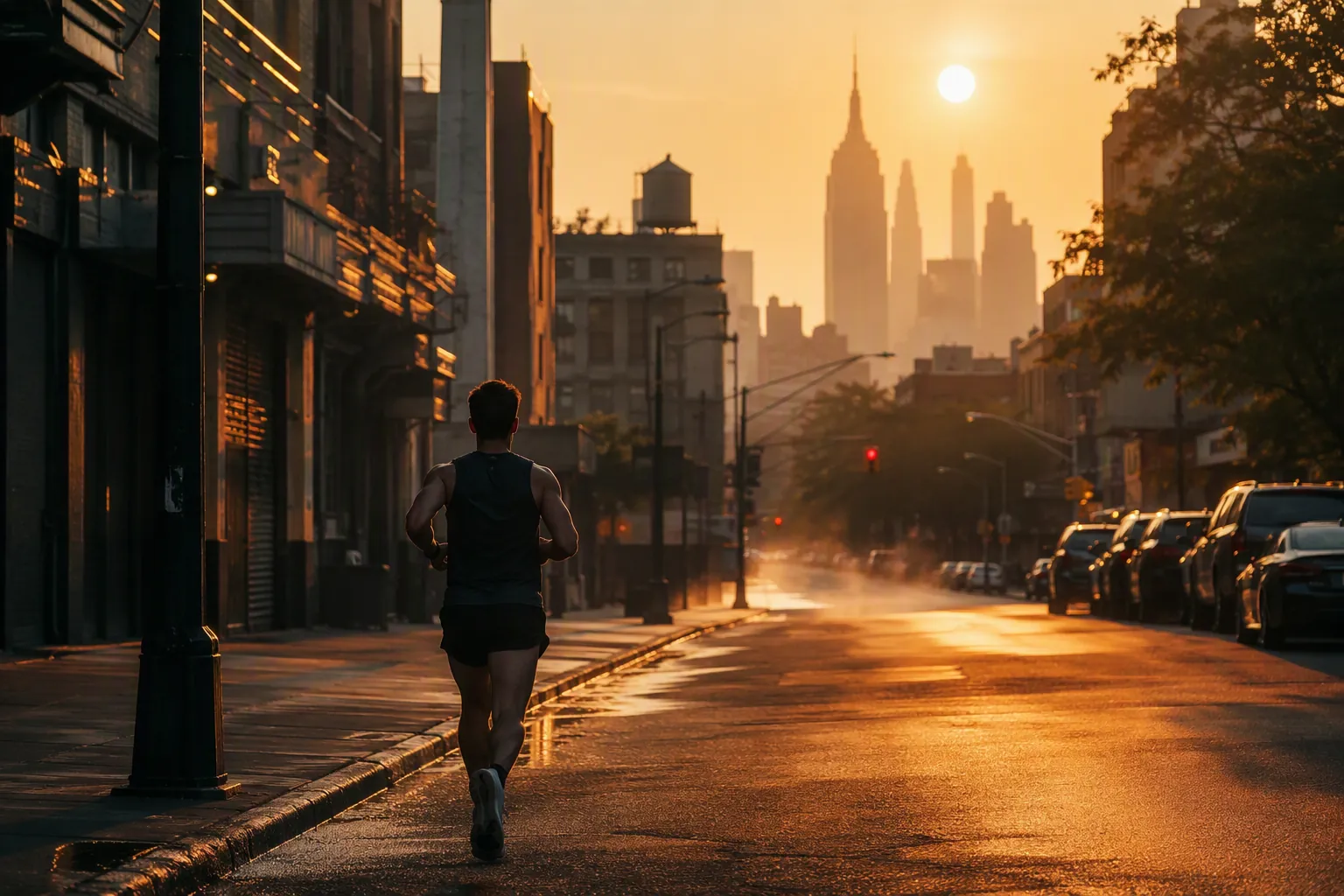
The disagreement between 83°F and 87°F is not a reason to shrug. Both forecasts point to the same practical answer: the city is runnable during the cooler edges of the day, then gets risky once heat, humidity, full sun, and possible storms start stacking.
Turn the forecast into three decisions
A passive forecast is not enough. For this weekend, use the numbers as triggers. NYRR’s race-day weather system is designed for organized events, so it is not a direct rulebook for your solo loop, but its thresholds are a useful conservative analogy when you are deciding whether to run through New York streets in August.
For the thresholds below, the key sources are NYRR’s guidance on electrical storms and hail, NYRR’s heat-and-humidity guidance, National Weather Service heat-index guidance, Mass General Brigham’s athlete heat guidance, and NYC Emergency Management’s AQI bands. [3][4][5][6][7]
| Decision | Use it when | What to do |
|---|---|---|
| Run outside | No thunder, no hail, AQI below 101, and you can run before 10 a.m. or after 7 p.m. | Keep it easy. Choose shade, water access, and a route you can shorten without negotiating with yourself. |
| Adjust the run | Heat feels heavy, humidity is high, UV is strong, or the route has long exposed stretches even though no hard stop has been reached. | Shorten the loop, slow by effort or heart rate, carry fluids, or split the run into morning and evening pieces. |
| Move indoors | Thunder or hail is present or imminent; wet-bulb reading reaches 88°F+; conditions are roughly 90–95°F with 70%+ humidity; heat index is 90°F+; AQI is 151+. | Use a treadmill or indoor substitute. If AQI is 101–150, limit strenuous outdoor running and strongly consider moving quality work inside. |
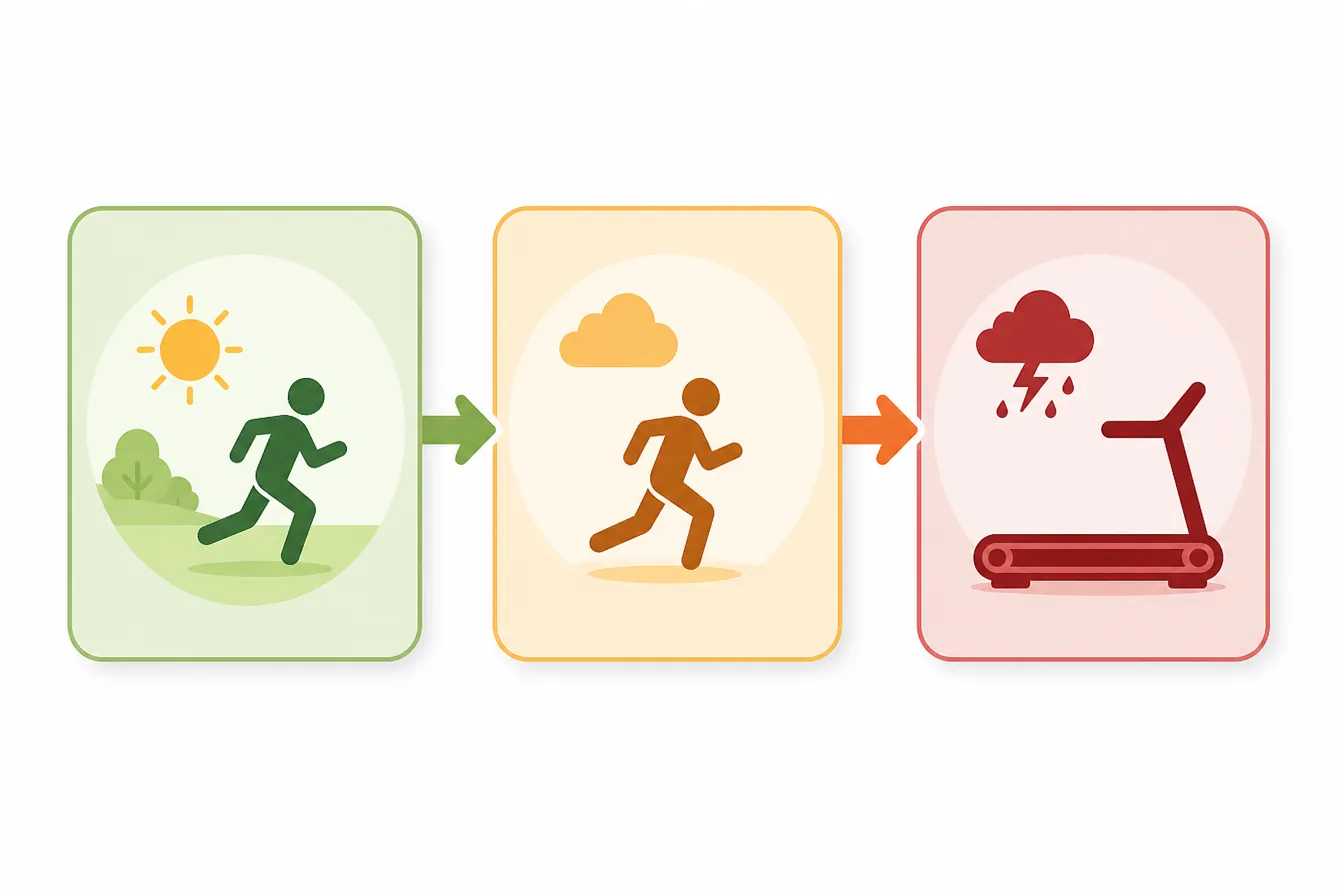
The afternoon heat-index concern is an estimate, not a published forecast value. Using The Weather Channel’s upper-80s temperatures and 65–80% humidity against NWS heat-index guidance puts the afternoon plausibly near the mid-90s, and NWS notes that full sun can add up to 15°F to the heat index. That is exactly the zone where a normal long run can turn into a bad last three miles. [2][5]
Mass General Brigham advises caution around 80°F and says athletes are at risk at 90°F and above. That does not mean every 90°F heat-index reading causes an emergency. It means you should stop treating pace, mileage, or a training-plan box as the deciding authority. [6]
Saturday, August 8: morning is the cleanest shot
Saturday is the more fragile outdoor day. NWS has the high near 83°F with a 40% shower chance, while The Weather Channel has 86°F, humidity in the sticky range, UV 8, and a 40% storm chance. Sunrise is about 5:59 a.m.; sunset is about 8:03 p.m. [1][2]
The best plan is boring in the right way: leave early, keep the pace honest, and be off exposed pavement before the day cooks. If you are starting at 9:30 a.m. for a long run, that is already a compromise. If thunder is in the forecast window or you see lightning, do not bargain with it. NYRR’s guidance is blunt on electrical storms and hail: skip the outdoor run. [3]
Evening can work if the storm line has cleared and the pavement has had a chance to give back some heat. But “after work” is not automatically safe; check radar, AQI, and the current heat index before you lace up.
Sunday, August 9: less storm pressure, still not an afternoon pace day
Sunday looks a little cleaner but not cool. NWS shows a mostly sunny day with a high near 83°F. The Weather Channel has 87°F, a low around 76°F, humidity up to about 80%, UV 9, and a 24% storm chance. Sunrise is about 6:00 a.m.; sunset is about 8:01 p.m. [1][2]
That makes Sunday a reasonable easy-run day if you go early. It is not a great day to prove fitness at noon. If your marathon plan says tempo, the weather gets a vote. Move the workout to a treadmill, change it to easy mileage, or split the volume rather than forcing a pace designed for a different season.
What an outdoor plan should look like
Start with the window. A 6:30 a.m. run is meaningfully different from an 11:30 a.m. run this weekend. The early start gives you lower sun, fewer exposed crossings, and a better chance of finishing before the heat index starts doing the part that never shows up in your training-plan notes.
Keep the route easy to exit. In Central Park, the Reservoir track gives you a shaded, controlled 1.58-mile option, useful when you want to stop without being four miles from the subway. The Hudson River Greenway is a longer 12.9-mile corridor with water and exit points, but exposed riverfront sun can feel a lot less romantic once humidity climbs. [10][11]
Do not chase normal pace. Runner’s World UK notes that performance can start fading above roughly 64°F, well below this weekend’s forecast highs. Use effort or heart rate, and let the watch pace look a little worse than your ego wants. [9]
Fluids should start before the run, not at mile five when your shirt is already pasted to you. NYRR suggests 18–24 ounces one to two hours before a run, then drinking every 20–25 minutes during warm-weather running. Mass General Brigham gives a similar practical range: 17–20 ounces before exercise, 8 ounces 20–30 minutes before, and 4–8 ounces every 15–20 minutes during activity. You do not need to stack both protocols; you need to show up already hydrated and carry enough to keep drinking. [8][6]
Kit matters, but it is not magic. Light-colored technical clothing, a hat or visor, sunglasses, sunscreen, and an easy-to-carry bottle are useful. They do not cancel out a thunderstorm, bad AQI, or a heat-index trigger. [3]
When the treadmill is the right call
The indoor pivot is not the consolation prize. It is the clean adjustment that keeps the training week intact without turning a bad forecast into a character exam.
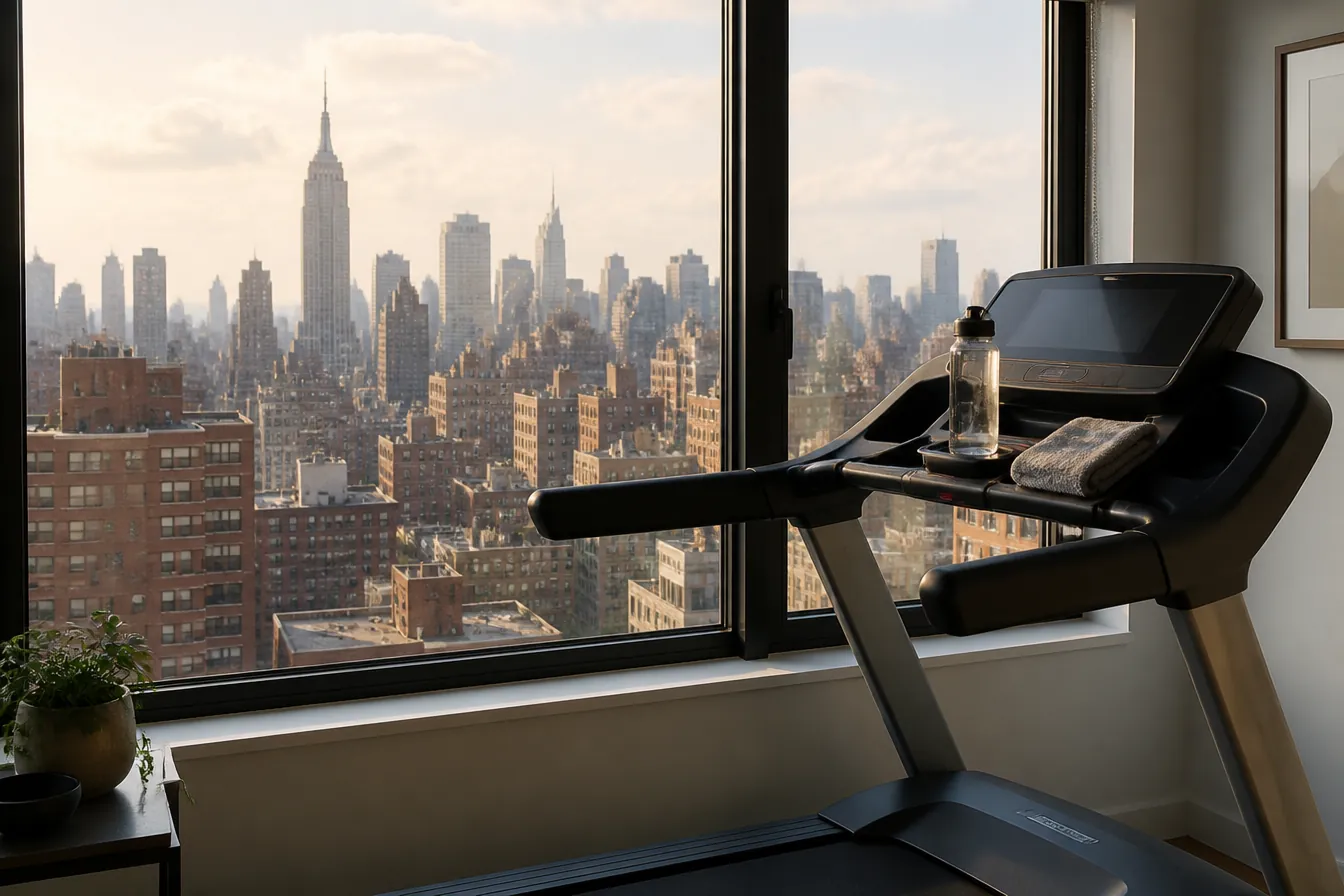
NYRR explicitly describes splitting a long run when heat and humidity make the full outdoor session a bad idea — for example, breaking a 12-miler into outdoor and treadmill pieces, or doing 6–8 easy miles in the morning and 4–6 later in the day. Runner’s World UK also lists an air-conditioned treadmill as a legitimate heat strategy. [4][9]
Use the treadmill when any hard stop trips: lightning, hail, a wet-bulb reading of 88°F or higher, a heat index at or above 90°F, AQI at 151 or higher, or a storm window that overlaps the only time you can run. For AQI 101–150, NYC Emergency Management advises limiting strenuous outdoor activity; if the planned run is intervals, hills, or a long effort, moving indoors is the cleaner choice. NYCEM also notes that indoor air is better than outdoor air on smoke days. [7]
If air quality is the reason you are moving inside, use these smoky-air indoor workout swaps or the bad-AQI indoor workout guide rather than trying to invent a substitute while you are already annoyed. If the apartment itself is hot, shift to extreme-heat apartment workout adjustments or a quiet no-jump heat-wave routine. The point is to preserve the training stimulus, not reproduce the outdoor route indoors mile for mile.
The stop signs are not subtle
A shortened run is a finished run. A run abandoned at the right time is a good decision. The CDC’s athlete heat guidance says faintness or weakness means stopping all activity and getting to a cool place. Do that immediately; do not jog to the next landmark to make the GPS file look cleaner. [12]
This is not a lost running weekend. It is also not an afternoon hero-run weekend. If the forecast holds, run before 10 a.m. or after 7 p.m., keep it easy, re-check storms and AQI, and move inside the moment the thresholds trip.
References
- NWS Point Forecast: New York NY — National Weather Service
- Carnegie Hill, Manhattan, New York Weekend Weather Forecast — The Weather Channel
- Preparing for the Weather — NYRR
- Training in the Heat and Humidity — NYRR, 2026
- Heat — National Weather Service
- How to Prevent Overheating During Workouts — Mass General Brigham
- Smoke From Canadian Wildfires May Affect NYC Air Quality — NYC Emergency Management, July 2026
- Warm-Weather Running Guidelines — NYRR
- Running in the heat — Runner’s World UK
- Running — Central Park Conservancy
- Places to Run in NYC — Runstreet
- Heat and Athletes — CDC
What a small equipment investment adds
We don't have a build tagged to this exact tier yet. Browse all builds.
How often should you repeat this?
See our recovery and rest reference for citation-anchored rest-interval guidance.
Spot something off?
Tell us if a movement, tier assumption, or duration didn't match your experience.