
How to Allocate Your Home Gym Equipment Budget: A Tier-by-Tier Guide ($200 to $5,000)
This guide helps budget-conscious home gym builders allocate their spending across equipment categories for maximum value. It covers five budget tiers from $200 to $5,000, explains the trade-offs at each level, and provides clear upgrade paths to grow your setup over time without wasting prior purchases.
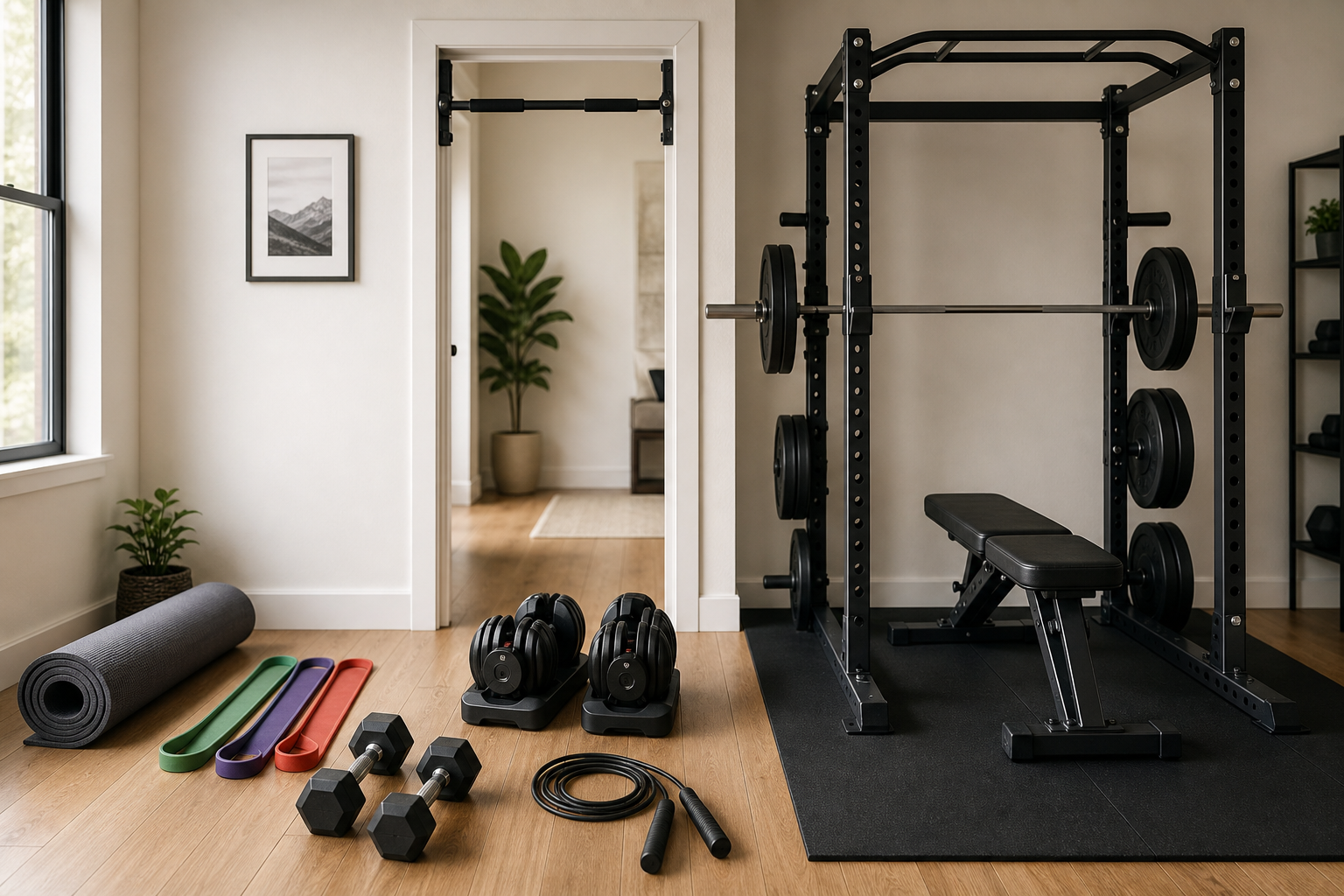
The most common mistake people make when buying home gym equipment isn't spending too little or too much. It's misallocating the money they have. A $1,000 budget spent on a single all-in-one machine with a low weight stack will deliver less long-term value than the same $1,000 split across a power rack, barbell, plates, and a bench. The total is the same. The result is not.
This guide is built around that idea. Instead of a simple list of products at each price point, it walks through five specific budget tiers — $200, $500, $1,000, $2,500, and $5,000 — and shows exactly how to distribute your spending across equipment categories at each level. Every tier includes the trade-offs it makes, the training styles it supports best, and a clear path to the next tier without rendering your previous purchases obsolete.
According to data from Garage Gym Reviews, the average home gym costs $1,855, while the average gym membership runs roughly $65 per month according to the 2024 U.S. Health & Fitness Consumer Report. That means a $1,000 home gym pays for itself in about 15 months compared to a commercial membership — but only if the equipment you buy actually supports the training you want to do. Poor allocation erases that math.
Tier 1 ($200–$300): The Minimalist Starter Setup
At this entry level, your goal is not to build a complete gym. It's to build a foundation that lets you start training immediately while saving for the next tier. The allocation strategy prioritizes versatility per square inch and avoids anything that locks you into a single movement pattern.
| Item | Estimated Cost | Why It's Here |
|---|---|---|
| High-density yoga or gym mat | $30–$50 | Protects floors, defines your workout zone, enables floor work and stretching |
| Pair of adjustable or fixed dumbbells (10–25 lbs each) | $80–$150 | Core resistance for upper body, lower body, and compound movements |
| Set of resistance bands (light, medium, heavy) | $25–$50 | Adds progressive resistance without weight; portable and space-efficient |
| Jump rope | $10–$20 | Minimal-cost cardio that fits in a drawer |
| Total | $145–$270 | — |
The dumbbells are the anchor of this tier. Fixed cast iron hex dumbbells can be found for as low as $1.10 per pound, meaning a pair of 20-pounders costs around $44. If your budget allows, spending the full $150 on a single pair of adjustable dumbbells — even a basic model — is the smarter move because it gives you a range of weights in one footprint. The bands fill the gap for lighter warm-up work and for movements where you want variable resistance through the full range of motion.
Tier 2 ($500): The Adjustable Dumbbell Breakthrough
Adding $200–$300 to the starter budget unlocks the single highest-value upgrade in home fitness: a quality set of adjustable dumbbells. A pair of adjustable dumbbells in the 5–50 lb or 5–60 lb range replaces 12 or more pairs of fixed dumbbells, saving floor space and money simultaneously. The REP Fitness QuickDraw Adjustable Dumbbells, for example, start at $335.99 for the 30-lb pair and go up to $576 for the 60-lb pair, with a lifetime warranty and drop-tested construction.
| Item | Estimated Cost | Notes |
|---|---|---|
| Adjustable dumbbells (5–50 lb or 5–60 lb range) | $335–$576 | Core of the setup; replaces 12+ fixed pairs |
| Pull-up bar (doorway-mounted) | $25–$50 | Adds vertical pulling and upper-body pulling strength |
| Jump rope | $10–$20 | Cardio; carryover from Tier 1 |
| Resistance bands (from Tier 1) | $0 (carryover) | Still useful for warm-ups and accessory work |
| Total | $370–$646 | — |
The key insight at this tier is that the adjustable dumbbells do almost all the work. With a 5–50 lb range, you can perform goblet squats, lunges, rows, presses, curls, extensions, and lateral raises. Adding a pull-up bar gives you vertical pulling — the one major movement pattern dumbbells alone cannot replicate. The total cost lands right around $500 if you choose a mid-range adjustable dumbbell set, and you end up with a setup that supports full-body strength training, cardio, and mobility work in roughly the same floor space as a yoga mat.
Tier 3 ($1,000): The Power Rack + Barbell Foundation
The $1,000 tier is where home gym equipment transitions from a supplement to a complete training environment. This is the sweet spot for versatility per dollar, and the allocation strategy centers on the power rack, barbell, and plates — the three pieces that unlock the core barbell lifts.
| Item | Estimated Cost | Why This Specific Pick |
|---|---|---|
| REP PR-1100 Power Rack | $380 | 700-lb weight capacity, 14-gauge steel, includes pull-up bar and J-hooks; best value in the sub-$500 rack category |
| Synergee Games Cerakote Barbell | $179.95 | 190,000 PSI tensile strength, needle bearings, lifetime warranty; handles all major barbell lifts |
| Fringe Sport Black Bumper Plates (~$2.20/lb) | $220 (for 100 lbs) | Virgin rubber, Durometer rating of 85–90, lifetime warranty; deaden sound and protect floors |
| REP FB-5000 Competition Flat Bench | $245 | 1,000-lb weight capacity, 11-gauge steel frame; stable and durable for bench press and dumbbell work |
| Total | $1,024.95 | — |
This combination enables squats, deadlifts, bench press, overhead press, rows, pull-ups, and any dumbbell variation you can perform on a flat bench. The REP PR-1100 rack has a 700-lb weight capacity, which is more than enough for the vast majority of home lifters. The Synergee barbell's 190,000 PSI tensile strength puts it well above the "budget" category in durability. And the Fringe Sport bumper plates, at roughly $2.20 per pound, are priced competitively with economy iron but offer the noise and floor protection advantages of virgin rubber.
What you give up at this tier: a dedicated cable system for lat pulldowns, tricep pushdowns, and face pulls. You can approximate some of these movements with resistance bands looped around the rack's pull-up bar, but it is not the same as a weight stack. If cable work is a priority, consider the Bells of Steel Cable Tower with Weight Stack, which starts at $434.99 and has a 250-lb max resistance. Adding it to the $1,000 build pushes the total closer to $1,450.
Tier 4 ($2,500): The All-in-One or Separate Equipment Crossroads
At $2,500, you face a genuine fork in the road: buy an all-in-one home gym machine that consolidates multiple functions into one footprint, or continue building a separate-equipment setup with upgraded versions of the rack, barbell, and accessories you already own. Neither choice is universally better — the right answer depends on your space, your training preferences, and whether you value consolidation or upgradability.
| Path | Example Product | Cost | Pros | Cons |
|---|---|---|---|---|
| All-in-one machine | Bells of Steel All-in-One Home Gym | Starts at $1,299.99 | Single footprint, cable system included, plate-loaded or weight-stack option | Limited upgrade path, lower max resistance than separate setup, harder to resell individual components |
| Separate equipment upgrade | Higher-end rack (e.g., REP PR-4000) + upgraded barbell + additional plates + adjustable bench + cable tower | $2,000–$2,500 | Fully modular, each piece can be upgraded independently, higher total weight capacity | Larger total footprint, more pieces to manage, higher initial complexity |
The all-in-one route is particularly compelling for users with limited floor space. The Bells of Steel All-in-One Home Gym, starting at $1,299.99, combines a squat rack, bench press station, lat pulldown, low row, and cable crossover in a single unit. It is plate-loaded (or available with a 210-lb weight stack) and has a 300-lb cable capacity. At $1,300, it leaves room in the $2,500 budget for a set of adjustable dumbbells, a rower or bike for cardio, and flooring.
The separate-equipment path, by contrast, lets you take your existing $1,000 build and upgrade each component. Swap the PR-1100 for a rack with a higher weight capacity and more accessory compatibility. Add a dedicated cable tower or functional trainer. Buy a second set of plates so you can superset without re-racking. The trade-off is floor space: a separate rack, bench, barbell, plates, and cable tower will occupy roughly 40–60 square feet, compared to the 20–30 square feet of a well-designed all-in-one.
Tier 5 ($5,000): The Premium Smart Gym or High-End All-in-One
At $5,000, you are no longer compromising on capability. The question becomes whether you want a smart home gym with digital resistance and guided programming, or a top-tier plate-loaded all-in-one with full accessory packages and no recurring fees.
| Option | Upfront Cost | Ongoing Cost | Max Resistance | Footprint | Best For |
|---|---|---|---|---|---|
| Tonal 2 (smart gym) | $4,295 (+ $495 smart accessories) | $59.95/month membership | 250 lbs digital resistance | 5.25" D x 21.5" W x 50.9" H (wall-mounted) | Users who want guided programming, form tracking, and a minimal footprint |
| High-end all-in-one (e.g., Major Fitness B17 or REP Ares 2.0) | $2,999–$4,199 | $0 | 1,500 lbs (B17) or dual 260-lb stacks (Ares 2.0) | Standard 30–50 sq ft | Users who want maximum resistance, no subscription, and traditional plate-loaded training |
The Tonal 2, priced at $4,295 with an additional $495 for smart accessories, uses up to 250 pounds of total digital resistance delivered through a cable-based arm system. It has 13 sensors for form tracking and smart handles with gyroscope motion sensors. It requires 7 feet of wall space, professional installation, and a $59.95-per-month membership. Over five years, that membership adds $3,597 to the total cost of ownership, bringing the real cost to roughly $8,387.
The plate-loaded alternative — something like the Major Fitness B17 Flying Fortress at $4,199.99 with a 1,500-lb weight capacity, or the REP Fitness Ares 2.0 at $2,999.99 with dual 260-lb weight stacks — has no subscription, no installation fee, and no digital dependency. The trade-off is a larger physical footprint and the absence of guided programming, form feedback, and automatic progression tracking.
How to Upgrade Between Tiers Without Wasting Prior Purchases
One of the strongest arguments for the allocation strategy outlined in this guide is that almost every purchase remains useful as you move up. A well-chosen Tier 1 setup does not become obsolete when you buy a power rack. It becomes your warm-up, mobility, and accessory station.
- Mat and bands from Tier 1: Still used for floor work, stretching, banded pull-ups, and warm-up activation. Never obsolete.
- Adjustable dumbbells from Tier 2: Remain the primary tool for unilateral work, isolation exercises, and any movement where a barbell is impractical. They complement a power rack rather than competing with it.
- Barbell and plates from Tier 3: The barbell and bumper plates are the backbone of the Tier 4 and Tier 5 setups. You add more plates, but you do not replace the bar or the first set of plates unless you outgrow their weight capacity.
- Power rack from Tier 3: The REP PR-1100's 700-lb capacity will serve most lifters indefinitely. If you eventually need a rack with more accessory compatibility or a higher weight rating, the PR-1100 retains good resale value because it is a known entry-level standard.
The key to waste-free upgrading is buying items at each tier that have standalone value and are compatible with the next tier's equipment. A 28mm barbell works in any rack. Bumper plates work with any barbell. Adjustable dumbbells work anywhere. Avoid proprietary systems — especially at the lower tiers — that cannot integrate into a larger setup later.
The Hidden Costs Most Buyers Forget
Every budget allocation guide should account for the costs that do not appear on the product page. These expenses can add 10–30% to your total investment depending on the tier and the equipment you choose.
| Hidden Cost | Typical Range | When It Applies |
|---|---|---|
| Rubber flooring (stall mats or puzzle tiles) | $1–$3 per sq ft | Any tier with a power rack, barbell, or heavy dumbbells; protects floors and dampens noise |
| Shipping fees (heavy items) | $50–$200 per item | Power racks, all-in-one machines, barbells, plate sets; often not included in the listed price |
| Assembly tools and hardware | $20–$100 | Most racks and all-in-one machines require wrenches, sockets, and sometimes a torque wrench; not included |
| Professional installation (smart gyms) | $200–$400 | Tonal, some wall-mounted racks; required for warranty and safety |
| Subscription costs (smart gyms) | $60–$80 per month | Tonal ($59.95/month), iFIT, JRNY, and other platform-dependent equipment |
| Accessories (collars, clips, chalk, straps) | $30–$100 | Every tier; often overlooked in initial budget planning |
For a $1,000 build, flooring alone can cost $60–$180 for a standard 6x8-foot lifting area using 3/4-inch stall mats. Shipping on a power rack and barbell can add another $100–$150. That means your actual equipment budget might need to be $750–$850 to leave room for the hidden costs, or you need to start with a $1,150 total outlay to land at $1,000 in equipment.
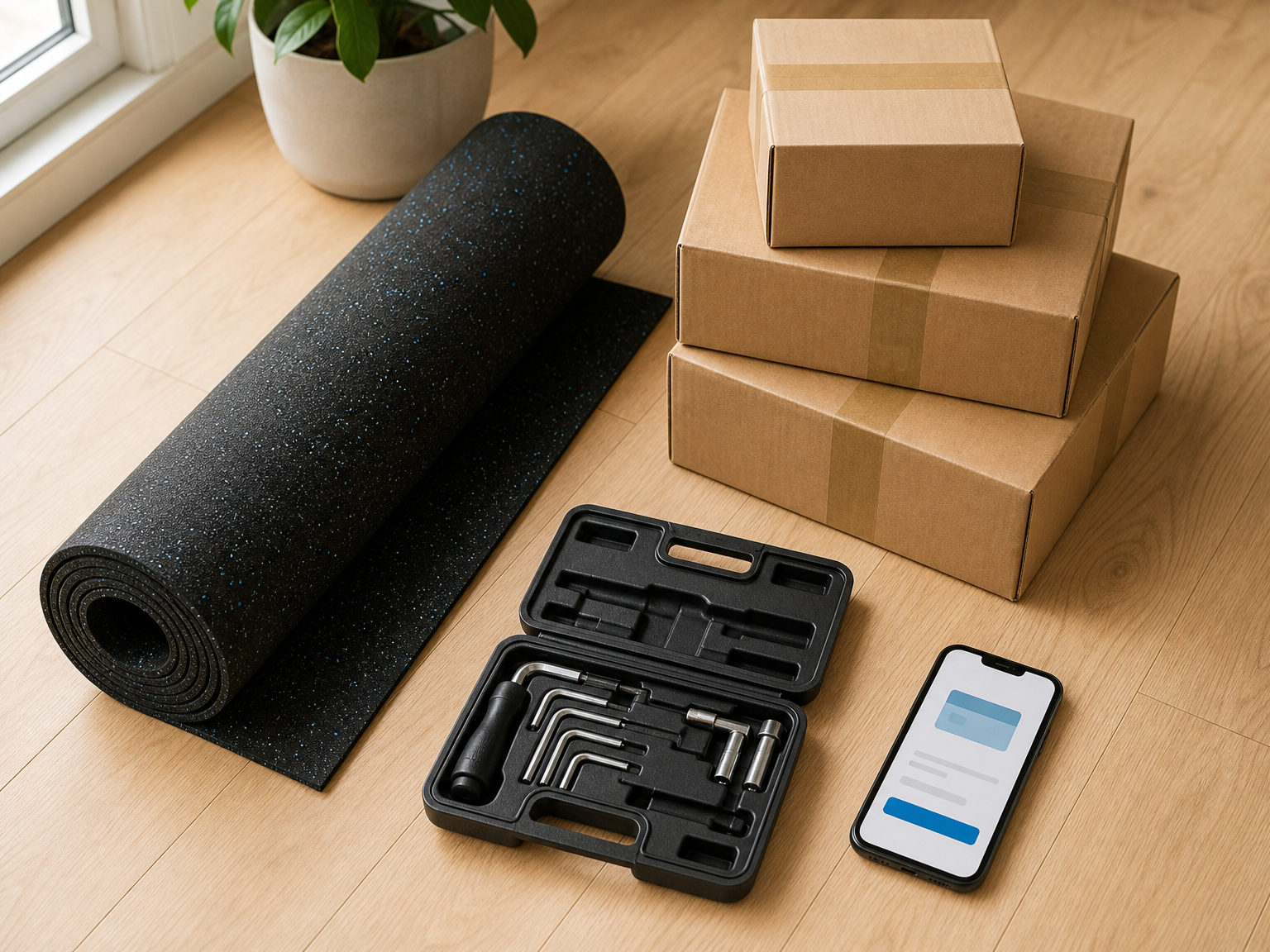
The smart gym subscription is the most insidious hidden cost because it is recurring and often presented as optional in marketing materials even when core functionality requires it. Tonal's $59.95 monthly membership is mandatory for accessing the device's resistance and programming. Over three years, that is $2,158 — more than half the cost of the hardware itself. Plate-loaded equipment has no equivalent expense.
The five tiers in this guide are designed to be sequential building blocks. Start where your budget allows, allocate deliberately, and upgrade with confidence that every dollar you spent at the previous tier is still working for you. That is the difference between buying home gym equipment and building a home gym.
This result comes from one real apartment under the stated conditions — it is a strong signal, not a guarantee your space will measure identically.
Builds this evidence supports
Cable Machine Alternatives That Save Space and Money
Compare the best cable machine alternatives for home gyms – from resistance bands and pulley systems to suspension trainers and compact digital units – and find the right option for your space and budget.
How to Choose a Compact Home Gym That Works for Your Space, Budget, and Noise Tolerance
This article provides a structured decision framework for apartment dwellers and small-space residents to match their specific floor footprint, noise sensitivity, and budget to the most suitable compact home gym strategy — whether that's an all-in-one machine, modular build, smart digital system, or band/bodyweight setup.
The Garage Gym Reality Check: What Equipment Actually Fits in a Single-Car Garage
Most garage gym guides assume a two-car space. This article uses real dimensions, real equipment footprints, and three layout templates to show what fits—and what doesn't—in a single-car garage (10x20 to 12x20 ft).
Spot something off?
If this result didn't match your own space, let us know — floor-damage and noise claims carry real deposit-risk consequences if we get them wrong.