By 2026, the phrase “AI-powered” has become almost useless in best workout apps lists unless you ask one blunt question: what does the app change in your next workout that a static spreadsheet would not?
If the answer is “it recommends exercises,” that may be convenient, but it is not yet coaching. If it notices repeated successful sets and nudges load upward, pulls volume back after poor recovery, flags a weekly imbalance before your shoulders start complaining, or sends an algorithm-built plan through a human coach before you train it, then the AI is touching the part of training that matters.
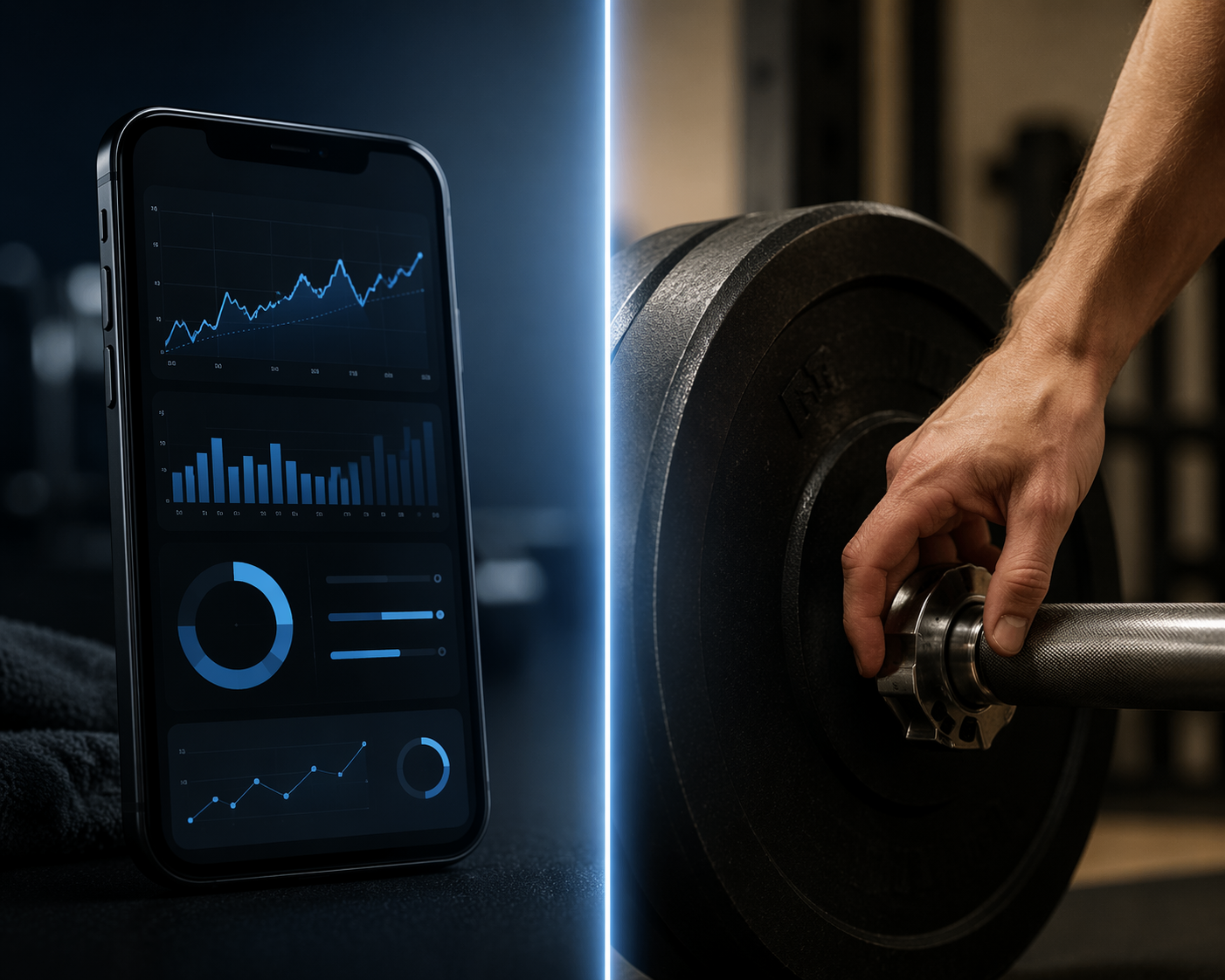
The claims are everywhere because the market is large enough to reward vague language. Grand View Research reported the fitness apps market at $13.9 billion in 2026 and identified AI-driven personalization as a leading trend, with AI and machine learning integration described as the primary driver of a 13.4% compound annual growth rate through 2033.[1] Business of Apps, using its own market framing, reported 540 million fitness app users in 2025, 888 million downloads, and $3.4 billion in revenue, including $1.6 billion in Peloton subscription revenue.[2]
Those numbers explain the flood of AI labels. They do not tell you whether the label means smarter progressive overload, a prettier workout randomizer, camera-based rep counting, or a chatbot wrapped around a normal template. For a lifter training without a coach, that difference is not cosmetic. It changes load selection, fatigue management, and sometimes injury risk.
The useful spectrum: from smarter logging to actual programming decisions
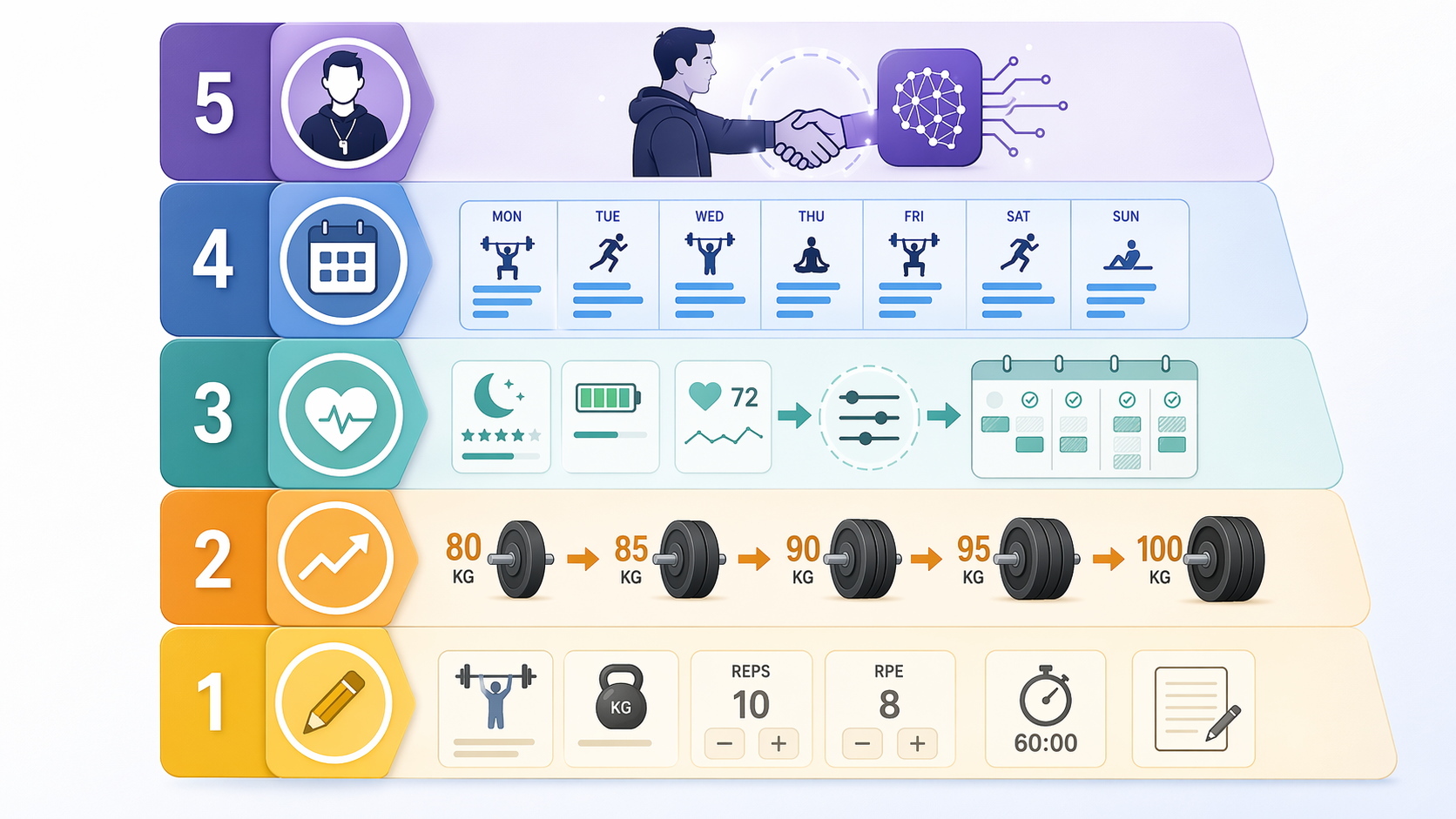
The first cut is not “AI app versus non-AI app.” It is whether the app makes a training decision you can inspect. The strongest implementations change sets, reps, loads, frequency, or exercise selection based on recent performance and recovery. The weaker ones mostly reduce friction: faster logging, premade substitutions, exercise suggestions, or a polished interface.
| Capability | What it changes | Training value |
|---|---|---|
| Logging intelligence | Makes recording workouts faster or more structured | Useful, but usually not enough to improve programming by itself |
| Progressive overload calculation | Raises or holds load after performance trends | High value when the assumptions are visible and conservative |
| Recovery adjustment | Changes load, volume, or exercise selection based on soreness, sleep, or recent training | High value for intermediate lifters who accumulate fatigue |
| Program generation | Builds training blocks from goals, equipment, and experience | Variable; strong for general strength, riskier for technical goals |
| Camera-based form feedback | Attempts to rate movement quality or correct technique | Still limited; not a coaching replacement |
| Human-reviewed AI | Uses automation to draft, then a coach reviews or adjusts | Most reassuring when the lifter needs guardrails |
Garage Gym Reviews’ app scores are useful here, but they should not be treated like lab results. Their category ratings come from testers using different apps in different contexts, so a 5/5 in one category is a directional signal, not a universal ranking.[3] Still, the scores help separate automation that affects training from automation that mostly affects presentation.
Progressive overload is where AI earns its keep
A static plan can tell you to add five pounds next week. A decent spreadsheet can calculate a percentage jump. The better AI workout apps go further: they look at what you actually completed, how hard it was supposed to be, and whether today is a good day to push.
JuggernautAI is the clearest example in the current evidence set. Before adjusting training, it asks about motivation, sleep, calories, soreness, and related readiness inputs, then auto-adjusts loads and rep schemes. Garage Gym Reviews rated it 5/5 for progressive overload, while giving it only 3/5 for workout variety and 3/5 for instruction.[3]
That split matters. A lifter who already knows how to squat, bench, and deadlift may care less that the exercise menu feels narrow and more that the app can decide whether today’s top set should move up, hold, or back off. That is the awkward middle ground many home-gym lifters occupy: not beginner enough to need every cue explained, not advanced enough to confidently audit fatigue and load jumps alone.
Jefit approaches progression from a different angle. Its free tier includes a 1,400-plus exercise library and logging, while Jefit Elite, priced at $12.99 per month in Q2 2026, unlocks its progressive overload algorithm and NSPI tracking.[4] The pricing matters because the best part of the system is not merely the exercise database; it is the layer that turns training history into a progression signal.
The question for value is therefore not “does Jefit have AI?” It is whether you will use the paid progression layer enough to justify paying for it. If all you need is a clean logbook, the free tier is meaningful. If you want the app to help decide when training is actually moving forward, the Elite features are the relevant product. That is the kind of pricing distinction that belongs in a value-per-dollar analysis, not a feature checklist.
Recovery-aware volume is the second real test
Progressive overload gets the attention because adding weight is satisfying. Volume management is quieter, and often more important. Many intermediate lifters do not fail because they lack hard sets. They fail because weekly stress drifts: pressing climbs while pulling stagnates, legs get punished after poor sleep, or accessory volume keeps accumulating because no single workout feels excessive.
Fitbod’s best use case lives here. Its adaptive AI adjusts workouts based on muscle recovery and recent training history, which can be useful for general strength training.[3] If you trained chest and triceps hard yesterday, the app can steer today away from the same tissue instead of pretending every session starts from zero. That is a real improvement over a static template for people training around limited equipment, changing schedules, or imperfect recovery.
Jefit’s NSPI, or North Star Progress Index, is interesting for a different reason. It combines training volume across muscle groups, movement-pattern balance, strength gains, and consistency into a single weekly score.[4] I am usually suspicious of one-number fitness scores because they can flatten the wrong things. But this one at least tries to summarize training quality beyond streaks, calories, or total workouts.
That does not mean NSPI proves a program is optimal. It means the app is looking at more of the training week than a single session’s completion. For a data-minded lifter, that is valuable because imbalance is often easier to catch at the weekly level than in the middle of a good workout. If your pushing volume is climbing while hinge work disappears, the issue is not motivation; it is programming drift.
Program generation is useful until the goal gets technical
Program generation sounds more impressive than it often is. Asking for your goal, equipment, schedule, and skill level is a good start. It is also what a basic onboarding form has done for years. The training value depends on what the app does after the first plan is built.
TR[Ai]NER by Element 26 customizes programs based on goals, equipment, and skill level, and Garage Gym Reviews rated it 4.3/5 overall, with 5/5 for its free trial because users can access up to three free programs.[3] That makes it easier to test whether the app’s programming logic matches your training reality before paying. For general strength and fitness goals, that trial structure is not a minor perk; it is how you find out whether the generated plan respects your equipment and experience.
Caliber takes a more conservative route by pairing AI-structured programming with a human coach review layer. Garage Gym Reviews rated Caliber 4.6/5 overall, and its free tier includes an ad-free experience, a 500-plus exercise library, and algorithm-built custom programs.[3] The human review layer is the important distinction. It admits something many AI products avoid saying plainly: automation can build a plausible plan, but a qualified person may still need to catch mismatches before they become training problems.
That model makes sense for lifters who want guardrails without hiring a full-time coach. It also fits the decision point covered in AI Strength Apps vs Human Coaches: the useful comparison is not whether an algorithm is “smart,” but whether the system gives the right amount of supervision for the lifter’s risk.
The failure boundary: form feedback and technical lifts
The weakest AI fitness feature is also the one that sounds most like coaching: camera-based form assessment. Shred uses camera access to track and rate performance with form corrections, and Garage Gym Reviews rated it 5/5 for instruction and ease of use.[3] PCMag’s expert review describes Shred as best for strength training and notes that beginners need not feel intimidated, while also indicating that the AI programs work best for people who already understand basic lifting mechanics.[5]
That last condition is doing real work. A camera can help count, cue, or structure a circuit. It cannot reliably replace a coach who sees your setup, asks why the bar path changed, notices the fatigue pattern across sets, and knows when to stop the lift. Garage Gym Reviews testers were explicit that AI form assessment is not yet reliable enough to replace in-person coaching.[3]
Shred’s $19.99 monthly price in Q2 2026 raises expectations because that is no longer “cheap tracker” territory.[3] If you are paying for camera-driven coaching, the app needs to deliver more than confident-looking feedback. It needs to make fewer bad calls than a lifter would make alone. The evidence available supports Shred as a polished and approachable strength-training option, not as proof that phone-camera coaching is ready to supervise high-risk technique work.
Fitbod shows the same boundary from the programming side. Garage Gym Reviews rated its instruction only 3/5 after testers found AI-generated Olympic lifting programs “wildly off.”[3] That does not erase Fitbod’s usefulness for general strength. It does show how general-purpose training intelligence can become dangerous when the goal depends on timing, positions, bar speed, and technical sequencing.
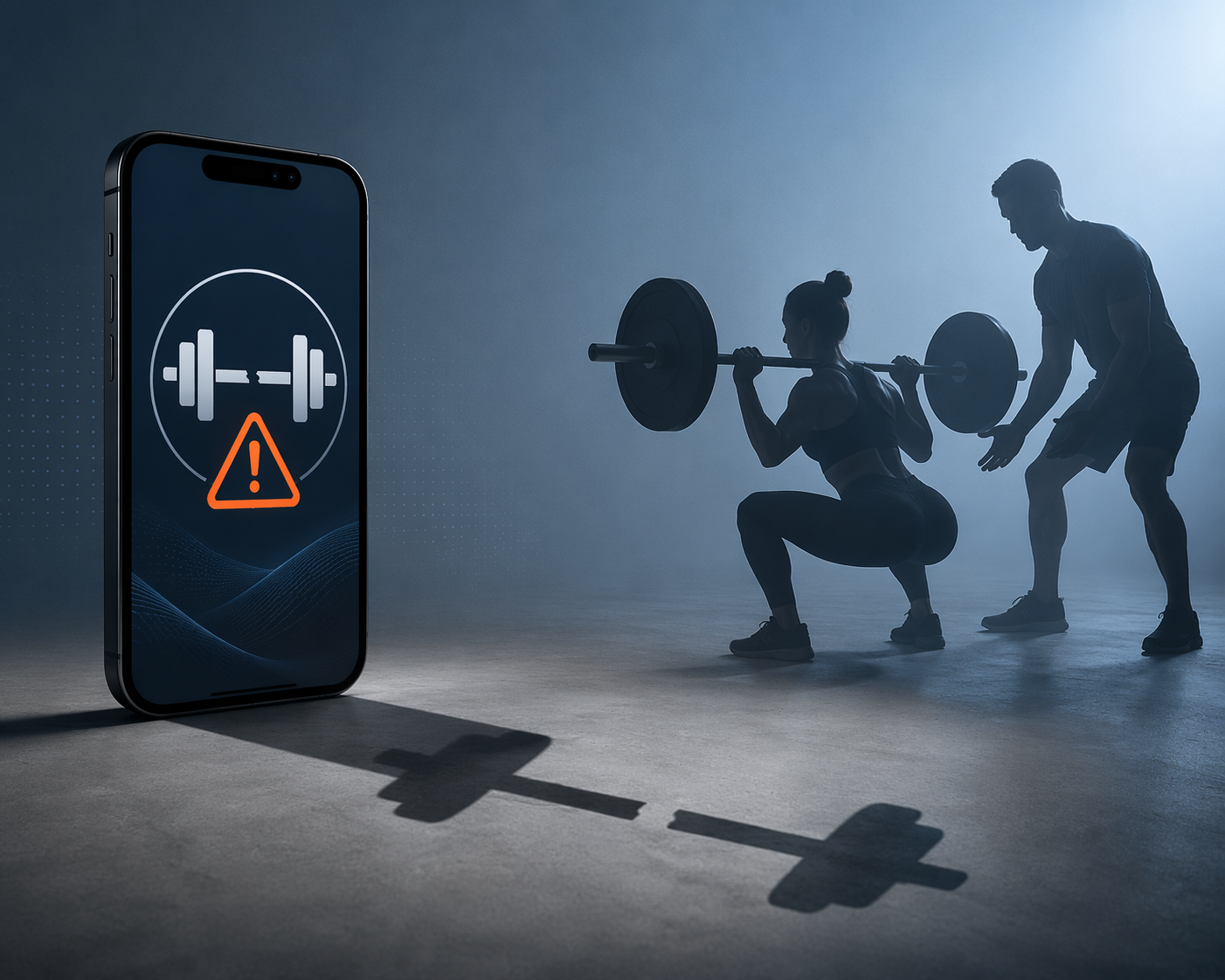
This is where beginners deserve more protection, not more optimism. A new lifter may not know when a generated clean pull progression is inappropriate, when a cue is irrelevant, or when a movement substitution changes the training effect. For Olympic lifting-style goals, post-injury training, or any lift where small technical errors carry large consequences, AI should be treated as a planning aid at most. The coaching boundary matters more than the app’s interface.
What to choose based on how you train
A useful decision framework starts with your training problem, not with the app category. If your main issue is consistency, you may not need the most sophisticated AI. If your main issue is progression, recovery, or auditing weekly balance, then the app’s programming logic matters more than its social feed, badges, or exercise animations.
- Intermediate strength trainees should prioritize adaptive load changes, readiness inputs, and conservative progressive overload logic.
- Data-minded lifters should look for weekly progress indexing, volume balance, and training-history analysis rather than streak tracking alone.
- Users who want guardrails should favor systems with human review or clear coach oversight instead of fully opaque program generation.
- Beginners should treat AI instruction as support material, not as a substitute for learning basic movement mechanics from a qualified source.
- Technical lifters should be especially cautious with AI-generated Olympic lifting, advanced barbell variations, and camera-only form feedback.
That framework also helps sort the broader market. A roundup of the best AI fitness apps in 2026 can show which products are leading the category, but the next layer is more personal: whether you need an AI coach, a human coach, or a tracker with better analytics. That app-type question is often clearer in an AI versus human versus tracker guide than in another ranked list.
For a home-gym lifter, the best sign is not that an app says “AI” on the pricing page. It is that the app can explain, through its behavior, why tomorrow’s squat load changed, why accessory volume moved, why a muscle group needs recovery, or why a human should review the plan before you run it. AI fitness apps are meaningfully better than static plans when they change programming decisions in ways a competent lifter would recognize as sound. When they cannot, the label is just decoration.
References
- Fitness App Market Size, Share & Trends Analysis Report, Grand View Research, June 2026.
- Fitness App Revenue and Usage Statistics, Business of Apps, June 2026.
- Best Workout Apps, Garage Gym Reviews.
- Best Workout Apps for 2026: Top 7 Options Tested and Reviewed, JEFIT Blog.
- The Best Workout Apps, PCMag.
Comments
Join the discussion with an anonymous comment.