
Why Cycle-Aware Training Matters for Women
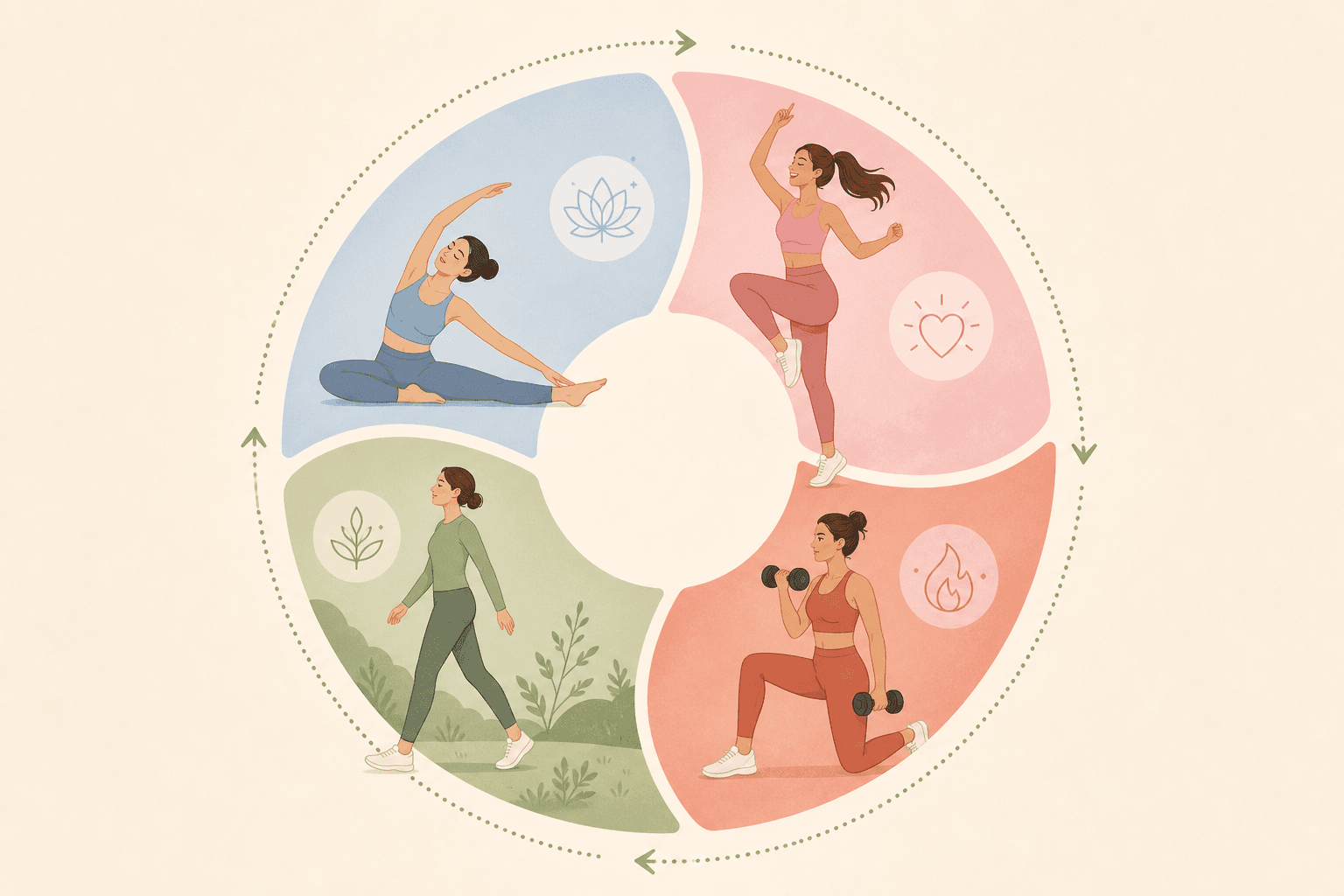
Hormonal fluctuations across the menstrual cycle are not a minor variable in training — they directly influence energy availability, muscle recovery, core temperature regulation, and ligament laxity. During the follicular phase, rising estrogen supports higher power output and faster recovery. In the luteal phase, elevated progesterone shifts your body toward fat oxidation and can raise resting heart rate, making perceived exertion higher even when absolute workload stays the same. Ignoring these shifts means training against your biology rather than with it.
Cycle-syncing is the practice of adjusting workout intensity, volume, and type to match these hormonal phases. It is not a wellness fad — it is a practical framework for managing energy and reducing injury risk. A growing number of fitness apps now build this logic directly into their programming, using period tracking data, mood check-ins, and AI to recommend workouts that fit where you are in your cycle. This guide evaluates those apps as purchase decisions: what they cost, how they track your cycle, and whether their recommendations actually align with the phase you are in.
Apps With Built-In Period Tracking and Cycle-Based Recommendations
Two apps currently lead the integration of menstrual cycle data into workout programming: Zing Coach and Obe Fitness. Both use different methods — one relies on AI-powered period tracking, the other on user-reported mood and cycle insights — but both aim to adjust your daily workout recommendation based on your cycle phase.
Zing Coach: AI-Powered Period Tracking That Adjusts Intensity
Zing Coach uses AI-powered period tracking to plan workouts based on your monthly cycle. You log your period start date, and the app's algorithm predicts upcoming phases, then adjusts the recommended workout intensity and type accordingly. During the follicular phase, it may suggest higher-intensity strength work; during the luteal phase, it shifts toward moderate cardio and recovery-focused sessions. The app also includes Zing Vision AI motion tracking to correct form in real time, which is particularly useful during pregnancy and postpartum when movement mechanics change. Zing Coach is rated 4.7 stars on both the App Store and Google Play, and it offers dedicated prenatal and postnatal workout plans.
Obe Fitness: Mood Check-Ins and Menstrual Cycle Insights
Obe Fitness takes a slightly different approach. The app includes mood check-ins and menstrual cycle insights that recommend classes based on your cycle phase. Rather than relying solely on period start dates, Obe asks you to log how you feel — energy level, mood, physical sensations — and uses that data alongside your cycle information to suggest specific classes. This hybrid model accounts for the fact that not every cycle is identical; if you are in the luteal phase but feel unusually energetic, the app can still recommend a higher-intensity class. Obe's library is built around live and on-demand video classes, so the recommendations are class-based rather than program-based.
Dedicated Prenatal and Postpartum Programs
For women who are pregnant or postpartum, cycle tracking takes a back seat to trimester-specific and recovery-stage programming. The apps below offer structured programs designed by prenatal and postnatal specialists, with safety modifications built in.
Bloom Method: Pelvic Floor, Breathing, and Core Activation
Bloom Method focuses heavily on diaphragmatic breathing, core activation, and pelvic floor exercises. It is priced at $30 per month and received a 4 out of 5 rating for value from Garage Gym Reviews (GGR). The programming is designed for both prenatal and postnatal stages, with an emphasis on rebuilding core stability and pelvic floor function after childbirth. It is not a general fitness app — it is a targeted recovery and preparation tool. If your primary goal during pregnancy or postpartum is core and pelvic health, Bloom Method is the most specialized option available.
Sweat: PWR Post-Pregnancy Program by Kelsey Wells
The Sweat app offers over 50 workout programs, including the PWR Post-Pregnancy Program created by trainer Kelsey Wells. This program provides structured strength training with progressive overload, designed specifically for women returning to exercise after having a baby. Good Housekeeping testers noted that the program "challenged me and gave me something to stick to after having the baby." However, GGR's review points out that the PWR program lacks built-in progressive overload tracking — you are responsible for logging weights and increasing load yourself. Sweat is available in 145+ countries and 8 languages, and features an all-female instructor team.
Down Dog: Trimester-Specific Prenatal Yoga
Down Dog's prenatal yoga mode lets you select your current trimester, then generates sessions tailored to that stage. The focus is on de-stressing the low back and side body — common pain points during pregnancy — and includes specific workouts for pelvic floor preparation and labor prep. The sessions are generated algorithmically, so no two classes are exactly the same. Down Dog is a strong option if yoga is your primary or supplementary movement practice during pregnancy.
Mapping Your Cycle Phase to the Right Workout Type
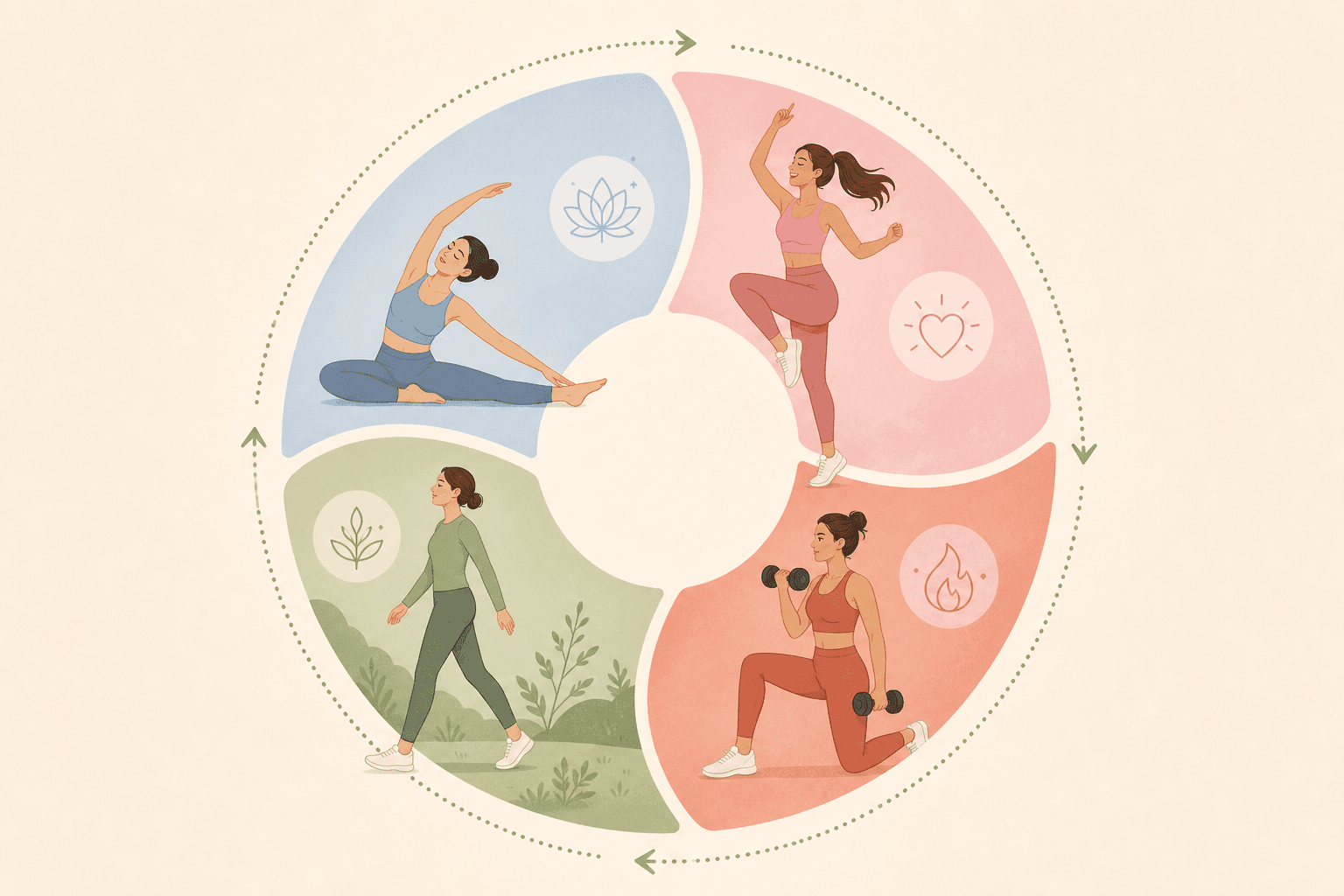
Understanding which workout type fits each phase of your cycle helps you evaluate whether an app's recommendations are actually useful. Below is a practical phase-by-phase guide, along with how the apps above map to each phase.
| Cycle Phase | Hormonal Profile | Recommended Workout Type | App Alignment |
|---|---|---|---|
| Follicular (Days 1–13) | Rising estrogen, increasing energy | Strength training, heavy compound lifts, high-intensity intervals | Zing Coach pushes higher intensity; Obe recommends strength-focused classes |
| Ovulatory (Days 14–16) | Peak estrogen and testosterone | Peak performance: HIIT, max effort lifts, sprint work | Zing Coach and Obe both suggest peak-intensity sessions |
| Luteal (Days 17–28) | Rising progesterone, higher RPE, increased injury risk | Moderate intensity: steady-state cardio, moderate weight training, technique focus | Zing Coach scales back intensity; Obe recommends lower-impact cardio and yoga |
| Menstrual (Days 1–5) | Low estrogen and progesterone | Restorative: gentle yoga, walking, mobility work, light stretching | Both apps suggest recovery-focused sessions; Down Dog prenatal yoga is also suitable |
Zing Coach and Obe Fitness both adjust their recommendations across these phases, but they differ in how they handle individual variation. Zing Coach relies more on algorithmic prediction based on your logged period dates, while Obe incorporates daily mood and energy check-ins. If your cycle is irregular, Obe's approach may be more responsive. If you prefer a set-it-and-forget-it model, Zing Coach's AI prediction is more convenient.
What the Science Says About Cycle-Synced Training
The evidence base for menstrual phase-based training is real but still emerging. Peer-reviewed studies show that estrogen has an anabolic effect on muscle tissue and that progesterone can increase core temperature and heart rate during the luteal phase, which raises perceived exertion. However, individual variation is significant. Not every woman experiences the same energy shifts, and cycle irregularity — whether from stress, diet, or conditions like PCOS — can make phase prediction unreliable.
The apps covered in this guide are useful tools for awareness, not prescriptive medical devices. They can help you notice patterns in your energy and recovery across the month, but they should not override how you actually feel on a given day. The most evidence-backed approach remains: track your cycle, note how you respond to different training types, and adjust based on your own data rather than a rigid phase schedule.
Feature Comparison: Cycle-Tracking Apps at a Glance
| App | Pricing Model | Platform | Cycle Tracking Method | Prenatal/Postnatal Support | Key Unique Features | Best For |
|---|---|---|---|---|---|---|
| Zing Coach | Freemium (premium pricing varies) | iOS, Android | AI-powered period tracking, predicts cycle phases | Yes — dedicated prenatal and postnatal plans | AI motion tracking (Zing Vision); 4.7-star rating on both stores | Women who want automated, AI-driven cycle-based workout adjustments |
| Obe Fitness | Paid subscription (pricing varies) | iOS, Android | Mood check-ins + menstrual cycle insights; recommends classes by phase | No dedicated prenatal/postnatal programs | Live and on-demand video classes; hybrid mood + cycle model | Women who prefer class-based workouts and want to log daily energy/mood |
| Bloom Method | $30/month | iOS, Android | Not cycle-tracking focused | Yes — prenatal and postnatal core/pelvic floor focus | Diaphragmatic breathing, core activation, pelvic floor exercises; GGR rating 4/5 for value | Pregnant and postpartum women focused on core and pelvic health |
| Sweat | Paid subscription (pricing varies) | iOS, Android | Not cycle-tracking focused | Yes — PWR Post-Pregnancy Program by Kelsey Wells | 50+ programs; all-female instructor team; available in 145+ countries | Postpartum women wanting structured strength training with progressive overload |
| Down Dog | Paid subscription (pricing varies) | iOS, Android | Not cycle-tracking focused | Yes — trimester-specific prenatal yoga | Algorithmically generated sessions; pelvic floor and labor prep workouts | Pregnant women who want yoga tailored to their trimester |
How to Choose the Right App for Your Life Stage
Your choice depends on where you are in your reproductive life and what you want from an app. Use the decision framework below to match your situation to the best option.
- Tracking a regular cycle and want automated workout adjustments: Zing Coach is your best bet. Its AI-powered period tracking handles the prediction work, and it adjusts intensity across all four phases. The prenatal and postnatal plans add future-proofing if your life stage changes.
- Prefer logging how you feel and getting class recommendations: Obe Fitness is the better fit. Its mood check-in model accounts for day-to-day variation that pure period tracking misses. If you enjoy live and on-demand video classes, Obe's library is a strong match.
- Pregnant and focused on core and pelvic health: Bloom Method is the most specialized option. At $30/month, it is not cheap, but its focus on diaphragmatic breathing and pelvic floor exercises is unmatched by general fitness apps.
- Postpartum and want structured strength training: Sweat's PWR Post-Pregnancy Program provides a clear progressive overload framework. Be prepared to track your weights manually, as the app does not automate that.
- Pregnant and prefer yoga: Down Dog's prenatal yoga offers trimester-specific sessions that address low back pain, side body tension, and pelvic floor preparation. The algorithmic generation means you get variety without losing relevance.
If you are unsure whether a paid app is worth the investment, start with a free trial — most of the apps above offer one. For a broader comparison of free vs. paid fitness apps for women, see our guide: Best Exercise App for Women: Free vs. Paid — What You Actually Get at Every Price Tier.
Comments
Join the discussion with an anonymous comment.