
Best Strength Training Apps for Women: Progressive Overload, Heavy Lifting, and Real Results in 2026
Tired of apps that default to HIIT and light weights? This guide evaluates the best fitness apps for women who want to build real strength through progressive overload, covering top picks like Fitbod, StrongLifts 5x5, Nike Training Club, Jefit, and Caliber with detailed methodology breakdowns.
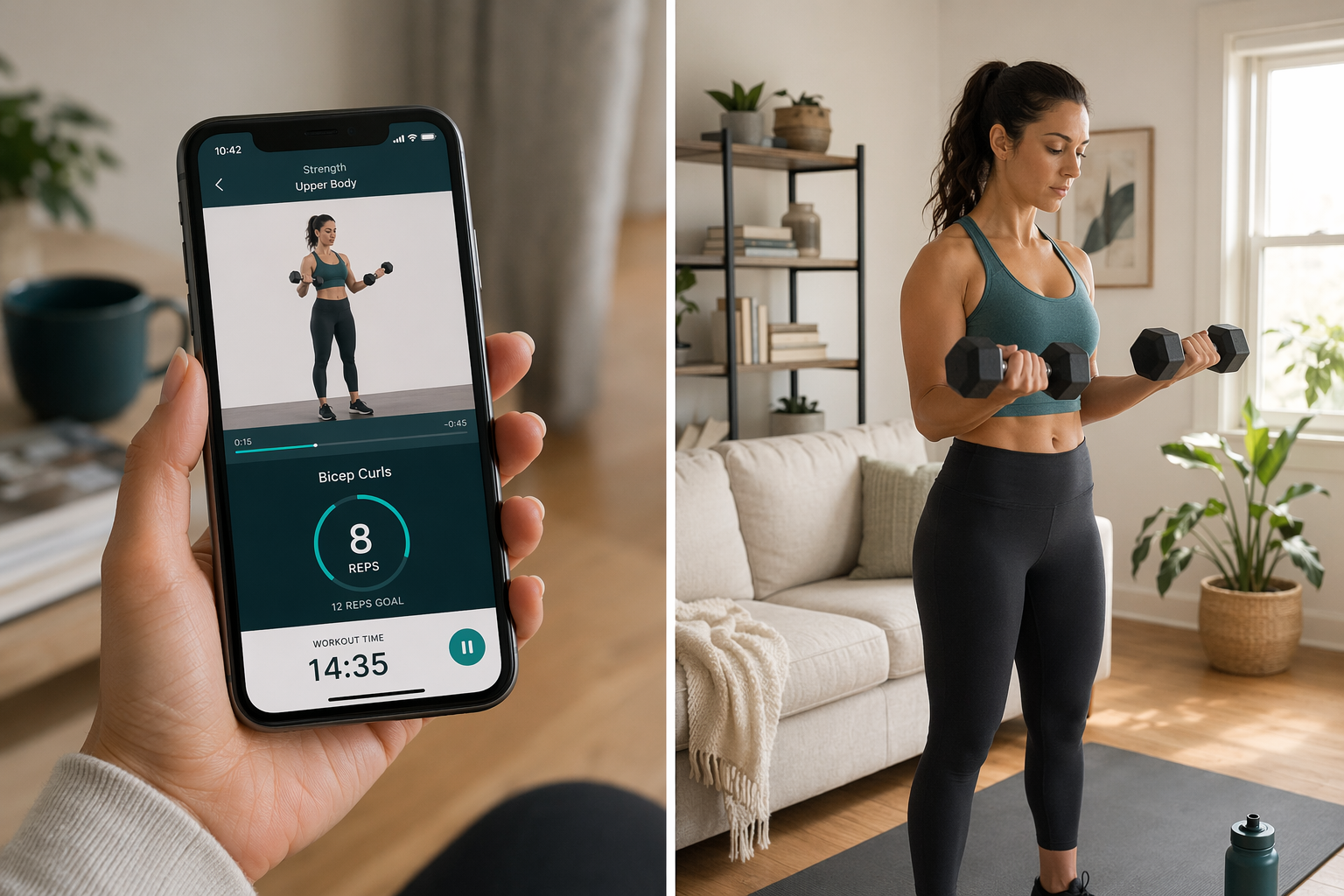
Why Most 'Fitness Apps for Women' Miss the Point on Strength
Open the app store and search for fitness apps marketed toward women. You will find a sea of programs promising to help you 'tone,' 'lean out,' or 'sculpt' — almost always built around HIIT circuits, light dumbbells, and bodyweight moves. The underlying message is that women should aim for a certain aesthetic rather than raw strength, and the programming reflects that bias.
The data shows this is a real gap. According to the American College of Sports Medicine, only 24% of women aged 19–65 follow recommended strength training guidelines, compared to 34% of men in the same age range. That is not a participation problem — it is a programming problem. When the apps women encounter default to cardio-dominant or light-resistance workouts, they are not being given a real path to building strength.
The good news is that 2026 has brought a shift. A growing number of apps now treat women's strength training as a serious discipline, with progressive overload at the core of their programming. This guide evaluates the apps that actually deliver on that promise, using a specific filter: how well does each app implement progressive overload, periodization, and real strength progression for women who want to lift heavy?
What to Look for in a Strength Training App: The Progressive Overload Filter
Progressive overload is the non-negotiable mechanism for muscle growth. It means systematically increasing the demands placed on your muscles over time — by adding weight, increasing reps, adding sets, or reducing rest periods. Without it, your body has no reason to adapt and get stronger.
When evaluating each app in this guide, we applied the following criteria:
- Progression mechanism: Does the app auto-increment weight and reps based on your performance, or do you have to track and adjust manually?
- Periodization support: Can the app handle different training phases (hypertrophy, strength, peaking) or is it a single linear program?
- Equipment tracking: Does the app let you specify what equipment you own (dumbbells, barbell, resistance bands, gym access) and generate workouts accordingly?
- Rep and weight logging: How easy is it to log your lifts, see historical data, and track progress over weeks and months?
- Recovery awareness: Does the app adjust future workouts based on your recovery status, or does it treat every session as a fresh start?
These criteria separate apps that are serious about strength from apps that simply offer a strength workout as one option among many. The apps below all score well on at least four of these five dimensions.
Best Overall for Personalized Strength: Fitbod
Fitbod earns the top spot because it solves the hardest problem in strength programming: personalization at scale. The app uses what it calls a Smart AI Workout Generator that takes your workout history, muscle recovery scores, and available equipment and generates a new, tailored session every time you train. That means if you crushed your leg day and your quads are still sore, the app will adjust the next session to prioritize a different muscle group or reduce volume.
For women who are serious about progressive overload, this is a game-changer. Fitbod's algorithm gradually increases resistance, reps, and sets based on your logged performance, ensuring you are always working at the right intensity without guessing. It also supports a wide range of equipment — from full home gyms to basic dumbbell sets — so you are not locked into a program that requires a barbell you do not own.
- Pricing: $15.99 per month or $95.99 per year
- Platforms: iOS, Android, Apple Watch
- Best for: Women who want AI-driven, adaptive programming that adjusts to their recovery and available equipment
- Progressive overload: Built-in auto-increment with recovery-aware adjustments
Best for Heavy Barbell Work: StrongLifts 5x5
If your goal is to get under a barbell and build a foundation of raw strength, StrongLifts 5x5 is the most straightforward path available. The program is built around five compound lifts: squat, bench press, deadlift, overhead press, and barbell row. You perform three workouts per week, each consisting of three exercises for five sets of five reps.
The progression model is simple and effective: every time you complete all five sets of five reps with good form, you add 5–10 pounds to the bar on your next session. This linear progression works exceptionally well for beginners and intermediates because it removes all decision fatigue. You do not need to wonder what to lift — the app tells you, and you execute.
StrongLifts 5x5 is described as a female-friendly weightlifting program for beginners ready to use a barbell. It does not have the AI personalization of Fitbod, but it does not need it — the simplicity is the feature. For women who want to focus on getting strong on the big lifts without overthinking programming, this is the app.
- Pricing: $9.99 per month or $39.99 per year
- Platforms: iOS, Android
- Best for: Beginners and intermediates who have access to a barbell and want a proven, no-frills strength program
- Progressive overload: Linear auto-increment based on completed sets
Best Free Strength Option: Nike Training Club
Nike Training Club (NTC) has undergone a significant shift in recent years. The app is now completely free to use, including content that was previously behind a paywall. That means you get access to hundreds of workouts designed by certified personal trainers and instructors, covering everything from bodyweight strength to dumbbell-focused sessions.
The trade-off is that NTC does not offer the same level of personalized progression as Fitbod or StrongLifts. You choose a workout from the library rather than having one generated for you based on your history. However, the app does include structured programs — such as 'Ignite Strength' or 'Build Muscle' — that follow a logical progression across several weeks.
For women who are not ready to commit to a paid subscription, NTC is an excellent entry point. The instruction quality is high, the exercise library is broad, and the price is unbeatable. If you eventually outgrow its programming depth, you can graduate to one of the paid apps below.
- Pricing: Free (no subscription required)
- Platforms: iOS, Android
- Best for: Beginners who want high-quality instruction at zero cost, or as a supplement to a structured program
- Progressive overload: Present in structured programs but less granular than dedicated strength apps
Best for Data-Driven Lifters: Jefit
Jefit has long been a favorite among lifters who want granular control over their training data. The app offers one of the most comprehensive exercise libraries available — over 1,400 exercises with demonstration animations — and allows you to build custom workouts from scratch or follow pre-built programs.
Where Jefit shines is in its logging and analytics. You can track every variable: weight, reps, sets, rest time, RPE (rate of perceived exertion), and even notes on how a particular set felt. The app then generates progress charts that show your strength increases over days, weeks, and months. For women who want to see the data behind their gains, this level of detail is invaluable.
Jefit's progressive overload is primarily manual — you decide when to increase weight or reps, and the app logs it. This gives you full control but requires you to understand the principles of progression. For lifters who already know how to program and just need a logging tool, Jefit is hard to beat.
- Pricing: Free tier available; Premium at $12.99 per month
- Platforms: iOS, Android
- Best for: Lifters who want detailed tracking, custom workout creation, and data analytics
- Progressive overload: Manual — you control the increments, the app logs the history
Best Value with Coaching: Caliber
Caliber occupies a unique space in the strength app market because it offers a genuine free tier that is not a stripped-down trial. The free-forever version includes over 500 exercises with demonstration videos, structured strength programs, and the ability to log your workouts. For many women, especially those who are comfortable following a program on their own, this is enough.
Where Caliber differentiates itself is in its tiered coaching structure. The Pro tier at $19 per month adds group coaching, where you can ask questions and get feedback from certified coaches within a community setting. The Premium tier at $200 per month provides one-on-one coaching with a dedicated coach who writes your programs, reviews your form, and adjusts your training based on your progress.
This structure makes Caliber the best value-to-feature ratio for women who want guidance but are not ready to spend $200 per month on personal coaching. You can start with the free tier, upgrade to Pro when you need more support, and only move to Premium if you want a fully personalized experience.
| Tier | Price | Key Features |
|---|---|---|
| Free | $0 | 500+ exercises, demonstration videos, structured strength programs, workout logging |
| Pro | $19 / month | All free features plus group coaching, community Q&A, and program adjustments |
| Premium | $200 / month | One-on-one coaching, custom program design, form review, and direct coach access |
Equipment Requirements at a Glance
Not every app works with every setup. The table below shows what equipment each app requires or assumes, so you can match the app to the gear you actually own — whether you train at home with a few dumbbells or have access to a full commercial gym.
| App | Minimum Equipment | Ideal Equipment | Home Gym Friendly? |
|---|---|---|---|
| Fitbod | Adjustable dumbbells or resistance bands | Full home gym or gym access (barbell, cable machine, bench) | Yes — adapts to what you own |
| StrongLifts 5x5 | Barbell, squat rack, bench | Same — the program is built around barbell lifts | Requires barbell and rack |
| Nike Training Club | None (bodyweight options available) | Dumbbells or resistance bands for strength workouts | Yes — most workouts need minimal gear |
| Jefit | Any equipment you log | Varies by program you choose | Yes — fully customizable |
| Caliber | Dumbbells or resistance bands | Full home gym or gym access | Yes — programs adapt to available gear |
How to Choose the Right App for Your Strength Goals
The best app for you depends on four factors: your experience level, your budget, the equipment you have access to, and how much guidance you want. Here is how the recommendations map to common reader profiles.
- You are a beginner with a barbell and want a proven program: Start with StrongLifts 5x5. The linear progression is simple and effective, and you will build a strong foundation in the big lifts.
- You have a home gym with dumbbells and want AI-driven personalization: Fitbod is the best choice. It adapts to your equipment and recovery, making it ideal for solo training.
- You want high-quality instruction at zero cost: Nike Training Club gives you access to professional programming without spending a cent. Use it to build a base, then upgrade when you need more structure.
- You love data and want to track every variable: Jefit gives you the most detailed logging and analytics. It is best if you already understand progressive overload and want a tool to manage it.
- You want coaching but are not ready for $200/month personal training: Caliber's free tier is genuinely useful, and the $19/month Pro tier adds group coaching at a fraction of the cost of one-on-one.
Prices checked as of June 2026. App pricing may change between publication and your access date. Always verify current pricing in the app store before subscribing.
This result comes from one real apartment under the stated conditions — it is a strong signal, not a guarantee your space will measure identically.
Builds this evidence supports
8-Week Compact Home Gym Strength Program: Build Muscle with Adjustable Dumbbells, Bands, and a Cable Tower
If you own a compact home gym setup—adjustable dumbbells, resistance bands, and a cable tower—this eight-week strength program shows how to program each resistance type for progressive overload without unlimited weight stacks.
Spot something off?
If this result didn't match your own space, let us know — floor-damage and noise claims carry real deposit-risk consequences if we get them wrong.