
AI vs. Human Coaching in Workout Apps: Which Model Actually Delivers Better Results in 2026?
The 2026 workout app market has split into two distinct coaching models: AI-driven adaptive programming at $10–$16/month and human-coached apps at $19–$200/month. This guide breaks down what each model actually delivers — personalization depth, accountability, form feedback, and value — so intermediate exercisers can choose the right fit for their experience level and budget.
The Two Coaching Models in 2026: AI Programming vs. Human Coaching
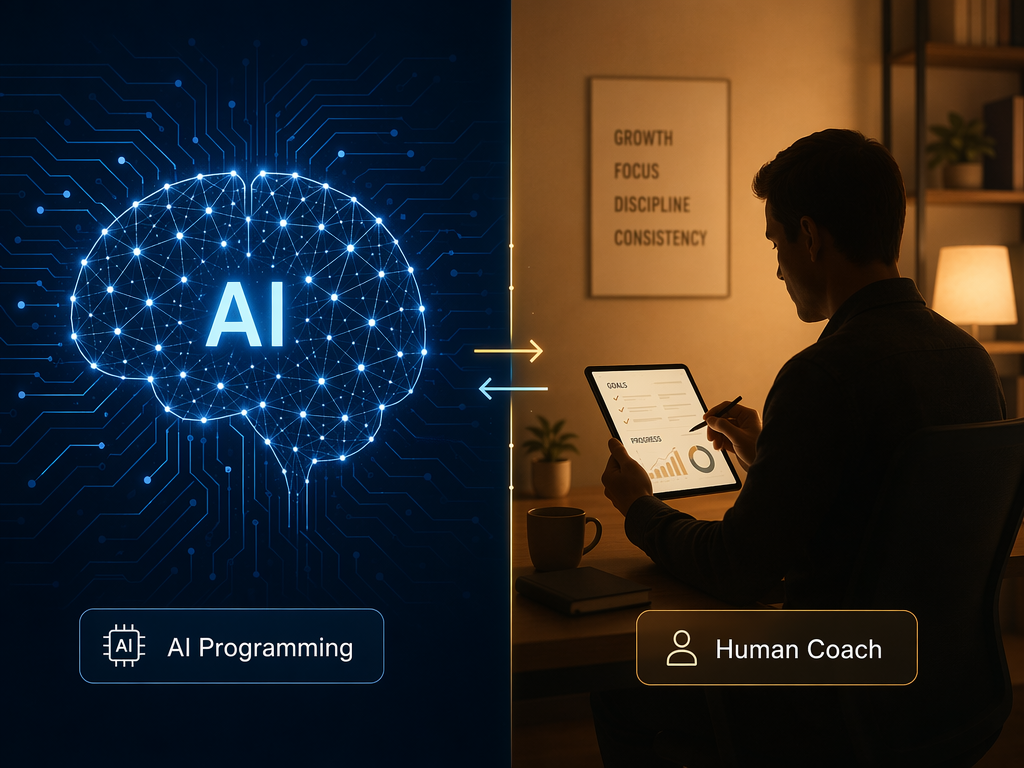
The fitness app market has matured past the era of simple workout timers and static PDF routines. In 2026, the landscape is defined by a clear bifurcation: apps that use artificial intelligence to program your training and apps that connect you with a human coach who does it for you. These two models operate on fundamentally different assumptions about what the user needs, and they come with very different price tags.
AI-driven apps like Fitbod, JEFIT, and TR[Ai]NER use algorithms that ingest your performance data — weights lifted, reps completed, rest intervals, and even recovery scores from connected wearables — to auto-adjust your next session. They cost between $10 and $16 per month on average. Human-coached apps like Future and Caliber Premium place a real trainer in your pocket, reviewing your logs, analyzing form videos, and sending daily check-ins. They cost between $19 and $200 per month.
Neither model is universally better. The right choice depends on your training experience, your budget ceiling, and whether you need programming help or accountability help more. This article breaks down what each model actually delivers so you can make an informed decision.
AI App Deep Dive: What $10–$16/Month Gets You
AI coaching apps use algorithms to generate and adjust training plans based on your logged performance. The sophistication of these algorithms varies significantly between apps, but the core value proposition is the same: you get a program that adapts to you without needing to pay a human to write it.
Fitbod ($15.99/month)
Fitbod uses an adaptive AI that tracks your training history and estimates muscle recovery to recommend exercises and adjust volume. If you log a heavy squat session on Monday, the algorithm knows your quadriceps are still recovering on Tuesday and will prioritize exercises that target fresh muscle groups. This recovery-aware programming is Fitbod's primary differentiator. It costs $15.99 per month, placing it at the higher end of the AI pricing spectrum.
JEFIT Elite ($12.99/month)
JEFIT's Elite subscription costs $12.99 per month or $69.99 per year. Its AI is built around a progressive overload algorithm that monitors your performance each session and tells you when to increase weight or reps. The app also introduced the North Star Progress Index (NSPI), a weekly score that reflects volume across muscle groups, movement balance, strength gains, and consistency. This gives you a single metric to track whether your training is actually progressing. JEFIT also has a library of 1,400+ exercises with HD video demos and a community of over 13 million users.
TR[Ai]NER by Element 26 (~$10/month with annual plan)
TR[Ai]NER is one of the more affordable AI options, costing as low as $10 per month with an annual plan ($99.99 per year). It allows you to create up to three free programs before committing to a subscription. However, expert testing from Garage Gym Reviews gave it a 1 out of 5 score for accountability, meaning the app does little to keep you on track between sessions. It is best suited for self-directed users who do not need external motivation.
Load Muscle (Free + Premium)
Load Muscle offers an AI-powered workout planner with a library of over 4,000 exercises. Its free tier includes AI-generated plans, while premium plans unlock additional features. This makes it one of the most accessible entry points for users who want to try AI programming without an upfront commitment.
For a more detailed comparison of how these apps stack up for strength training specifically, see our Best Strength Training Apps 2026 guide.
Human-Coached App Deep Dive: What $19–$200/Month Gets You
Human-coached apps replace the algorithm with an actual trainer who reviews your logs, provides form feedback, and adjusts your program based on qualitative input that AI cannot process — like how a set felt, whether you were fatigued from poor sleep, or if a particular exercise caused joint discomfort.
Future ($199/month)
Future is the most well-known human-coached app. For $199 per month, you are matched with a personal trainer who creates a training plan, reviews your form via video submissions, and sends daily check-ins. In expert testing, Future scored 5 out of 5 for both accountability and progressive overload. The cost is roughly 12 to 20 times higher than the average AI app, but the value proposition is clear: you get a dedicated professional who knows your name, your goals, and your limitations.
Caliber Premium ($200/month) and Caliber Pro ($19/month)
Caliber offers a tiered approach to human coaching. The free tier provides AI-driven programming. Caliber Pro costs $19 per month and adds group coaching — you get access to a coach who reviews community logs and provides general guidance. Caliber Premium costs $200 per month and provides one-on-one coaching where a coach reviews your individual logs, analyzes form videos, and can sync with nutrition tracking. This tiered structure makes Caliber a unique hybrid: you can start with AI programming and upgrade to human coaching as your needs evolve.
AI vs. Human Coaching: Side-by-Side Comparison
The table below summarizes the key differences across the decision dimensions that matter most for intermediate exercisers.
| Dimension | AI Coaching (Fitbod, JEFIT, TR[Ai]NER) | Human Coaching (Future, Caliber Premium) |
|---|---|---|
| Monthly cost | $10–$16 | $19–$200 |
| Personalization depth | Data-driven: adjusts based on logged weights, reps, and recovery estimates | Qualitative: coach adjusts based on form, feel, sleep, stress, and goals |
| Accountability level | Low to moderate: app notifications and streak tracking only | High: daily coach check-ins, log review, and direct messaging |
| Form feedback | None: relies on user knowing correct form | Video review: coach analyzes and corrects form |
| Best for experience level | Intermediate and advanced lifters who know their programming | Beginners who need form correction and structured guidance |
| Progressive overload | Automated: algorithm tells you when to increase weight or reps | Manual: coach decides based on qualitative and quantitative data |
Decision Framework: Which Model Fits Your Situation?
Use the following criteria to decide which model is right for you.
Choose AI coaching if:
- You are self-directed and have at least intermediate training experience.
- Your budget for a workout app is under $20 per month.
- You already know correct exercise form and do not need video review.
- You want a program that automatically adjusts based on your logged data.
Choose human coaching if:
- You are a beginner who needs form correction and structured guidance.
- You struggle with consistency and need daily accountability.
- You have the budget to spend $150–$200 per month on coaching.
- You want qualitative input from a professional who can adjust for factors like sleep, stress, and how a set felt.
For a deeper look at how experience level should influence your choice, see our guide on Best Strength Training Apps for Beginners, Intermediates, and Advanced Lifters. If you train at home and have specific equipment constraints, our article on How to Choose a Strength Training App When You Train at Home can help you narrow down the options further.
The Hybrid Middle: Apps That Offer Both AI and Human Coaching
Not every app forces you to choose one model exclusively. Caliber is the clearest example of a hybrid approach. Its free tier provides AI-driven programming. Its Pro tier at $19 per month adds group coaching with a coach who reviews community logs. Its Premium tier at $200 per month provides one-on-one coaching with full log review, form video analysis, and nutrition syncing.
This tiered structure lets you start with AI programming and upgrade to human coaching as your needs evolve. If you are a beginner who is unsure whether you need a coach, starting with Caliber's free tier is a low-risk way to test the waters. If you find that you need more accountability or form feedback, you can upgrade to Pro or Premium without switching apps.
For a broader look at when free tiers are sufficient and when paid coaching is worth the investment, see our Workout Apps for Beginners: Free vs. Paid guide.
Which Coaching Model Will You Choose?
The 2026 workout app market has given us two viable paths to better training. AI coaching offers scale, consistency, and affordability for self-directed lifters who know what they are doing. Human coaching offers personalized attention, form correction, and accountability for beginners and those who need external motivation.
There is no single right answer. The decision comes down to your experience level, your budget, and whether you need programming help or accountability help more. Use the comparison table and decision framework above to make your choice. If you are still unsure, start with a free AI tier — you can always upgrade to human coaching later.
For a deeper understanding of the distinction between apps that program your training and apps that simply log it, see our Best Fitness Plan Apps guide.
This result comes from one real apartment under the stated conditions — it is a strong signal, not a guarantee your space will measure identically.
Builds this evidence supports
No build currently links to this specific test. Browse all builds with a matching tag.
Spot something off?
If this result didn't match your own space, let us know — floor-damage and noise claims carry real deposit-risk consequences if we get them wrong.