
Best Strength Training Apps 2026: Complete Comparison Guide
This guide compares 8–10 top strength training apps across pricing, coaching type, progression science, and equipment flexibility. It helps home fitness enthusiasts, beginner-to-intermediate lifters, and equipment-conscious buyers choose the right app based on their specific needs and budget.
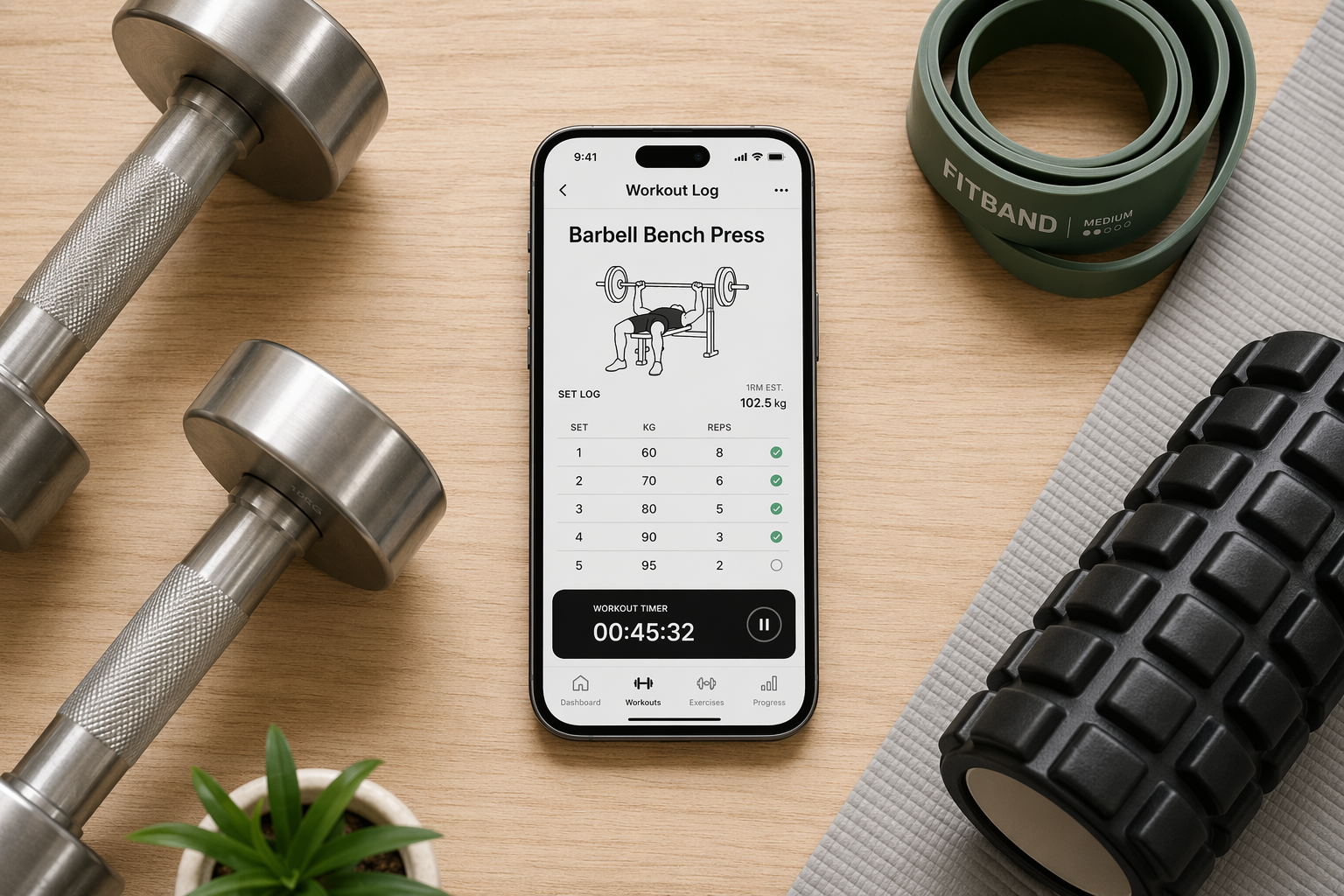
Why the Strength Training App Market Is Different in 2026
The fitness app market has crossed a significant threshold. In 2025, the sector generated $3.4 billion in revenue, representing a 24.5% year-over-year increase. With 540 million users and 888 million downloads in the same year, the audience for these tools is massive and still growing. But the real story isn't just the numbers — it's how the market has matured. The days of choosing between a glorified notepad and a $200/month personal trainer are over. In 2026, the strength training app landscape is a multi-tier ecosystem with distinct categories that serve very different needs.
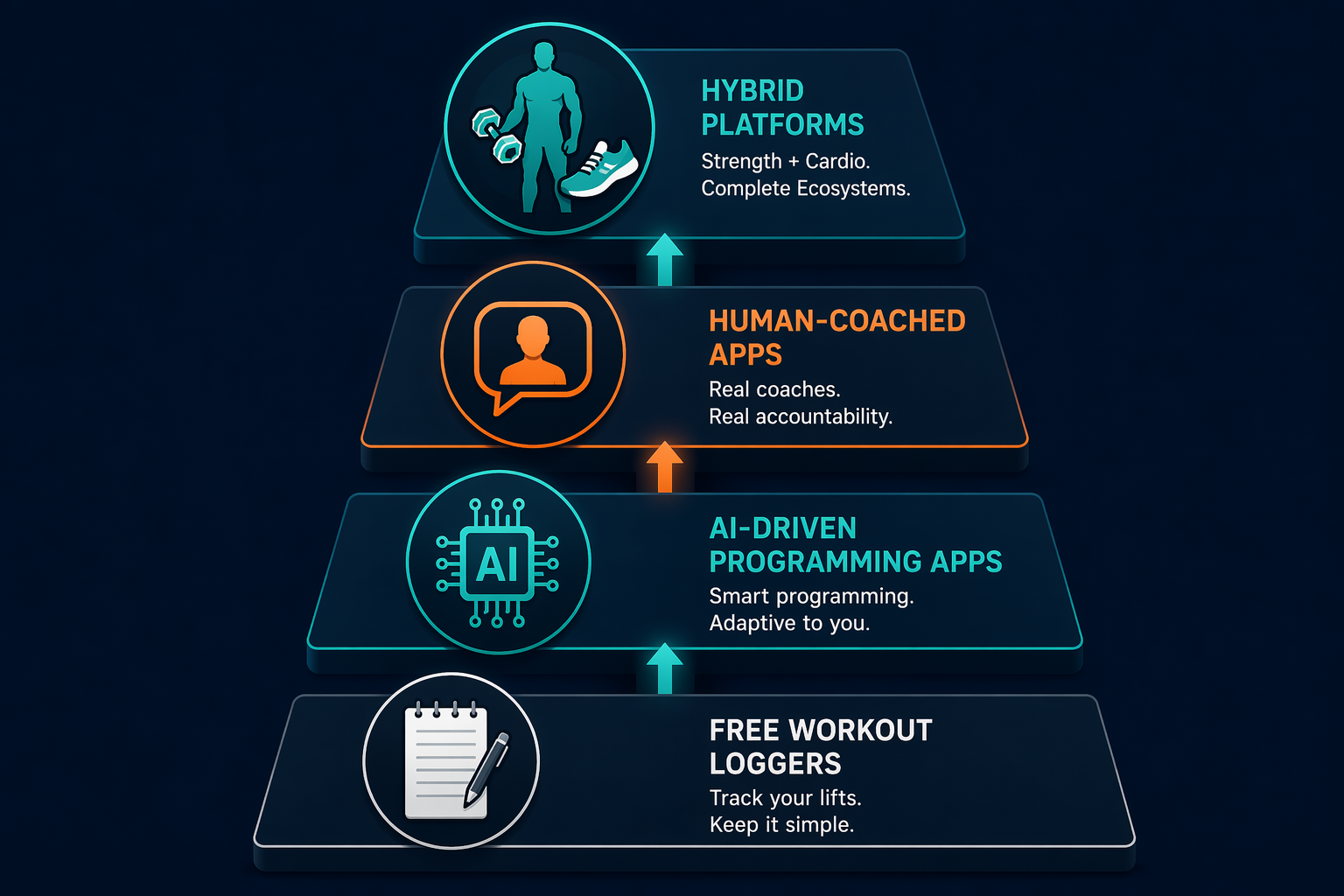
Today's market breaks down into four distinct tiers. At the base are free trackers like Hevy and Strong — excellent for logging workouts but offering no programming guidance. Above them are AI-driven programming apps like Fitbod and JuggernautAI, which use algorithms to build and adjust training plans based on your performance. Higher up are human-coached services like Future and Caliber Premium, where real coaches design and oversee your program. Finally, hybrid platforms like Edge and Shred blend strength training with conditioning and running, all within a single personalized plan.
The core thesis of this guide is simple: the best app for you depends entirely on the trade-offs you're willing to make between progression science (how well the app applies the principle of progressive overload), equipment flexibility (can it handle your home gym setup?), coaching depth (AI vs. human vs. none), and total cost. A powerlifter following a specialized program has different needs than a beginner building their first routine with a single pair of dumbbells. This guide evaluates 8-10 leading apps across these dimensions to help you find the right fit.
Quick-Reference Comparison Table: Top Strength Training Apps at a Glance
The table below summarizes the key specs for each app. Scores are from Garage Gym Reviews' expert testing, which uses a proprietary 1-5 scale across categories including trial period, ease of use, accountability, instruction, and progressive overload. Pricing data is from Q2 2026 sources and may vary by region or platform.
| App | Starting Price | Coaching Type | GGR Score | Progressive Overload | Best For |
|---|---|---|---|---|---|
| Shred App | $9.99/mo | AI + Hybrid | 4.3/5 | Adaptive AI | Overall value, muscle gain |
| Caliber | Free / $19/mo Pro | AI + Human (Premium) | 4.6/5 | 5/5 (Coach-set weekly goals) | Customization, beginners |
| Future | $199/mo | Human 1:1 | 4.3/5 | 5/5 | Personal training at home |
| Fitbod | $12.99/mo | AI | 3.8/5 | AI-driven adjustments | Equipment adaptation |
| Hevy | Free / $2.99/mo Pro | Logger | 3.8/5 | 1/5 (User-manual) | Free tracking |
| JuggernautAI | $35/mo | AI | 4/5 | 5/5 | Powerlifting, advanced lifters |
| Boostcamp | Free / $14.99/mo Pro | Program Library | 4.2/5 | Program-dependent | Elite coach programs |
| Edge | Not disclosed | Human + AI Hybrid | 5/5 (Edge rating) | Integrated | Hybrid training (strength + cardio) |
| Strong | Free / ~$4.99/mo | Logger | 4/5 (Edge rating) | None | Simple, fast logging |
Detailed App Profiles: What Each App Does Best
Each app in this comparison has a distinct philosophy about how strength training should be programmed and delivered. Understanding these differences is more important than comparing feature checklists.
Shred App: Best Overall Value
Shred App earned a GGR score of 4.3/5 and is priced at $9.99/month — well below the average workout app cost of $34/month. Its adaptive AI adjusts training based on user feedback, making it a strong contender for muscle gain. Fortune's review also rated it 4/5 for muscle gain, noting a 7-day free trial and premium plans at roughly $14.99-$19.99/month or ~$119/year. The core value proposition is simple: it delivers AI-driven programming at a fraction of the cost of human-coached alternatives.
Caliber Strength Training: Best Customization and Highest Score
Caliber earned the highest GGR score of any tested app at 4.6/5, with perfect 5/5 scores for trial period (a free version is available), accountability, instruction, and progressive overload. Its pricing tiers are generous: a free-forever version, Pro at $19/month, and Premium at $200+/month for 1:1 human coaching. For beginners, Garage Gym Reviews named it the top pick, citing its 4.5/5 instruction score and coach-set weekly goals that ensure progressive overload is actually applied. Caliber is the rare app that scales from free tracking to full-service coaching within a single platform.
Future: Best 1:1 Human Coaching
At $199/month, Future is the most expensive app on this list, but it's also the closest thing to having a personal trainer in your pocket. It earned a 4.3/5 GGR score with perfect marks for accountability, workout variety, progressive overload, and equipment demands. Coaches design workouts based on a video walkthrough of your gym space — a level of personalization that AI alone cannot match. When you consider that in-person personal training costs $50-$150 per session, Future's monthly fee becomes more reasonable for those who need structured accountability.
Fitbod: Best AI for Equipment Adaptation
Fitbod scored 3.8/5 from GGR but earned a 5/5 for equipment demands — the highest score in that category. Its AI analyzes every logged set and adjusts future workouts based on performance and recovery. The Edge review rated it 4.5/5, noting its exercise library of over 900 movements with video demonstrations. At $12.99/month, it's a mid-range option that excels at adapting to whatever equipment you have, making it a strong choice for home gym users with evolving setups.
Hevy: Best Free Tracker
Hevy scored 3.8/5 from GGR, with a free version and Pro at $2.99/month. The Edge review rated it 4/5, praising its clean interface, free core features including exercise logging and 1RM calculations. However, it scored 1/5 for both accountability and progressive overload — meaning it's a tracker, not a coach. If you already know how to program your own training, Hevy is an excellent, low-cost logging tool. If you need guidance on what to do each session, it will not provide it.
JuggernautAI: Best for Powerlifters and Advanced Lifters
JuggernautAI scored 4/5 from GGR, with a 5/5 for progressive overload — tied for the highest in that category. Priced at $35/month with a 14-day free trial, it's designed specifically for lifters who follow periodized strength programs. Its AI is built around the principles of the Juggernaut Training System, making it ideal for those focused on the squat, bench press, and deadlift. It's less suitable for general fitness or casual training.
Boostcamp: Best for Accessing Elite Coach Programs
Boostcamp scored 4.2/5 from GGR, with a free version and Pro at $14.99/month. Its unique value is access to programs from elite coaches like Dr. Eric Helms and Jim Wendler — names you would normally pay hundreds for coaching from directly. With over 1,000 pre-made programs filtered by fitness level, it's a library of proven training methodologies rather than an AI that generates workouts on the fly. Garage Gym Reviews rated it best for strength training beginners, despite its appeal to advanced lifters.
Edge: Best for Hybrid Training
Edge received a 5/5 rating from its own review platform, programming strength, running, and conditioning into one personalized weekly plan. It offers 24/7 access to real human coaches — not chatbots — and Apple Watch guided workouts for hands-free gym sessions. For athletes who want a single app that handles both barbell work and cardio without juggling multiple platforms, Edge fills a gap that most strength-only apps ignore.
Strong: Best for Simple, Fast Logging
Strong scored 4/5 from Edge's review, positioning it as a simple, fast logger with no coaching features. It's the digital equivalent of a workout notebook — excellent for experienced lifters who just need to record sets and reps quickly between exercises. It does not program workouts, track progressive overload, or provide instruction. For its intended use case, it's effective; for anyone needing guidance, it falls short.
Key Evaluation Criteria: What to Look for in a Strength Training App
Not all strength training apps are created equal, and the differences go far beyond price. Here are the five criteria that matter most when evaluating which app will actually help you get stronger.
1. Progressive Overload Implementation
Progressive overload — the gradual increase of stress placed on the body during exercise — is the single most important principle in strength training. An app that does not implement it is not a training app; it's a logging app. Apps like Caliber, JuggernautAI, and Shred score highest here because they automatically adjust weights, sets, and reps based on your performance. Hevy and Strong, by contrast, leave this entirely to the user. If you don't know how to program progressive overload yourself, you need an app that does it for you.
For a deeper look at which apps actually program your training versus just logging it, see our guide on programming vs. logging apps.
2. Equipment Flexibility
Home gyms are not commercial gyms. Your setup might include a single pair of adjustable dumbbells, a barbell and plates, or a full power rack. The best apps adapt to what you have. Fitbod earned a perfect 5/5 for equipment demands because its AI can generate effective workouts from whatever equipment you specify. Future's coaches design programs after a video walkthrough of your space. If you train with limited gear, an app that assumes you have access to a full gym will be frustrating and useless.
For specific recommendations on apps that work well with minimal equipment, read our guide on strength training apps for home gyms with limited equipment.
3. Instruction Quality
Good instruction prevents injury and ensures you're actually working the target muscles. Caliber scored 4.5/5 for instruction from GGR, while Nike Training Club offers high-quality video instruction for free. Apps with video demonstrations for every exercise (like Fitbod's library of 900+ movements) provide a safety net for beginners. Pure loggers like Hevy and Strong offer no instruction — they assume you already know proper form.
4. Accountability Features
Accountability is what separates apps you use from apps you delete. Future and Caliber Premium offer human coaches who check in on your progress. Caliber's free version and Shred use in-app notifications and streak tracking. Hevy and Strong scored 1/5 for accountability — they log your workouts but do nothing to ensure you actually do them. If you struggle with consistency, prioritize an app with strong accountability features.
5. Trial Period and Cost Transparency
The average workout app costs $34/month, but the best strength-focused apps range from free to $199/month. A generous trial period lets you test the app's programming philosophy before committing. JuggernautAI offers 14 days. Shred offers 7 days. Caliber's free version is essentially a permanent trial of its core features. Always check whether the trial auto-renews and what the cancellation policy is before entering payment information.
Decision Framework: Which App Is Right for You?
The right app depends on who you are and what you need. Use the table below to match your profile to the best starting point.
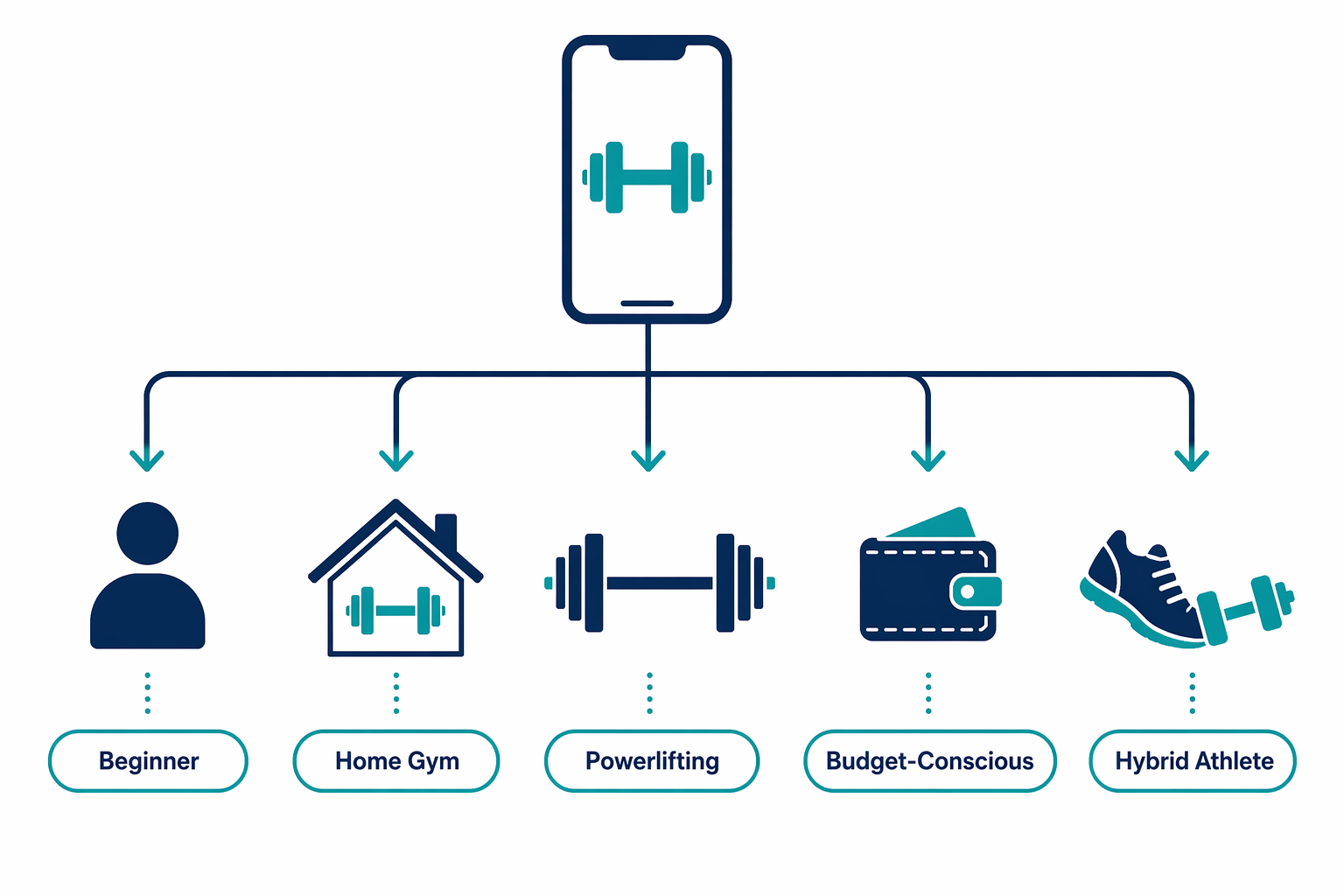
| User Profile | Primary Need | Top Recommendation | Runner-Up |
|---|---|---|---|
| Beginner | Guidance and safety | Caliber (free version) | Shred App |
| Home gym user with limited equipment | Equipment adaptation | Fitbod | Future |
| Powerlifter / advanced lifter | Periodized strength programming | JuggernautAI | Boostcamp (Pro) |
| Budget-conscious | Free or low-cost tracking | Hevy (free) | Caliber (free version) |
| Hybrid athlete (strength + cardio) | Integrated training plan | Edge | Shred App |
| Needs 1:1 human coaching | Accountability and personalization | Future | Caliber Premium |
For a more detailed breakdown by experience level, see our guide on strength training apps for beginners, intermediates, and advanced lifters. If you're completely new to strength training and unsure where to start, our beginner's decision framework for choosing your first workout app provides a simpler, more foundational approach.
Frequently Asked Questions
Are paid strength training apps worth it compared to free ones?
It depends on your knowledge level. If you understand how to apply progressive overload, structure your own workouts, and track your progress, a free logger like Hevy is perfectly adequate. If you need guidance on what to do each session, paid apps like Caliber ($19/mo Pro) or Shred ($9.99/mo) provide programming that would cost significantly more if delivered by a human coach. The average paid workout app costs $34/month, which is still less than a single in-person personal training session ($50-$150).
Can a strength training app replace a personal trainer?
For programming and accountability, yes — apps like Future and Caliber Premium come close to replicating the coaching experience. For form correction and hands-on spotting, no. No app can watch you squat and tell you your knees are caving in. If you're new to lifting, consider using an app for programming while also learning proper form from a qualified professional or reputable video resources.
How important is progressive overload in a strength training app?
It is the most important feature. Progressive overload is the physiological mechanism that causes muscle growth and strength gains. An app that does not implement it — like Hevy or Strong — is a logging tool, not a training tool. If you don't know how to systematically increase training stress on your own, you need an app that does it for you. Caliber, JuggernautAI, and Shred all scored highly on this metric in Garage Gym Reviews' testing.
What's the best strength training app for limited equipment?
Fitbod is the strongest choice here, earning a perfect 5/5 for equipment demands. Its AI can generate effective workouts from a minimal setup — even a single pair of dumbbells. Future is also a strong option because its coaches design programs based on a video walkthrough of your actual equipment. For a full list of recommendations, see our dedicated guide on strength training apps for home gyms with limited equipment.
Final Verdict: The Best Strength Training App for Most People
If we had to recommend a single app for the widest range of users, it would be Caliber Strength Training. It earned the highest GGR score (4.6/5), offers a genuinely useful free version, scales to Pro ($19/mo) and Premium ($200+/mo) as your needs grow, and scored perfectly on progressive overload, accountability, and instruction. It works for beginners and intermediate lifters alike, and its equipment flexibility is strong.
However, the "best" app is highly personal. If your primary constraint is budget, Shred App at $9.99/month delivers AI-driven programming at a fraction of the average cost. If you need human accountability, Future at $199/month is the closest thing to a personal trainer in your pocket. If you're a powerlifter, JuggernautAI is purpose-built for your goals. If you just need a clean logging tool and already know how to program, Hevy is free and excellent at what it does.
This result comes from one real apartment under the stated conditions — it is a strong signal, not a guarantee your space will measure identically.
Builds this evidence supports
No build currently links to this specific test. Browse all builds with a matching tag.
Spot something off?
If this result didn't match your own space, let us know — floor-damage and noise claims carry real deposit-risk consequences if we get them wrong.