
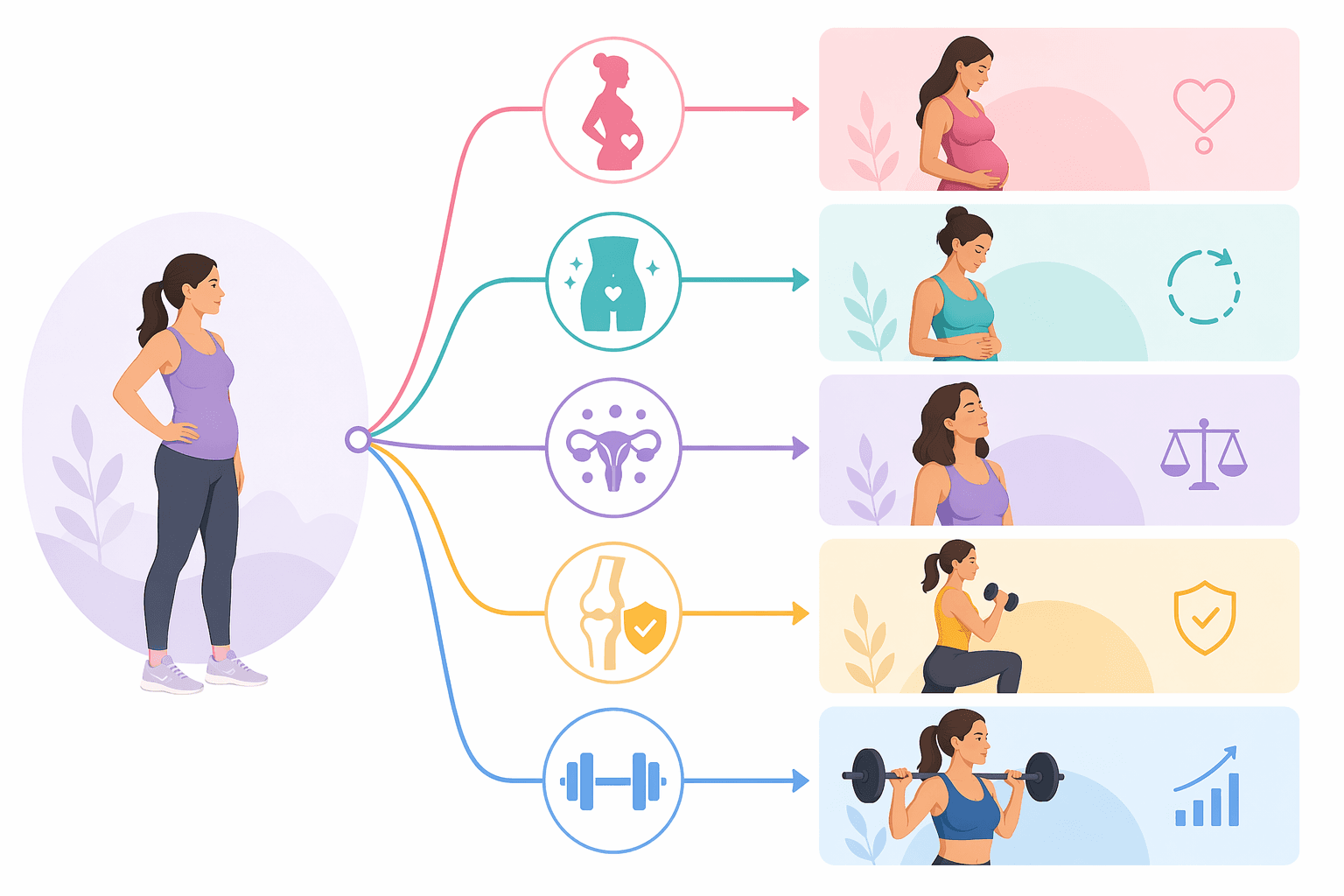
Most “best workout apps for women” roundups still sort the choice into familiar buckets: best overall, best free, best for strength, best for beginners, best for variety. That structure is tidy, but it dodges the harder question many readers are actually asking: which app fits my body right now? The major comparison pages from CNET, Forbes Health, Women’s Health, Good Housekeeping, and Garage Gym Reviews all use some version of the conventional roundup format rather than organizing recommendations primarily by life stage. [1][2][3][4][5]
That matters because “for women” is not a training method. A pregnant user needs different guardrails than someone chasing a deadlift PR. A postpartum user may need core and pelvic floor progression before high-intensity intervals. A perimenopausal user may be dealing with joint tolerance, sleep disruption, and shifting recovery capacity. And someone who simply wants to get stronger may not need a women-branded app at all; Garage Gym Reviews notes that most strength exercises are not meaningfully different across genders. [5]
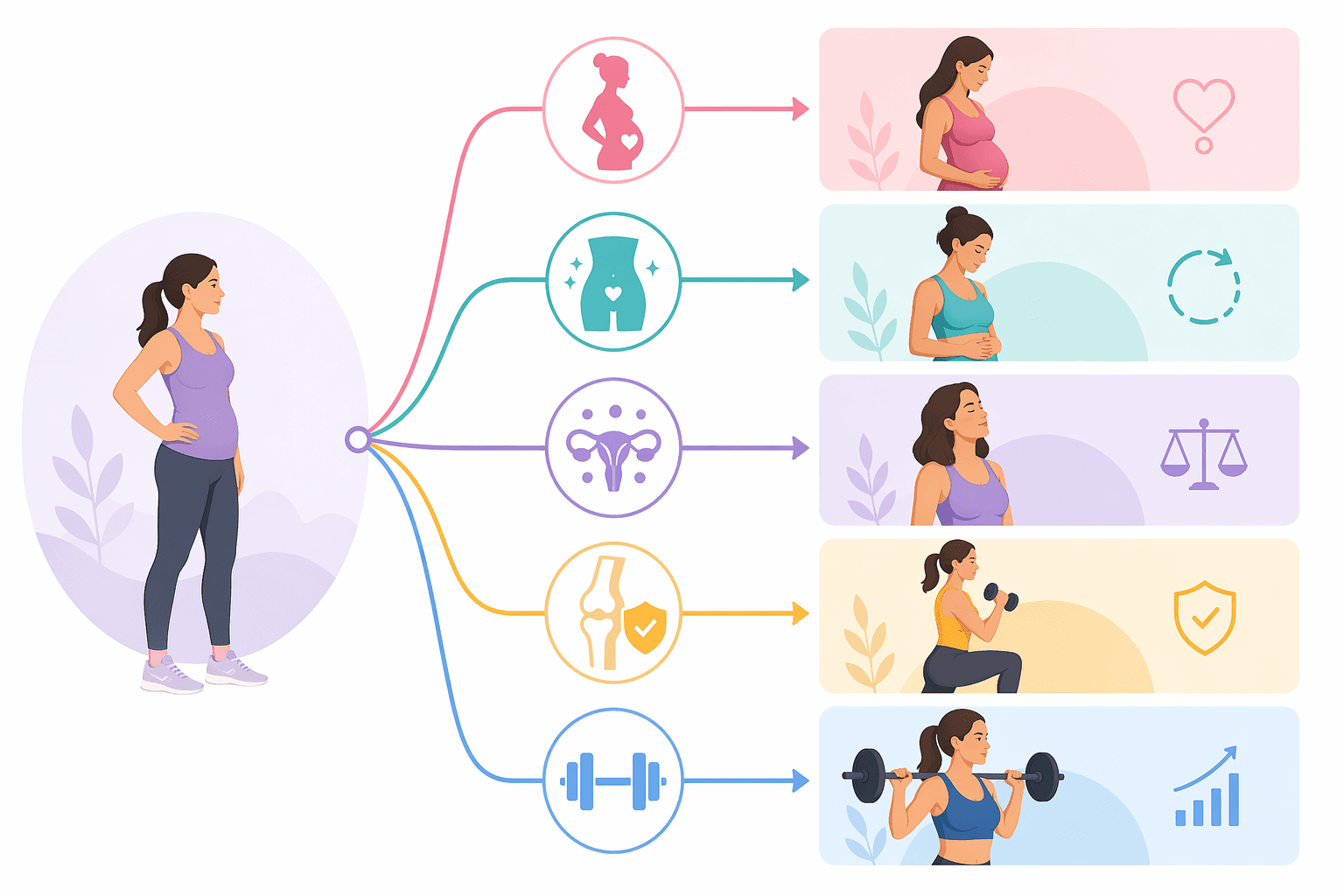
Start With The Stage, Then Pick The App
If you are comparing apps today, the fastest filter is not brand polish or library size. It is whether the app’s programming logic changes when your body’s constraints change. A large class catalog can be useful, but it does not automatically answer whether the instructor knows how to modify loaded core work in pregnancy, slow down postpartum progression, or account for joint sensitivity in perimenopause.
| If this is your current stage | Look for this first | Apps worth comparing |
|---|---|---|
| Trying to conceive or cycle-aware training | Optional cycle-phase suggestions, presented as guidance rather than certainty | Obé Fitness, LES MILLS+ |
| Pregnant | Trimester-specific programming, prenatal-qualified instruction, pelvic-floor-aware core work | Bloom Method |
| Postpartum | Recovery-first progressions, pelvic floor awareness, no rush back to high-pressure core work | Bloom Method |
| Perimenopause | Hormone-aware programming, joint-conscious strength, recovery-aware intensity | Jennis |
| Joint-sensitive strength training | Strength plans designed around joint tolerance and sustainable loading | Evlo Fitness |
| General strength | Clear progressive strength structure, not just a women-branded workout library | A dedicated strength app or program |
Subscription prices, trial windows, and annual-plan discounts move often enough that they should be checked close to purchase. Treat cost as the second pass: first decide which physiological problem the app needs to solve, then compare the current price, platform support, and cancellation terms.
Trying To Conceive Or Cycle-Aware Training
Cycle-syncing is one of the more interesting developments in women-focused fitness apps, and it is also one of the easiest to oversell. Obé Fitness and LES MILLS+ have both been called out for menstrual-cycle-aware features that adjust training suggestions around cycle phases. [1] HealthyWomen describes the evidence around menstrual fitness apps and cycle-based training as partially supported rather than settled. [6]
That makes cycle-syncing a useful optional feature, not a rulebook. If you are trying to conceive, tracking patterns in energy, symptoms, and recovery may help you choose when to push and when to keep training gentler. But an app should not imply that every person with a menstrual cycle needs the same intensity pattern on the same days, or that cycle phase alone can explain performance, fatigue, or pain.
For this stage, Obé Fitness and LES MILLS+ are worth a look if you want cycle-aware prompts layered onto a broader class library. They are less compelling if you need medicalized fertility support, diagnosis-specific exercise guidance, or a program that changes around pregnancy once conception happens.
Pregnancy: Where Generic Fitness Apps Get Riskier
Pregnancy is the point where “just modify as needed” becomes too thin. The issue is not that pregnant people are fragile. It is that the training variables actually change: pressure management, breath, position, impact, fatigue, pelvic floor symptoms, abdominal wall changes, and trimester-specific tolerance all matter more than whether a workout looks gentle from the outside.
Bloom Method stands out here because its prenatal programming is described as trimester-specific and pelvic-floor-conscious, with content designed by a pelvic health physical therapist and certified prenatal specialists. CNET identifies Bloom Method as a strong pregnancy-focused option rather than merely a general app with a prenatal playlist. [1]
That distinction is the reason Bloom Method deserves more attention than a larger app that happens to have a few pregnancy classes. A prenatal plan should not leave the user to guess whether a core exercise is appropriate, whether a breathing cue is helping or increasing pressure, or whether an instructor understands common pelvic floor concerns. The value is in the programming logic, not in the softness of the branding.
- Prioritize apps that state who built the prenatal programming and what qualifications they hold.
- Look for trimester-specific adjustments rather than one generic “pregnancy-safe” label.
- Check whether core and pelvic floor cues are integrated throughout the program, not isolated in one educational class.
- Avoid apps that treat pregnancy modifications as a quick disclaimer before returning to standard programming.
Even the best prenatal fitness app is not a substitute for individualized medical care. If you have bleeding, pain, dizziness, placenta-related restrictions, pelvic floor symptoms, a high-risk pregnancy, or provider-specific limitations, the app should sit underneath your clinician’s guidance, not compete with it.
Postpartum: Recovery Is Programming, Not A Waiting Period
Postpartum fitness is often mishandled in two opposite ways: either the user is treated as permanently delicate, or she is rushed back into planks, crunches, jumping, and high-intensity circuits as soon as she is cleared for exercise. Neither approach is especially useful. Clearance is not the same as restored coordination, load tolerance, sleep, or pelvic floor readiness.
This is another reason Bloom Method belongs near the top of the shortlist for pregnancy and postpartum users. Its pelvic-floor-conscious positioning and prenatal/postnatal focus are a better match for early recovery than a general-population app that simply tags a workout as low impact. [1]
The app you choose should make the first few steps smaller, not just easier. A useful postpartum progression teaches breathing and pressure management, restores core coordination, rebuilds strength gradually, and gives the user a way to notice symptoms before intensity climbs. The red flag is an app that sells “bounce back” energy while leaving the user to self-police leaking, heaviness, doming, pain, or fatigue.
Tester praise for Bloom Method is useful, especially when it comes from reviewers who actually tried the app, but it should still be treated as app-review evidence rather than broad clinical outcome data. The practical takeaway is narrower and stronger: Bloom Method appears better aligned with prenatal and postpartum needs than most general fitness apps because its structure centers the exact issues those users are trying not to ignore.
Perimenopause: The Missing Category In Most App Roundups
Perimenopause is where the current app landscape looks especially thin. In the surveyed CNET, Forbes Health, Women’s Health, Good Housekeeping, and Garage Gym Reviews roundups, only 2 of more than 12 apps were identified as offering perimenopause-specific content, even though women in this stage are a fast-growing fitness audience. [1][2][3][4][5]
Jennis is the app that most clearly belongs in this lane. Founded by Olympic cyclist Jessica Ennis-Hill, it offers programming that addresses hormonal shifts and perimenopause-specific training needs, and CNET is one of the few major roundups to mention it in that context. [1]
That scarcity is not a small editorial oversight. A perimenopausal user may be balancing strength goals with changes in sleep, recovery, joint tolerance, cycle regularity, temperature regulation, and energy. A generic “best for women over 40” label does not tell her whether the program actually changes anything about exercise selection, intensity, progression, or rest.
Jennis earns its place because it names the stage and builds around it. That does not mean every perimenopausal person needs a specialized app, or that hormone-aware programming is a guarantee of better results. It means that if symptoms are affecting training consistency, recovery, or confidence, an app that acknowledges the stage directly is more relevant than a general library that quietly assumes the same weekly plan works for everyone.
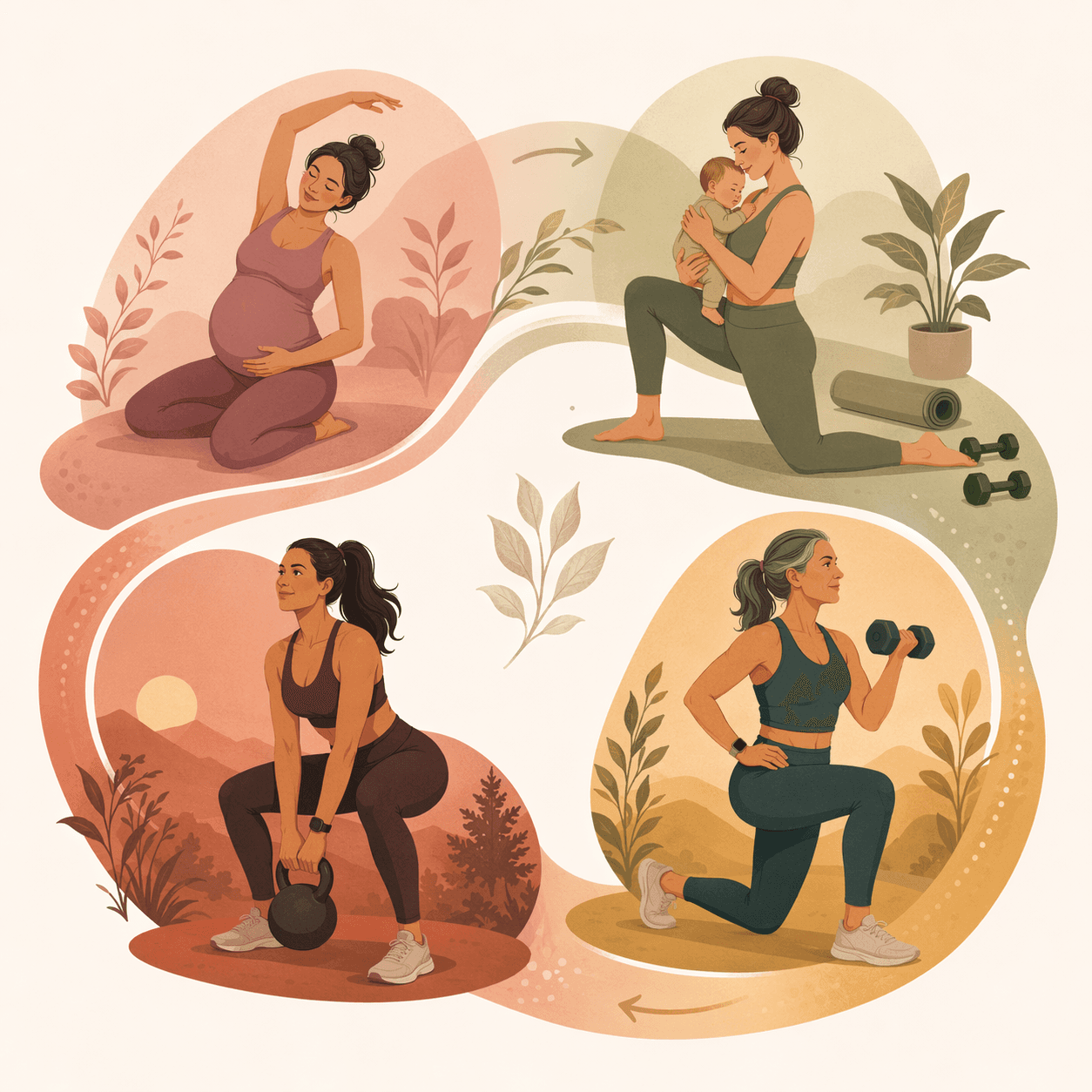
Joint-Friendly Strength: When The Main Problem Is Tolerance
Some users do not need pregnancy, postpartum, or perimenopause programming. They need strength training that does not punish their joints. Evlo Fitness is the clearest example in the research set: CNET describes it as a physical-therapist-created app built around joint-friendly strength programming and common injury patterns in women. [1]
This is a different promise from “low impact.” Low impact usually describes what happens at the floor: less jumping, less pounding, fewer explosive moves. Joint-friendly strength should go further and ask how exercises are selected, how volume accumulates, which ranges of motion are emphasized, and whether the program leaves room for sustainable progressive loading.
Evlo is most relevant if you have repeatedly bounced off strength programs because your knees, hips, shoulders, wrists, or back object before your muscles are meaningfully challenged. As with Bloom Method, reviewer praise is not the same as large-scale outcome data. But the programming premise is specific enough to matter: it is solving for tolerance, not just motivation.
General Strength: You May Not Need A Women-Specific App
If you are not pregnant, newly postpartum, trying to train around cycle symptoms, navigating perimenopause, or managing joint tolerance, the best workout app for you may simply be the one with the clearest strength progression. This is where the gendered framing becomes least helpful. Good Housekeeping, CNET, and Garage Gym Reviews all include broad fitness and strength apps in their women-focused coverage, and Garage Gym Reviews explicitly notes that most strength exercises are universal across genders. [1][4][5]
For general strength, look past the women’s marketing and inspect the plan itself. Does the app tell you what to do next week based on what you did this week? Does it progress load, reps, sets, tempo, or exercise difficulty in a way you can follow? Can you repeat movements long enough to improve, or are you constantly being shuffled into novelty workouts?
A huge class library can be enjoyable, especially for people who need variety to stay consistent. But variety is not the same as progressive training. If the goal is strength, the app should make progression visible rather than asking you to infer it from sweat, soreness, or instructor enthusiasm.
How To Choose Without Getting Distracted
The right app should answer your current constraint before it entertains you. That does not make production quality irrelevant; clear video, reliable audio, and an easy interface all help. They just come after the main fit question.
- If you are pregnant, start with qualified prenatal programming and trimester-aware modifications.
- If you are postpartum, choose recovery-first progressions that respect core and pelvic floor rebuilding.
- If you are in perimenopause, look for programming that explicitly addresses hormonal shifts, recovery, and joint tolerance.
- If cycle symptoms affect training, try cycle-aware features as optional guidance, not as settled science.
- If you simply want to get stronger, choose the clearest progressive strength plan rather than the app most aggressively marketed to women.
That is the cleaner way to read this category. The question is not whether an app is “for women.” The question is whether its methodology matches what this stage actually requires.
References
- The Best Workout Apps for Women to Stay Active and Motivated — CNET
- The 10 Best Workout And Fitness Apps Of 2026 — Forbes Health
- The 12 Best Workout Apps Of 2025: Fitness Apps Trainers Actually Use — Women’s Health
- 10 Best Workout Apps of 2026, Tested by Personal Trainers — Good Housekeeping
- Best Workout App For Women: Our Expert Picks (2026) — Garage Gym Reviews
- Menstrual fitness apps that can help your goals — HealthyWomen
Comments
Join the discussion with an anonymous comment.