
Why Generic Roundups Fail a Home Gym
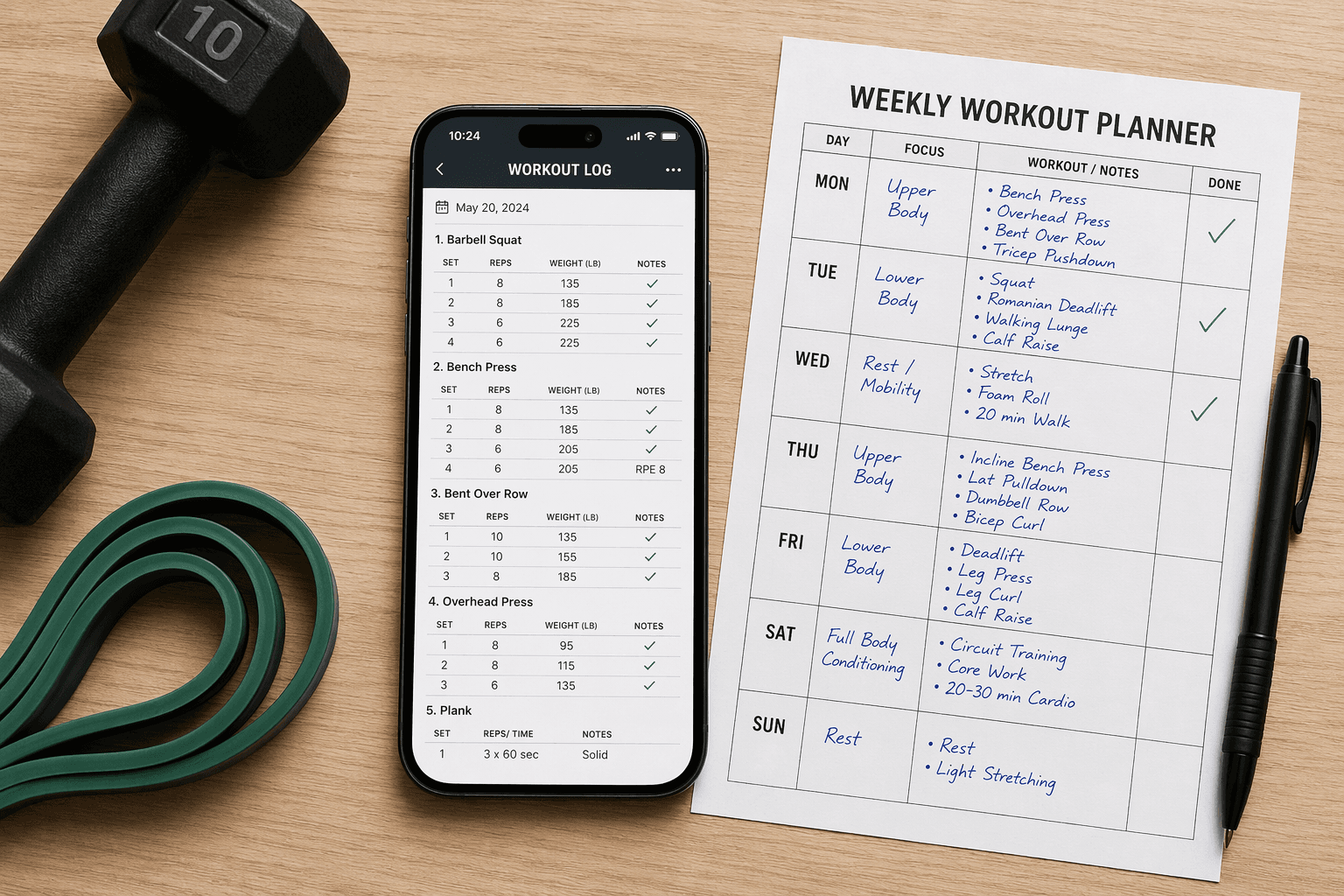
I clicked on a roundup of the best free workout apps. Thirty seconds in, I knew it wasn’t written for me. The writer assumed I had access to a full gym: barbells, a squat rack, cable towers. My “home gym” is a spare bedroom with one adjustable dumbbell and a set of resistance bands. I don’t go to a commercial gym. I don’t need an app that expects me to. Most roundups evaluate apps the same way — by how well they serve a gym-goer with unlimited equipment. They don’t ask whether the app can filter exercises by what you actually own, work offline in a basement, or generate a plan for a dumbbell-only kit. That gap is exactly why I wrote this.
Instead of another star-rating table, I started with three constraints that actually matter when you train at home:
- Space — apartment, garage, spare room. Does the app offer modifications for tight quarters or no-ceiling exercises?
- Budget — free means no hidden paywalls, no ads, no signup required for core features.
- Experience — beginner, intermediate, advanced. Does the app adapt or does it throw a generic program at you?
I also decided to treat every self-reported number — Hevy’s 14 million users, LoadMuscle’s 4,000 exercises — as useful leads, not verified facts. The companies provide those numbers on their own promotional pages. I’ll cite them, but I won’t let them carry the argument. The real value is in how an app handles your actual setup. For a deeper look at what to check when evaluating any workout tracker, see our buyer’s framework.
LoadMuscle: For When the Only Limit Is Your Gear
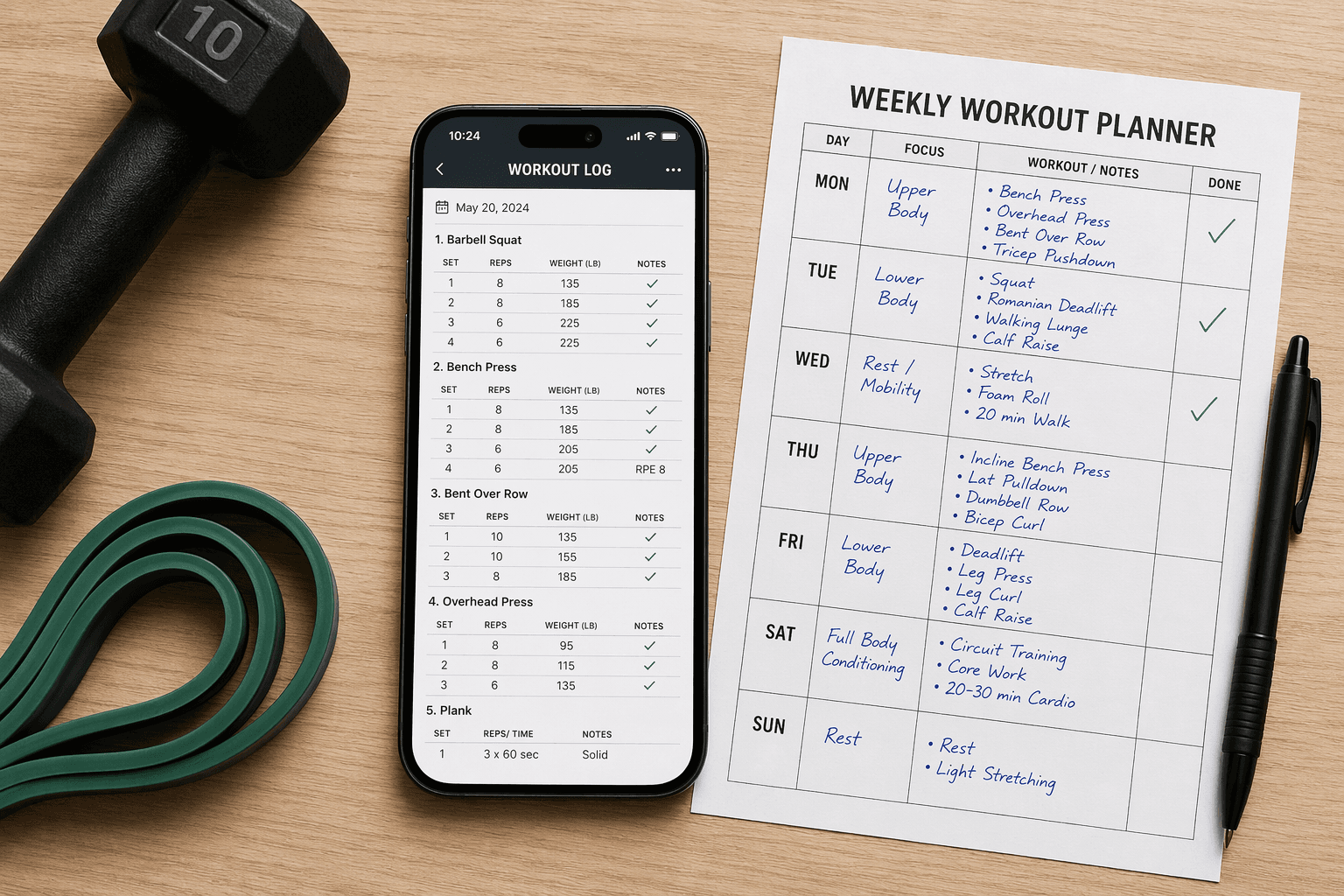
LoadMuscle’s free AI planner claims a library of 4,000+ exercises with video demos and can generate a personalized plan in 60 seconds — then export it as a PDF with no signup. That “no signup PDF” is genuinely useful for someone who doesn’t want to hand over an email just to see whether the app works with a dumbbell-only kit. The company says the AI adapts to the equipment you have, but I couldn’t independently verify that the filtering actually narrows 4,000 exercises down to a sensible list for, say, a single adjustable dumbbell. The numbers are from LoadMuscle’s own blog and their free planner page. Still, if you have very limited gear and want a quick, printable plan without locking into an account, LoadMuscle is the most aggressive free offering for that specific pain point.
Hevy: Community Carries the Accountability
Hevy’s free tier gives you a generous workout limit (four per week, I believe, though the exact cap isn’t clearly stated on their site), a clean logger, and access to a community of 14+ million users. The 4.9 rating on both stores is self-reported — Hevy’s website proudly displays it — and it measures popularity, not home-gym suitability. But the community scale is real. When you work out alone in a spare bedroom, seeing that other people are logging their sets can be a small but real accountability boost. Hevy isn’t a planner; it’s a tracker. If you already know what exercises to do and just need to log, Hevy’s free tier is the strongest pick.
Caliber: Strength Programming That’s Actually Free
Caliber’s free version includes over 500 exercises, custom program generation from a quick assessment, progress charting, and — critically — no ads and no subscription required. The source for this isn’t Caliber itself but Garage Gym Reviews, which tested 50 apps and rated Caliber as genuinely free-forever. That gives me more confidence than a company’s own marketing. For home lifters on a strict budget who want evidence-based strength programming — not just guided workouts — Caliber is the clearest win. It’s built for people who already have some equipment and want a structured program, not a video-class platform.
Boostcamp: Pre-Built Programs, No Planning Needed
Boostcamp’s free plan gives you access to over 1,000 training programs — including GZCLP, nSuns 5/3/1, and Reddit PPL — designed by elite coaches and the community. It also offers offline mode and automatic progression. The offline mode is the killer feature for garage gyms without cell signal, but I need to confirm it covers logging exercises, not just viewing the plan (the Garage Gym Reviews article says “offline mode” but doesn’t specify). Pre-built programs remove the need to design anything yourself. If you want to follow a proven routine without tweaking, Boostcamp is the best free option. The Garage Gym Reviews article is the primary source for the 1,000+ plan claim.
Match Your Constraint to the App
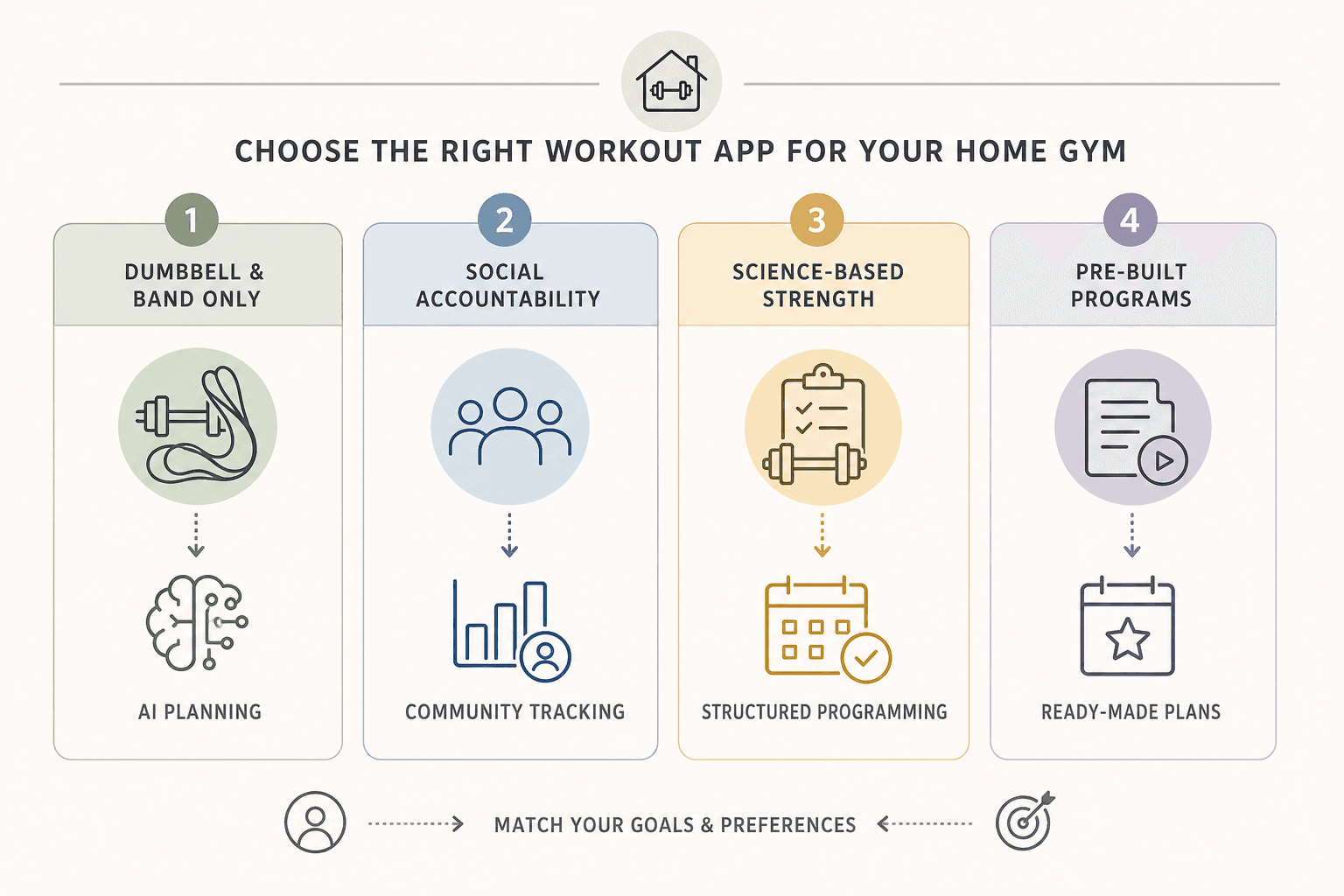
| Home Gym Profile | Recommended App | Key Reason |
|---|---|---|
| Dumbbell & Band Only | LoadMuscle | AI planning adapts to limited gear; no-signup PDF export |
| Need Social Accountability | Hevy | Large community, generous free tier for tracking |
| Budget-Conscious Strength Lifting | Caliber | Free-forever, no ads, science-based programming |
| Want Pre-Built Elite Programs | Boostcamp | 1,000+ plans from proven coaches; offline mode |
| Apartment with Minimal Space | LoadMuscle + Hevy stack | Plan with LoadMuscle, track with Hevy; see our apartment-specific guide here |
For apartment dwellers, also check our best free apps for limited home equipment and apartment spaces — it covers noise and space constraints in more detail.
Stacking a Planner and a Tracker
You don’t have to pick one. The free tiers are generous enough that you can combine them: use LoadMuscle to generate your weekly plan (exported as PDF, no signup), then track your sets with Hevy. Or pair Caliber’s structured programming with Hevy’s logging for a strength-focused stack. The two‑app approach gives you planning intelligence plus tracking consistency — and none of these combinations requires spending a dollar.
When Free Stops Working
Free is great, but it has real boundaries. LoadMuscle’s free planner lacks the advanced customization of the paid version. Hevy’s free tier caps your workout history length — after a few months you might lose access to old logs. Boostcamp’s offline mode may be limited to viewing plans, not fully logging offline. If you hit those limits and genuinely need more, a paid upgrade (or a different free app) is a reasonable move. For a detailed breakdown of what a home lifter actually gets by paying, read Free vs Paid Strength Training Apps in 2026. The constraint-axis framework I used here applies just as well to paid decisions: ask what your actual limit is — space, budget, or experience — before you reach for your wallet.
Comments
Join the discussion with an anonymous comment.