
Two numbers sit across from each other like opposing case filings. FitCraft, a company that sells an AI fitness app, reports that 73% of free fitness app users abandon them within 30 days. Business of Apps, an app industry data provider, puts health and fitness app day-30 retention at 3% (2023). The gap between 73% and 3% tells you less about the true abandonment rate than about the reliability of the sources. But both point in the same direction: most people who download a free strength training app stop using it within a month.
This matters because the real bottleneck in home strength training is not exercise selection or equipment. It is consistency. And if free apps bleed users that fast, the question shifts from "which app has more exercises" to "which app can keep me training." That is the question worth your money.
Free Apps Are Not Teasers
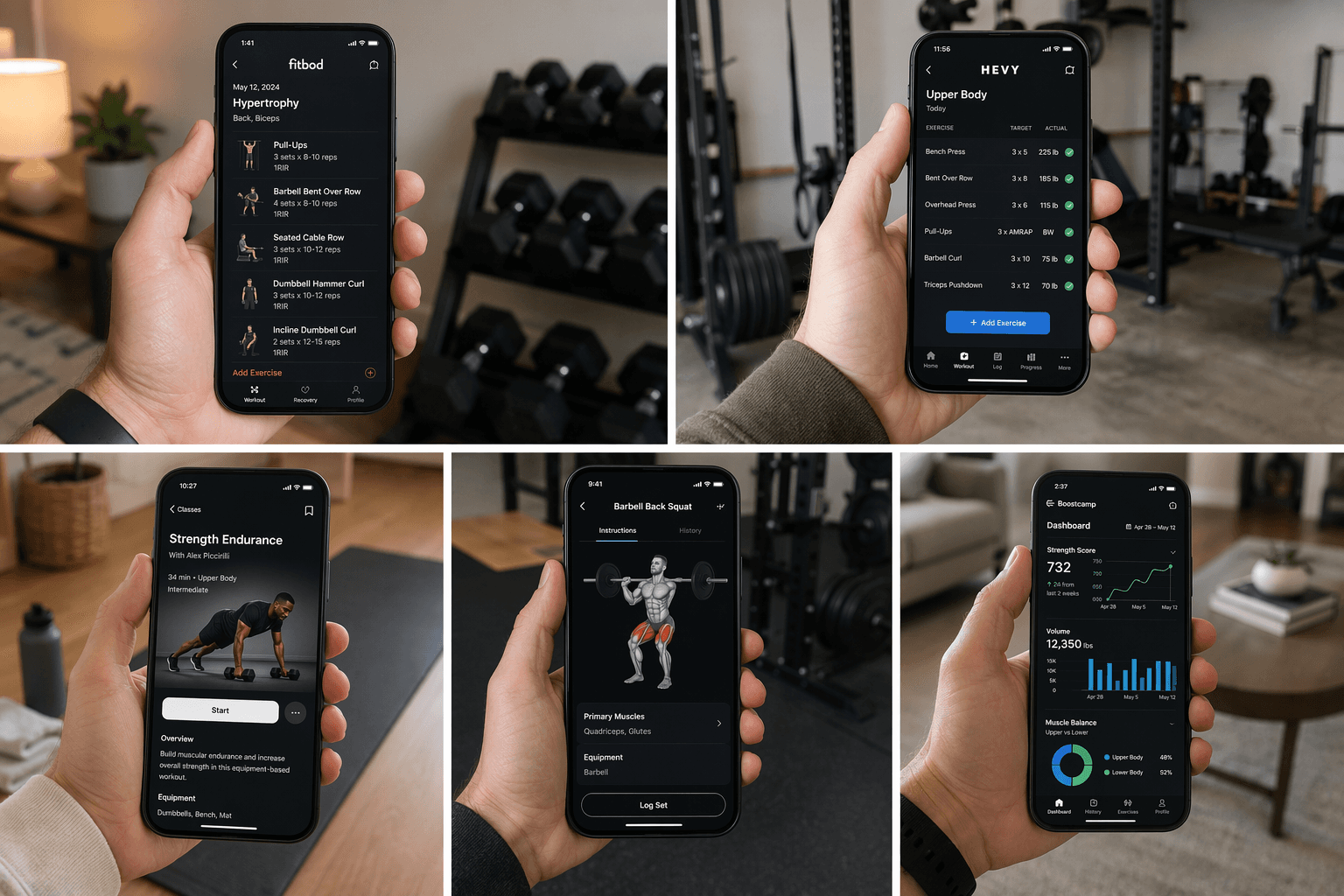
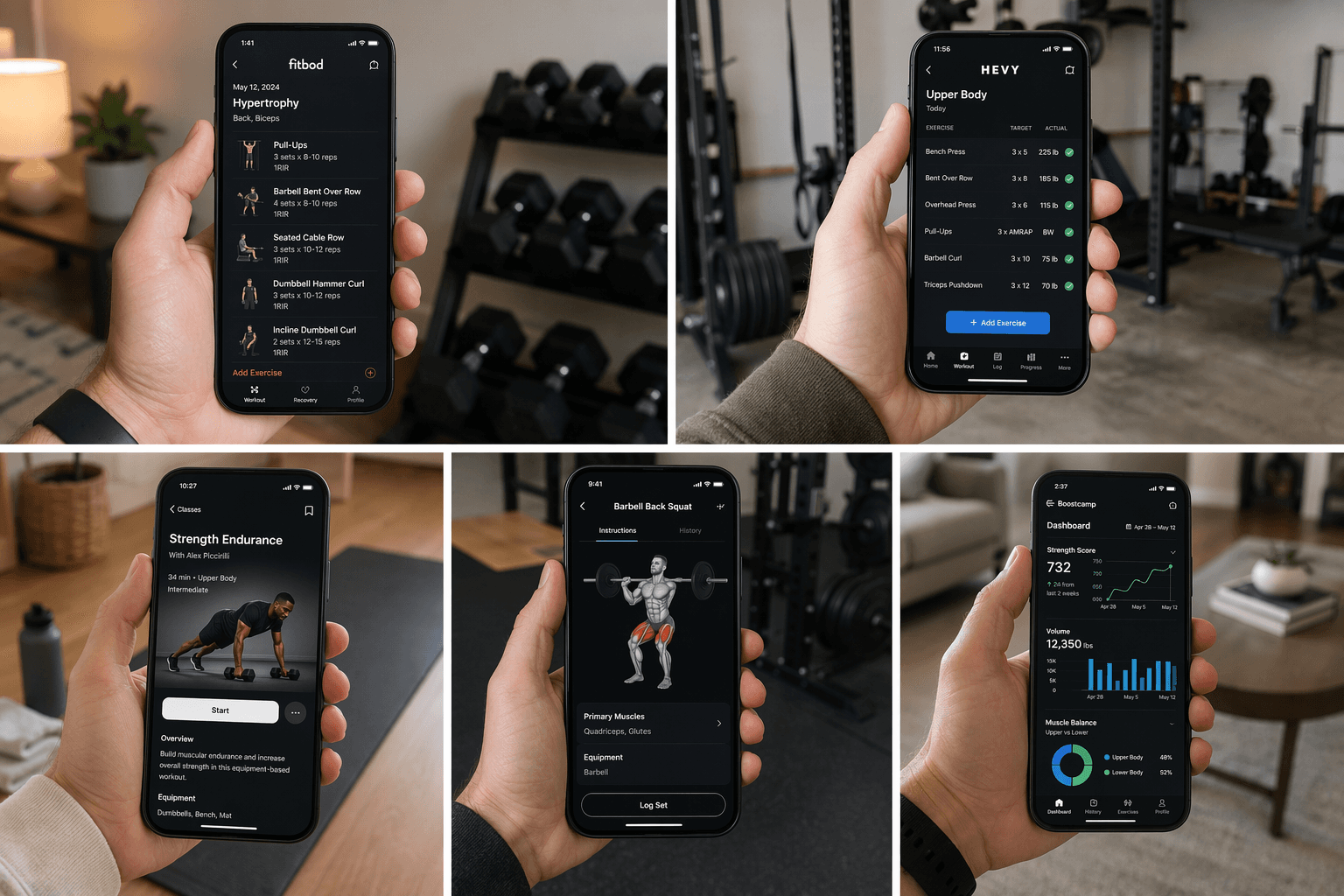
If you imagine free apps as stripped-down trial versions with annoying ads and a handful of exercises, you are working with an old picture. Caliber includes over 500 exercises with zero ads. Boostcamp offers more than 1,000 free strength training programs designed by elite coaches. Hevy gives you social features and workout tracking at no cost. Nike Training Club is entirely free with over 300 on-demand workouts and live classes. Jefit throws in a library of 1,400+ exercises.
These are not teasers. They are functional products that solve the "I don't know what to do" problem completely. If your only complaint about a free app is that it does not have enough exercises, you have not looked at what free apps actually ship in 2026.
What Paid Apps Actually Change
The difference between a free app and a paid one is not exercise count. It is what happens after your third session. A free app gives you the same workout plan on day 3 as on day 1. A paid app with AI personalization changes your next workout based on how your last one felt.
Take JuggernautAI ($35/month). You enter your rate of perceived exertion (RPE) after each set. The algorithm adjusts your reps and weight for the next session accordingly. Jefit's AI progressive overload algorithm tells you explicitly when to increase weight or add reps. Fitbod ($15.99/month) adjusts for fatigue based on your logged volume. On the high end, Future ($199/month) pairs you with a real human coach who designs sessions, checks in, and adjusts programming based on your feedback.
FitCraft claims that paid apps with AI-driven personalization can increase retention rates by up to 50% compared to generic programming. That claim comes from a company selling an AI app, so I would not call it independent evidence. But the mechanism is real: adaptive programming gives you a reason to open the app tomorrow that a static spreadsheet does not.
Cost Per Workout: App vs Trainer vs Gym
The strongest argument for paying for an app is the per-session cost. Garage Gym Reviews pegs the average workout app at $34/month. Train in that app four times per week and each session costs about $2.13. A personal trainer runs $60 to $150 per session. A gym membership runs $40 to $60 per month — comparable to the app, but you still have to drive there.
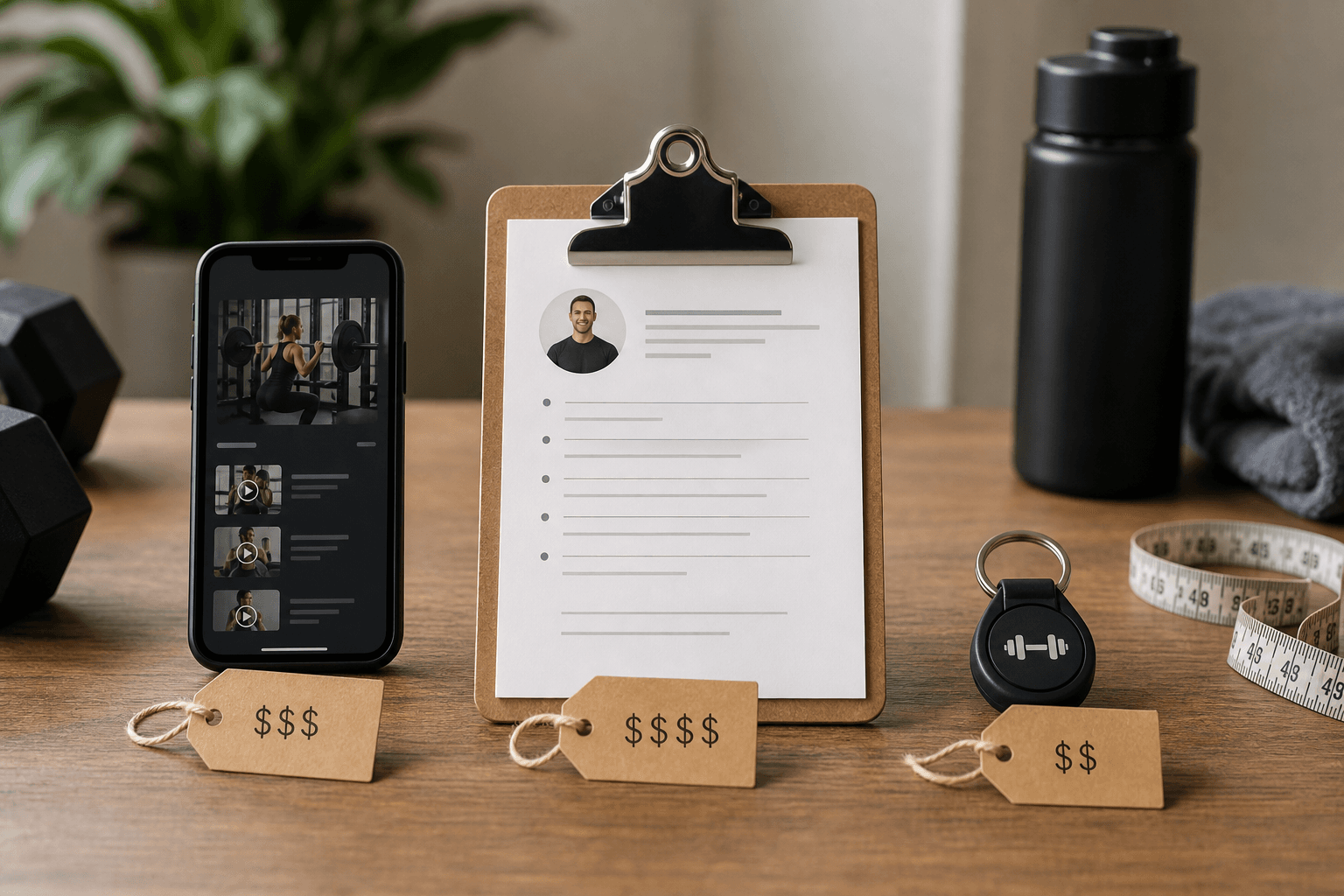
| Option | Monthly Cost | Per-Session Cost (4x/week) | Key Limitation |
|---|---|---|---|
| Free app | $0 | $0 | No adaptive programming; static plans |
| Paid app (mid-tier, e.g. Fitbod) | $15.99 | $1.00 | No human feedback on form |
| Paid app (premium, e.g. JuggernautAI) | $35 | $2.19 | AI can't see your form |
| Human coaching app (Future) | $199 | $12.44 | Still requires self-discipline to show up |
| Personal trainer (in-person) | $240–$600 | $60–$150 | Highest quality feedback; highest cost |
| Gym membership (plus commute) | $40–$60 | $2.50–$3.75 | Requires travel; limited equipment at home |
The math gets less flattering for paid apps if you train less often. Two sessions per week doubles the per-session cost. And $199/month for Future still depends on you showing up. A trainer at $60/session gives you live form correction and real-time feedback that no app can replicate.
Should You Pay?
The answer depends on one variable: how much external structure you need to stay consistent. Here is a rule of thumb in two questions.
Do you already know how to program progressive overload, manage RPE, and periodize your training? And do you follow through on your own plan for more than four weeks without someone checking in? If yes, a free app like Hevy, Caliber, or Boostcamp is enough. You do not need to pay for adaptive programming because you already adapt your own training.
Do you find yourself skipping sessions when the plan feels stale, or do you need to be told what to do each session and want that plan to adjust based on how you feel? Then a paid app like Fitbod, JuggernautAI, or Future is worth the spend. The retention data — caveats and all — suggests that most people in this bucket will not stick with a free app long enough to see progress.
The danger is overselling paid apps to experienced lifters who do not need them. The cost-per-workout math favors paid apps only if you actually use them consistently. A self-directed lifter on a free app for two years gets far more value than someone who pays $35/month for three months and then quits.
The best app is the one you will open three weeks from now. For some lifters, that is a free one. For others, it costs $15 a month. Neither choice is wrong, but making the wrong one costs more than the subscription.
Comments
Join the discussion with an anonymous comment.