
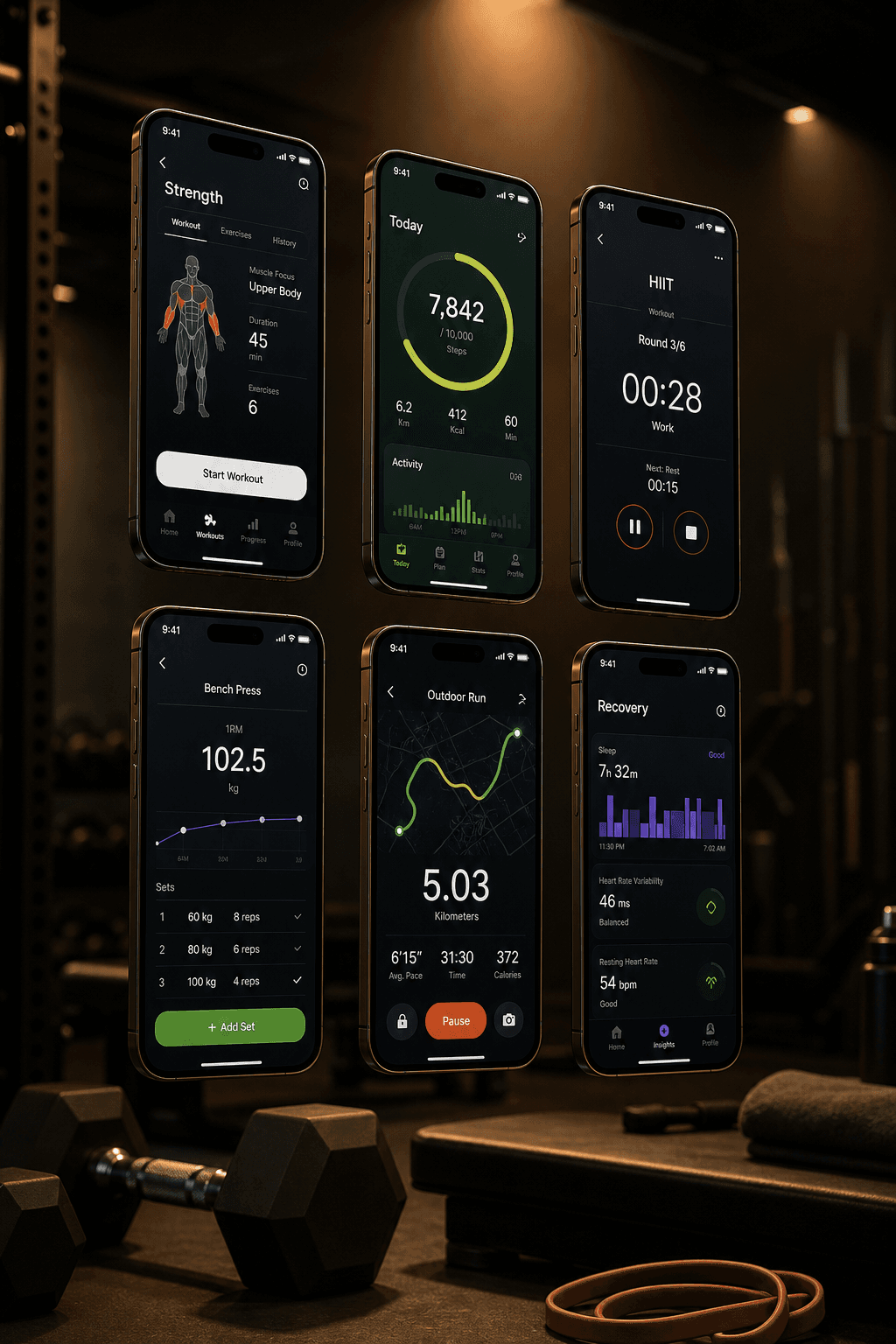
Most strength training app lists assume you walk into a commercial gym with a barbell and a squat rack. That is not how most home gyms work. I have spent years testing apps with a pair of adjustable dumbbells and a mat, and I can tell you the difference between an app that adapts and an app that just says it adapts. JuggernautAI gets a 4/5 for equipment demands in some reviews — but read the fine print: it requires a squat rack, barbell, and plates for most workouts. That is not flexible. That is a specific setup that maybe a third of home gym users actually have.
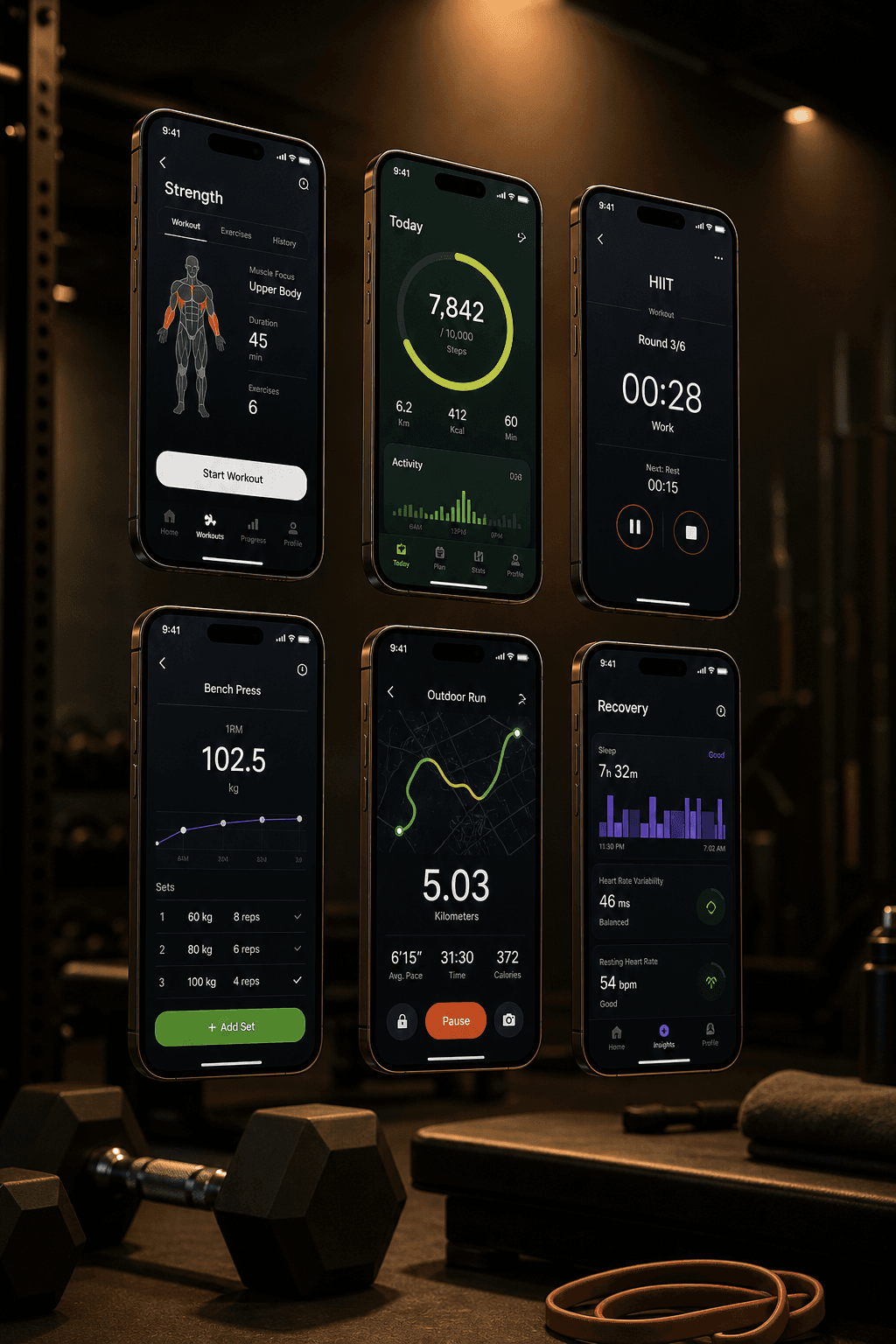
Why equipment flexibility matters more than the composite score
Most roundups pit Fitbod against Caliber against JuggernautAI and pick a winner based on a composite score that mixes equipment flexibility, progressive overload, value. For a home user, equipment flexibility should outweigh everything else. An app with perfect progressive overload that only works with a barbell is useless if you own only a kettlebell.
When I opened Fitbod and told it I had bodyweight only, it gave me a session of push-ups, lunges, and planks — a coherent program, no surprises. When I tried JuggernautAI with the same filter, it tried to assign barbell squats. That is the difference between an app that genuinely adapts and one that merely lists equipment options.
To make this useful, I break the apps into three equipment tiers based on what you actually own. If you are not sure where to start, see our guide to home exercise equipment for beginners or what fits in a small space.
Tier 1 — Bodyweight only: a mat, maybe a yoga block. No weights. No bands.
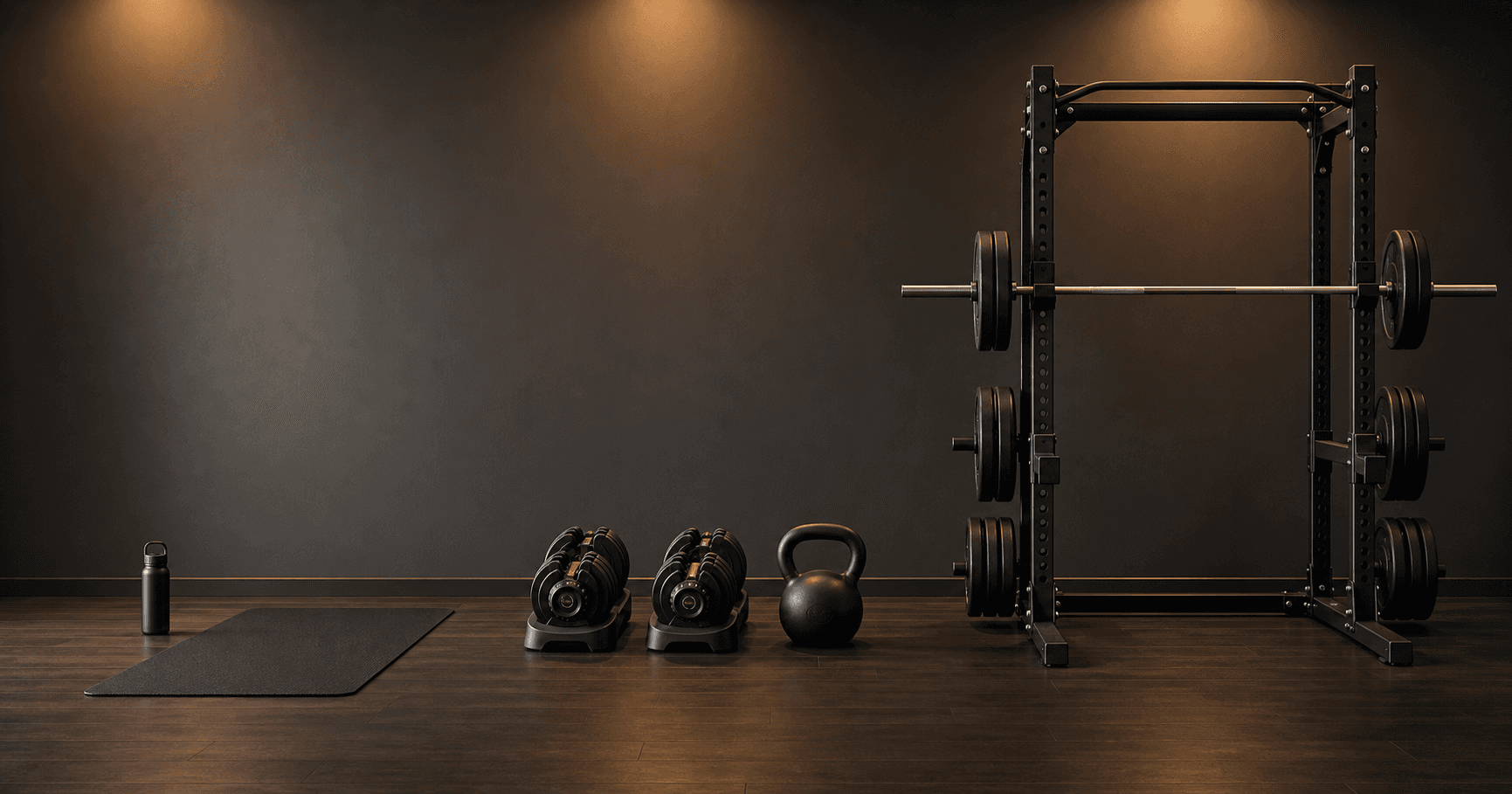
Tier 2 — Dumbbells or kettlebells: adjustable dumbbells, a kettlebell, maybe resistance bands. You can load progressively but no barbell or rack.
Tier 3 — Full home gym: barbell, squat rack, plates, bench. You can run most commercial gym programs.
I use equipment demands ratings from Garage Gym Reviews (GGR), but I test each app myself because I do not trust any rating from a site with affiliate ties until I see the actual workout.
Bodyweight-only: Which apps actually build a real program?
You would think any app can handle bodyweight. They cannot. I tested this directly.
Fitbod, Caliber, and Shred all earn 5/5 for equipment demands from GGR. That matched what I saw: each built a full bodyweight workout — push-ups, lunges, planks, glute bridges — with sets, reps, and rest. Caliber’s free-forever version stood out: you get a coach-designed program without paying a cent. Shred’s $9.99 per month is also compelling for someone who just wants a structured, equipment-aware plan.
On the other side: JuggernautAI, which scores 4/5 overall but requires a squat rack and barbell for most workouts. That is not a 4/5 for a bodyweight user. It is a 1/5. Do not bother if you own only a mat.
Nike Training Club is 100% free and has 300+ trainer-led videos. But it has no progressive overload tracking — it gives you a workout, not a program. For a beginner who just wants to move, it is fine. For someone serious about strength gains over months, it falls short.
Dumbbells and kettlebells: Where flexibility meets long-term strength
If you own a pair of adjustable dumbbells, you need an app that not only accommodates dumbbells but also progresses the load over time. Fitbod gets a 5/5 for equipment flexibility — you can tell it exactly what you own and it adjusts — but only a 3/5 for progressive overload. I saw that in practice: after a few weeks, the weight recommendations plateaued. For pure strength gains, that is a weakness you need to know about.
Caliber and Shred handle dumbbells well. Caliber’s free tier gives you dumbbell progressions; the Pro version ($19/mo) adds auto-progression. Shred costs $9.99/mo — well below the average app cost of $34/mo — and its programs specify equipment clearly. You lose nothing in programming density at that price; the limitation is mainly in community features and coaching support.
Annual billing saves 30–50% on most apps. Fitbod’s annual plan costs $79.99, which is 56% cheaper than paying monthly ($155.88). That kind of saving matters for a home gym budget.
For a structured dumbbell program that follows progressive overload principles, our Progressive Overload System for a Full Body Dumbbell Workout pairs nicely with any app that handles the tracking side.
Full home gym: When you can finally use the powerlifting apps
If you have a barbell, rack, and plates, the options open up. JuggernautAI’s 4/5 for equipment demands is still misleading — relative to a commercial gym it is a 4, but relative to a typical home gym it is only a 4 if you have the full barbell setup. That said, its progressive overload rating of 5/5 is genuine. I tested it with a barbell and the programming was aggressive, well-structured, and hard to outgrow.
At $35/mo, JuggernautAI is cheaper than Caliber Premium ($200/mo for human coaching) and Future ($199/mo). Both Caliber and Future also score 5/5 for equipment demands — they will build programs for a full home gym. The difference is coaching depth. Future gives you a real human coach; Caliber Premium does the same. JuggernautAI is AI-only. If you want the best strength training app for serious powerlifting without a human coach, JuggernautAI is the pick. If you want human guidance and have the budget, Future or Caliber Premium are excellent.
Price-value breakdown
Here is how the major apps compare on monthly vs. annual pricing and which tier they serve best.
| App | Monthly | Annual | Best for tier |
|---|---|---|---|
| Shred | $9.99 | N/A | Bodyweight, dumbbells |
| Fitbod | $12.99 | $79.99 (56% savings) | Bodyweight, dumbbells, full gym |
| Caliber Free | $0 | $0 | Bodyweight |
| Caliber Pro | $19 | N/A | Dumbbells, full gym |
| JuggernautAI | $35 | N/A | Full gym (barbell required) |
| Future | $199 | N/A | Full gym (human coaching) |
The average fitness app user churns within 90 days, per FitCraft. I suspect much of that churn comes from picking an app that does not match the user’s equipment. If you start with an app that assumes a full gym and you only have dumbbells, you will quit frustrated. The equipment-tier framework is designed to prevent that mismatch.
The short version: Your equipment decides the app
- Bodyweight only: Caliber (free) or Shred ($9.99). Both build real programs. Avoid JuggernautAI.
- Dumbbells/kettlebells: Fitbod for equipment flexibility, Shred for value, Caliber Pro for coaching. Be aware of Fitbod’s weaker progressive overload (3/5).
- Full home gym: JuggernautAI for serious strength at $35/mo, Caliber Premium or Future for human coaching at $199/mo. Fitbod and Caliber still work well.
If you are still unsure, start with a free tier. Our guide to the best free workout apps by goal breaks down which free options match each training style.
The best strength training app is not the one with the highest composite score. It is the one that actually works with the equipment you already own. Start with what you have, pick the app that adapts to it, and let your gear decide — not the other way around.
Comments
Join the discussion with an anonymous comment.