The hard part of choosing among fitness apps for women is not finding one with attractive classes. It is figuring out, before you give another app your email, your goals, your injury history, and your credit card, whether it will still tell you what to do three Tuesdays from now.
Start with three filters: your primary goal, your budget, and the equipment you can reliably use. If your goal is strength, add one more filter before everything else: does the app actually progress your training over time, or does it only give you a library of strength-flavored workouts?
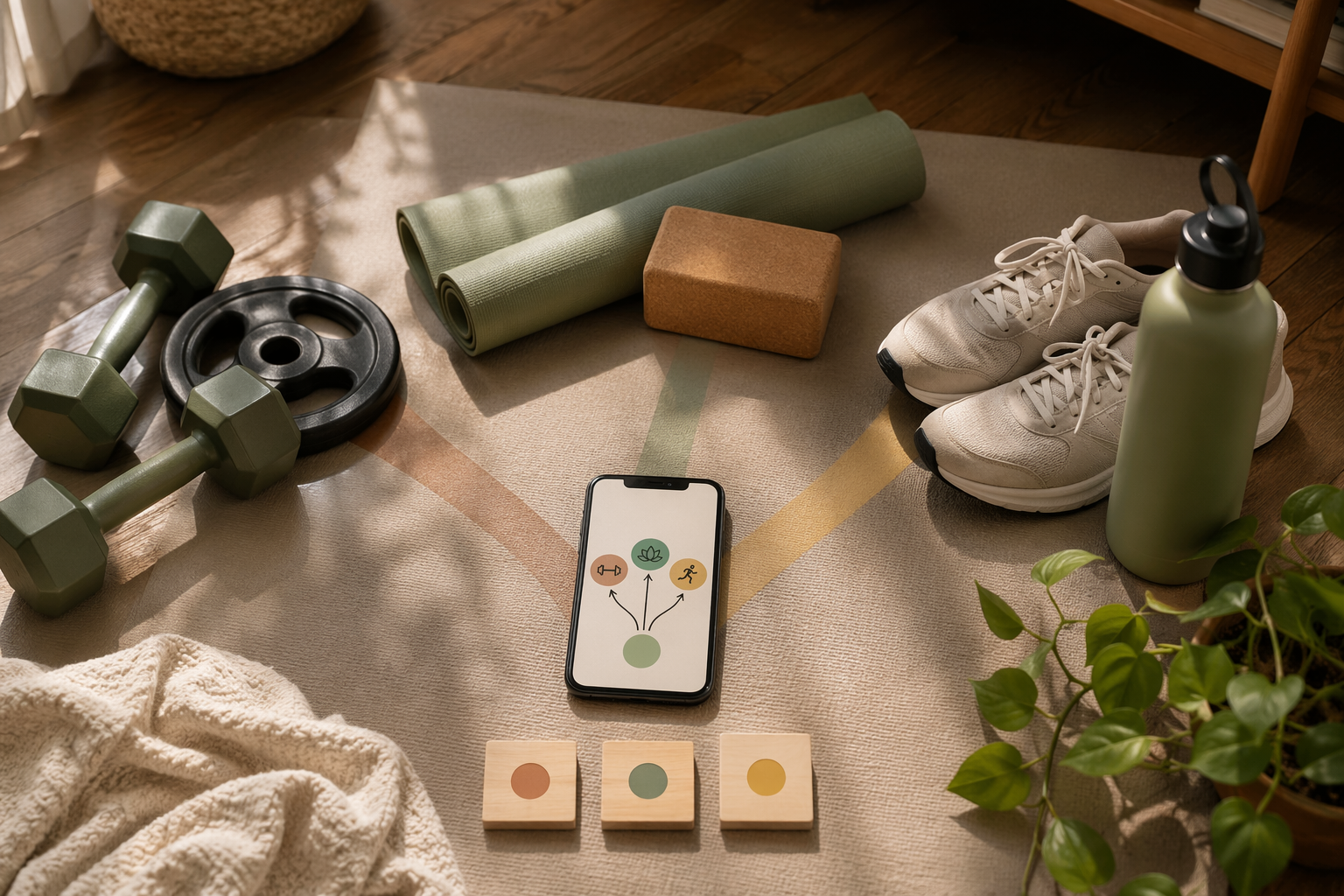
| If your main goal is | Look first at | Free or lower-cost options | Paid options worth considering | Watch out for |
|---|---|---|---|---|
| Strength | Progressive overload, logging, plan adjustments, equipment fit | Nike Training Club for general strength classes | EvolveYou, Sweat, Caliber, Peloton, Future | Large workout libraries that do not progress load, reps, or difficulty |
| Yoga or Pilates | Instructor style, flow length, recovery options, consistency | Alo Wellness Club, FitOn, Nike Training Club | Apple Fitness+, Peloton, Centr | Paying for strength features you will not use |
| Running or cardio | Pace guidance, outdoor audio, treadmill classes, wearable fit | Nike Training Club for conditioning; FitOn for cardio classes | Peloton, Apple Fitness+ | Choosing a studio app when you mainly need run structure |
| General fitness | Variety, ease of starting, habit support, class length | Nike Training Club, Alo Wellness Club, FitOn | Apple Fitness+, Peloton, Centr | Mistaking variety for a clear weekly plan |
Why This Category Feels So Crowded
There is a reason every app seems to have a free trial, a premium tier, a trainer-led challenge, and a screen asking what kind of woman you want to become. The global women’s workout app market is valued at $5.64 billion in 2026, with a 17% compound annual growth rate forecast through 2033.[1] The broader fitness app market is valued at $13.9 billion in 2026.[2] Subscription models account for 62.2% of market share, and many apps sit in the $10 to $30 per month range.[3]
Those numbers explain the noise, not the answer. A crowded subscription market rewards apps for looking useful to as many people as possible. Your job is narrower: pick the app that matches the kind of training you will actually do.
If Your Goal Is Strength, Do Not Stop at “Strength Workouts”
Strength is where generic rankings become least helpful. A 30-minute dumbbell class, a glute burner, a barbell program, and a coach-built plan can all sit under the same “strength” tab. They are not the same product.
For strength training, the useful question is whether the app helps you apply progressive overload: gradually increasing the challenge through weight, reps, sets, tempo, range of motion, or exercise difficulty. If the app cannot remember what you lifted last week, cannot suggest what to do next, and cannot adapt when a workout was too easy or too hard, it may still be a good class app. It is just not a complete strength program.
EvolveYou belongs near the top of the strength conversation because its programs range from 8 weeks to 67 weeks and place a strong emphasis on progressive overload, especially in strength tracks associated with co-founder Krissy Cela.[4][5] That matters for someone who wants more than a fresh lower-body class every Monday. A longer program can reduce the mental tax of deciding what counts as enough.
Sweat is also a serious contender for women who want structured strength without building their own plan. It has more than 1 million monthly users across more than 145 countries, with strength-focused programs such as PWR and BUILD, along with perimenopause-specific tracks noted in app reviews.[6][7] It is not the quietest app in the category, but for women who like program identity and a strong female-focused ecosystem, that can be part of the appeal.
Caliber is a different kind of strength choice. Its paid tiers are reported around $10 to $20 per month, and its strength programming uses AI-driven weekly adjustments.[7] The catch is not a flaw so much as a responsibility: an adaptive strength app depends on honest logging. If you routinely underreport effort, skip notes, or choose random substitutions without recording them, the app has less useful information to adjust from.
Peloton is easy to reduce to bikes and charismatic instructors, but the app has a broader catalog: strength, yoga, running, outdoor content, and strength programs that use progressive overload.[4][6] At $12.99 per month, it can make sense for someone who wants strength plus cardio and community accountability in one place.[4] It is less appealing if you want quiet spreadsheet-level lifting progression and do not care about classes.
Future is the expensive outlier. Its pricing is reported at $19 for the first month and $149 per month after that, with a human coach reviewing every completed session and adjusting programming.[5] That is not a casual subscription. It is closer to buying accountability and decision removal. For the woman who has enough equipment, wants strength progress, and repeatedly falls apart when left to self-program, the price may be more honest than paying for three cheaper apps she will not use.
Nike Training Club complicates the paid-app assumption in a good way. It offers more than 300 free workouts and is one of the strongest free choices for general training.[4][8] But it is better understood as a generous workout library than as an advanced strength progression system. If your goal is to move more, learn exercises, or build a home routine with minimal friction, that may be enough. If your goal is measurable strength gain over months, look for logging, progression, and plan adjustment.
For a deeper strength-only breakdown by equipment and experience level, see Strength Training Apps Compared by Budget, Equipment, and Experience Level. That is the better place to split hairs between dumbbell-only, barbell, beginner, and intermediate programming.
When Free Is Enough, and When It Is Not
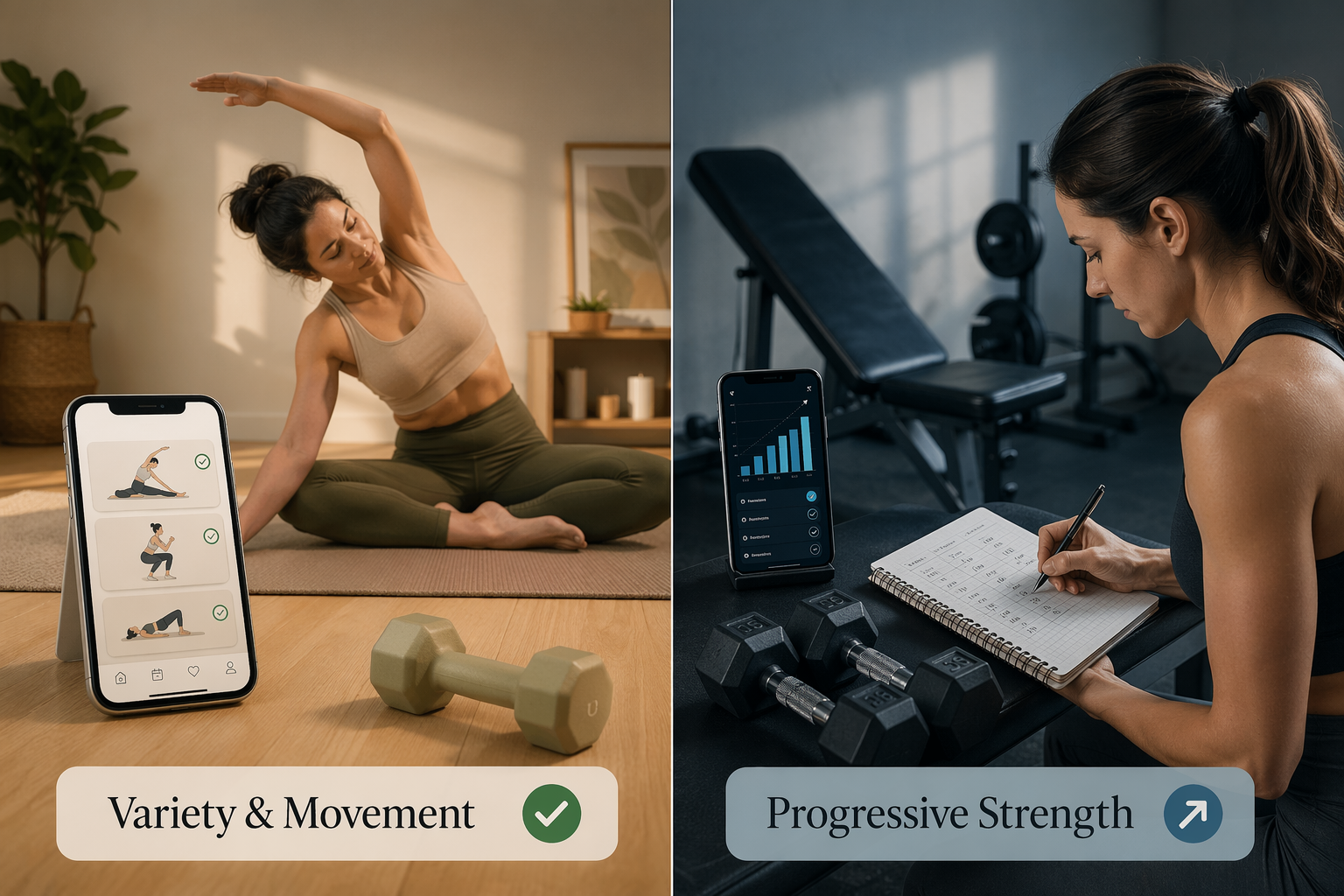
Free is enough more often than app marketing wants you to believe. It is enough when your real need is guided movement, short classes, beginner-friendly instruction, yoga, Pilates, mobility, light conditioning, or a way to restart without turning fitness into another bill.
Nike Training Club is the obvious first download in that category because the library is broad and free.[4][8] FitOn is also useful for variety, with a free tier supported by ads and many class types, although its programming depth is limited for advanced users.[4] Alo Wellness Club became completely free in 2026 and is especially strong for yoga and Pilates, while being less suited to dedicated strength or running programming.[5]
The free-versus-paid line usually appears when the app needs to do more than show you today’s workout. You are paying for structure, feedback, progression, accountability, integration, or the convenience of not having to assemble your own week.
- Stay free if you want class variety, yoga, Pilates, mobility, beginner strength, or low-pressure general movement.
- Pay modestly if you want one reliable app for strength, cardio, yoga, and weekly consistency.
- Pay more if you need strength progression, adaptive programming, detailed logging, or a coach who notices when you disappear.
- Do not pay only because an app has more workouts. More choices can make Tuesday night harder, not easier.
If you want a more detailed price-tier comparison, Free vs Paid Fitness Apps for Women: What You Actually Get at Each Price Tier covers the budget tradeoffs more directly.
Yoga, Pilates, and Mobility Need a Different Filter
For yoga and Pilates, progression matters, but not in the same way as strength. The app does not need to tell you to add five pounds to a hinge pattern. It needs instructors you can follow, class lengths that fit your day, clear cueing, and enough variation that you can return without feeling punished by the app’s mood.
Alo Wellness Club is one of the easiest recommendations here because it became free in 2026 and has strong yoga and Pilates content.[5] Nike Training Club and FitOn also work if you want yoga or mobility as part of a broader home routine.[4][8] If you are already in Apple’s ecosystem, Apple Fitness+ is a clean, low-friction option at $9.99 per month, or included in Apple One Premier at $37.95 per month, with strong Apple Watch integration.[4]
Peloton can be worth considering if yoga sits beside strength, walking, running, or cycling in your week. Centr, at $14.99 per month, offers a broad content library with celebrity-trainer programs and added a perimenopause guide in 2026.[8] Its breadth is useful if you want one lifestyle-oriented app, but it is weaker if your primary goal is specialized strength progression.
For Running and Cardio, Decide Whether You Need Coaching or Classes
Running and cardio apps split into two needs. Some women want guided treadmill classes, music, and instructor energy. Others need pace guidance, outdoor audio, and a plan that helps them build running capacity without guessing.
Peloton is strongest if you like coached cardio across formats: treadmill, outdoor runs, walking, strength, and yoga in the same subscription.[4][6] Apple Fitness+ is strongest if your Apple Watch is already part of your exercise habit and you want classes that fit neatly into that ecosystem.[4] Nike Training Club and FitOn can handle general cardio and conditioning, but they are not the same as a running-specific training plan.
If the real goal is to run a first 5K, rebuild pace after a long break, or manage mileage carefully, do not choose a general fitness app just because it has a cardio tab. Pick the tool that gives you the running structure you need, even if it is less glamorous than the all-in-one app.
The Equipment Question Is Usually Where the Wrong App Reveals Itself
A great app for someone with adjustable dumbbells, a bench, and a pull-up bar may be irritating for someone training in a bedroom with one pair of light dumbbells. Before you compare brands, compare the equipment assumptions.
| Your reliable setup | Best fit | Be cautious with |
|---|---|---|
| Bodyweight only | Nike Training Club, FitOn, Alo Wellness Club, Apple Fitness+ | Strength programs built around heavier loading |
| Light dumbbells only | Nike Training Club, Sweat beginner tracks, Peloton strength, Apple Fitness+ | Apps that promise long-term strength progress without enough loading options |
| Adjustable dumbbells or home gym | EvolveYou, Sweat, Caliber, Future, Peloton | Class libraries that do not track your prior performance |
| Gym access | EvolveYou, Sweat, Caliber, Future | Apps designed mainly for mat-based home classes |
The point is not to shame a limited setup. It is to avoid buying a program that depends on equipment you will not use. A bodyweight app you open four times a week is better than a barbell program that lives untouched behind a subscription renewal.
Accountability Can Be Worth Paying For, but Name What Kind You Need
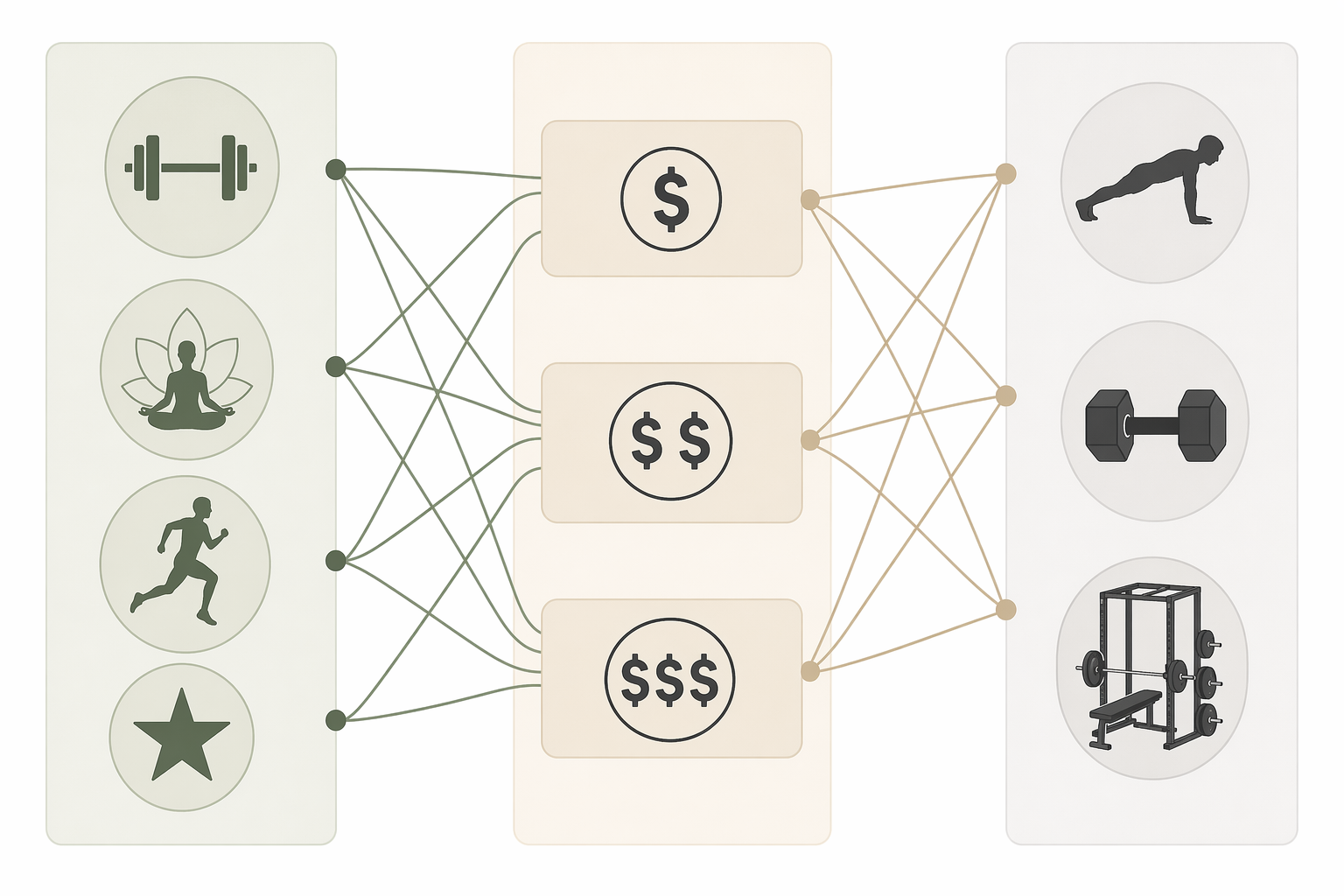
Accountability is one of those app words that can mean almost anything. It might mean a streak, a push notification, a leaderboard, a trainer community, AI plan adjustments, or a human coach checking your completed sessions. These are not interchangeable.
Peloton’s accountability is social and class-based. Caliber’s is tied to logging and program adjustment. Future’s is human and direct, with a coach reviewing each completed session.[4][5][7] Sweat’s accountability often comes from following a named program inside a large women-focused community.[6][7] Nike Training Club and Alo Wellness Club remove cost as a barrier, but they will not care if you vanish for three weeks.
That is not a criticism. Some people do not need an app to care. Others absolutely do. If your history with fitness apps is a burst of motivation followed by quiet abandonment, the better next read is Why Most Women Quit Fitness Apps (and How to Choose One You'll Actually Use).
A Practical Shortlist by User Type
If you still want names, use them as a shortlist, not a ranking. The best choice changes as soon as the goal changes.
- Best first free download for general home fitness: Nike Training Club, because 300+ free workouts are enough for many women who need movement, instruction, and variety.[4][8]
- Best free yoga/Pilates starting point: Alo Wellness Club, because it became completely free in 2026 and fits mat-based training better than serious strength or running.[5]
- Best for structured women-focused strength: EvolveYou or Sweat, especially if you want named programs rather than one-off classes.[4][5][6][7]
- Best for strength with adaptive programming: Caliber, if you will log honestly and want weekly adjustments.[7]
- Best all-in-one class ecosystem: Peloton, especially if strength, cardio, yoga, and community all matter.[4][6]
- Best for high-touch coaching: Future, if the ongoing $149 monthly cost fits your budget and you want a human coach involved.[5]
- Best for Apple Watch users: Apple Fitness+, because the integration may matter more than having the most advanced strength progression.[4]
- Best broad lifestyle library: Centr, if you want general training variety and wellness content more than specialized lifting progression.[8]
- Best free variety app: FitOn, if you can tolerate ads and do not need advanced programming depth.[4]
Pregnancy and postpartum training deserve a separate filter because the stakes and constraints are different. If that is your situation, use a dedicated guide such as Best Prenatal and Postpartum Fitness Apps for 2026 instead of relying on a general fitness app roundup.
Make the Choice in This Order
- Name one primary goal for the next eight to twelve weeks: strength, yoga/Pilates, running/cardio, or general fitness.
- Choose your budget tier: free, under $10, $10 to $20, or high-touch coaching.
- Match the app to the equipment you can use on an ordinary weekday, not the equipment you hope to buy.
- For strength, require progression, logging, or coaching before paying for a subscription.
- For yoga, Pilates, cardio, or general movement, prioritize instructor fit, class length, and how quickly you can start.
- Cancel the trial if the app makes you reorganize your life before it gives you a useful next workout.
The most popular app is allowed to be wrong for you. If a free app gives you the movement you need, keep the free app. If your goal is serious strength and the free app cannot progress your training, pay for the structure instead of pretending a larger library will solve the problem. The right fitness app is the one that matches your actual goal, your actual equipment, and the amount of accountability you are genuinely willing to pay for.
References
- Workout Apps for Women Market Forecast, 2026-2033, Coherent Market Insights, 2026
- Fitness Apps Market Size, Share & Trends Report 2026-2033, Grand View Research, 2026
- Fitness App Revenue and Usage Statistics (2026), Business of Apps, 2026
- The Best Workout Apps for Women to Stay Active and Motivated, CNET, 2026
- The 10 Best Workout And Fitness Apps Of 2026, Forbes Health, 2026
- The 12 Best Workout Apps Of 2025: Fitness Apps Trainers Actually Use, Women's Health Mag, 2025
- Best Workout App For Women (2026): Expert Tested And Approved, Garage Gym Reviews, 2026
- 10 Best Workout Apps of 2026, Tested by Personal Trainers, Good Housekeeping, 2026
Comments
Join the discussion with an anonymous comment.