
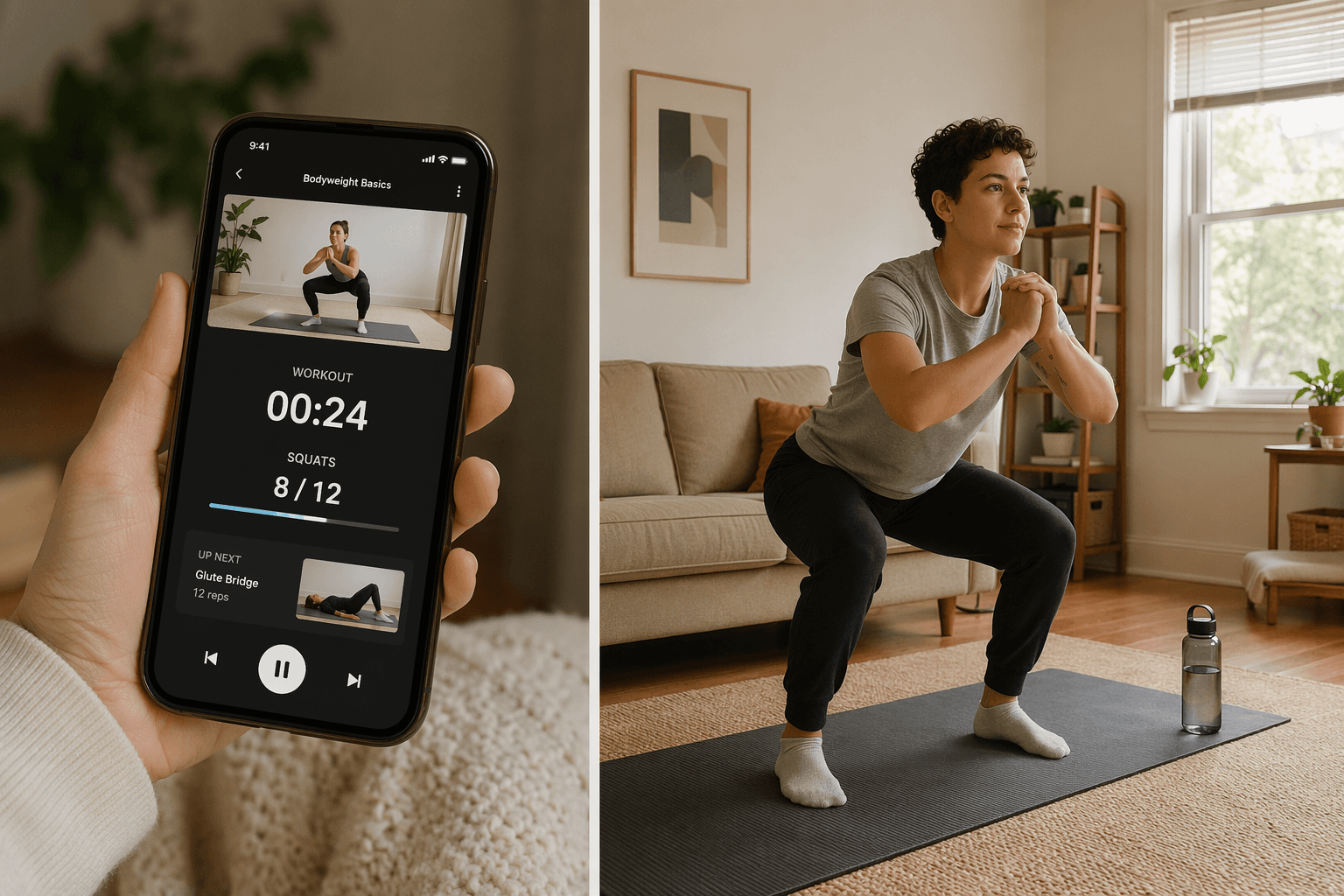
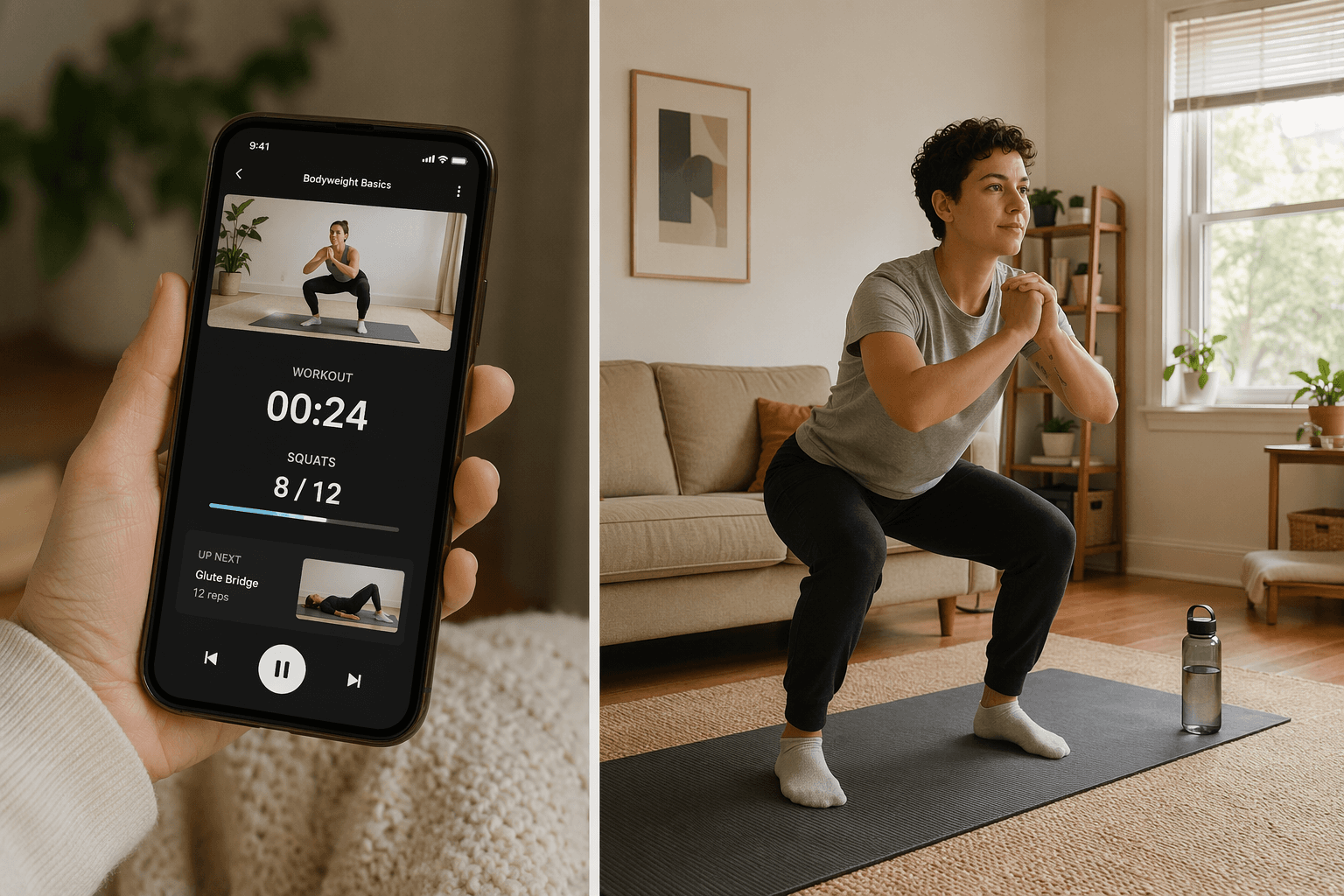
Ninety-seven out of every 100 people who download a health and fitness app are no longer using it 30 days later. That 3% day-30 retention rate comes from 2023 industry benchmarks, and it is the most honest number you will hear about fitness apps all year. The usual narrative blames the user — not enough grit, not enough discipline, not enough willpower. But that narrative misses what is actually happening.
People are not quitting because they are weak. They are quitting because the app they chose was designed for someone else — someone who already knows what to do, who likes endless choice, who can walk into a 45-minute class without thinking twice. If you have tried and abandoned two or three apps already, that does not mean you are the problem. It means you have been picking the wrong tool. The question is what to pick instead.
Why the 3% number matters
The 3% day-30 retention statistic is an industry average across all health and fitness apps. Annual subscription renewal sits at 33% — better, but still meaning two out of three paying subscribers walk away within a year. These numbers are not from one outlier study; they come from aggregated app analytics. The implication is not that all apps are equally bad. It is that most apps fail to hold a beginner's attention because they were never built with a beginner's actual decision-making in mind.
Look at the typical first experience: you download an app, create a profile, and are immediately shown a library of 200, 300, or more classes. This is called library overwhelm — you are asked to choose from dozens of categories, difficulty levels, and instructors before you know what any of them mean. Behavioral psychology has known for decades that too much choice leads to paralysis and abandonment, yet the app industry keeps designing for the power user. The beginner needs a path, not a map.
What beginners actually bounce off
The reasons people quit early fall into a handful of recurring patterns. Each one is a design flaw, not a character flaw.
- Library overwhelm. An app that presents hundreds of undifferentiated workouts forces you to decide the workout type, duration, difficulty, and instructor — every single time. That cognitive load exhausts you before you even start moving.
- No progression path. Many apps treat each workout as a standalone event. There is no sense of getting stronger, no structured increase in difficulty, no plan for next week. You repeat the same random sequence and eventually feel you are going nowhere.
- Workouts are too long or too hard. A 45-minute HIIT class aimed at intermediate fitness is not a beginner's workout. Research from Daily Burn suggests that for the first month, workouts should be 15–25 minutes, three days per week. Apps that default to longer sessions break the habit before it forms.
- No form feedback. Beginners do not know if they are doing the movement correctly. Without visual cues or written explanations, they worry about injury and stop.
- Isolation. Working out alone at home with a screen can feel lonely. Some people need a sense of community or accountability — a leaderboard, a friend, a coach. Without it, adherence drops fast.
Now compare that list to the features that stick. Apps that design for the beginner eliminate decision fatigue, provide a clear weekly structure, keep sessions short, offer form guidance, and build in some form of accountability. These are not nice-to-haves; they are the difference between day 3 and day 30.
How I evaluate apps: five stickiness factors
After watching dozens of beginners cycle through apps and quit, I now look at five specific dimensions. These predict whether a beginner will still be using the app a month later.
- Structured progression. Does the app lay out a week-by-week or day-by-day plan, or do you have to assemble your own workout from a library? Apps like Daily Burn's True Beginner program (8 weeks, low-impact, no equipment) and Caliber's free tier (500+ exercises with structured strength plans) eliminate the need to decide what to do next.
- Form coaching. Do you get step-by-step cues, video demonstrations, or real-time feedback? Down Dog offers an "Absolute Beginner" level with detailed verbal cues for $9.99/month. Future ($199/month) gives you a real coach who checks form via video. The more hand-holding at the start, the more confidence builds.
- Session length ceiling. The ideal beginner session is 15–25 minutes. Apps that let you filter by short duration or that default to shorter programs protect early adherence. Avoid apps whose shortest class is 30–45 minutes.
- Accountability mechanism. Some people thrive on community leaderboards (Peloton at $12.99/month, live classes with leaderboards). Others need a real coach (Future). And some just need a streak tracker or a friend to keep them honest. The right accountability type depends on your personality — more on that in a moment.
- Equipment barrier. The fewer pieces of equipment a workout requires, the more likely a beginner will do it. Apps that offer bodyweight-only routines (like Nike Training Club, completely free, 300+ workouts with no equipment option) reduce friction. If an app assumes you own dumbbells, resistance bands, and a yoga block, a beginner will likely feel unqualified before they start.
I do not buy the idea that an app is good just because it is popular or free. The fitness app market is crowded, and "free" is not the same as "sticky." A free app that overwhelms you with choices is worse than a paid app that holds your hand for the first month. Judge by these five factors first.
Find your beginner profile
The five stickiness factors matter in different proportions depending on your personality. I have grouped beginners into five common profiles. Find yours, and the recommendation will follow naturally.
The Self-Starter
You do not need a community or a coach. You just need a clear path and a library you can browse. You are comfortable picking a workout from a list as long as the list is organized by difficulty and goal. Nike Training Club (free, 300+ workouts, led by certified trainers) is your best bet. Caliber's free tier is also strong if you want a more strength-focused, programmatic approach.
The Community-Lover
You feed off energy from others. A live class with a leaderboard energizes you. Peloton's app ($12.99/month, 30-day free trial) is the classic choice. But note: a leaderboard can also intimidate beginners. If you find yourself comparing unfavorably with others and feeling worse, this may backfire. A kinder community experience like Strava (free, premium $12/month) with social kudos and group challenges might be a better fit.
The Accountability-Seeker
You know you will skip workouts if no one is watching. You need a real person who expects you to show up. Future ($199/month) pairs you with a dedicated personal coach who designs your workouts and checks in regularly. That is expensive, but it works. Caliber's Pro membership ($19/month) adds more coach oversight while still being affordable.
The Screen-Avoider
You do not want to watch a video or stare at a screen during your workout. You prefer to listen and move. Aaptiv ($14.99/month, 7-day trial) offers over 8,000 audio-guided workouts. You hear instruction and music without having to look at your phone. TR[AI]NER by Element 26 ($14.99/month, three free AI plans) generates a written workout plan you can follow without video.
The Quiet Beginner
You are anxious about doing exercises wrong. You want clear, gentle instruction and a safe environment. Down Dog ($9.99/month) is built for this — its "Absolute Beginner" level explains every step. Daily Burn's True Beginner ($19.95/month) is similarly beginner-focused with low-impact modifications and no equipment required.
How to test an app in two weeks
Most beginners download an app, try one workout, and decide based on that single experience. That is like judging a restaurant by the first appetizer. A proper trial takes two weeks and six to eight workouts.
- Commit to 3 workouts per week for 2 weeks (6 total). Use the app's free trial — most offer 7–30 days.
- After each session, note one thing you liked and one thing that frustrated you.
- At the end of the two weeks, evaluate: Did you feel guided? Were workouts the right length? Did you want to open the app again? Did you ever feel lost or overwhelmed?
- Compare against the five stickiness factors. Mark which factors the app satisfies. If three or more are missing, move on.
What to expect in your first month
Even with the right app, the first month is fragile. The goal is not to transform your body — it is to build the habit. Workouts should be 15–25 minutes, three days per week, and the focus is on showing up. Some days the app will feel boring. That is fine. Boredom is not a failure; it is a normal part of building a routine. The first month is about consistency, not intensity. If you keep the effort low and the frequency steady, you will survive the drop-off period that claims 97% of users.
Do not judge progress by weight lost or muscles gained in the first month. Judge by whether you completed your three sessions each week. That is the only metric that matters.
When to switch
Apps have a shelf life. After a few months — or a year — you may outgrow even the best beginner app. Signs: workouts feel too easy, you find yourself skipping them because they are no longer challenging, or you want heavier weights or more structure. That is not a failure. It means you are ready for the next level.
- If you need more structured strength progression: Caliber Pro ($19/month) or Boostcamp (free tier with 1,000+ programs, Pro $14.99/month).
- If you need a coach to push you further: Future ($199/month) becomes a more justified investment.
- If you want more variety and live community: Peloton or Apple Fitness+ ($9.99–$12.99/month).
Switching is not quitting. It is the natural progression from a beginner tool to an intermediate one. The best app for you is not the one with the most features or the cheapest price. It is the one that keeps you coming back — day 1, day 30, and beyond.
Comments
Join the discussion with an anonymous comment.